
When Trevor Ashley was five years old, his parents had a problem: they had a stagey kid and weren’t quite sure what to do with him.
They found an answer in Shopfront Arts Co-op, the youth-led theatre company in Sydney’s Carlton, where Ashley would spend the next 12 years discovering his theatrical voice, developing his skills as a writer and performer, and finding a creative community that would stay with him throughout his career.
‘Shopfront enabled me to find my own theatrical voice, to write, to create, and to find my tribe,’ says Ashley, who would go on to become one of Australia’s most respected comic entertainers.
‘It was hugely impactful for a boy from Bexley. They encouraged, uplifted and helped and made many dreams come true. It’s hard to explain what an impact it made, but I will be forever grateful.’
50 years of Shopfront Arts Co-op – quick links
A drag star is born
Now in his forties and a prominent drag queen, cabaret artist and musical theatre performer who’s in-demand on London’s West End, Ashley is among the many artists whose creative lives have been shaped by Shopfront, which marked its 50th anniversary in 2026.
But the stories of its alumni, celebrated through a milestone year of performances, reunions and fundraising, are only part of what makes the organisation significant.
For five decades, Shopfront has championed a different way of making theatre: one in which young people aren’t simply performers following an adult’s instructions, but collaborators whose ideas, experiences and voices shape the work itself.
Its legacy can be measured in professional careers launched, but also in the confidence, friendships and sense of belonging that thousands of young people have found within its walls.

Where an icon found belonging, and his destiny
For Paul Capsis, discovering Shopfront in his late teens was about more than finding somewhere to make theatre. It was the first time he remembers feeling completely accepted.
‘When I was 18 years old, a very good friend of mine took me to this magical place called Shopfront, in Carlton,’ he recalls.
At the door, he was welcomed by Shopfront co-founder Errol Bray, one of the people instrumental in the co-op’s legacy.
‘He welcomed me with open arms, and said, “Welcome to Shopfront theatre, I hope that you find something here that interests you.”’
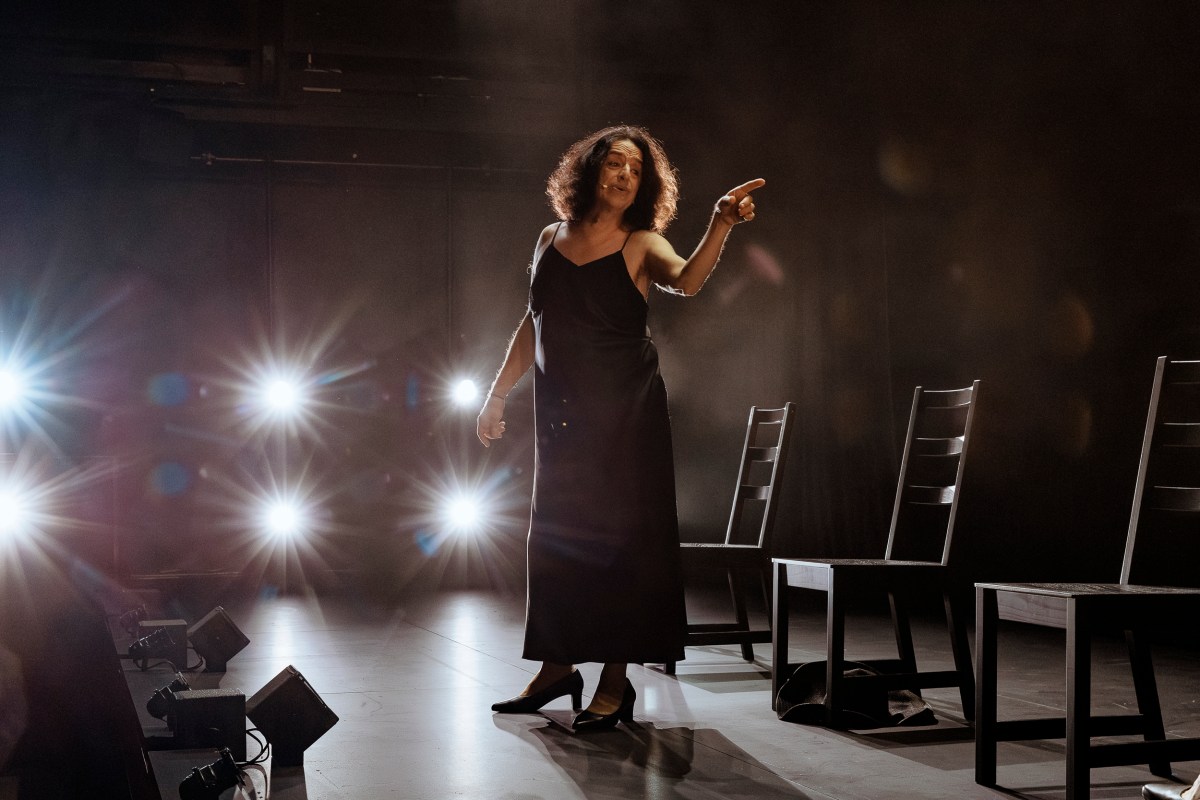
A respected actor, singer, and playwright who continues to be booked and blessed now into his early sixties, Capsis is an Australian treasure and a bonafide queer icon regarded for his raw, soulful, gender-bending performances.
But growing up as a misfit Greek-Maltese kid who was partly raised in a ‘conservative, religious environment’ by his maternal grandmother following his parents’ divorce, it took him a while to find his way. At the beginning of his career, he was warned that he would be held back for being ‘too gay, too short, and too wog’.
But Shopfront is where he began to understand the possibilities of creating theatre on his own terms. Working with then-artistic director Cathy Henkel, he discovered that stories didn’t have to be handed down by someone else.
‘It was the first time I experienced how to make your own work, your own theatre. It was then that I realised you could present your own story on stage,’ he says.
Capsis adds that there was something special about being accepted ‘as a person, as a human, by people my own age and younger’.
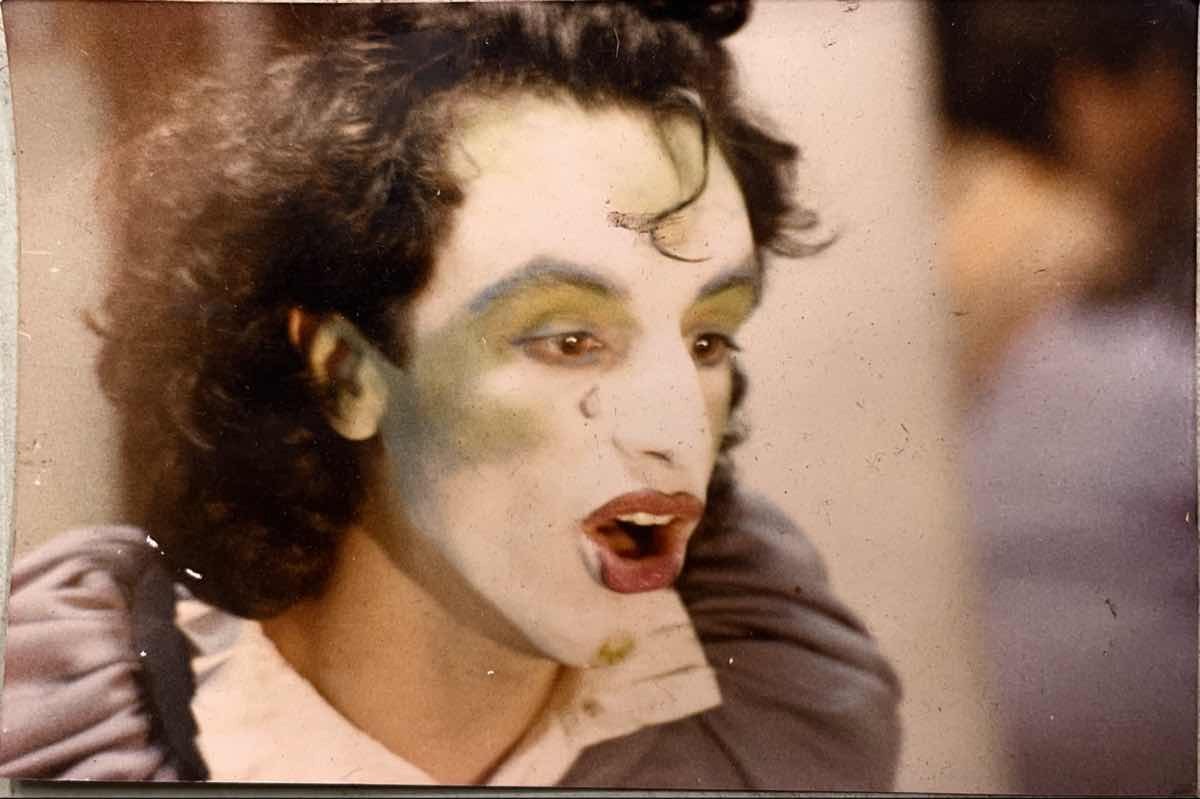
Henkel encouraged him to sing in public for the first time, while the organisation also introduced him to the work of Shakespeare and Samuel Beckett. Shopfront also opened up opportunities to travel, including trips to London to see West End theatre and tours to the UK, Scotland, Wales and Montréal.
These were, Capsis says, ‘incredible milestones and life changing experiences’.
His recollections speak to the importance of having a place where young people can experiment, take creative risks, and discover possibilities they might not otherwise have encountered.
‘The lessons, confidence and the communicative strength that you gain from being involved in making theatre is something I find difficult to surpass,’ he says. ‘I am eternally grateful. Thank you Shopfront, and happy 50th.’
A first job, a first commission – and a musical for 40 children
Esteemed playwright Hilary Bell (daughter of John Bell and Anna Volska) also found her footing with Shopfront. It all began at Interplay ‘85, the first ever international festival of young playwrights (organised by Shopfront’s Errol Bray), where she submitted a musical and was accepted as a participant at the age of 19.
More than four decades later, Bell says she still has close friends she met there.
‘It had a very profound impact,’ she says, recalling that theatre and opera director Barrie Kosky (now based at the Komische Oper Berlin) was among the teenagers involved. Others went on to become novelists, playwrights and actors, while many remained connected to the arts in different ways.
At the end of the two-week festival, Bray asked Bell if she would like to become the organisation’s playwright-in-residence.
‘That was my first real job,’ she says. ‘It was six days a week. I got paid $180 a week – which wasn’t even that good at the time, but my rent was $25 a week.’
More importantly, it was her first experience of being taken seriously as a playwright, and the role led to her first commission.
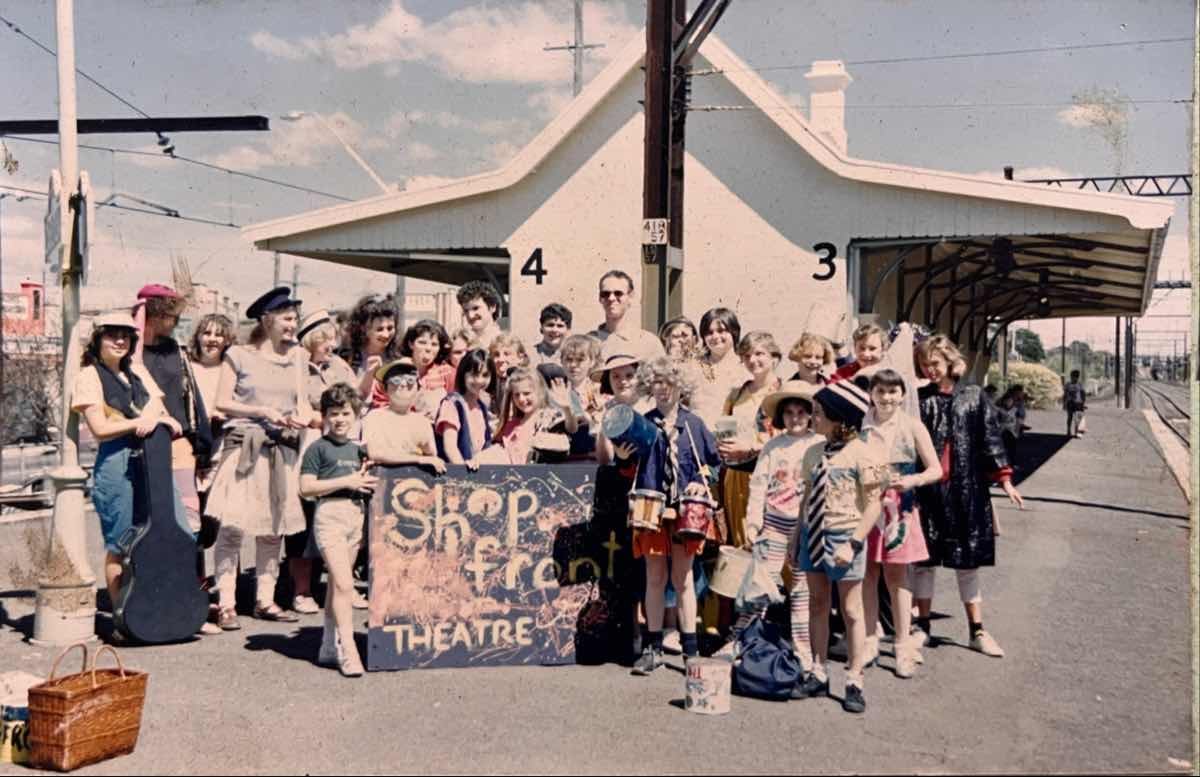
As playwright-in-residence, Bell was tasked with creating a play that could involve as many children as possible. The result was Near and Strange, a musical written for 40 young performers. Among them was an eight-year-old Trevor Ashley.
Their intertwined stories demonstrate how Shopfront’s influence can extend across generations: a young performer finds his feet, a young writer gets the opportunity to create, and both become part of a much larger creative community.
For Bell, that sense of opportunity was inseparable from the organisation’s inclusive ethos.
‘There are so many people who were involved in Shopfront whose lives changed from it. I think it also came at a point in some people’s lives – that very vulnerable age where you [could be] being bullied at school, or you’re the one gay kid, or you’re the one fat kid, or the one – you know, we didn’t have these terms for ADHD [and neurodivergence] back then,’ she says.
‘Those kids who didn’t fit in not only found a home at Shopfront, but the door was thrown wide, they were welcomed, and everybody found their place there and thrived,’ she says.
‘Any idea was a good idea. And it was run by the kids. Literally, the kids were at the board meetings.’
What does it mean to put young people in the driver’s seat?
That principle remains central to Shopfront’s work today.
Current Shopfront Young Leader, Liv Tsigaropoulos, first joined the organisation at 13, after her mother spotted an audition notice for The Lies We Were Told, a devised production directed by Shopfront CEO and Creative Director Natalie Rose.
She moved from the production into workshops in drama, film and technical theatre, joined ensembles and participated in advisory panels. Now 19 years old, she works within the organisation, helping connect young participants with the staff and programs that support them.
For Tsigaropoulos, the transition from participant to staff member has brought a new understanding of what makes Shopfront special.
‘It’s so empowering to have an idea and then people are like, “Yeah, let’s do that,” and then it’s done, and then it’s like on a stage, and you get to see it,’ she says.
‘But I think what’s even more awesome than that, is being able to be the person that does that for young people.’

The process of devising theatre at Shopfront can involve improvisation, writing exercises, recorded conversations or voice memos. Facilitators adapt their methods to the needs and communication styles of the young people in the room, gathering their ideas and words into a collective work.
The result is not simply a script written by an adult for a young cast to perform. It is a piece of theatre built from the participants’ own experiences and perspectives.
Tsigaropoulos remembers reading the script of The Lies We Were Told and recognising her own words on the page.
For her, that moment carried a powerful message: ‘You’ve said something, and it’s on a page, and you are like, oh, what I’ve said is worthy of being heard by other people… This is really cool.’
Natalie (or Nat) Rose has worked at Shopfront since 2012 and has been Creative Director for a decade, but she may be better known as one third of legendary performance collective POST (with Zoe Coombs Marr and Mish Grigor).
Rose says she has always approached young people’s work with the same seriousness she brings to collaborations with professional adult artists.
‘I didn’t want to undermine young people or make the devising process childish or tokenistic,’ she says. ‘I wanted to value their opinions and do the same exercises as I would do in the room, but with young people. Because, why not?’
She is keen to challenge the tendency to praise youth arts primarily for the novelty of its participants.
‘The process is more important than the outcome. Yes, we have really shit-hot outcomes that are excellent, and youth work should be seen as excellent and as valued as work created by adults,’ Rose says.
‘But that process of creation and the way you see a young person develop through a process, because it is all youth-led, is more important than that outcome.’
The distinction matters. Young people deserve the opportunity to make ambitious, challenging and formally adventurous work, not simply work that is considered impressive for their age.
Thousands of stories beyond the famous names
Shopfront’s alumni are a testament to the opportunities the organisation has created. But neither Rose nor Tsigaropoulos sees fame as the only measure of its impact.
‘I think that is what makes Shopfront so special,’ Tsigaropoulos says. ‘In the 50 years there are like thousands of individual histories within that.’
Some alumni have gone on to establish high-profile careers in the arts. Others have carried the skills, friendships and confidence they gained at Shopfront into entirely different fields.
Tsigaropoulos recalls discovering how far the organisation’s influence extends when researching its history for a Year 9 school assessment. Her history teacher recognised the building from the train, while people in her everyday life would unexpectedly reveal their own connections to Shopfront.
‘It feels like such a small, tight community, but it has such a wide reach outside of the arts,’ she says.

That reach is built through practical opportunities as well as creative ones. Shopfront runs workshops for children and teenagers across drama, film, singing and technical theatre, alongside ensemble programs where young people devise work with professional artists. It also supports emerging artists through free masterclasses and longer residencies.
Accessibility is a core part of that model. The organisation offers around 200 scholarships each year, and Rose says young people should not be turned away if they don’t have the funds to participate. Its drop-in program also gives participants a low-pressure social space and the flexibility to move in and out of workshops as needed.
The creative direction of the company is overseen by five youth advisory panels representing different perspectives (including First Nations, Culturally and Linguistically Diverse (CALD), LGBTQIA+, and people living with disability and/or who are d/Deaf), with an annually appointed Young Leader playing a key representative and decision-making role within the organisation.
Shopfront’s work extends beyond its own building through programs delivered with schools, councils and community organisations across Greater Sydney.
‘We work with 2,500 young people per year,’ Rose says. ‘Yes, Shopfront is a place to come if you want to be an artist, but really, it is a place to help develop great humans.’
For Tsigaropoulos, that is the heart of the organisation’s legacy: providing a place where young people can be unapologetically themselves, contribute their ideas, and feel that they matter.
A co-op built by young people – and sustained by them
Shopfront’s commitment to youth leadership isn’t just an artistic philosophy. It is built into the organisation’s structure.
One of the country’s remaining arts co-operatives, Shopfront operates on a one-member, one-vote model. As Rose explains, an eight-year-old has the same voting rights as the CEO.
That principle was put to the test nearly five decades ago, when the organisation’s landlord decided to sell the building. The young members wanted to put buying it to a vote – and they won, despite some board members believing the idea was unrealistic.
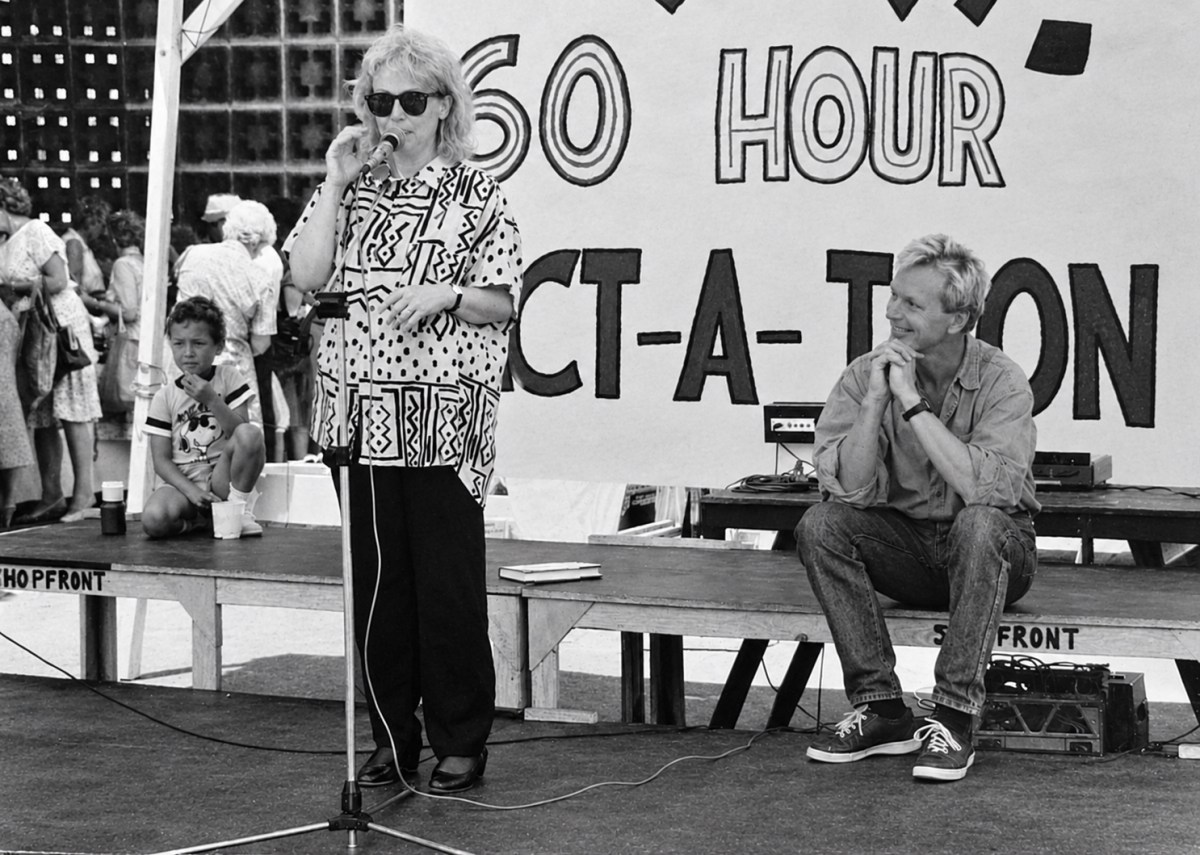
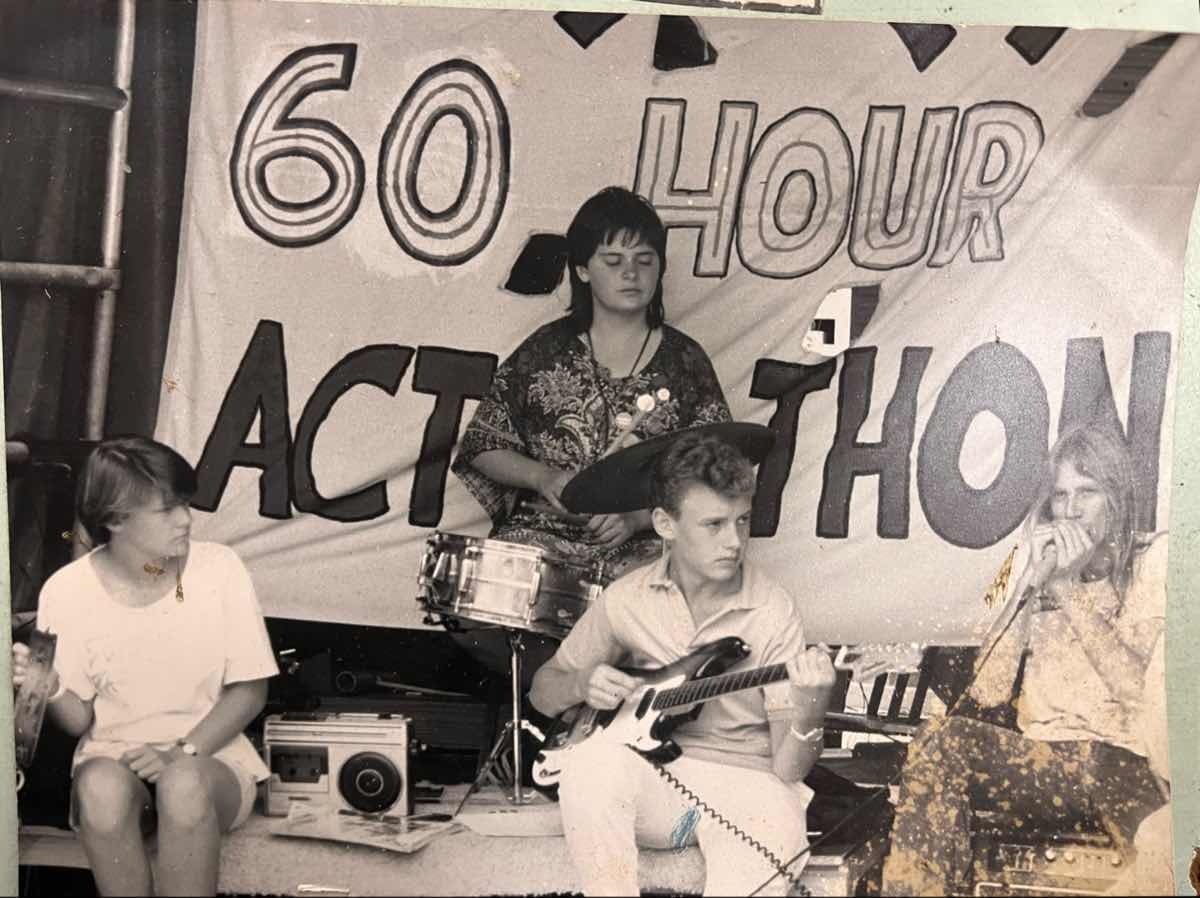
The young people then organised an act-a-thon in Kogarah Town Square, shaking tins on trains to raise the money needed to purchase the building, with additional support from a small grant from Create NSW.
They succeeded, securing a permanent home for the organisation – an achievement Rose describes as one of the smartest decisions young people have made for Shopfront. For its 50th anniversary, she wanted to pay tribute to those original alumni ‘who clearly got it right in the first place’ by revisiting their idea.

The special 50th Birthday, 50-Hour Act-A-Thon was just held over the weekend of 10–12 October, and it was a resounding success.
The original fundraising target was $50,000 in 50 hours. Shopfront surpassed that amount in less than 15 hours, prompting the organisation to raise its goal to $75,000. The campaign is continuing, with the funds intended to help ensure its programs remain free for any young person who needs them.
The anniversary act-a-thon became a celebration of the many people who have called Shopfront their creative home
The response from current participants, emerging artists, alumni and established performers was so strong that organisers had a waitlist. Archival footage from independent collectives that had worked at Shopfront also poured in, more than could be included in the program..
‘Everyone involved in the act-a-thon and those who donated, attended and viewed online understand that Shopfront is not just an arts organisation, it is a movement, a feeling that is hard to express,’ Rose says.
‘It is a place where people truly value people. However they arrive, whoever they are, they are accepted.’
The anniversary also included a youth-led conference at the Sydney Opera House on October 12, building on an initiative developed by Shopfront’s young people’s advisory panels. Its theme – ‘How do we define success?’ – reflects the organisation’s belief that young people should be shaping conversations about their own needs, rather than simply being discussed by adults.
The next 50 years of making theatre differently
For Rose, the anniversary is an opportunity to celebrate Shopfront’s history while reaffirming what she wants to see across the Australian arts sector.
She wants major companies and main stages to take more risks, giving greater visibility to work created by young people and artists with disability. She also wants devised and collaborative theatre to be valued alongside traditional playwriting and production models.
‘Why can’t collaborative, devised work be seen the same as a script that’s [already] been written?’ she asks.
Tsigaropoulos hopes for a theatre culture that is accessible to everyone, both in terms of participation and the ability to attend performances, and where the people whose stories are being told have a meaningful role in creating the work.
Both are challenging the assumption that theatre must look a particular way: a familiar script, a conventional venue, a traditional hierarchy of creative roles. At Shopfront, the possibilities are broader, and the work can be surprising precisely because young people are given the freedom to make it their own.
That freedom is what Trevor Ashley, Paul Capsis and Hilary Bell all describe in their memories of the organisation, even as their experiences differ. It is what allows a camp little boy from Bexley to discover a theatrical voice, an oddball 18-year-old to experience acceptance, and a 19-year-old playwright to receive her first commission.
And it is what continues to draw young people through Shopfront’s doors today.
As Tsigaropoulos puts it, people who encounter the organisation’s work are often surprised by what they see – and by what theatre can be.
For a company that has spent 50 years placing young people at the centre of its work, that may be one of its most important achievements: not simply helping the next generation find a place in the arts as they already exist, but giving them the tools and confidence to imagine what the arts could become.