Gwendolyn Warnock knows when one of Wakka Wakka’s puppet-led performances is speaking to theatregoers. ‘You can start to hear the audience making noises that they don’t usually make in normal theatrical productions,’ she says.
‘People will start saying aaah, oooh, ohhh. They’ll make more sounds than they let themselves … when things feel more adult or realistic.’
In the 25 years since founding the New York City and Oslo-based visual theatre company with Co-Artistic Director Kirjan Waage, Warnock has heard those audible responses. In the process, she has listened to audiences openly grapple with big emotions in a way that they might not if they were watching people, not puppets.
That’s part of the appeal of the medium for Warnock. Sitting in the audience of a puppetry show, ‘I am willing to go places that you don’t necessarily go when it’s humans in front of you,’ she says.
In Wakka Wakka’s international hit Dead as a Dodo – which makes its Australian premiere this week, running from 23 to 26 September at Brisbane Festival – that includes taking a trip to the underworld to contemplate life and death.
Dead as a Dodo at Brisbane Festival – quick links
Bones, birds and big ideas
Putting two skeletons at the heart of its story, this all-ages-friendly puppet musical isn’t afraid to dive deep – metaphorically or literally. Within the realm of the dead, audiences meet two friends: a boy, plus the dodo of the show’s title, an animal that’s become shorthand for extinction.
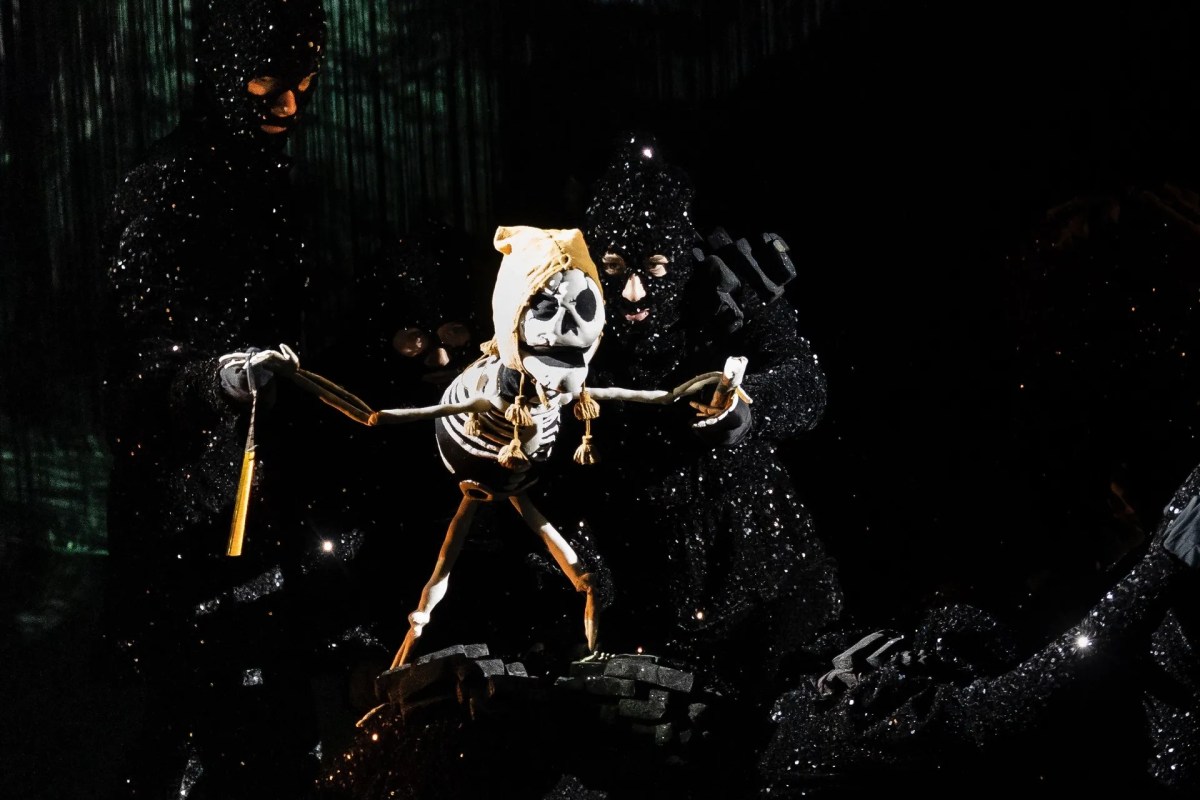
The pair begin the show as disintegrating bones, and must dig for more, as is the way of the dead in this tale, until – as shown via puppetry, music and projections – the dodo begins to sprout feathers again.
Wakka Wakka has mused on humanity’s impact upon the animal kingdom before, in the 2019-premiering Animal R.I.O.T. and 2021’s The Immortal Jellyfish Girl. Dead as a Dodo forms the third part of the company’s Animalia trilogy, all independent shows but thematically linked.
Warnock co-wrote Dead as a Dodo and now co-directs and co-produces the production, also co-designing the set and costumes, all with Waage. ‘If I went to the root of it, I would say we wanted to tell a story that was combining the future and the past,’ she says.
‘I think the dodo was always an obvious entry point for us, because it’s such a beloved extinct bird – because we are the ones who are the cause of its extinction, and also because it’s a non-threatening animal.’
That’s peering backwards covered. Looking forward, the fact that the production’s namesake might actually get the chance to live again was also pivotal. ‘People are talking about in the future, or even soon, the possibility of bringing something back that very closely resembles a dodo,’ Warnock says.
It unlocked ‘the idea of things dying, and then also the idea of bringing things back to life,’ she says. ‘And the power of humanity and how we have to grapple with that ourselves – of how we affect our environment.’
Opening the door to imagination and emotion
With Dead as a Dodo, as in all Wakka Wakka’s work to date, the aim is to channel big ideas and weighty subject matter into an inventive and imaginative puppetry-centric performance.
As Warnock puts it, ‘We want to be able to have fun and also tell a story that we think that audiences can relate to … a story that we think is important.’
The task then becomes ‘how to create a story that can still hit people – and make you think afterwards – without necessarily lecturing,’ says Warnock. ‘That’s what puppetry brings a lot of times – an easy way in.’
Nothing is simplistic about Wakka Wakka’s chosen artform, of course. That’s a recurring message at this year’s Brisbane Festival, thanks also to the Queensland Art Gallery & Gallery of Modern Art’s world-exclusive Make, Believe, Magic: The Worlds of The Jim Henson Company exhibition.
ArtsHub: Celebrating 70 years of The Jim Henson Company at QAGOMA
But as Warnock has long witnessed, there’s no denying that touching upon serious topics – such as mortality, extinction, rebirth and transformation – can feel more accessible when combined with puppetry. ‘I don’t want to say “easy” but it’s an easy way to get to people’s emotions. Their guards are down a little bit.’
She adds, ‘There’s just a different game that’s being played when you start to animate objects and create lifeforms in front of people, so they have to start playing along with you.
‘Your imagination has to be a part of the game there on a big level, and then once that starts to happen, you can open up the possibilities for the audience member to take in ideas and take in the story in a new way.’
When death sings and shimmers
There’s no missing the ambition fluttering within a production with death among its subjects, and with inspirations as varied as Dante’s Inferno, Silly Symphonies and Tales From the Crypt too.
‘The trick for us was to allow those things to be there, because the world of the dead is a creative place for all of humanity. We all don’t know what’s there, so we’re all imagining it together in different ways,’ says Warnock.
‘Every religion has their own version of it, and every person has to think about it, so that’s why you have all kinds of stories about it and horror movies about it.’
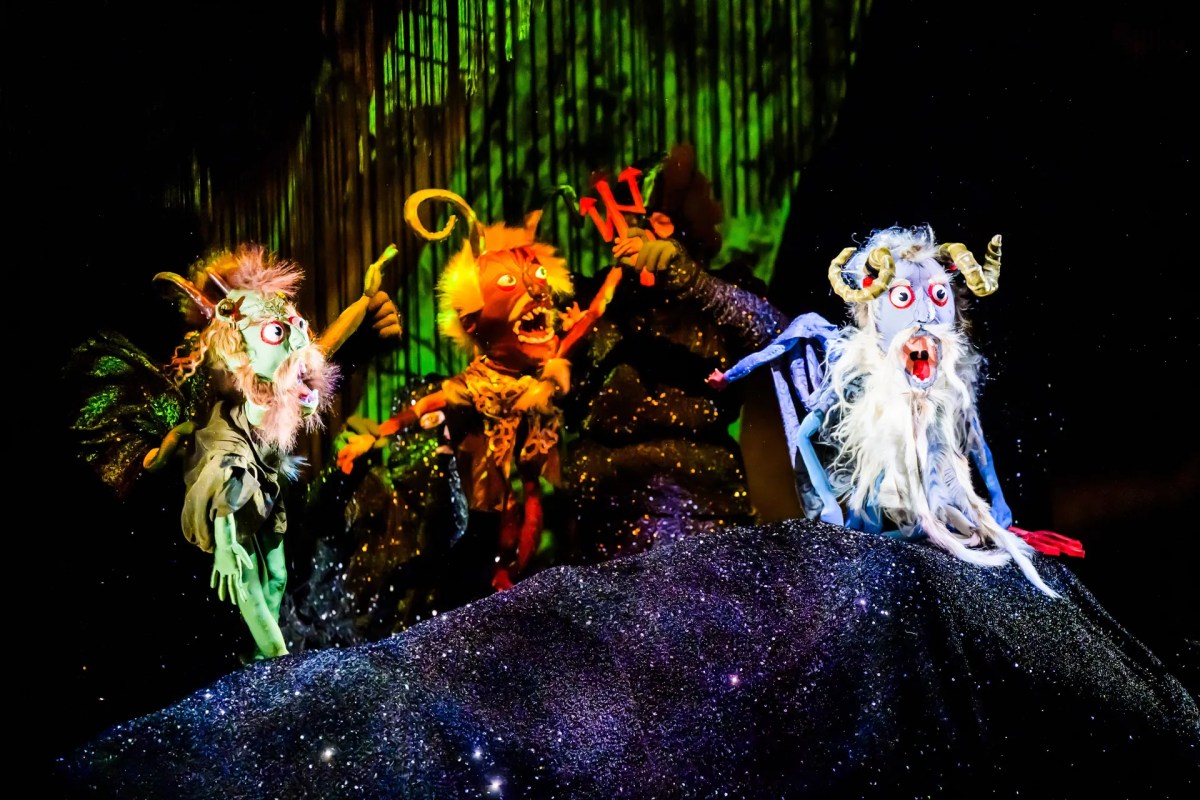
Theatregoers in Norway, the US, South Korea, France, Portugal, Italy, Taiwan and Sweden have already had that opportunity to go deep, thanks to a show that ‘crosses ages and crosses cultures and crosses languages,’ as Warnock describes its success so far.
Now, Brisbane Festival attendees will have the chance to experience a work that uses every possible element to immerse viewers in its unique realm, and to perfect the tone.
The show’s musical moments came naturally, Warnock says. ‘The Bone King comes out and in our world. He wanted to sing,’ she says.
Dead as a Dodo not only explores the underworld, but also what dwells under the ground, spiritually and physically – including geodes and crystals. ‘We have a sound and song that comes from the geodes, that’s a supporting element of the whole thing,’ says Warnock.
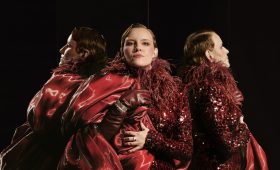
This is a production that genuinely glimmers in its costuming and staging as well, as it plunges into the earth. ‘The puppeteers became a huge part of the scenography because they’re dressed in black sequins,’ says Warnock, ‘so they become the moving structures that the puppets are on.’
That ‘sparkling underground’, as she calls it, gives you ‘the sense of being in the dark, of not knowing where the darkness begins and ends’. It also helps ensure that for audiences, even as they contemplate mortality, Dead as a Dodo remains enjoyable and entertaining.
‘There’s something about the sparkling and the pleasure that it gives you, the thing that you feel. I’ve done a little research on it, supposedly it comes from water – the idea that you feel safe when there’s water around you,’ Warnock says. ‘I don’t know if that’s true.’
Digging into puppetry’s layers
Striking the right mood for a production like Dead as a Dodo is still an act of careful calibration, albeit one that Wakka Wakka is accustomed to. ‘If you can’t find the comedy in these things, then the show becomes very serious,’ says Warnock, ‘and that’s not usually where we play.’
The company’s preferred terrain is ‘that liminal space between something that’s heartfelt and serious, and something that makes you laugh,’ she says, also mentioning the link between comedy and tragedy in theatre theory, with the sweet spot ‘in that place where they meet’.
After all, ‘life in itself is both funny and tragic,’ Warnock says.
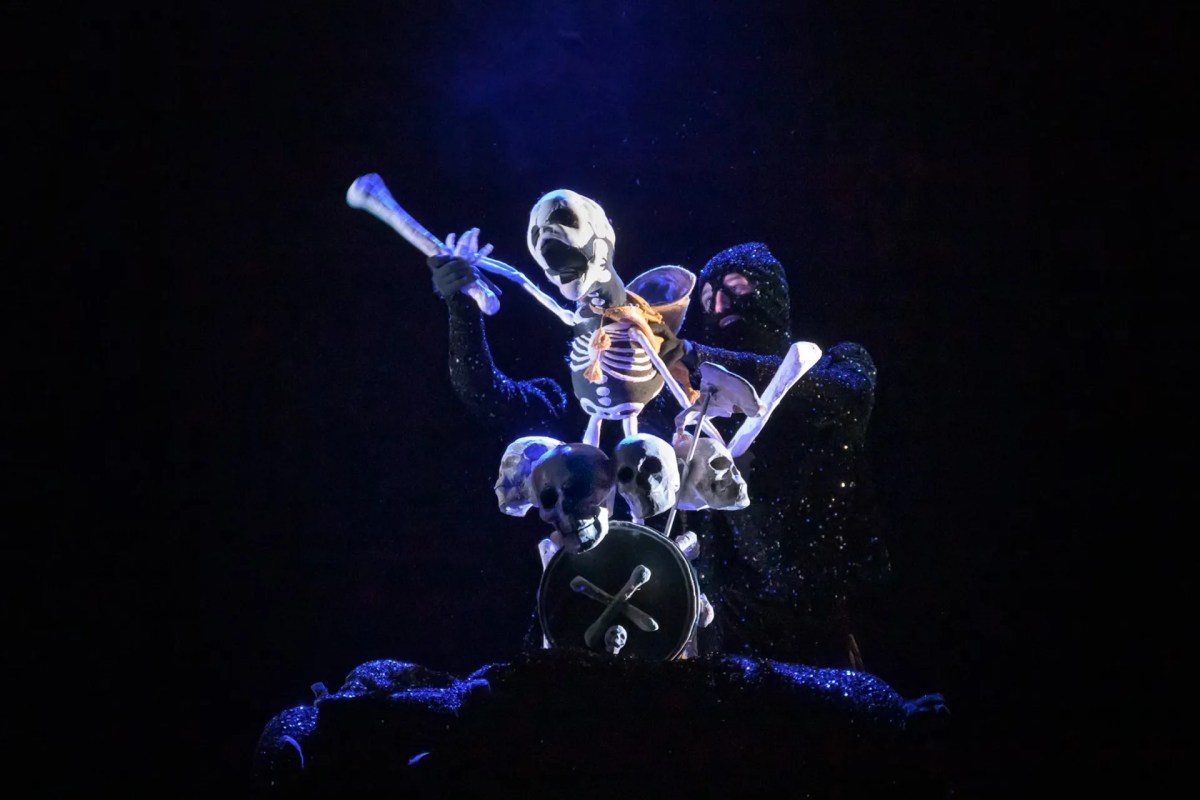
It’s why she believes Wakka Wakka’s productions can evoke such an emotional response from audiences. ‘There’s a lot of people that do cry during the show [and] they say to me, “I can’t believe how moved I was by puppets”,’ Warnock says.
‘Because the show is a little bit funny, it’s a little bit silly, there [are] so many things happening in it. But it also has a lot of feelings that you don’t expect, suddenly, when you have to process what’s actually happening to these characters.’
Audiences come in expecting one thing and then they leave feeling something else, she says, noting how it can be quite surprising for people who’ve never been to puppetry. ‘Because there is a difference between going to see a show that’s made specifically for young children and one that’s made for a broader audience,’ she says.
Those expectations can mean people have a one-sided view of puppetry. ‘And then if they do get it, and if we can grab them into it, even if they have to bring their kids in order to feel like they can go, then they’re so pleasantly surprised.’
An all-ages show that isn’t specifically made for children
Dead as a Dodo is suitable for audiences aged five and over, but this isn’t the type of piece that’s only catering for the youngest in the room. Instead, ‘we always try to make a show for an adult audience,’ says Warnock, ‘meaning that we keep our themes a little bit stronger than maybe what we would necessarily make for a family audience.’
Wakka Wakka then edits out subjects or events that wouldn’t work or wouldn’t be appropriate for children. ‘But this one didn’t seem like it needed any of these things, or wanted any of those things either,’ she says of developing Dead as a Dodo.
ArtsHub: ACMI hosts Lifelike exhibit charting the history of puppets on screen
Warnock says that Wakka Wakka doesn’t ever develop productions with a narrow audience in mind. ‘We start to tell a story, and then as it’s being told, then we can decide who it’s open to.’
With Dead as a Dodo, they found it had ‘broad themes for a much larger group of people’.
They saw the production dealt with sensitive topics but ‘didn’t try to make it safe in that way,’ she says. Even with death so firmly at its core, ‘we didn’t try to make it to protect anybody.’
As a result, ‘we’ve had people who’ve come to see our show who have had death in the family, who brought their kids, and then everybody cried and afterwards they were all able to talk to each other about it. We get thank you letters because of this,’ she says.
‘So I think that maybe that’s part of the recipe, because sometimes if you’re too afraid to tackle themes for a bigger audience, then you don’t put those people in conversation.’
She adds, ‘The grandparent, the parent, the kid can all come see a show and they can all have things to say and talk about it afterwards together. And that’s an important thing that I think sometimes is missing in shows, because they’re so geared towards a certain audience.’