This feature contains the names of First Nations people who have died, with family permission.
The rampaging British Empire has a lot to answer for. Not least in its aggressive attempt to eradicate innumerable languages (as well as lives) across the globe. Their colonial trampling, demanding homogeneity, ranges from my birthplace of Scotland – a story complicated by the union of crowns – to the genocidal assault on First Nations peoples here, there and everywhere.
But warriors have dedicated their lives to keeping endangered tongues alive. Often, they are proud matriarchal women who understand innately the cultural value in preserving storytelling as it should be heard.
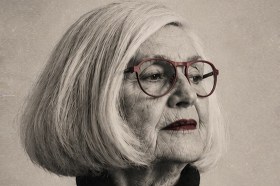
People like Dr Jeanie Bell, the celebrated linguistic academic who worked tirelessly to preserve Aboriginal languages within communities that were dislocated, sometimes with only a handful of speakers remaining. In a cruel twist of fate, for a hero so set on preserving living memory, the late Dr Bell’s sparkling mind and spirit were clouded by dementia.
Her daughter, the Badtjala, Butchulla and Jagera playwright and director Kamarra Bell-Wykes, has taken this rotten luck, processed her grief and rebirthed it as a beautiful new and intergenerationally strong MTC show Before I Forget, now showing at Arts Centre Melbourne.
MTC’s Before I Forget review – quick links
Family drama
Before I Forget opens with a metatextual flourish, breaking the fourth wall before we’ve begun. An announcement welcomes Faith Well, just such a powerful woman and keeper of languages, to the stage to introduce the show. But no sooner has she begun than whispering words on the wind interrupt her train of thought, so that she loses her place on the rumpled paper in her hand.
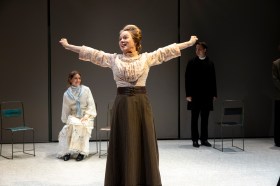
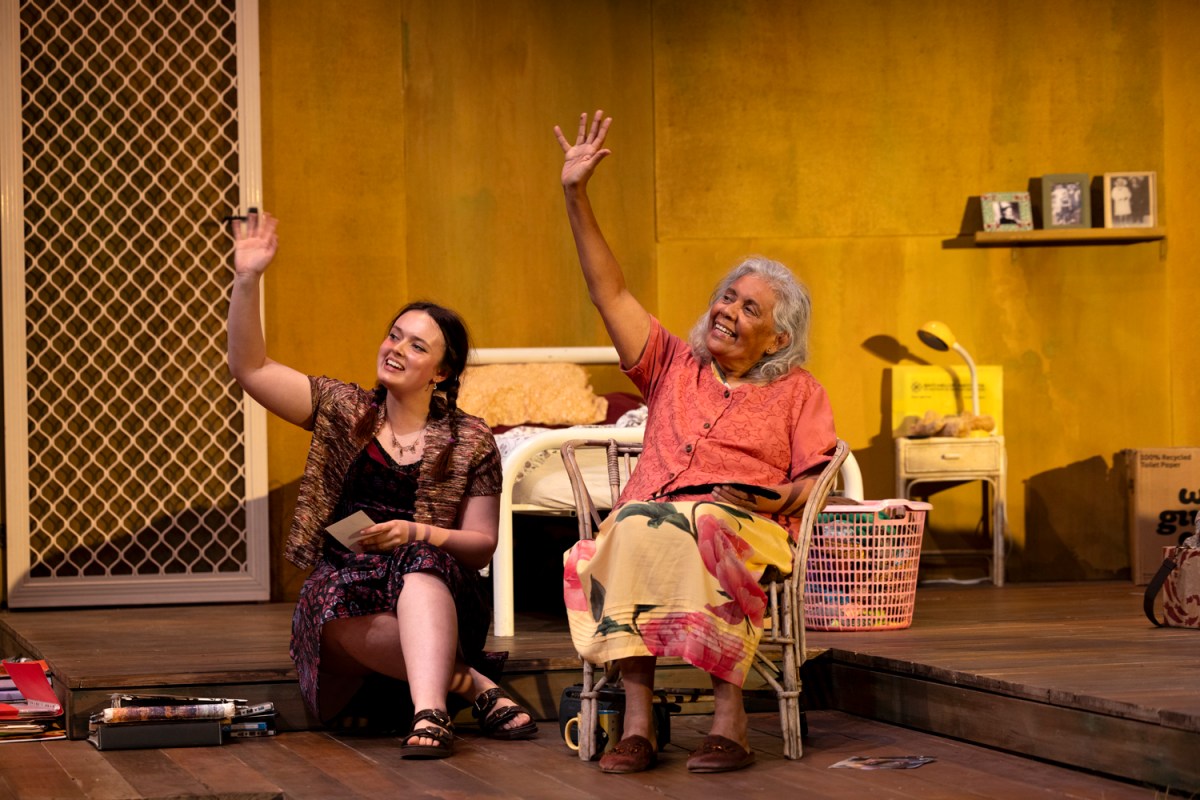
As played by the inimitable Roxanne McDonald, Faith, who puts her trust wholeheartedly in words, is, in fact, a fictional character not unlike Dr Bell. She’s soon accompanied by her down-to-business daughter Karma (Melodie Reynolds-Diarra) and granddaughter Hope (Tyallah Bullock).
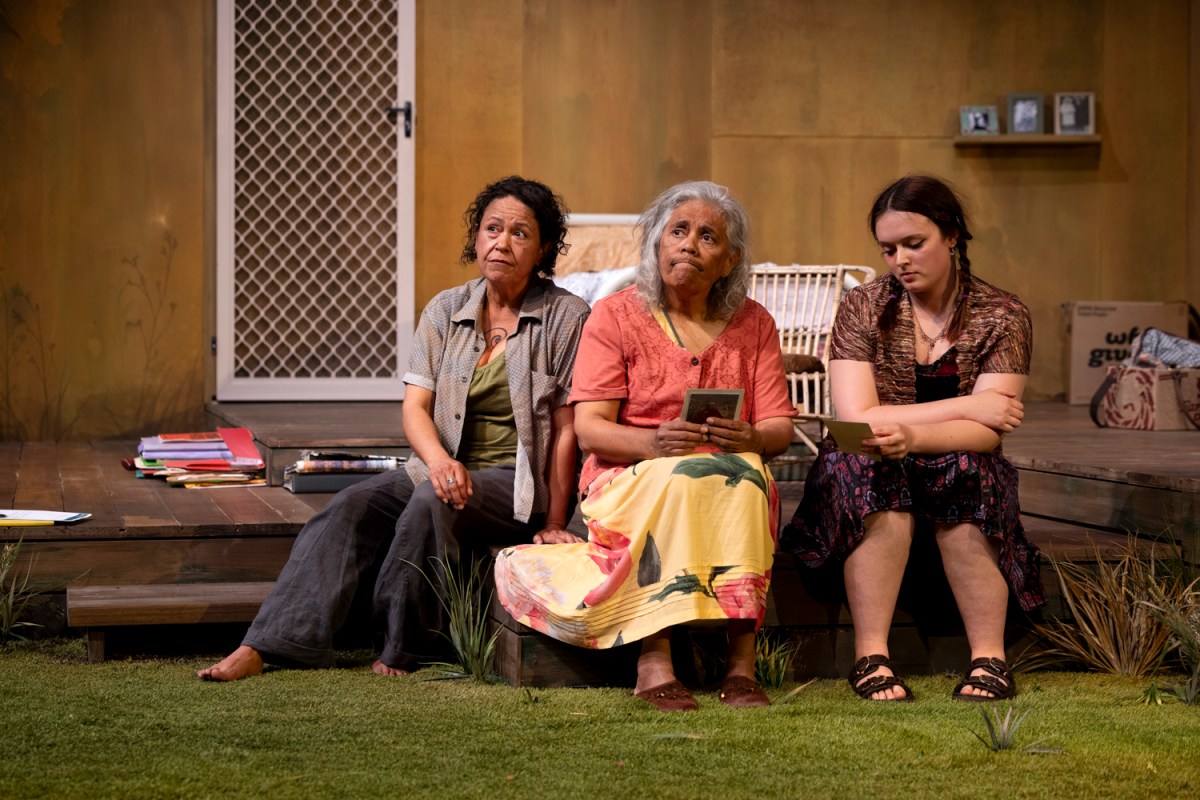
Yep, there’s symbolism in those names as these very different but indelibly bound women face a future as uncertain as some First Nations languages.
Faith is ferociously funny, an activist and academic who isn’t best pleased that, due to dementia darkening her door, she’s been pressed into giving up her home, with Karma and Hope here to pack up her things before she’s moved into aged care. That’s if they can find the keys to get into Faith’s humble pad with a sh(ith)ouse out back.
Karma clearly loves her mum, but it wasn’t a walk in the park, growing up in the shadow of a great intellect with itchy feet who had a habit of buggering off on business regularly. She’s also had to shoulder the burden of her mother’s decline almost single-handedly, with her golden boy brother Jet (Nathan Wright, appearing later in the piece in a support role) nowhere to be seen. It’s tiresome and often unforgiving work, and she’s prone to cracking it.
Karma also loves her daughter. But Hope similarly feels as if her mother hasn’t always had the time for her that she needs, as a young woman looking for guidance on relationship woes and the like. Hope finds solace in the arms of her grandmother, easily picking up language in a way Karma never did.
Faith is often bristling with witty comebacks as all three hurl tough love and mud at one another, and everything from poop to electric kettles gets singed. But the confusion creeps in unexpectedly, giving way to a muddle of the past on occasion and an abject fear of things that aren’t there.
Or are they?
Watch the trailer
Starry skies
Those voices, in the languages Faith steadfastly guarded, continue to filter into the theatre and Faith’s consciousness. Soon, all three women can hear them, with composer and sound designer Small Sound brilliantly evoking both Faith’s life’s work as well as the many lives that have walked these lands before us.
Sophie Woodward’s deceptively simple set design seemingly transports us to the desert, where a screen door is required to keep the beasties out of a cluttered cottage that spills out onto a shrub-hugged veranda.
This set, with its sparsely decorated walls and stacks of books, old photographs and Jet’s trophies, tells us so much about Faith and what she places importance in. Also on costume duty, Woodward brings floaty grace to Faith, singlet-wearing haste to Karma and the clumpy layers of youth to Hope.
A great big sky hangs over it all, with ace lighting designer Katie Sfetkidis transfixing us as it shimmers from sunset to dawn and on to a night lit up by dancing auroras and pierced by with shooting stars, creating a wondrous glimmer.
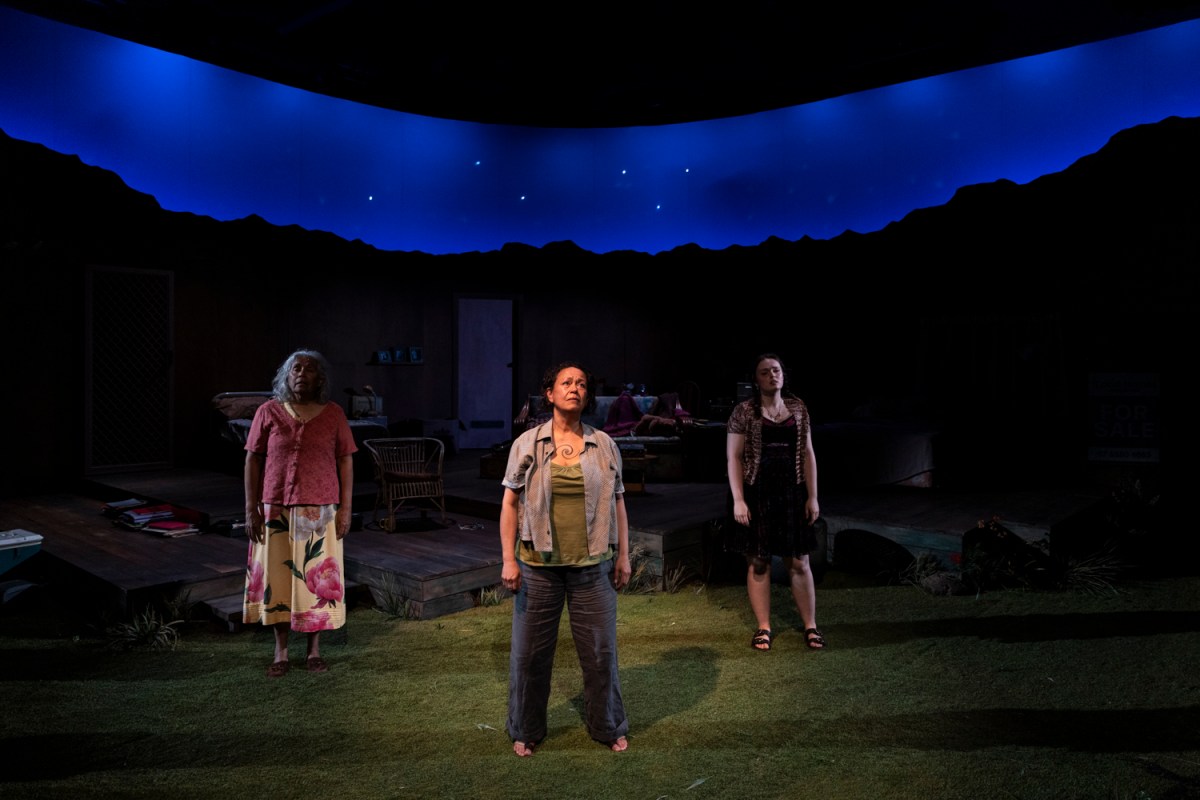
It’s often the case that economic staging smartly deployed can achieve the greatest effect, as when the humble parapet of Faith’s sanctuary is punctured by a pop-up moment, envisioned by Woodward, that casts the sobering shadow of colonial violence.
But these women are strong, their heads held high above that devastation, thriving despite it and on their own terms. Bell-Wykes’ nimble writing and surehanded direction, as joyous as it is occasionally devastating, holds fast to a simple truth. This trio may be their own worst enemies sometimes, but together they are tight and mighty.
Unmooring finale
All three central performers are fantastic, with McDonald particularly impressive as a woman who finds that even as her memories desert her, it’s the solid foundations of her life’s work that cling on longest.
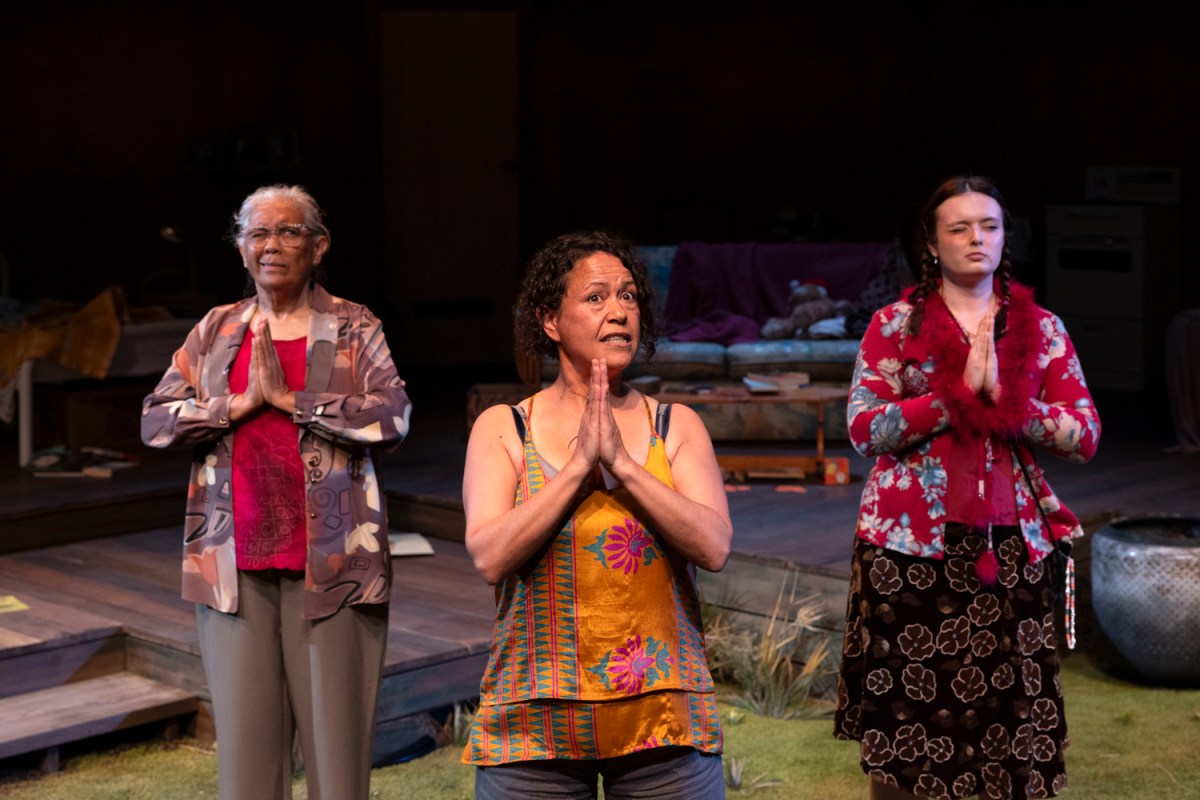
Anyone who has endured the indignities thrust on a loved one by such conditions will, as I did, most likely find themselves totally unmoored by the time Bell-Wykes brings the truths of Before I Forget home.
And what a home it is, filled with the loving and often laugh-out-loud work of McDonald, Reynolds-Diarra and Bullock. In their tender hands, Before I Forget will not so easily be lost to time.