
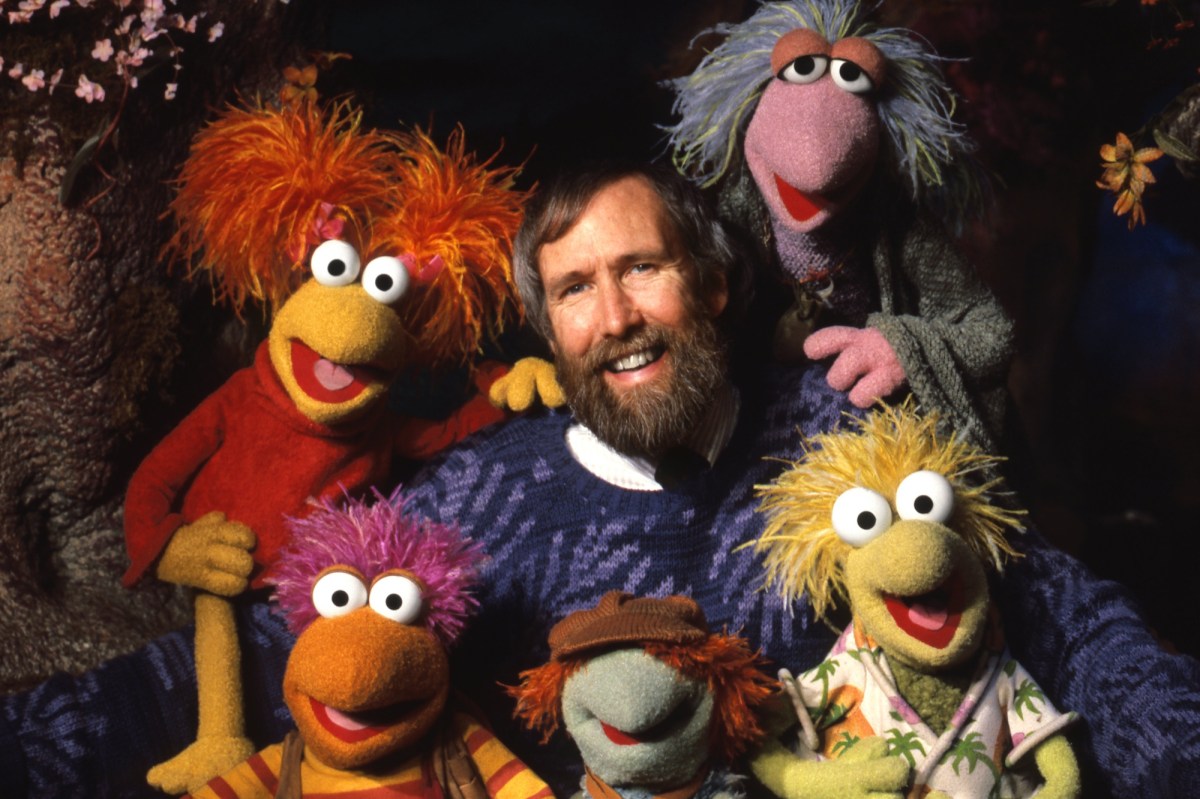
Everyone has a first Jim Henson Company memory. For Amanda Slack-Smith, the Curatorial Manager of the Australian Cinematheque at the Queensland Art Gallery and Gallery of Modern Art, it was Sesame Street that earned that honour – and vividly – with its lively puppet characters created by Jim Henson.
From her childhood in Roma in rural Queensland, ‘my memory of Sesame Street is in full colour, even though I know that the TV was black and white,’ she tells ScreenHub. ‘And I think that is the power of performance and storytelling.’
Now curating QAGOMA’s world-exclusive, seven-month-long, all-ages-friendly exhibition Make, Believe, Magic: The Worlds of The Jim Henson Company – which is on show from 12 September – Slack-Smith also owes The Muppets a debt.
‘I thought my sense of humour was unique, but I think I am the child of The Muppets and my sense of humour has very much come from The Henson Company,’ she says. It’s been a sobering and delightful realisation, ‘because obviously I rewatched everything, and just little turns of phrases – “Oh, that’s where I got that from”.’
For puppeteer and performer John Tartaglia, who is also The Jim Henson Company’s Vice President Development and Production, his entryway was Fraggle Rock – the show that, in a lovely full-circle development, he has been guiding a reboot of over the past few years.
‘It felt like this amazing, magical, secret world that was mine to discover,’ he shares of initially stumbling upon the original series on a motel TV in the 80s when he was seven. ‘And I think … what drew me in was that it felt like this fully detailed, realised world. Of course, I didn’t realise that’s what it was at the time.’
Make, Believe, Magic in Brisbane – quick links
Affection, inspiration and artistry
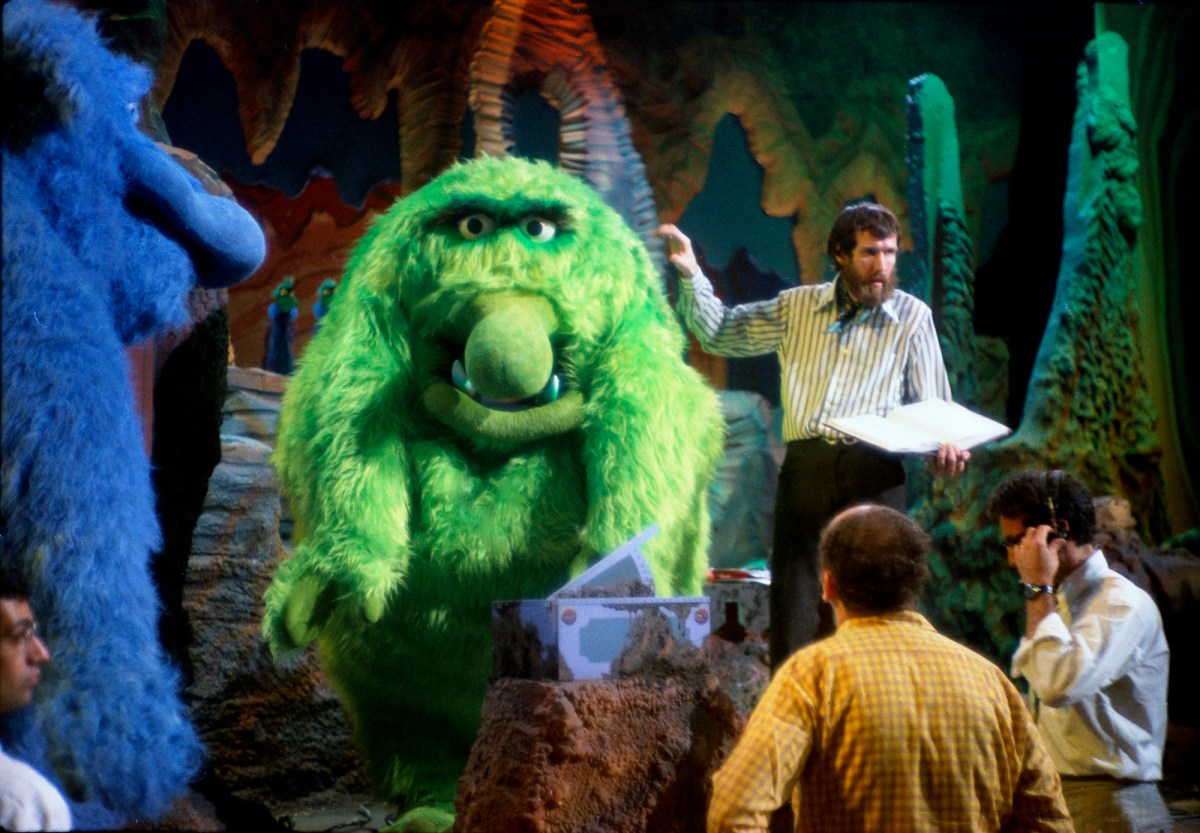
For anyone who’s ever watched the feast of television shows and movies that The Jim Henson Company has crafted, or contributed to, across the past 70 years, it’s easy to recognise Slack-Smith and Tartaglia’s childhood experiences, and the love, wonder, joy and admiration they now bring to their work.
We all haven’t grown up to spearhead a sprawling gallery showcase dedicated to this gorgeous puppetry realm, as Slack-Smith has, or to work to bring the company’s beloved creations to life, as Tartaglia now does. However, the likes of The Muppets, Sesame Street, Fraggle Rock, The Dark Crystal, Labyrinth, Farscape and more have shaped hearts and minds for decades.
Cherishing this, and celebrating the immense artistry and imagination behind this impact, are one in the same in Make, Believe, Magic as the exhibition pays tribute to The Jim Henson Company’s ongoing contribution to TV and film history.
‘How we understand puppeteering onscreen is all based back to that early Henson method of puppeteering. Discarding the proscenium and just using the television as the frame, that was ingenious. And it permeated everything,’ says Slack-Smith.
‘Jim Henson would sit on a couch in a talk show with Kermit on his arm. There was no hiding the fact that he was sitting right there. He wasn’t doing ventriloquism. He was talking for Kermit,’ she continues. ‘But I think the magic of what puppets are is you don’t see the puppeteer – they blend away.’
‘And if you watch any of those clips, the hosts just start talking to Kermit. It’s like Jim isn’t even there. You’ve got two megastars and one just drifts into the background, which is fascinating, but that’s the talent of the performer and their ability to do that.’
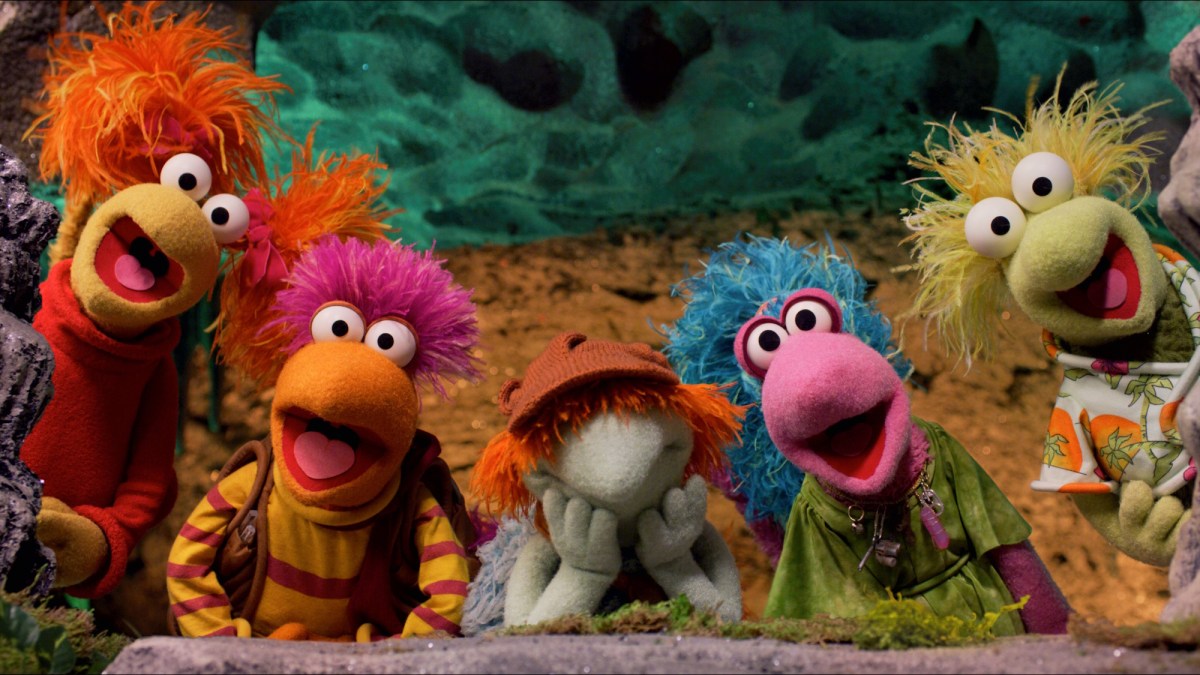
Indeed, if that talent and ability hadn’t caught Tartaglia’s attention as a boy, and he hadn’t been so enthralled and inspired by it, he wouldn’t be working in puppetry today, let alone as a Jim Henson Company VP and Creative Supervisor for Fraggle Rock: Back to the Rock.
‘I never met Jim, but I indirectly feel very much so that I owe everything I have to him,’ Tartaglia says, ‘because he created these worlds and these characters that meant so much to me and I knew I wanted to be part of in some way, and influenced all of my choices to get here.’
When one exhibition inspires another
QAGOMA’s big summer blockbuster, Make, Believe, Magic is the Brisbane venue’s latest effort to highlight screen culture beyond its own onsite cinema, and it follows on from the gallery’s previous David Lynch retrospective, Between Two Worlds in 2015, and its Marvel ode, Creating the Cinematic Universe in 2017.
This time, ‘there’s a lot of feathers, fur, foam and colour,’ Slack-Smith says, across an immersive treasure trove taking up the South Brisbane site’s entire ground floor.
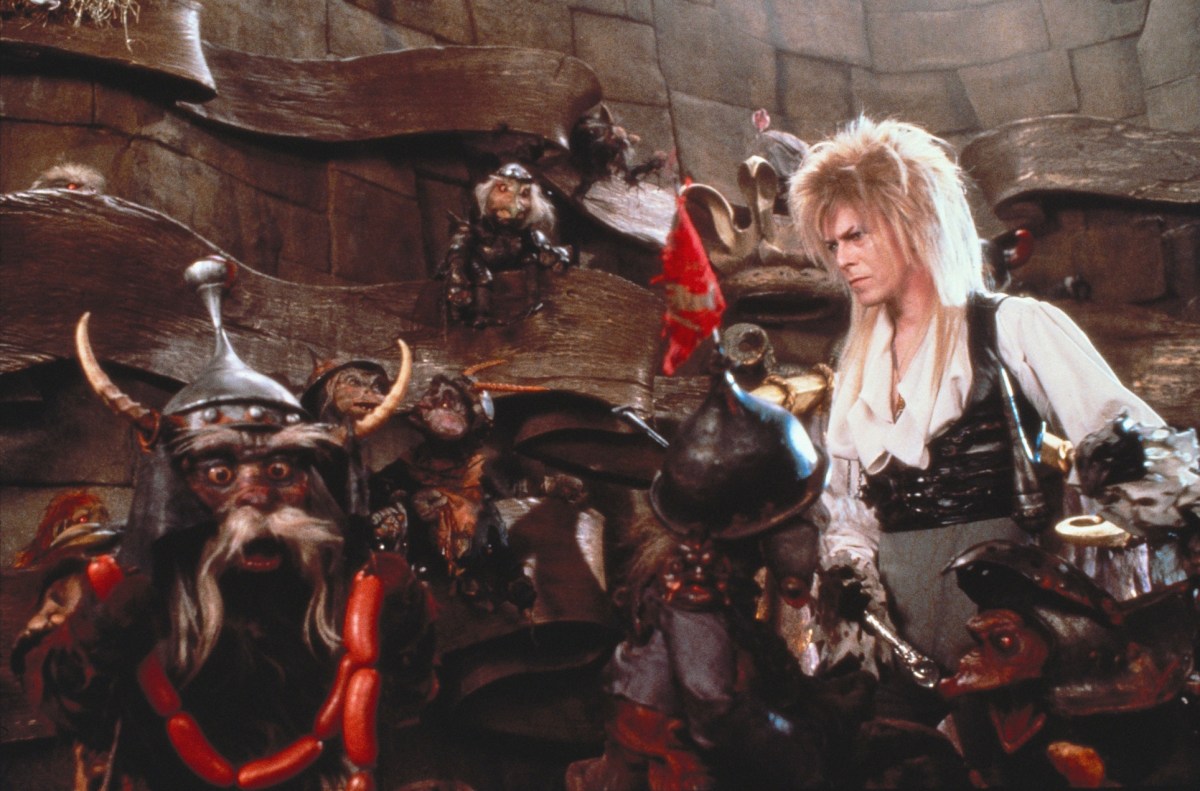
In an exhibition that marks not only seven decades of The Jim Henson Company, but also half a century of The Muppet Show and four decades of the Jim Henson-directed Labyrinth, attendees can expect hundreds of objects. Puppets and animatronic creatures are a drawcard, yes, but so are original sketches, pitches, clips, props, costumes and sets, plus a tribute to David Bowie’s Magic Dance from Labyrinth. A wide-ranging screening program also runs alongside the exhibition.
Nods to Labyrinth won’t be new for seasoned QAGOMA visitors, either at its exhibitions or Australian Cinematheque’s film programs. The same is true of Where the Wild Things Are, the 2009 adaptation of Maurice Sendak’s adored children’s book, which features animatronic suits by Jim Henson’s Creature Workshop for its titular critters.
In fact, Slack-Smith started thinking about Make, Believe, Magic thanks to Fairy Tales, the gallery’s 2023 exploration of enchanting folk stories, which featured both Jareth’s crystal orbs from Labyrinth and the suits from Where the Wild Things Are.
‘I was in New York meeting with both Karen Falk, who’s the Archives Director, and Susie Tofte, who’s an archivist, to talk about Labyrinth and a little bit about The Dark Crystal,’ Slack-Smith says. ‘And they were just an absolute delight to talk to.’
‘The archives are right beside one of the Creature Shops – there’s one in New York and one in LA – so just to see all that energy and creativity, it was really super exciting.’
‘And 70 years’ history is a massive milestone for a company that had 35 years with Jim Henson and now 35 years’ family-led, and still going strong and still very cohesive as a company – and creative and innovative and constantly pushing the line of where puppeteering is going. That gets me excited,’ Slack-Smith adds.
‘It’s that intangibility of creativeness and art-making that fuels the ideas that come together from there. And obviously the cinema component is so integral to what they do. I mean, that’s the final artwork.
‘So the ability then to work with them, to draw on their archives, to be able to actually then illustrate that in a way that audiences can dive into, is exciting.’
Stepping onto a Fraggle Rock set
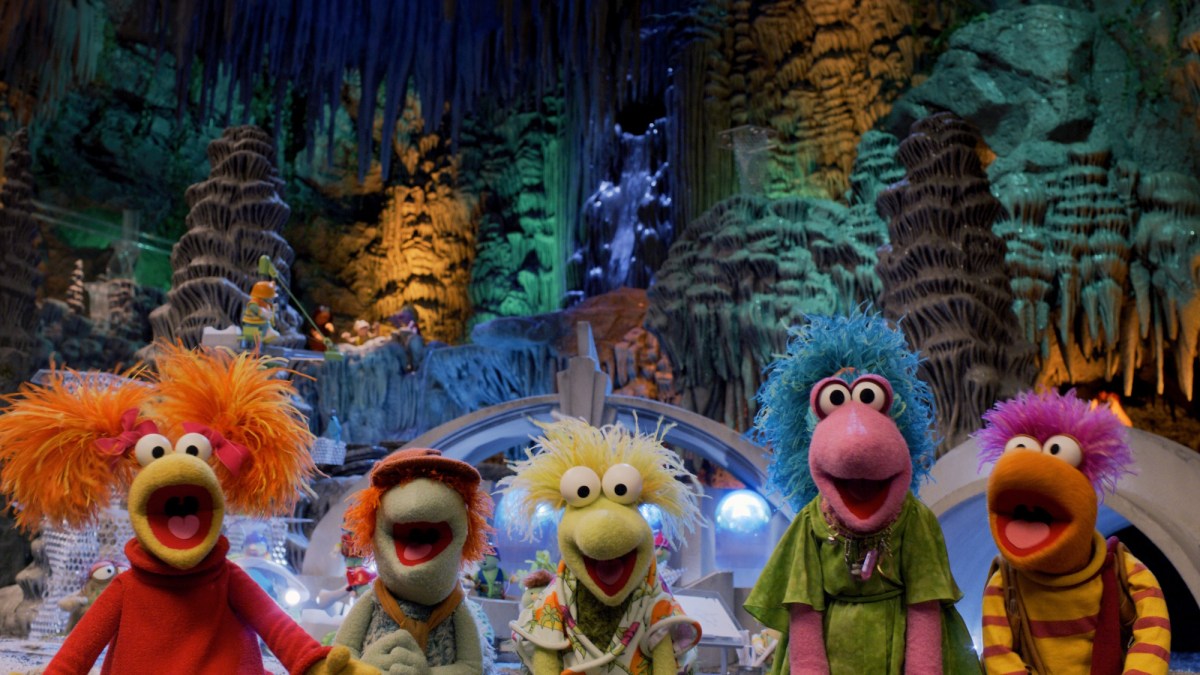
One world-first aspect of Make, Believe, Magic doesn’t hail from The Jim Henson Company’s archives, but from a current production: the Great Hall set from Fraggle Rock: Back to the Rock. Exhibition patrons can walk through a space that they’ve only ever seen on their TVs until now, not only stepping inside the Fraggle world but also enjoying the full puppeteer experience.
For Tartaglia, truly welcoming attendees behind the scenes ‘means a lot to me, because it’s what I would have dreamt of being able to experience when I was a kid and a Fraggle fan’.
‘It gives people a really tactile, clear and visual, experiential example of what we need to do to make these worlds come to life onscreen as puppeteers and as a puppet production.
‘It’s easy to read that all the sets are raised, or that we’re holding the puppet six feet off the ground, or that we’re pushing our arms through holes in the wall, or that we’re on different levels, all those things. But then to actually see it in person, it just gives you such a different perspective, and it gives you an appreciation of it.’
For Henson devotees and puppetry obsessives, ‘it’s a dream come true,’ says Tartaglia, ‘because you get to experience what we literally experience. It’s not a recreation, it’s the real thing.’
ScreenHub: ACMI to host Lifelike exhibit about puppets on screen
Slack-Smith is equally enthused, including about just how rare this chance is for Make, Believe, Magic visitors. ‘It’s a once in a lifetime opportunity – I think it’s a once in a lifetime for me opportunity,’ she says.
‘Not only is it the Fraggles, which is important, but to actually have authentic set pieces – and from a puppeteering set, which is different to a soundstage or a theatre set … It’s a bodily experience to actually be in the presence of something which is kissing the ceiling. It is over six metres tall. It’s eight to 10 metres one way, six the other. It’s a presence.
‘It’s the authenticity of that. They are the sets that they have used for two years to make the series. The puppeteers have scrawled on the back of them. There’s graffiti and all, like “Mokey for President!” and some really cute stuff. Because that’s a lived experience.
‘You don’t normally get to walk on these sets unless you’re a VIP or a journalist – and even that access is fairly limited, because they’re trying to get a show made.’
Behind the felt and fur
This is exactly what peering behind the curtain at the age-old storytelling vehicle that is puppetry, and at one of the medium’s biggest modern-day names, should offer, stresses Slack-Smith – especially today.
‘In a time when it’s a little amorphous about what we’re seeing and whether it’s real or not, [puppetry is] this ancient artform, which is so very much about now, and talking about things now,’ she says.
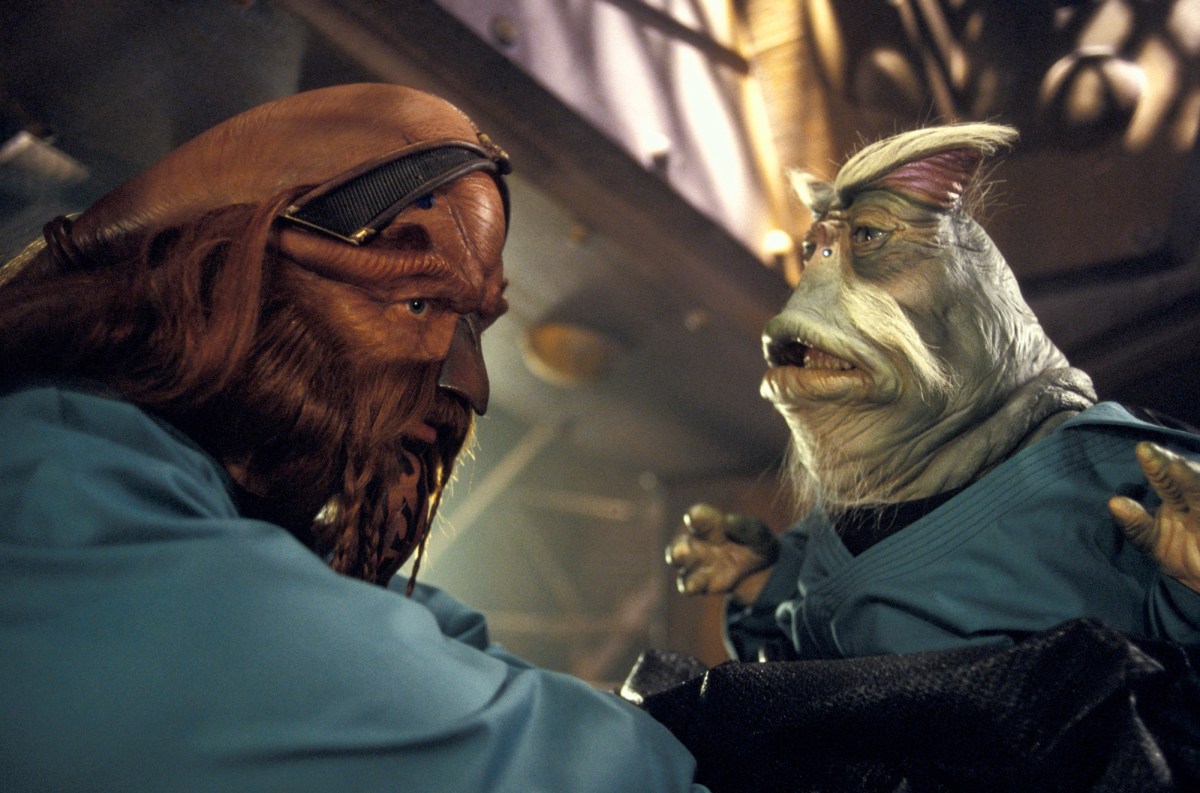
She adds, ‘On these puppets‚ even the shirts, they actually have proper buttonholes. The level of craftsmanship on these, it’s all very authentic, it’s very handmade.
‘And I think that’s timely for us to be able to go, “This is what’s important. The craft, the creativity, the artistry is important”.’
While The Jim Henson Company has never shied away from technology, including puppeteer-controlled live digital animation, Tartaglia says screen audiences today are ‘a little bit more in the know now than I think that they used to be’.
‘Everyone knows how blue screen works now. Everyone knows how computer graphics work,’ he says. ‘It’s not as impressive when you go to see a film anymore, when you see a big explosion or you see a giant, 80-foot-tall dinosaur. No one’s going, “How do they do that?” Everyone feels very “Oh, it’s CG” or “It’s special effects, or AI even”.
‘And so now I think puppetry is the last magic trick. You can see that it’s this creature made of foam or fleece or fur or latex, or whatever it’s made of. And you know that there’s a person manipulating it.
‘But for some reason, we are still willing to let our imaginations run wild and let that childlike wonder out, and still go for it and believe in it. ‘
Celebrating not just puppets, but the people who give them life
Tartaglia is also thrilled that Make, Believe, Magic encourages attendees to value not only the craftsmanship, but the collaboration that’s so essential as well. To create a single puppet, ‘just on the basic level, it takes a really great writer, it takes an incredible designer, it takes an incredible puppet builder, it takes the puppeteer,’ he says.
‘You might need an assistant – or two or three, depending on the puppet. And it takes an incredible director of photography to know how to film that puppet, and an incredible director. All these people shape that one singular thing you might see onscreen.’
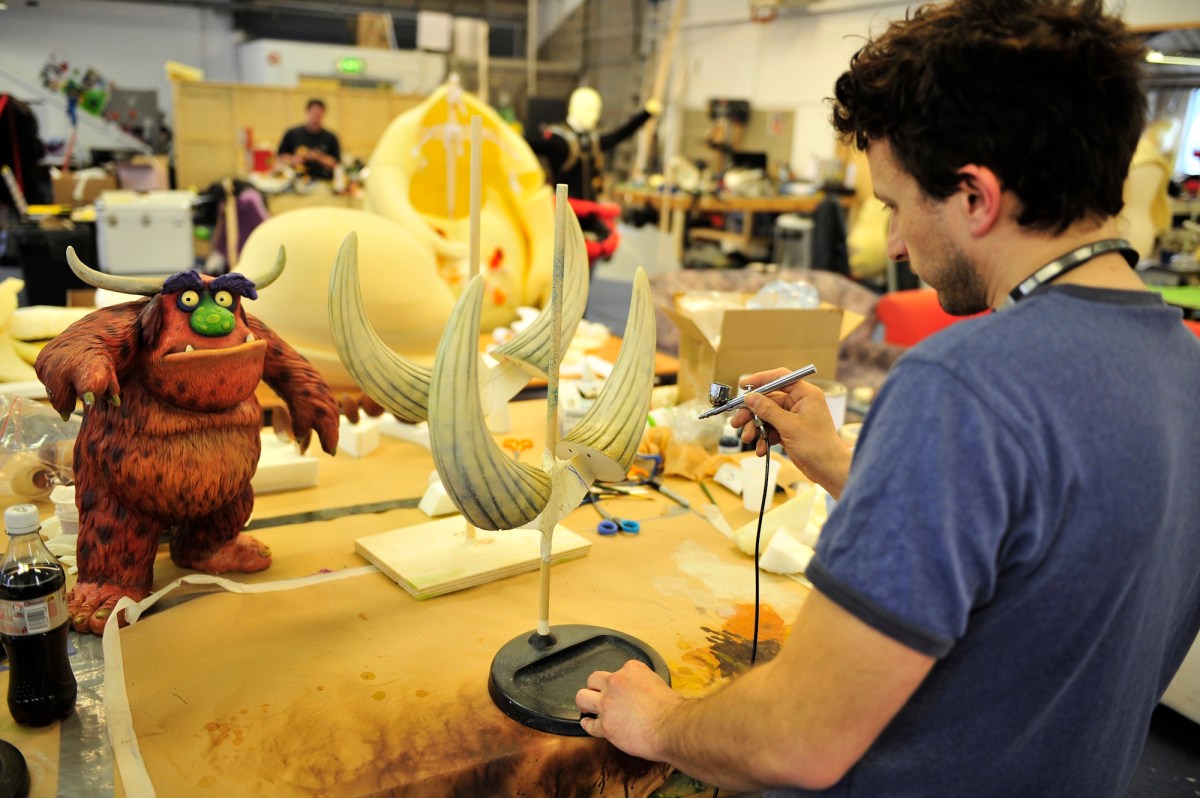
Honouring that fundamental element of puppetry, and of The Henson Company’s approach, is the perfect way to honour Henson himself, after all.
‘Jim was so smart to surround himself with really collaborative, generous, creative folks,’ says Tartaglia. ‘And I think that he trusted his team, that everyone’s ideas were welcome, and he created an environment where people felt like they could be their best selves.
‘And I think that contributes to making the best kind of art. I also think that really good characters have so many different layers.’
Ask Tartaglia why The Henson Company’s creations have endured – as both a lifelong fan and someone who began living his dream of working with their characters as a teenager, when he first became a Sesame Street puppeteer – and he comes back to that teamwork and the intricacy it inspires again and again.
‘As human beings, we have so many different sides to ourselves. No one is one thing or the other. We’re a bunch of things. And I think really good characters are the same way,’ he says.
‘Miss Piggy’s a great example of that. She’s only funny because she’s got all those vulnerabilities, and you know where they’re coming from. If she was only “hi-ya” all the time, it wouldn’t be as interesting. She wouldn’t be as long lasting as a character.’
ScreenHub: Miss Piggy isn’t just a fashion icon, she also charts the role of women
Tartaglia adds, ‘Good characters come from multiple places. And I do think that Jim just created all these worlds, all these great characters, that you just wanted to keep learning more about. And he had a team of people around him who believed in that and gave their best work to make that happen.’
The magic of reflecting humanity’s struggles, flaws and worries
Slack-Smith agrees, not just about The Henson Company’s creations, but about puppetry in general. ‘There is a level of joy and acceptance that comes with diving into puppeteering worlds, because they’re so relatable. They are flawed characters and that’s what we love about puppets,’ she says.
‘The performance is obviously drawn from the puppeteers and what they bring to it. But they are a conduit. And we get to talk about tough stuff if we want to.
‘You look at Fraggle Rock, and the focus audience for that is quite young, but we’re talking about climate hope, and we’re talking about working with others, and how I impact socially and [make] ripples, and what empathy is, and all those sort of things – which are not actually small things to talk about.’
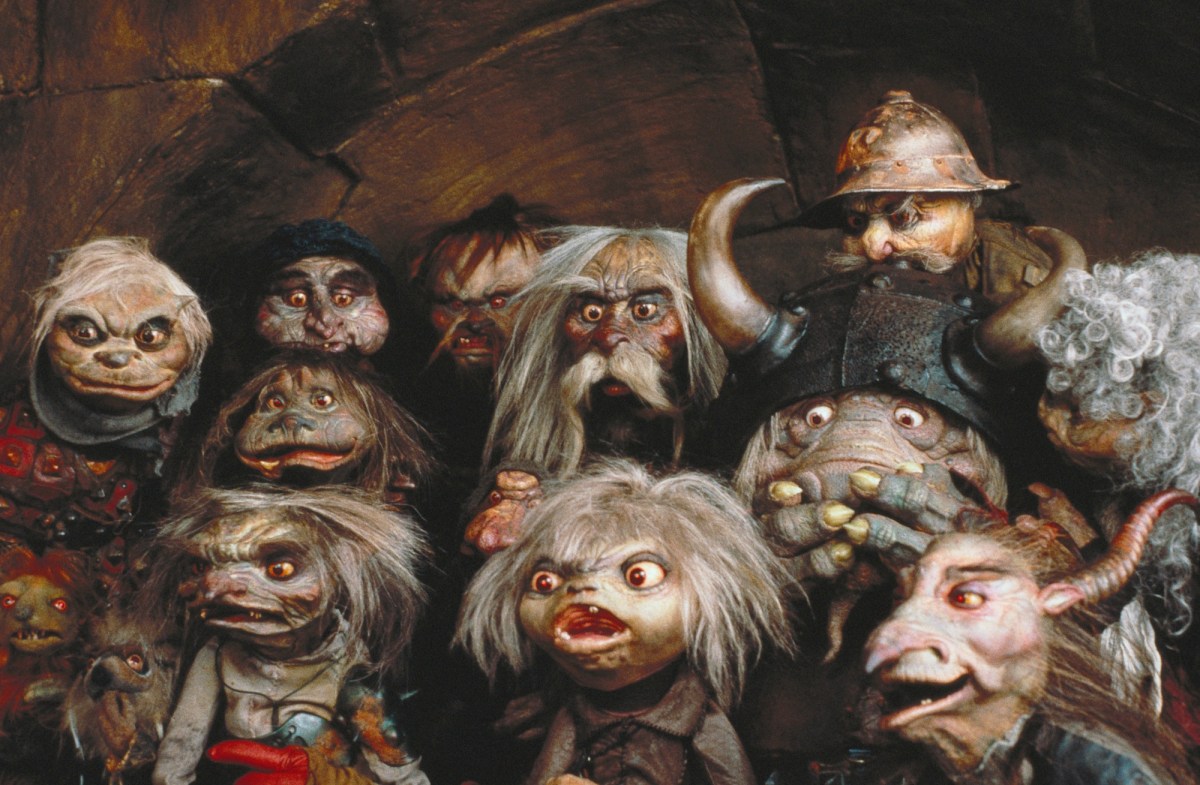
Slack-Smith adds, ‘But somehow with puppets, and also the way The Henson Company do it with music and all that joy, it packages the conversation in a way that is really relatable.
‘And I think that’s what puppets give us, that ability to have that connection, because what puppeteers are really bringing to the conversation is this mixture of magic and the everyday. It’s the alchemy.’
With both Slack-Smith and Tartaglia, ‘magic’ is a word that comes up often. It’s no wonder that QAGOMA’s exhibition puts the term right there in its name, or that demonstrating how broadly that magic shines across the screen, including beyond The Jim Henson Company’s best-known work, is firm a focus as well.
For Tartaglia, ‘I’ve been so blessed to be here since I was 16,’ he says. ‘I’ve worked for the company on and off, but pretty regularly. And to this day, there’s times where at the Creature Shop, someone will be like, “Remember when we did that film? We built the gorilla.” And I’m like, “Wait, we did that?”
‘It’s really an unbelievable amount of projects, and I think it just shows the versatility – of when Jim was around and now, too.’