There’s an assumption that if you want to make it as a comedian in Australia, you need to be in Sydney or Melbourne. But what if you could build a sustainable comedy career without living in a capital city?
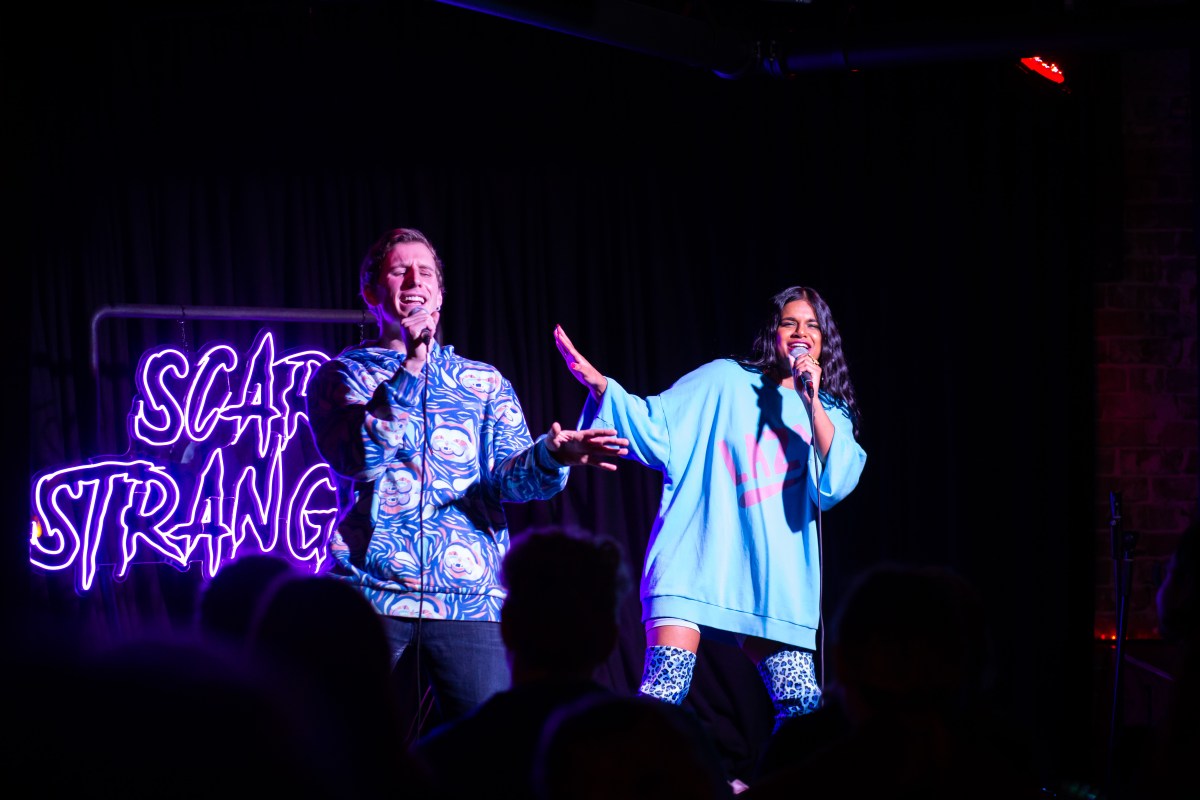
For Tom Stevenson and Ru Halwala – aka, acclaimed comedy duo Scary Strangers – taking a chance on moving to the Blue Mountains was an opportunity to build something new. But as they prepare to launch the region’s first dedicated comedy festival, they’ve discovered that creating a sustainable creative career outside a capital city takes more than finding an audience.
‘There are huge benefits to working in Sydney,’ Halwala tells ArtsHub. ‘We’ve had to keep a strong foot in both camps to be able to sustain our work and to sustain our business, which comes with challenges, but also opportunities.’
Scary Strangers Comedy Festival – quick links
From the world stage to the Blue Mountains
Partners in both comedy and in life, Stevenson and Halwala formed Scary Strangers in 2021, and have since grown a broad practice not only as performers, but as producers, educators and community builders.
Moving between stand-up, improvisation, sketch and musical comedy, their work has taken them around Australia and internationally – from making their way around the Indian comedy scene to the stages of major festivals, they’ve also delivered workshops for schools, juvenile detention centres, and are developing a program for people living with dementia.
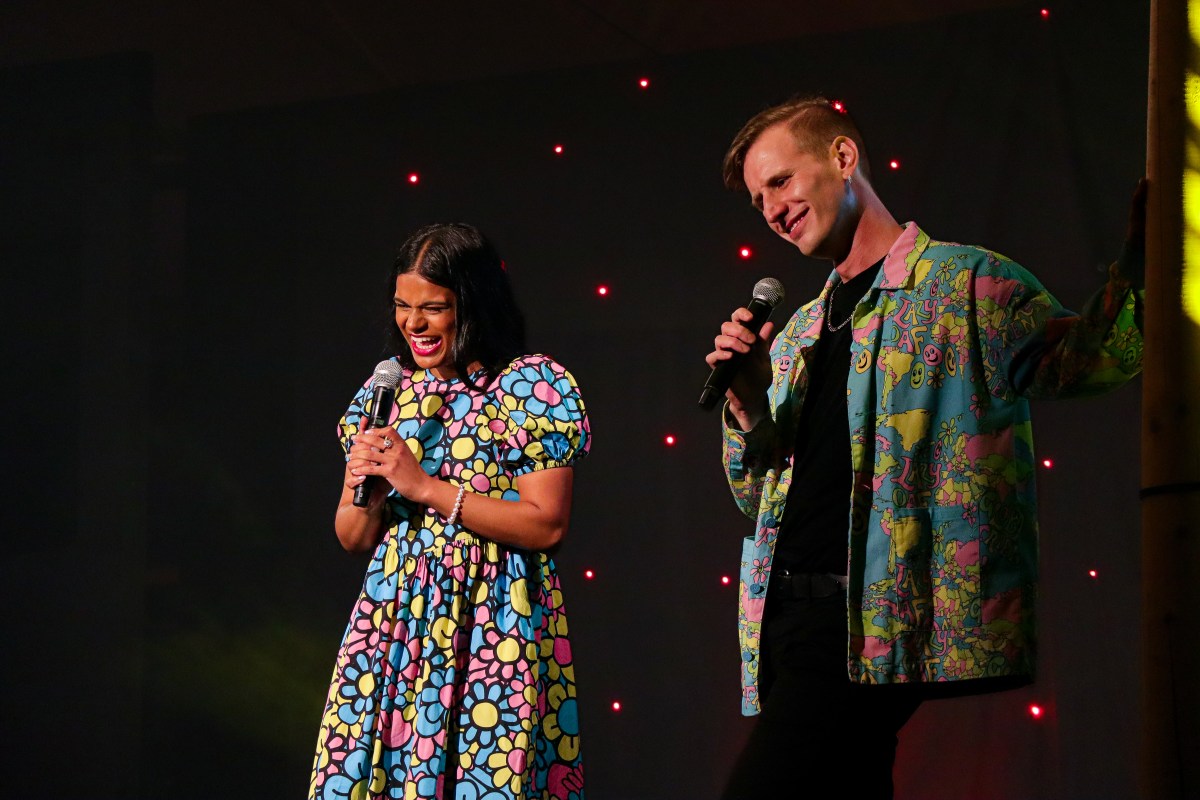
Now, the pair are putting those experiences to work in a new home. The inaugural Scary Strangers Comedy Festival runs from 15 to 18 October, bringing four days of performances, workshops, and community events to the Blue Mountains of New South Wales.
Supported by a Blue Mountains City of the Arts Trust Grant, the festival is intended as more than a new addition to the regional events calendar. For its founders, it is an experiment in what it takes to build a local comedy scene – and whether regional artists can develop viable careers without having to relocate to the big smoke.
Building a comedy community from the ground up
Stevenson and Halwala moved to the Blue Mountains in March 2025. Establishing themselves in a new creative community meant learning how the local arts ecosystem worked, finding the right contacts, and building relationships with audiences and potential collaborators.
‘It’s taken about 18 months’ worth of lobbying and building networks and relationships,’ Stevenson says of getting the festival off the ground.
The pair began running local improvisation jams in May, before securing council grant funding around the end of June. The resulting four-day program brings together an eclectic line-up of comedic talent with workshops and performance opportunities.
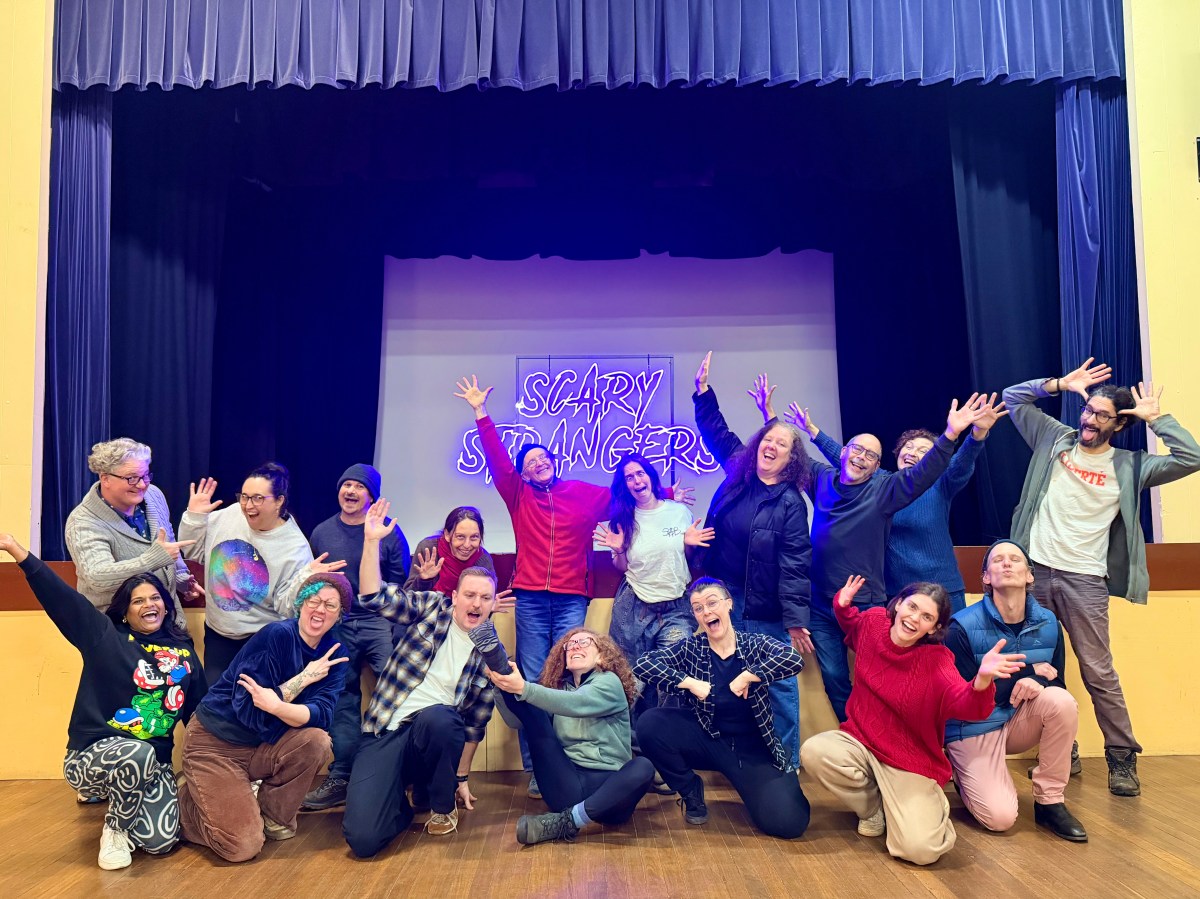
Among one of the most significant initiatives is an eight-week improvisation course culminating in a festival performance. Its participants will also form what the founders hope will become the area’s first improv ensemble troupe.
The line-up combines established performers with opportunities for local talent. Stand-up comedians Fady Casab, Ian Mu and Keeley Willis – all veterans of RAW Comedy – join the program, alongside Unplanned Melodies, a long-running musical improvisation troupe of which Stevenson and Halwala are members.
A sketch competition, community workshops, and a graduate showcase further broaden the festival beyond conventional ticketed performances.
The response so far has encouraged the founders. Halwala says participants have returned repeatedly for workshops and shows, with some signing up for almost the entire festival program.
‘So many people [have] said that it’s the best thing to happen in the Mountains in a long time,’ she says.
For a small, two-person operation, however, enthusiasm is only one part of the equation. The bigger question is how to turn that initial interest into regular opportunities for artists to make work, perform and get paid.
The advantages – and limitations – of working regionally
There can be tangible benefits to working outside a capital city, Halwala says. In the Blue Mountains, local businesses have been generous in helping to promote events, while community noticeboards and word-of-mouth networks can give emerging projects a visibility that is harder to achieve in Sydney.
Venues are another advantage. The community halls available to hire in the Mountains are, she says, considerably better than the spaces the pair could afford in Sydney for comparable prices.
But regional networks cannot compensate for a shortage of performance opportunities.
The pair have found that even when a gig is available in Sydney, getting there from Katoomba to perform a one-hour show and then travelling home can be difficult to fit around their other work, including teaching and producing.
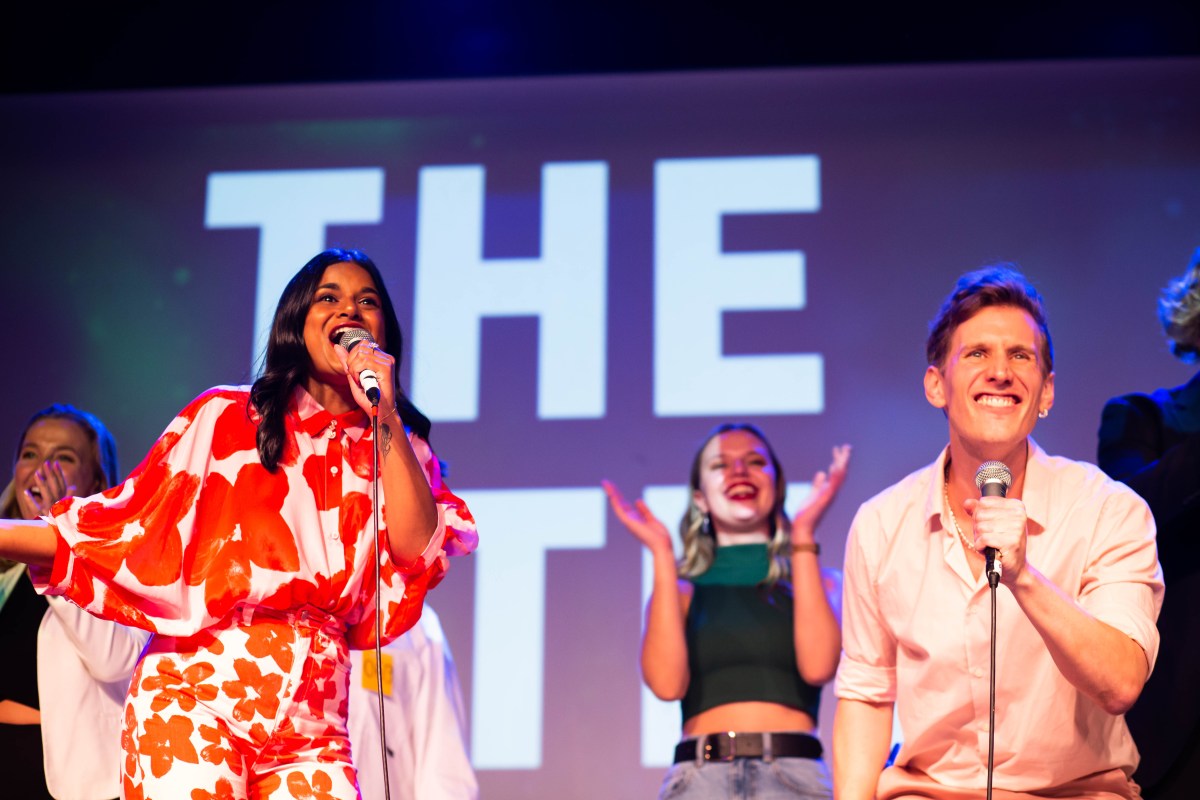
‘When we’re producing and organising all of these things, the amount of admin and logistics is like this,’ says Halwala, holding her arms out wide for emphasis. ‘And then the amount of actually doing the thing is this tiny little sliver that comes at the end.’
There is also the challenge of building a sufficiently large pool of local performers. In Sydney, artists can more readily find collaborators, join existing shows, and take advantage of one-off opportunities. In the Mountains, Stevenson and Halwala are developing those networks from scratch.
Their response is not to abandon Sydney, but to maintain connections with multiple communities. They are considering a more regular schedule of local performances, supplemented by quarterly shows in Sydney and Bathurst, to help make their work more sustainable while building audiences across the region.
It is a pragmatic approach to a question that can too easily be framed as a choice between city and country. For artists whose work depends on professional networks, audiences and collaborators, maintaining a foothold in both may be essential.
More than a comedy act
Scary Strangers’ ambitions extend beyond performing and producing shows. The pair are interested in comedy and improv in particular as a tool for building confidence, communication and connection – skills that can be useful well beyond the stage.
One of their early projects, The STEAM Room, trained scientists in stand-up comedy to help make their research more accessible to the public. With Dr Karl Kruszelnicki on board, the show toured nationally for two years, bringing science communication and comedy together.
They have also tailored improv workshops for young people in the juvenile justice system, and are developing a program for people living with dementia, which they say is seeing positive results in reactivating patients’ neural pathways.
For Stevenson, improv’s appeal lies partly in its collaborative nature. Coming from the precision-oriented world of musical theatre, he found the form liberating because it encourages participants to embrace mistakes rather than fear them.
‘In improv, all the mistakes are celebrated. So I found that as an artform really liberating,’ he says.
Halwala similarly describes improvisation as an accessible art form that requires little more than a group of people willing to participate. She has seen students discover it during significant life transitions, including moving to a new area, recovering from illness, or navigating a separation.
The shared creative experience can offer a way to meet people, develop friendships, and find a sense of community.
Beyond the community spirit, the pair’s approach to producing is one of fairness. They have made paying performers a priority across their productions, including the upcoming festival.
‘There are so many instances where [comedy is] donated – it’s volunteer time to get a performance opportunity, which I don’t really agree with,’ Halwala says.
For a regional creative ecosystem to be sustainable, the founders argue, opportunities need to be more than plentiful: they need to provide a pathway for artists to develop their practice and earn an income.
Can a festival sustain a year-round scene?
Despite the excitement around the inaugural event, Stevenson and Halwala are already considering whether a traditional annual festival is the most effective way to achieve their longer-term goals.
The Blue Mountains has no shortage of festivals, Halwala observes – from the Blue Mountains Writers Festival at the end of October, to Superposition, a new four-day arts festival that will celebrate its inaugural edition in November. But for Scary Strangers, she questions whether concentrating so much programming into a single weekend necessarily creates the year-round work that artists need.
There is also considerable pressure on a single event to succeed. Weather, bushfires, rising costs and competing demands on audiences can all threaten months of planning, particularly for a small independent producer without the resources of a large festival organisation.
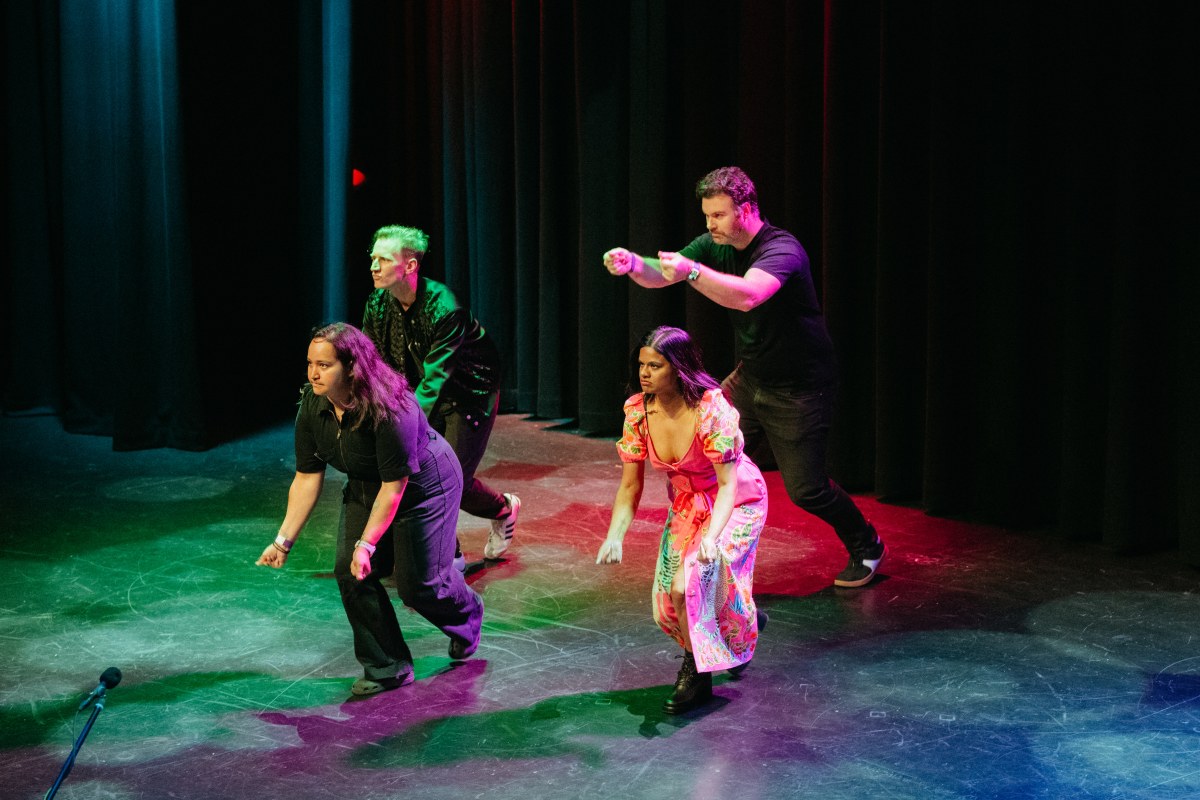
The pair are exploring a model in which individual festival days, each with their own themes and flagship events, could become standalone offerings spread across the year. Rather than relying on a single concentrated burst of activity, Scary Strangers could build a more consistent rhythm of performances and workshops.
It is a shift from thinking about a festival as the destination to treating it as a starting point.
The inaugural event will introduce local audiences to the possibilities of improv and comedy while giving emerging performers opportunities to collaborate, learn and perform. What happens afterwards will be the more revealing test of whether a new creative ecosystem is taking shape.
Neither Stevenson nor Halwala suggests that regional work is inherently easier, or that capital cities have nothing to offer. Their experience points to a more complicated reality: affordable spaces and strong local relationships can create real opportunities, but artists still need access to audiences, collaborators, paid work and professional networks.
For now, the pair are focused on building those connections – one show, workshop and improv jam at a time.
The festival may last four days, but the ambition is to create something that lasts considerably longer.