Australian director Brett Sullivan has spent years figuring out how to make live theatre work for the cinema – and Hadestown: The Musical might be his most captivating challenge yet.
For Sullivan, the journey from Sydney to becoming one of the international theatre-to-screen world’s most in-demand directors was hardly planned.
He and his production company Steam Motion initially made their name in music videos, commercials and documentaries after moving to London. Then came an unexpected commission to film a production of Wicked in Germany, opening the door to work with British theatre heavyweights including Cameron Mackintosh and Andrew Lloyd Webber.
He has since directed and produced notable pro-shots including Disney’s Newsies Live!, which broke US box office records for a live musical event at the cinema, and Frozen: The Broadway Musical, which became the number one most-streamed movie on Disney+ in Australia, the UK, and the USA.
Hadestown pro-shot director Brett Sullivan – quick links
Hadestown is officially the biggest pro-shot since Hamilton
Meanwhile, Hadestown has already surpassed Hamilton for the highest grossing opening weekend for a live theatre film in North America, bringing in $10.2-million USD during its debut weekend.
Sullivan has developed a distinctive approach to capturing stage productions for the screen: get closer to the performers, use the visual language of cinema, but never lose sight of the fact that what is happening is live theatre.
He describes it as ‘a bit of a dance between two worlds’.
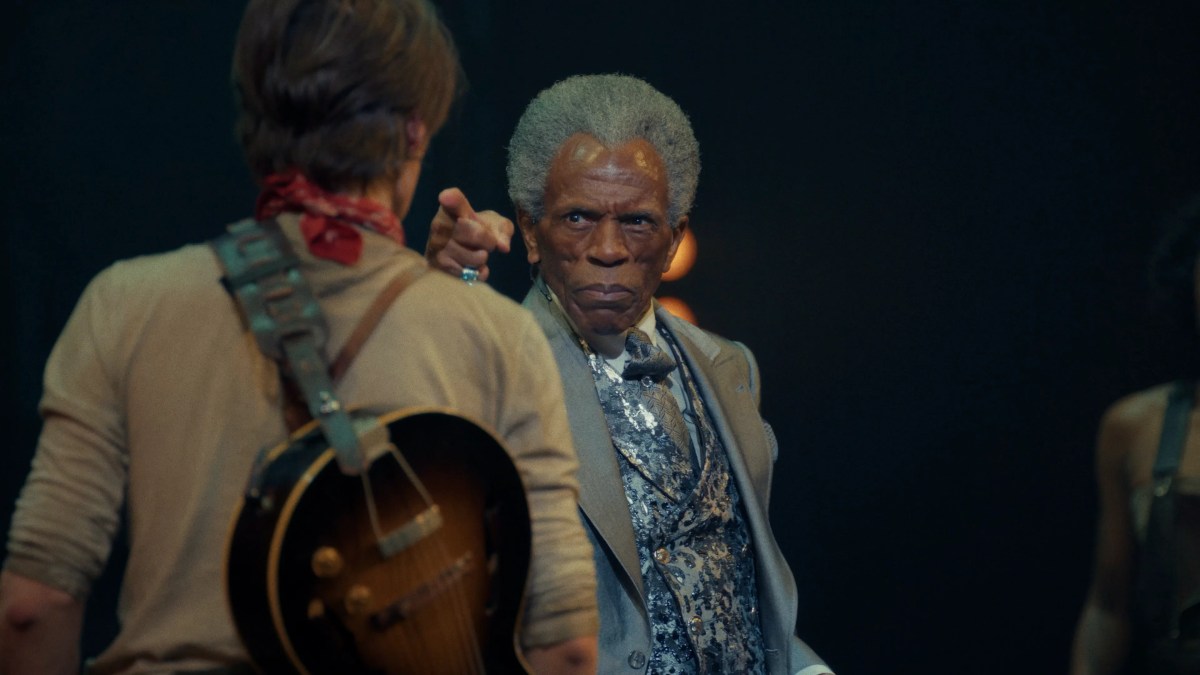
Hadestown: The Musical was filmed live at London’s Lyric Theatre with the original Broadway principals Reeve Carney, André De Shields, Amber Gray, Eva Noblezada and Patrick Page reprising their roles.
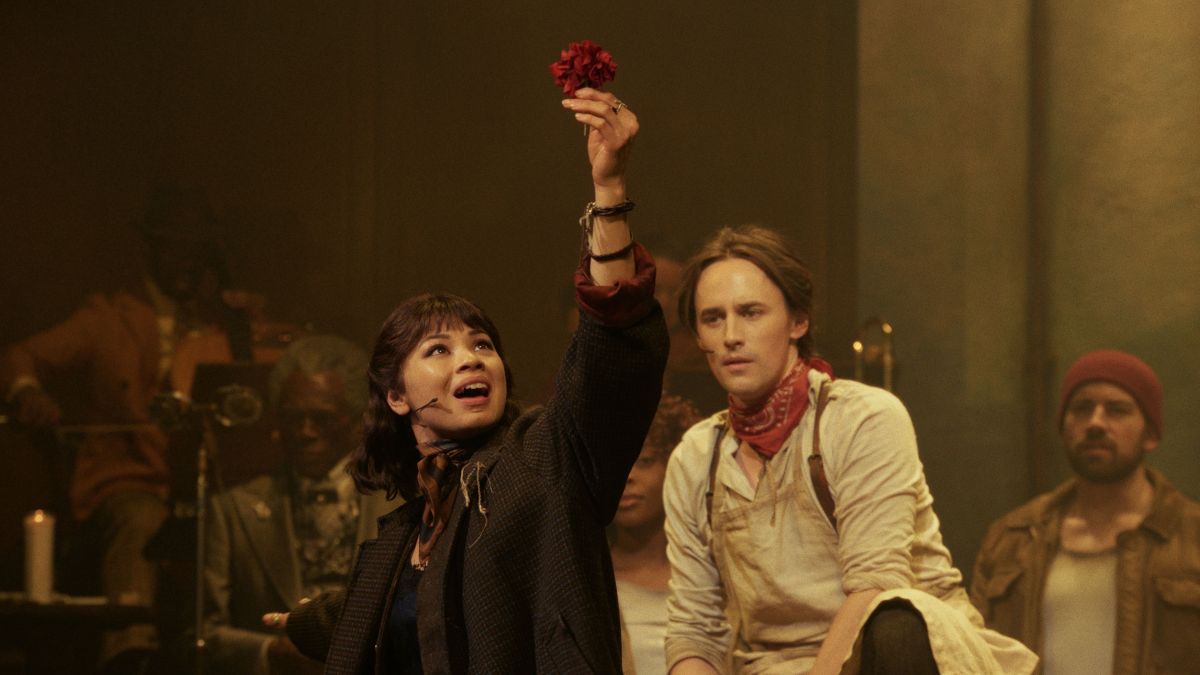
Hadestown reimagines two intertwined ancient Greek myths in a post-apocalyptic world with a New Orleans-style jazz, folk, and blues-infused score – and true fans will know that part of the magic is that it’s one of the few modern musical blockbusters where the performers can really put their own spin on the characters.
This means that if you loved the Australian production of Hadestown that toured in 2025, you’ll more than likely get a thrill out of seeing how the original Broadway cast ride that train in the pro-shot.
The result arrives in Australian and New Zealand cinemas for a limited time from 13 October – offering audiences who might never make it to Broadway or the West End a chance to experience the original cast of Anaïs Mitchell’s Tony- and Grammy-winning musical on the big screen.
Sullivan spoke to us about the peculiar art of filming live theatre, the cult appeal of Hadestown, and why the camera can reveal things even the actors themselves don’t see from the stage.
Director Brett Sullivan on taking Hadestown from stage to screen
What is it about Hadestown that you feel makes it particularly compelling to capture for the screen?
Brett Sullivan: I was introduced to it by my daughter. I listened to the songs and, to be honest with you, they didn’t sound like typical musical songs to me. It just sounded like a really strong album.
I was instantly drawn to the lyrics, but also the circular nature of the story. By the time you get to the last song, you just have tears in your eyes, particularly the way André De Shields sings it.
Then I saw the show on Broadway and instantly thought, ‘We’ve got to do this. We’ve got to figure out how to do this.’
It was quite a while, with the pandemic and everything, before that was able to happen. Fortunately, it did happen in London, and bringing the original Broadway principals over to work with the London cast was fantastic. Having that blend was really special.
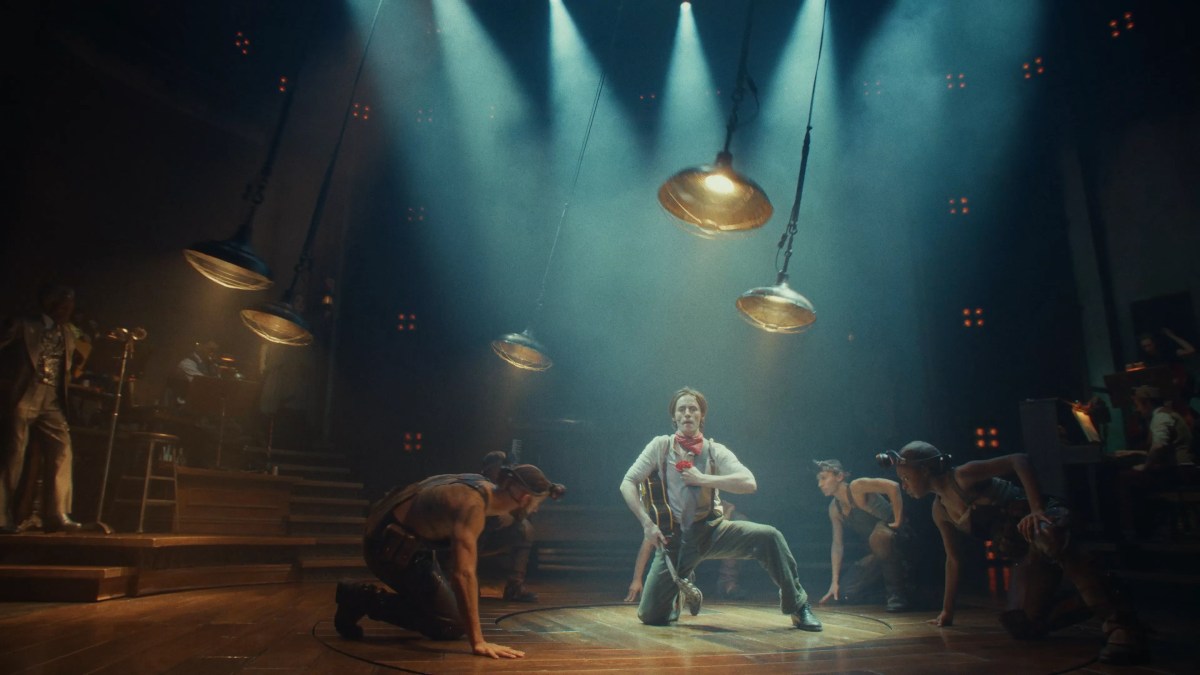
I think it was really the music that got me there, but also Rachel Chavkin’s really clever, fluid, circular staging, which was always flowing. It’s magic in a bottle, really.
The show leaves you thinking for days afterwards, which is why it has such a strong, loyal fanbase. It means a lot to people. The messages in it have so much depth, so people keep coming back to it.
The pro-shot brings together the original Broadway principal cast on the West End. What went into making that happen?
BS: It was obviously months in the planning. Everyone has their individual shows that they’re working on, so getting them back together was one thing. We also had to find a point where the UK cast was changing over so we weren’t interrupting that production.
Eventually a window became available. Some of the UK ensemble was kept on, and the Broadway cast had a couple of weeks to get used to the UK staging. The UK stage is just slightly different to the Broadway stage in terms of its dimensions, so they had to get used to that, as well as playing in front of UK crowds. Then we came in for the filming week.
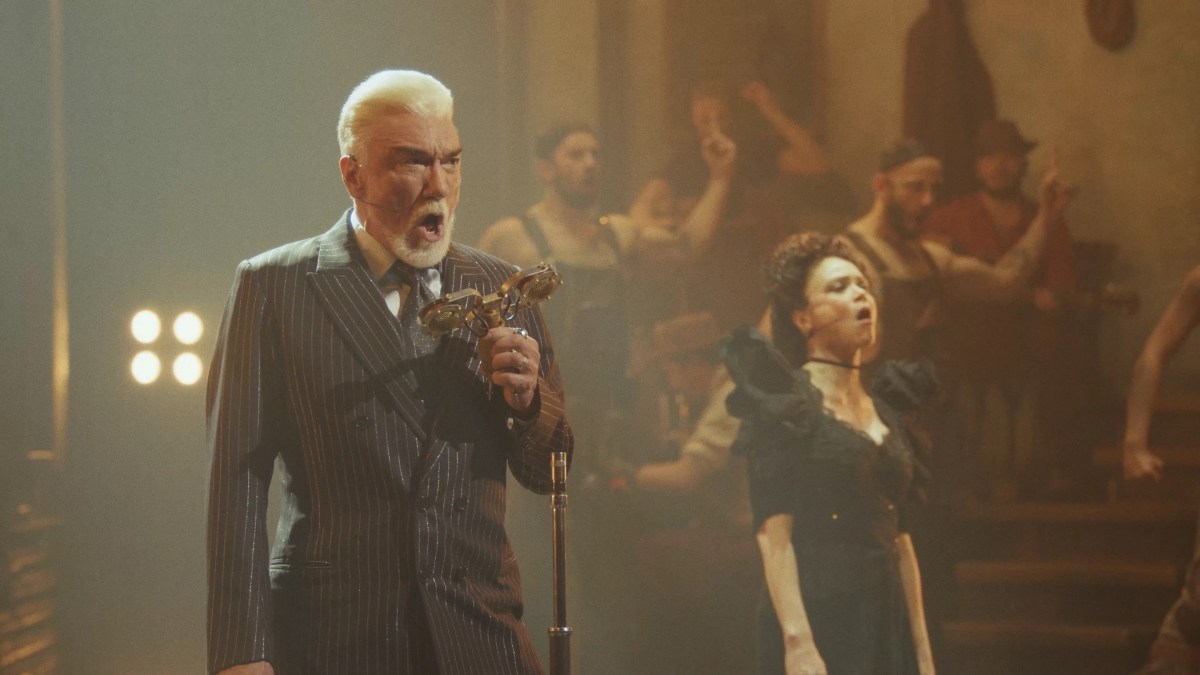
There were a lot of pieces that had to fall into place for it to happen. We were also very close to Patrick Page, who plays Hades, not joining us because he had an accident during rehearsals.
The filming itself was three days of setups and then three shows, so from the time you get in there to the time you get out is about a week.
How do you capture a live show for the screen without losing its atmosphere?
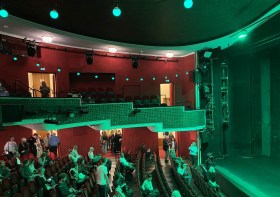
BS: It’s a combination of the live shows with the audience in there and then [what is essentially] a film studio setup, where there is no audience and we’re doing close-up work or particular camera angles that we just couldn’t get in a live show. Then, in the edit, we join those two worlds together so it feels seamless.
Having a live audience is critical. I don’t think I’ve ever done one where it’s not in front of a live audience at some point during the filming.
I generally try to leave that until the end of the filming schedule. It means the cast have gone through the setups and close-up work, and everything we’ve learnt during that period can then be employed in the live show. It’s also a great way to finish – just the adrenaline of it all.
The live show is the glue around everything else. It’s the essential part because, let’s face it, it is a live show. We need that audience. We need the sound of that room. It’s essential.
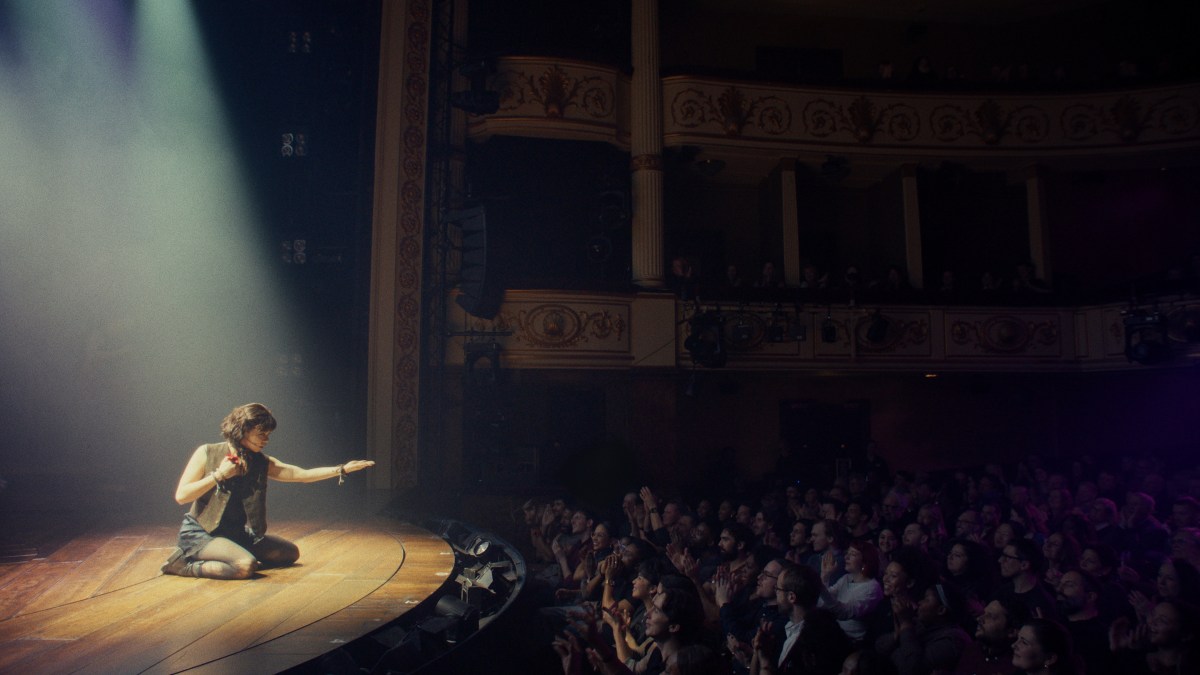
It’s a tricky dance. You want to honour what happens live, and you want to honour the risk that actors take in a live show. Every show is different. At the same time, you’re also making something for a screen.
When you’re watching something, you want to see close-ups and so forth, but you can also give the audience access that they just don’t have in the theatre. You can’t get close-ups or even camera angles that they can’t see.
I think it’s surprising even for the actors when they’re watching some of the playback. They’re seeing other actors this close in shots and going, ‘I didn’t know you did that.’ It can be a revelation to see the power of their acting in close-up.
Then we’ll cut to a wide shot to remind [the viewer]: hey, we’re on the stage, this is playing out live.
Do you see pro-shots as a growing trend? And what makes some musicals better suited to a live capture than a movie adaptation?
BS: If you’re taking it off the stage and doing a musical film, you’re almost starting from scratch. It’s a very different proposition.
With this type of thing, you’re keeping it on the stage. The staging [for Hadestown] has already been set by Rachel Chavkin, with the production design and choreography by David Newman. That’s all in place.
My challenge is how to get it to the screen in an entertaining way, and make people feel like they want to be in that room. That’s really my main goal.
Taking Hadestown and making it a movie musical in the sense of shooting on a studio lot is a very different proposition. TheWicked movies are a very different proposition – much, much bigger project, much more planning, and there’s also the reimagining of what that would look like.
When people watch the live show, they’re looking at what they want to look at. Even though it’s all a wide shot, your eyes are going where you want them to go. When you’re watching an edited version, you’re watching my edited version of that.
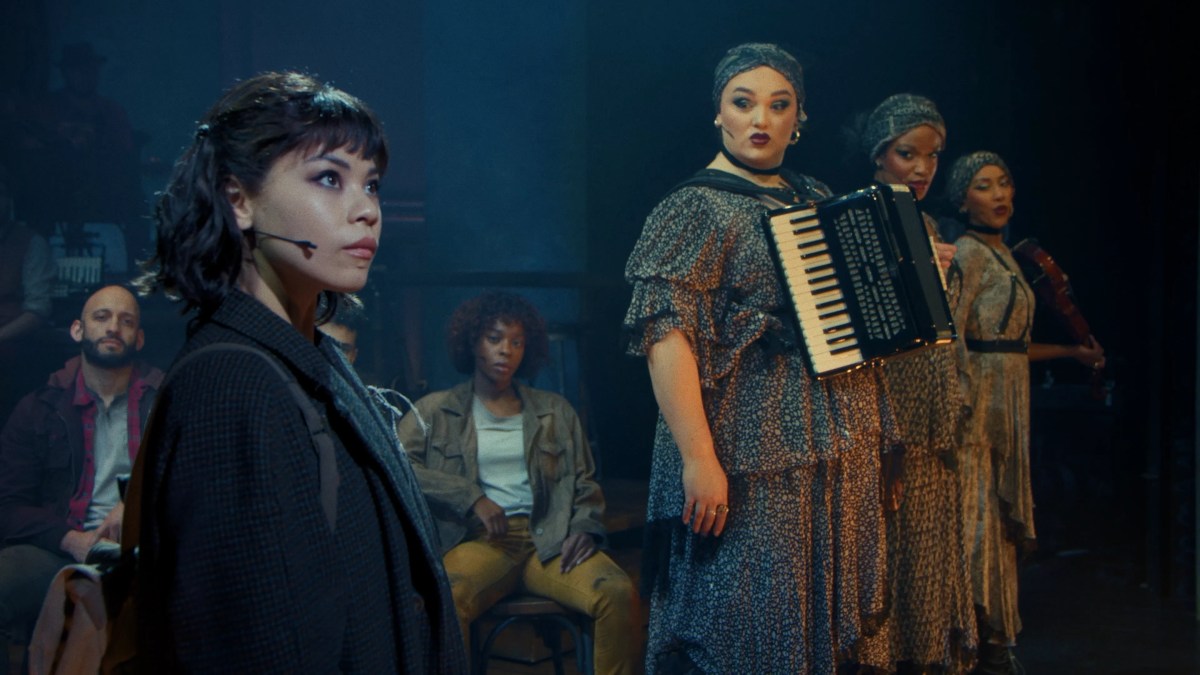
But the way I look at it, this is just a version of Hadestown. It’s not the version. Every single night is a different version.
I absolutely think it can help reach new audiences, particularly in regional centres where people can’t afford to get to town or don’t have the time to get to Broadway or the West End, or even if there’s a tour running.
Tickets are also pretty expensive to see these shows. If you’re having a family watch it on screen at home, that’s great. That access is easier.
Quite often what happens is that people then go and see the live show. Once they’ve watched the screen version, they’re into it, and they’ll try to get a ticket to see it live. So there’s a nice little bounce-back effect for the actual tour or live show.
That’s certainly the hope. In terms of the financials, it’s not really about sabotaging a tour or something like that; it’s actually about enhancing those ticket sales.
What was particularly tricky to capture in Hadestown?
BS: The trickiest part was probably that Patrick [Page] had an accident which affected his leg, meaning he couldn’t do his normal blocking in certain cases. So, very last-minute, we had to work out how we were going to get him up and down stairs. Literally as basic as that.
That was a technical challenge in terms of creatively working out how to cover something.
The turntable is another thing. Hadestown [is on a revolving stage] that spins quite a lot, so understanding the geography of where people are on that turntable can be tricky.
It’s important that we don’t lose the audience. We need them to know where people are, which means sometimes coming back to a wide shot to reframe: ‘Oh, that’s where everyone is.’ Then I can go in again.
Apart from that, creatively I was just very excited to work on it. The cast was so amazing.
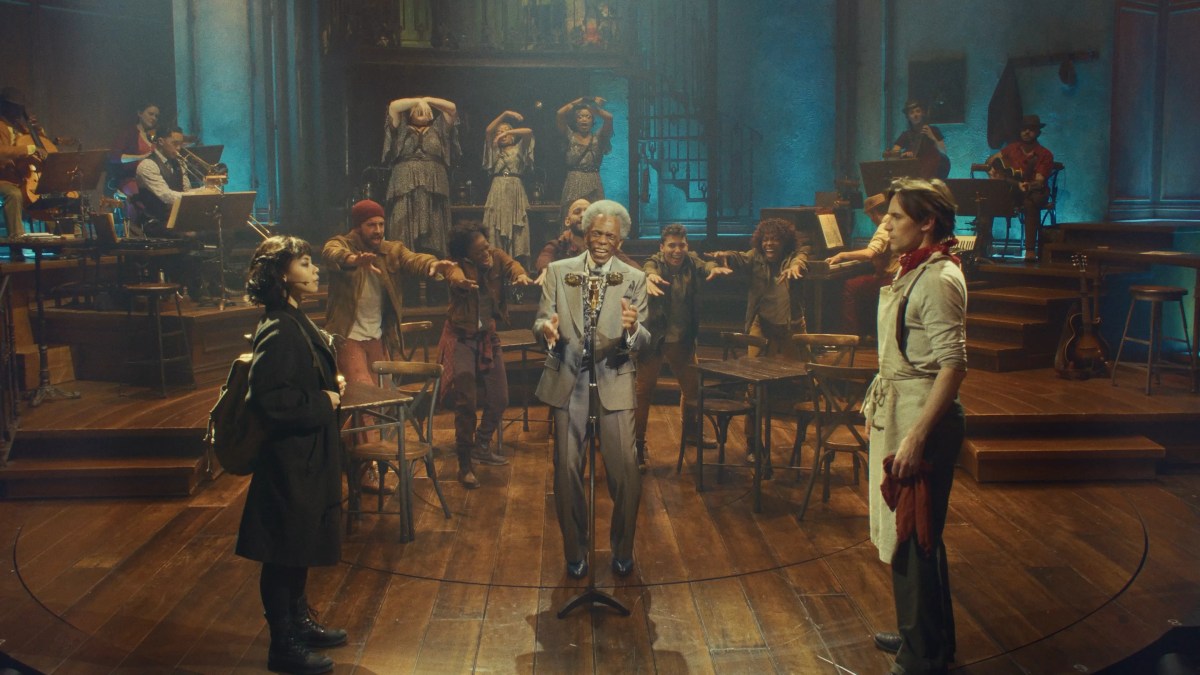
I love that Hermes, played by André De Shields, kind of breaks the fourth wall and tells this story. It gives us a sense that the audience is included in this.
In some cases, it almost feels like a concert or a gig. You have the camera at the back behind the heads of the audience, and you feel like you’re at a gig in that way. That was very deliberate.
When we sat down at the beginning with Anaïs Mitchell and Rachel [Chavkin], we talked about concert films we liked, and Stop Making Sense [the Talking Heads concert film] was top of mind. That was certainly a big influence for me.
At the beginning, we also sat down with producer Mara Isaacs and went through literally every beat of the show. Anaïs and Rachel had made this and lived through it for quite some time, so they were able to really brain-dump onto me what was important and what each beat really meant.
I would then go away and do a shooting script. Rachel was involved with the edit, and Anaïs was involved more with the sound mix.
What other live productions would you love to bring to the screen?
BS: I’ve done a few projects since Hadestown, although they haven’t come out yet. I’m actually in the middle of doing The Phantom of the Opera, which is quite a large one.
I’d love to do Les Misérables. I think the music is so incredible. The staging is quite simple, but I think it would really translate. We’ve shot it in short-form a whole bunch of times, but that’s one I would really love to do [in full].
And Moulin Rouge! [The Musical] is another one that I think would look spectacular on screen. Again, it’s one that really lends itself to making you feel like you’re in the club.
Hopefully one day I’ll get to work on those.
I’m just really happy that we were able to make Hadestown. When we first watched it back at Tribeca Film Festival, I was so nervous about playing it in front of an audience on the screen. [But] within the first five minutes, I was like, ‘OK, we’re OK. I think we’re going to get away with this.’
It was that moment of relief where you realise people get this. They’ll get this because the story and the music are just so good.