In partnership with the Sydney Fringe Festival, ArtsHub is sharing some of the best reviews to come through the festival’s Reviewer Lab. The lab supports emerging arts writers and critics, providing space for new voices and perspectives.
Earlier in the festival, we brought you six standout fringe reviews and now we check back in to see what else caught the attention of these talented emerging writers.
Sydney Fringe Reviewer Lab – quick links
ODIE
Reviewed by Rosana Bouzas
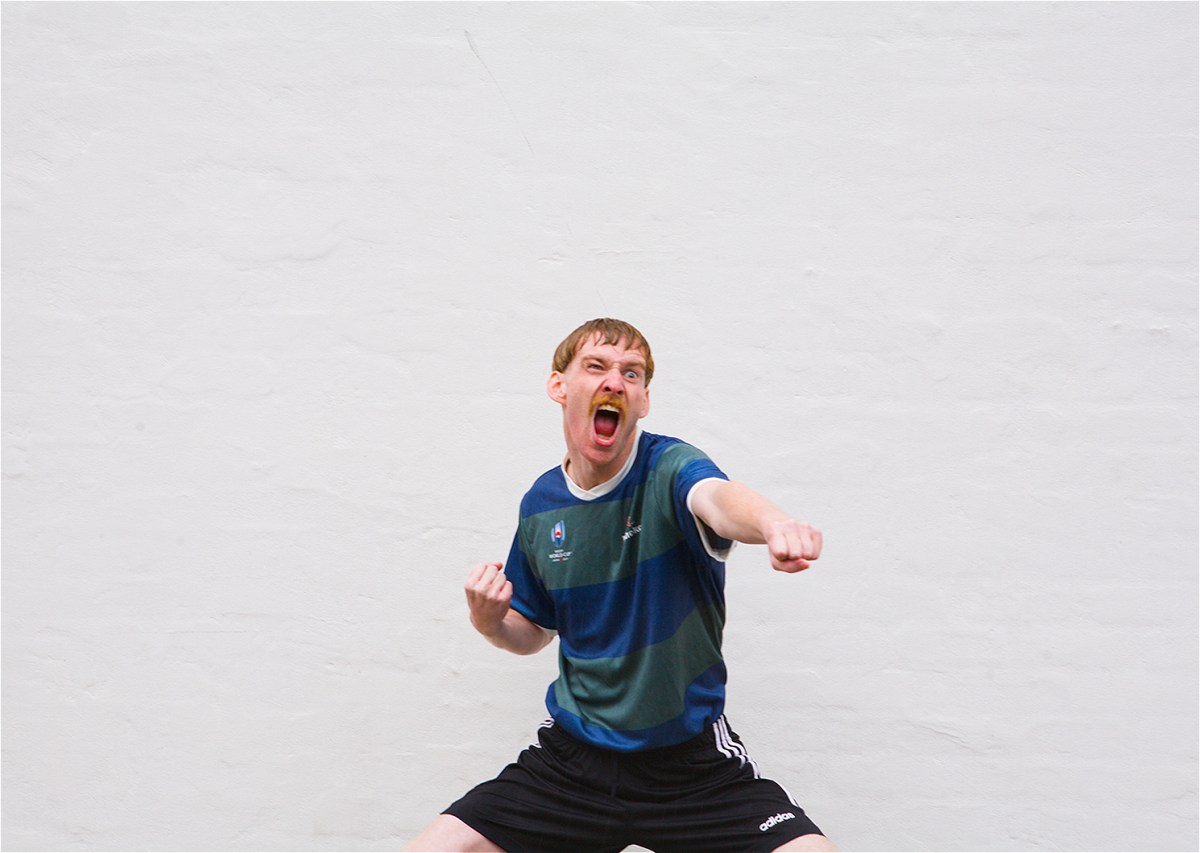
Ancient tales are often modernised to speak to contemporary anxieties. It’s nothing new, but the best adaptations always understand what makes the original story endure. Emrys Quin’s ODIE proves the point brilliantly. By translating Homer’s concerns around honour and identity into the language and rituals of Australian masculinity, Quin reveals how the quintessential Aussie bloke is no more than a mythologised ideal.
In a fast-paced, one-hour verse monologue, Quin maps Odie’s journey through the codes of Australian male culture: footy, boozing, partying, and gambling with your mates. Armed with little more than a plastic crate and a beer-soaked maroon NRL jersey, his highly physical performance is dynamic and very funny.
But ODIE is much more than The Odyssey with footy jokes. By reimagining the warrior culture at the heart of Homer’s world into modern Australian sports hooliganism, Quin astutely presents us with men who readily accept aggression and tribal loyalty, along with excessive drinking, partying, and gambling as part of the code that signals they are ‘one of the boys’. What Odie’s journey gradually exposes is how easily those accepted markers of masculinity tip into brutality, prejudice, complicity and self-destruction.
ODIE played at the Erskineville Town Hall as part of Sydney Fringe. Read Rosana Bouzas’ full review on the Sydney Fringe Feed.
Foul mouthed coot, permanent as party balloons.
Reviewed by Will Winter
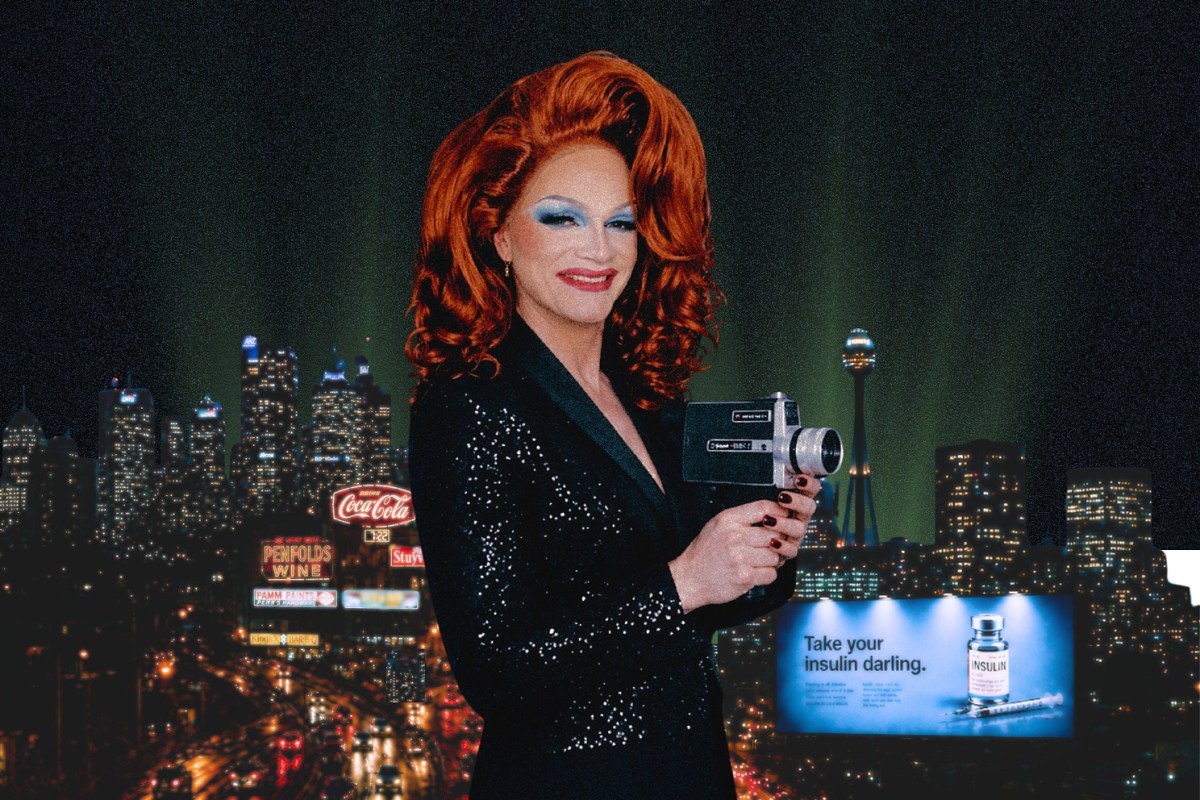
Cinema’s strength as a medium has always been its ability to tell real stories with heart and depth, teaching audiences about themselves and the world through narrative heft and striking visuals. It makes sense, then, that Coot, the almost-washed-up film director at the helm of an erotic musical sequel to The Wizard of Oz, wants to change the last act of the film to be a semi-autobiographical didactic saga about Dorothy learning to treat her recently-diagnosed gay diabetes.
Yes, there is such thing as ‘gay diabetes’ in the world of Foul mouthed coot, permanent as party balloons., Billy White’s one-woman show performing at Qtopia’s substation from 15 to 19 September. Coot, a storied Hollywood director on her last legs, is struggling to accept her recent medical diagnosis (of gay diabetes) while reflecting on her life and career. With her severely-parted wig and terrible screenplay in hand, Coot sets out to prove she’s still got directorial chops before the studio ages her out of fashion … As a character, Coot could have easily felt like a parody, but White’s earnest approach to her life and story in writing and performing makes her fully realised.
After her opening monologue, Coot spends the rest of the show flipping through various conversations with pre-recorded voices, dazzling at dinner parties and running auditions for the role of slutty Dorothy and horny Tin Man. Almost every line from Coot is delivered as a retort, but her lived-in underbelly remains strong … The entire show is incredibly high-concept, and there is some absolute camp on display by White, but Coot remained real, understated, and endearing throughout. That’s what made her so human and divine, her foul mouth and her genuine passion.
Foul mouthed coot, permanent as party balloons. played at Qtopia Sydney as part of Sydney Fringe. Read Will Winter’s full review on the Sydney Fringe Feed.
Motion Sickness
Reviewed by Matthew Donlan
Motion Sickness is the feeling you get when you scroll too long on social media. It’s the nauseating whiplash of seeing images of a genocide next to an AI ad for pool cleaners next to a red-pilled podcaster next to baby monkeys cuddling a toy. It is hypnotising, confronting and essential.
Writer and director Ben Ashby has meshed the end of the world with our digital age. In three distinct acts, Motion Sickness uses a pulsing electronic synth score, text-based projections and breakneck-speed performances to manifest three distinct theories on how the universe may end: the big rip, the big freeze and the big bounce.
Each theory is succinctly explained before its mechanisms are brought to life through sound, visuals and choreography, reaching a visceral simulation you can’t escape from but don’t want to leave … Motion Sickness is perhaps the best theatre show I have seen. It makes you want to scream and cry and kick in frustration with the world. It makes you ask why everything is so intense. Why it feels like the world will end at any moment. Why no one knows what they are doing or why they do it. It demands us to ask why can’t we just dance? And love? And lay on the beach looking up at the stars?
Motion Sickness played at New Theatre as part of Sydney Fringe. Read Matthew Donlan’s full review on the Sydney Fringe Feed.
The Sleepover
Reviewed by Grace Davidson-Lynch
The sleepover is classic story fodder for the modern horror genre – young girls, wide-eyed and wildly unsupervised, are easy pickings for your standard slasher or demon possession. The accompanying symbolism is also fairly trite. Teen girls in horror so often stand in for innocence or sexual depravity, and are so often slain in the name of making a point.
That might be the cultural context that The Sleepover – devised by HEAT PACK’s Fia Morrison, Georgia Condon, Alison Cooper, with filmmaker Jayden Rathsam Hua – stems from, but it is certainly not where it ends up. This play is instead a funny, bloody, and surprisingly touching interrogation of the existential horrors of girlhood.
The titular sleepover in HEAT PACK’s new show starts as a celebration of Fia’s 14th birthday, but from the jump there is an undeniable, unnerving tension that pulls you in. It’s not the sleepover of Fia’s dreams, and despite the Just Dance and charades and scary stories told in torchlight, Fia’s besties Al and G don’t seem engaged.
To divulge all the secrets of this show would be to ruin the fun, but the raw awkwardness of The Sleepover is immediately arresting, tapping into a deep-rooted anxiety that many former teenage girls will recognise … The quirky, uncomfortable energy of The Sleepover, as well as its fascinating story, production, and performances, made for an exhilarating night of theatre. It is a form-bending journey into the depths of adolescent madness, tinged with a distinctly digital strangeness and glittery nostalgia.
This reviewer lives in anticipation (and fear) of what kinds of madness HEAT PACK and Jayden Rathsam Hua will devise next.
The Sleepover played at Studio One UNSW as part of Sydney Fringe. Read Grace Davidson-Lynch’s full review on the Sydney Fringe Feed.