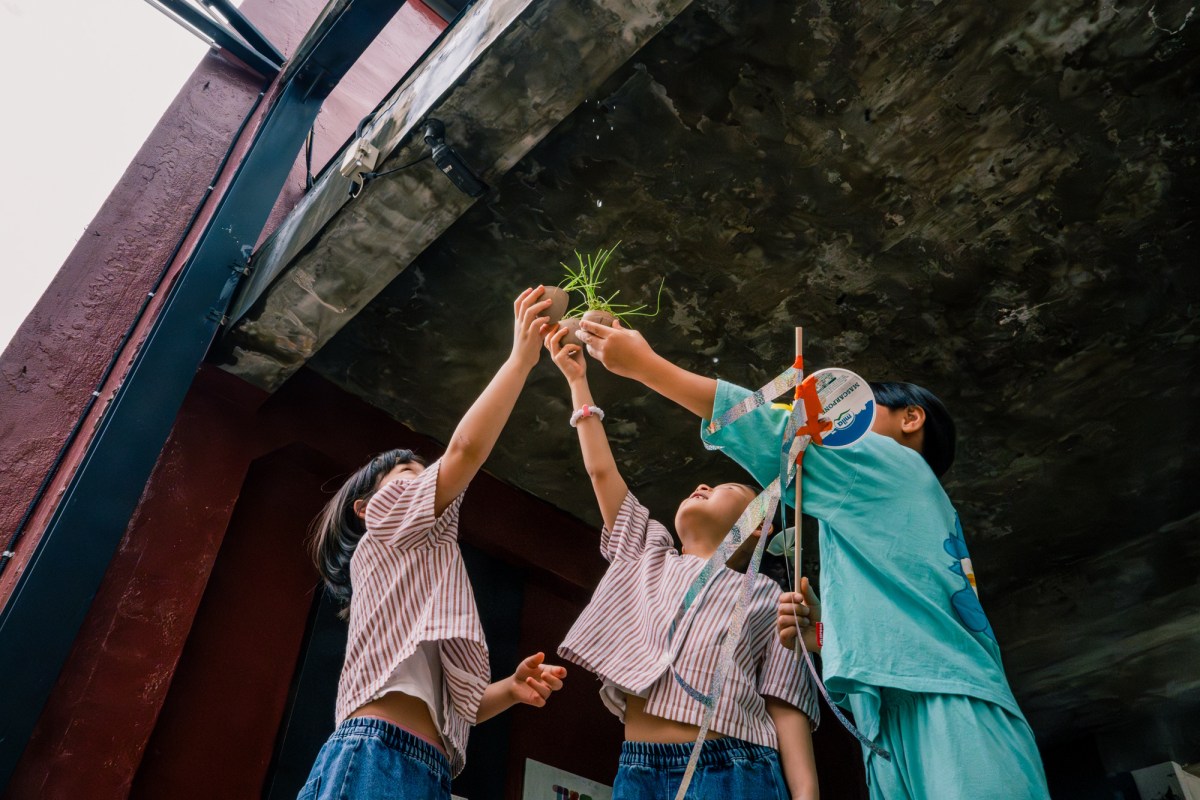
What can a child’s shadow communicate to another child in a different country? For the creative partnership between Melbourne and Jeonju in South Korea, the answer has involved movement, play, digital technology and the possibility of making a connection without sharing a spoken language.
Presented during Asia TOPA 2025, the Asia Pacific Triennial of Performing Arts, Shadows in Twin Cities 쌍둥이 도시의 그림자들 connected children in Melbourne and Jeonju through live digital interactions and public artworks.
The children’s creations appeared in cultural and public spaces across both cities, bringing an international partnership into everyday view and making the collaboration itself into an artwork. Earlier this year, the project was shortlisted for the 2026 Asia Pacific Arts Awards.
Shadows in Twin Cities was a striking expression of the ongoing partnership between Melbourne’s ArtPlay and the Jeonju Cultural Foundation that began back in 2020. What started as a way to exchange knowledge about children’s arts programming has developed over the years into a broader exchange of collaborative practice, with SIGNAL now helping extend the relationship to help artists and emerging creatives.
This week, that partnership is on show across a series of Melbourne events: the BiBim MixUp Showcase 비빔 of work by young makers; the Seedling Sessions 모종의 모임 professional development workshop for artists; and Imaginations Aglow 상상의 별빛 creative play sessions for children.
ArtPlay and SIGNAL – quick links
Cross-cultural collaboration
For Jeany Lee, Creative Producer at SIGNAL, the achievement is not simply about the projects they deliver, it’s about the relationships it has nurtured.
‘One of our greatest achievements has been building a strong and enduring creative team across Melbourne and Jeonju,’ says Lee. ‘Many of the artists, producers, interpreters and technical collaborators who worked together on our early projects have continued to collaborate, building trust, friendships and shared creative knowledge.’
That emphasis on long-term relationships distinguishes the exchange from many international art collaborations that are built around a single festival or event.
Here, the process of working together – of negotiating the cultural differences, testing ideas and initiatives and learning from one another – is as important as the creative outcomes.
Communicating through play and movement
Thousands of children and families have now participated in projects and presentations across the two cities.
In Shadows in Twin Cities, children could communicate through images, movement and play rather than needing a shared language. The simplicity of that approach is part of its appeal, but it also raises interesting questions about how arts participation can help children see themselves as contributors to cultural life, rather than just having a more passive role as the audience.
Lee says both communities see children as the future builders and leaders of their communities. The partnership puts that principle into practice by giving children meaningful opportunities to make, share and encounter creative work with other children, at home and internationally.
Growing new ideas
It also recognises that sustainable creative exchange requires time for artists to develop their own relationships. Established in 2023, the Seedling Sessions 모종의 모임 bring artists from Melbourne and Jeonju together for peer learning, experimentation and the shared development of participatory artworks for children.
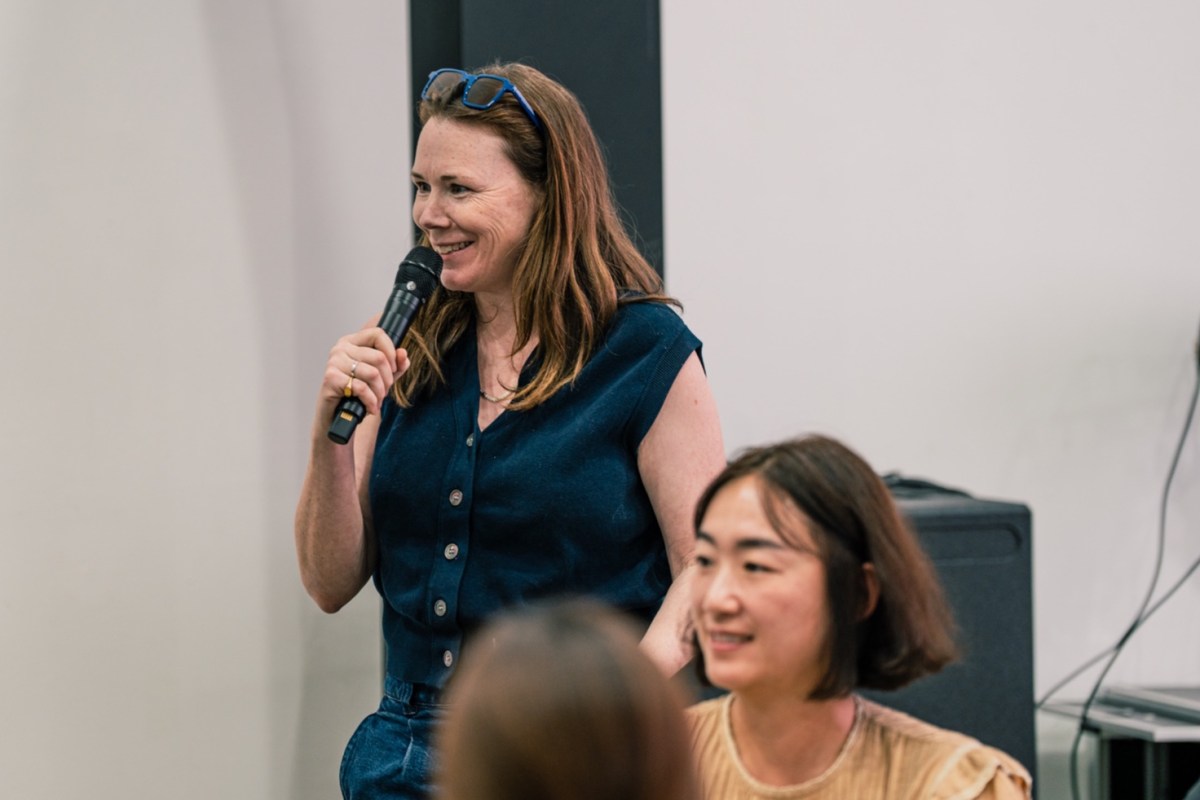
In its 2025-26 iteration, three artists from each city were selected to collaborate through online sessions and an in-person residency in Jeonju in September 2025.
This month, they will present their work in Melbourne, with public presentations of Imaginations Aglow 상상의 별빛. This is an interactive installation where children are invited to converse with their dream selves, invent companions from recycled materials, and nurture networks of connection between people and nature.
On 17 and 18 October, there will be four free drop-in sessions for children aged 5 to 9, held as part of the Melbourne Fringe.
Artist Hannah Liddeaux is one of the creators of Imaginations Aglow. ‘Experimental art often involves some kind of sensory immersion, and this is a state that children are already deeply familiar with,’ she says. ‘They are experts at making a given world their own.’
Liddeaux believes that children should not sit at the margins of contemporary culture. ‘Children have their own rich histories and cultures that should be central to our creative and cultural ecology,’ she says.
Positioning young people as co-creators
The next phase of the partnership is BiBim MixUp 비빔, a residency for nine artists from Melbourne and nine from Korea with a public showcase on 17 October. This extends the model to young creatives, inviting them to become co-creators, rather than observers, in an international exchange. BiBim MixUp is a significant shift, moving the partnership on to create opportunities for emerging practitioners to create works across cultures, generations and artistic practices.
Supported by numerous organisations – including the Australia-Korea Foundation; the Korean Ministry of Culture, Sports and Tourism; and Creative Australia – the collaboration shows that cultural diplomacy doesn’t always need grand gestures or formal exchanges.
Instead, it can be expressed through harnessing long-term partnerships, making work together, building a deep understanding of each other’s perspectives, and building valuable relationships that continue long after the event has ended and the audience has gone home.
The lasting value of the ArtPlay and SIGNAL partnership comes from discovering what can be achieved when creatives come together across time and place. As Lee says, ‘The experience has strengthened professional relationships and friendships across the two cities. These relationships have continued beyond individual projects and have become an important foundation for future collaborations.’