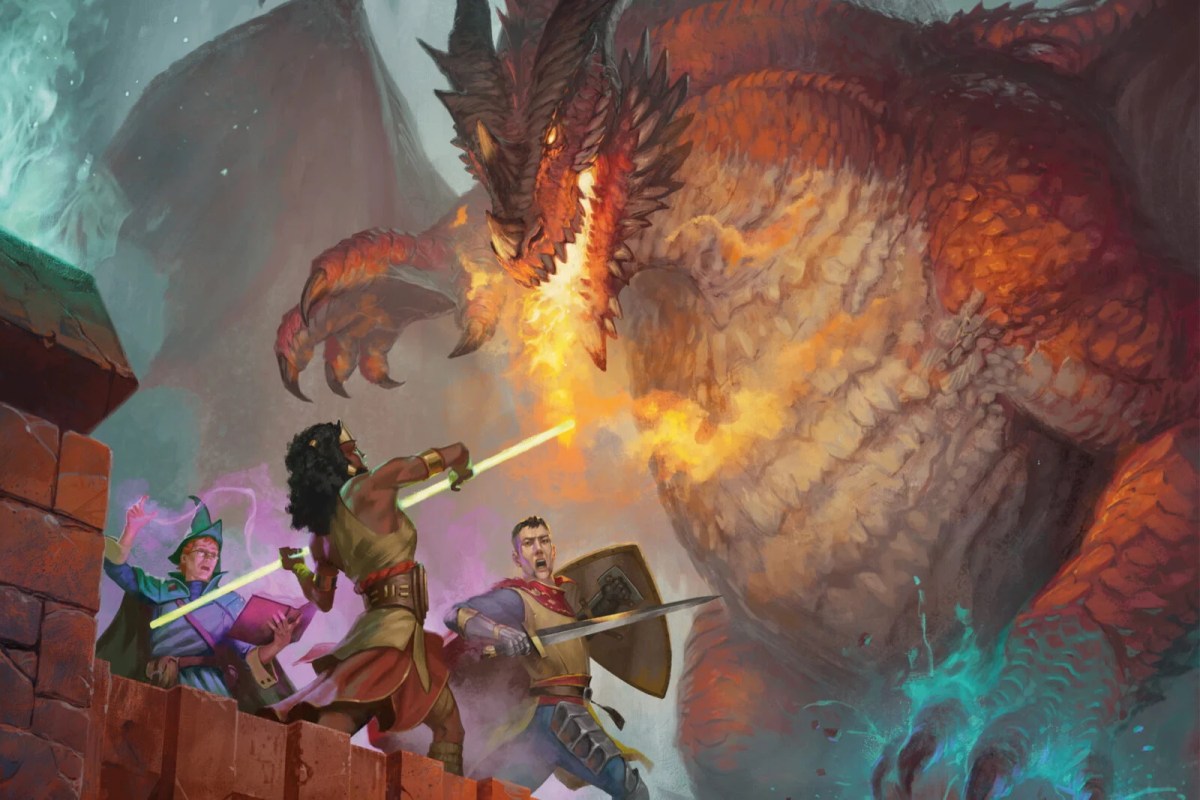
Dungeons & Dragons, once considered a tool of the devil, promises an escape into high fantasy worlds, where imagination drives magical roleplay through a colourful, creature-filled world.
Misunderstanding of the game and what it allowed players of all ages to experience briefly led to a well-publicised ‘satanic panic‘ in the 1980s, as concerned parents and religious groups rallied against the game and its depiction of fantasy.
The game was constantly dogged by allegations of encouraging witchcraft, satanism, voodoo, blasphemy, cannibalism, gambling, and more.
It wasn’t until many decades later – through word of mouth, growing understanding of games, and depictions in popular media – that Dungeons & Dragons was better understood, as a carriage for players to image new worlds, transport themselves, collaborate with friends, and even learn new skills.
And then, of course, there was the popularity of Netflix smash-hit Stranger Things, described in some quarters as a ‘giant advertising campaign‘ for D&D, which did wonders for the game’s cachet, spawning Strangers Things editions of the basic D&D rules and other marketing tie-ins.
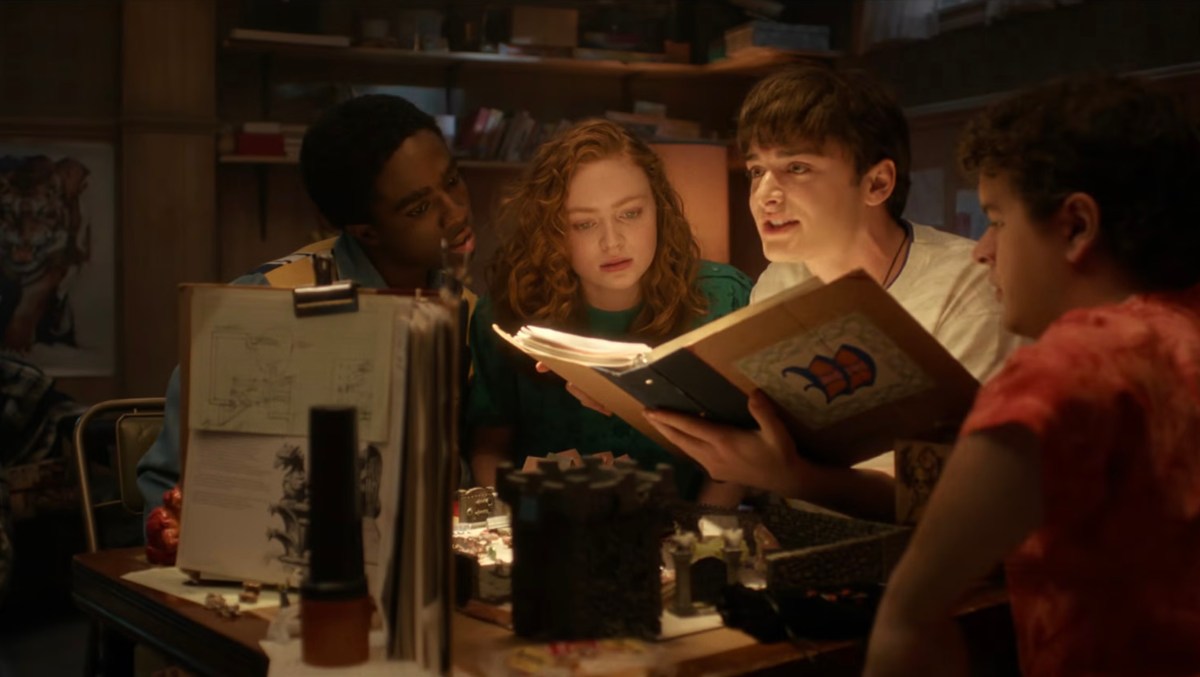
As a player-driven game, the power of imagination is in the hands of the individual.
The structure and style of Dungeons & Dragons actually makes it a wonderful tool for education, and slowly, its principles are being adopted in classroom settings. All these years later, D&D has become an incredibly valuable tool for teaching children and students of all ages.
In fact, owner Wizards of the Coast now even offers education resources for teachers looking to integrate it into the classroom.
How Dungeons & Dragons can help in the classroom – quick links
New learning design principles have been inspired by Dungeons & Dragons
Learning designer and gamification expert Claire Seldon was raised on Dungeons & Dragons, to the point where it ‘framed the entirety of her existence’. Her parents were big fans of the game, and taught the value of imaginative play, adventure, and working how to ‘win’ within structures determined by rules.
She believes Dungeons & Dragons has shaped her approach to practical learning design in the classroom, with the game actually serving as an valuable lesson about how to transmit knowledge and encourage learning in a more tangible, engaging way.
Early into her career as an educator and learning designer, Seldon found resonance within the ideas of Montessori-style learning, where teachers act as a ‘guide by the side’ to foster the engagement and interest of children. This approach is about learning from multiple facets, and allowing children to guide their own research and experimentation – an approach shared by Dungeons & Dragons.
Leaning into aspects of play to expand on this learning style, allowing children to harness their own interests and excitement, proved to be the most fruitful and rewarding methods of teaching for Seldon, whose work has shaped curriculums.
‘Almost all animals will play,’ Seldon tells ScreenHub.
‘Why do lion clubs play? What are they doing? They’re practising the skills they need for life. So, why would humans be any different?’
‘If you look at little kids, what are they playing? They’re mimicking adult behaviours. They’re cleaning the house. They’re pretending to run a business. They will pretend-play schools.’
Children often learn through play
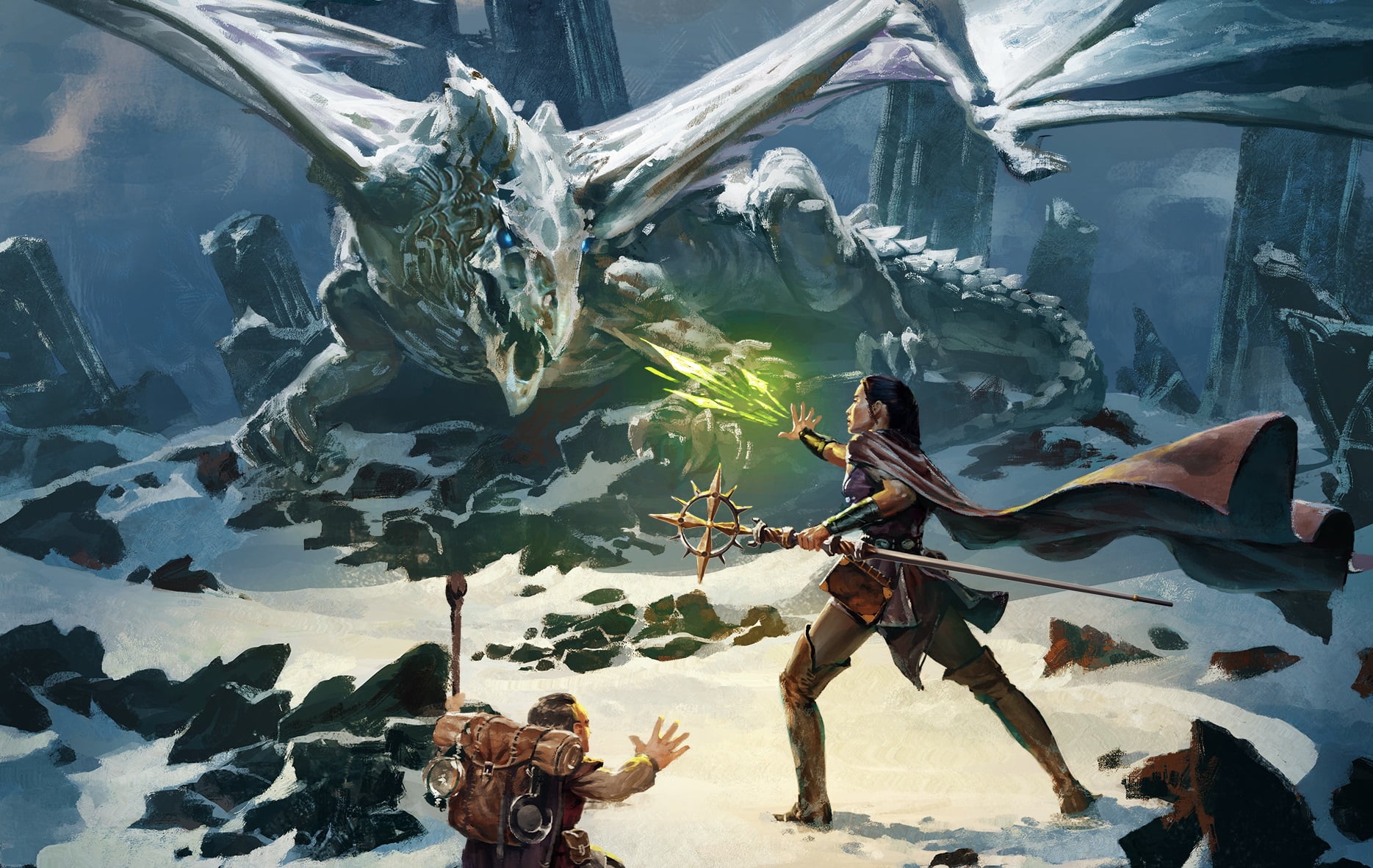
Children often learn by imagining the doing, and gain confidence from the act. As Seldon explains, even in play, children are purposeful. They’re rehearsing physically and mentally, and are more deeply engaged in their play and its intentionality. In that state, they’re always learning.
Roleplaying games elevate that engagement in a different manner, as they require kids to put a piece of themselves into their learning and play. It’s an entirely engaging system, and one where agency is key to education retention.
As Seldon told ScreenHub, her experiences as an educator and learning designer began with creating her own D&D adventures to share at pop culture conventions.
‘I’d design these [roleplay experiences] then go to the convention and run them in sessions, 12 times, for 12 different groups of people,’ Seldon says. ‘That’s kind of what teaching is.’
The same principles that back D&D can be seen in the world of teaching, worldwide. A leader at the front of the classroom guides children through various scenarios, challenging them and teaching them valuable skills along the way.
It’s why the game is so impactful as a learning tool, with education able to be somewhat ‘disguised’ or otherwise entrenched within the bounds of the game. And by engaging a child’s innate desire to play, the lessons intended can be taught with more care.
Put into one magical scenario or another, children can be taught valuable skills of teamwork and listening to their peers. They can learn to strengthen their imagination and visual conceptualising. They can learn to verbalise their ideas and goals.
On a basic level, roleplay presents an escape. But there is a deeper complexity here, as valuable skills can be taught and absorbed through engaging imaginitive play.
As Bec West, Queensland-based principal and creator of the Talkin’ Chalk content series shared in her own experiences using the game in the classroom, integrating Dungeons & Dragons into the classroom can teach even reluctant learners about writing and imagining, inviting them to experience new forms of play with a strategic, careful approach.
‘They have gone from being those reluctant writers at the beginning of the year to wanting to sit down and mind-map,’ West says of her students. ‘They want to put their ideas on paper.’
‘They understand that the pencil in their hand isn’t a barrier anymore. It’s a tool, it’s a weapon. It’s something they can fight, and battle, and journey, and cast, and do all sorts of wonderful things, with.’
The learning approach of ‘Mantle of the Expert’
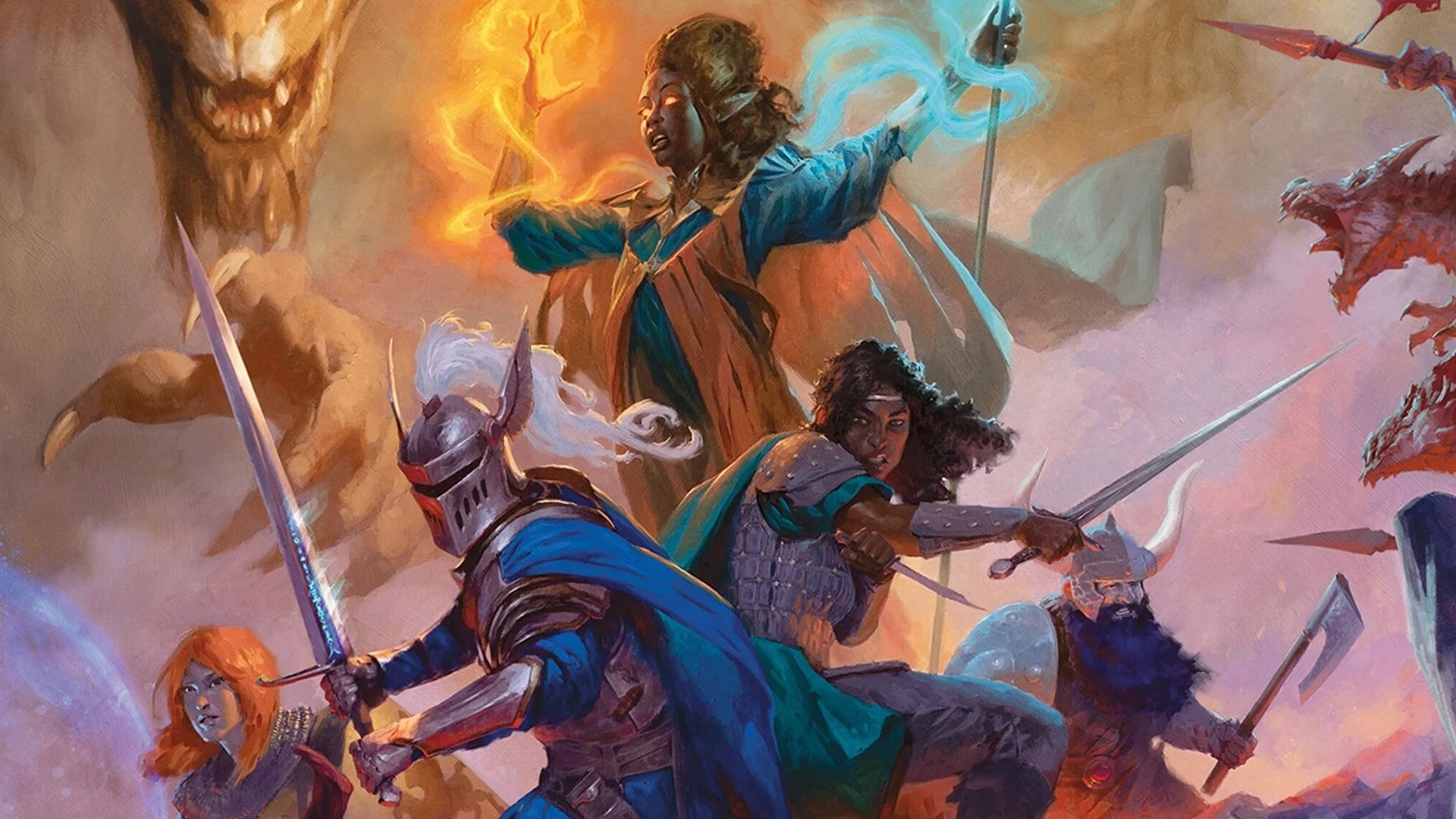
The ‘Mantle of the Expert’ learning approach is one particular emerging style that engages roleplay in this manner, as a means to teach children valuable skills. This approach focuses on allowing students to safely explore imaginary contexts, to learn new skills and broaden their horizons, with their teacher as the guide.
‘If you imagine a Venn diagram, with one circle for D&D and one for MoE [concepts], the intersection is roleplay,’ Tim Taylor, author of A Beginner’s Guide to Mantle of the Expert tells ScreenHub.
‘Both D&D and MoE are dialogic, in that the narrative is moved forward by collaborative discussion. In D&D, decisions are represented by moving the figures that stand for the different members of the party. In MoE, the students themselves represent the members of the Team and other characters in the story.’
Per Taylor, there is nuance between the two systems – Dungeons & Dragons is explicitly a game, complete with imaginary fantasy worlds, while MoE is typically grounded in the real world and directed lessons. Regardless, there are parallels between these styles of play and learning, and why they’re so impactful.
‘What I noticed when I started using MoE was that the role of the teacher often parallels the role of the Dungeon Master,’ Taylor says. ‘The teacher is the one who has planned the context and knows what is coming next.’
The important thing in this style of gamified learning is to bring students into the imagined world, to create a shared fiction that students can engage in genuinely. While it adds plenty of extra layers to the creation of lessons, Taylor believes the gamified, roleplay approach has great value for students and their long-term learning.
The true value of roleplay in the classroom
‘Why go to all this bother? That is a good question,’ Taylor says. ‘My answer is: to make learning more meaningful to students.’
‘School is an artificial environment, and the curriculum often makes little sense to students. If you put yourself in their shoes, much of what they do in school is simply practice for something that might be useful to them in some way in the future.’
‘Stories, particularly stories that they can play a part in making, are meaningful and can be used as a context for making learning tasks urgent and important.’
‘Role play games and drama are useful as mediums for exploring stories because they both incorporate the imagination and add tension. The students know that what is happening is not real, but it feels real and has a sense of danger and excitement. If a teacher can foster that and use it to teach the curriculum, then the students are much more likely to be engaged.’
As Seldon told ScreenHub, humans naturally lean towards play for their learning. As children, we play to emulate common behaviours and assigned roles – parent, teacher, or doctor, as examples. As we grow older, that sense of play remains important to retaining knowledge, and to stay engaged.
Dungeons & Dragons and its structure provide a transformative way to learn, while teaching many valuable lessons along the way.
While once dismissed as a devilish tool, the game is now much better understood. With this knowledge comes the potential to use Dungeons & Dragons for the greater good, to help young learners reach their potential.