Since virtual reality and mixed reality technology arrived in commercial products, with affordable headsets becoming available to the public, its core purpose has seemingly been misunderstood. As with the rapid adoption of most modern technologies, the first thought was commercialisation.
The world runs on money, of course. So how must VR and XR become instantly commercial, ultra-successful tools? Perhaps in the form of VR chat rooms, with a view to integrate the technology in all aspects of work and play? At least, that was part of the guiding principle behind the transformation of Facebook to Meta, a move that saw the company invest billions of dollars into VR, XR and metaverse-focused technology.
But the reality is that VR and XR will never be adopted as all-encompassing systems replacing face-to-face interaction, nor will they supplant more realistic methods of communication and skill-building. These goals have been a distraction from the truest purpose of these technologies, a purpose that should be better understood.
That’s because VR and XR have ample potential in the world of education, helping support empathy-building and knowledge delivery for all ages. They are valuable tools for learning more about the world, indulging in curiosity and furthering emotional understanding.
As learning designer and gamification expert Claire Seldon tells ScreenHub, effective education must be about ‘meaningful’ exploration.
VR and XR as educational tools – quick links
Drawing the audience in
The simplest form of learning is by doing. Humans are naturally drawn to play in the physical world, getting hands-on to figure out how something works, experiencing real world examples and talking to people.
It’s not enough to tell kids (or adults) to go off and learn about something. You must give them background knowledge, engage them in some way and provide tools that allow for them to grasp at new learning.
ScreenHub: Begone Satan! Dungeons & Dragons works wonders in education
In her work, Seldon is an advocate for introducing more hands-on experiences in the classroom, particularly in regards to video games and other, more gamified learning.
‘When it’s really fun and situational, then you can talk to them about it after afterwards and connect that experience with the actual academic content,’ Seldon says.
It all goes back to human nature. ‘Almost all mammals will play,’ she says. ‘So why would humans be any different?’
Situations of play, where humans can have fun or experience something new in the context of problem solving, skill-building or learning, is one of the most impactful ways to educate. When play can engage a multitude of senses, education can be delivered with an artful, immersive touch.
One only has to look at the impact of works like The World Came Flooding In, first exhibited at Melbourne’s ACMI as part of Melbourne international Film Festival, to see how VR and XR technology can be transformative in the education space.
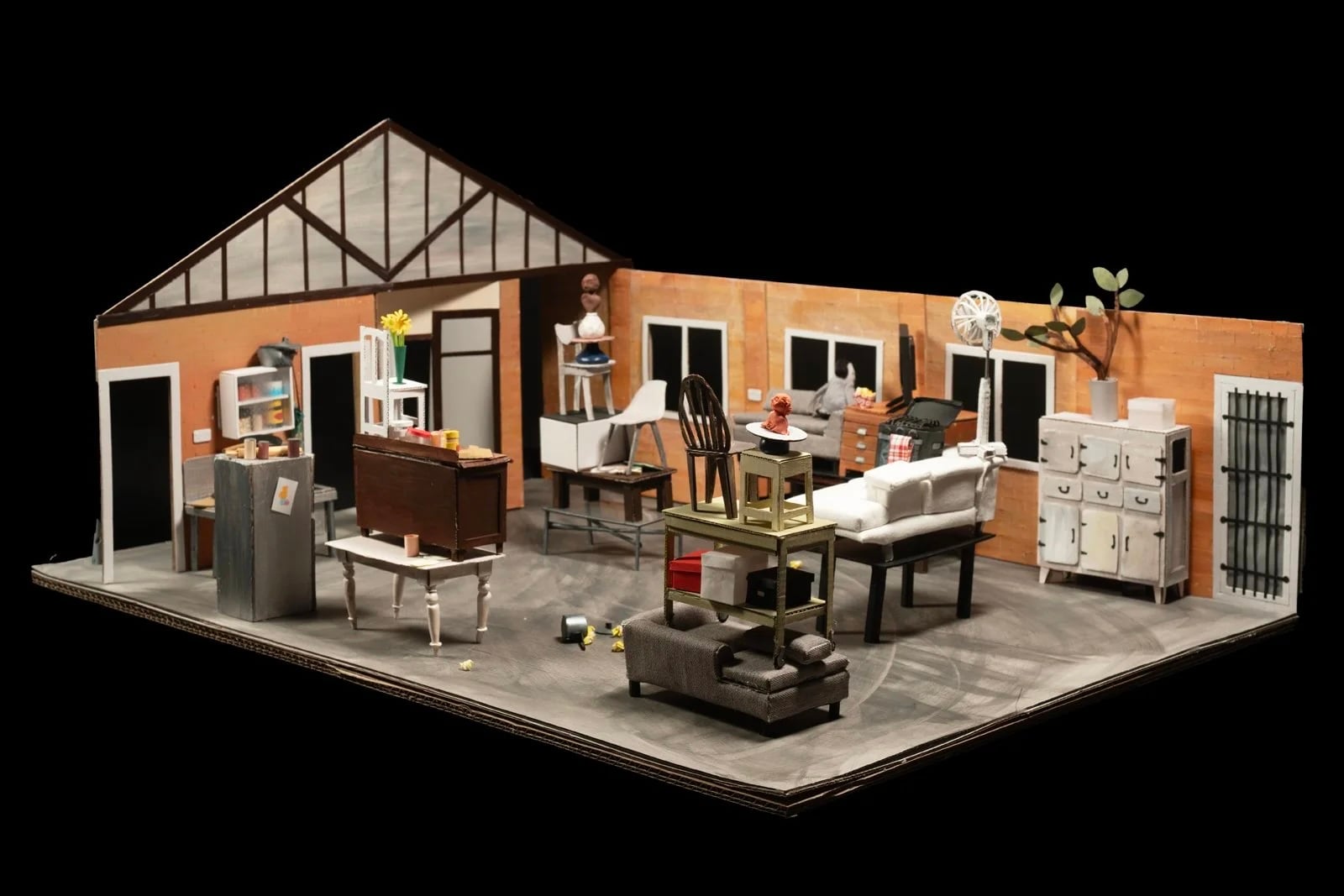
This VR documentary-installation invites viewers to experience the reality of flood-affected individuals by hearing about their stories directly, and seeing the devastating impact of floods on their personal worlds.
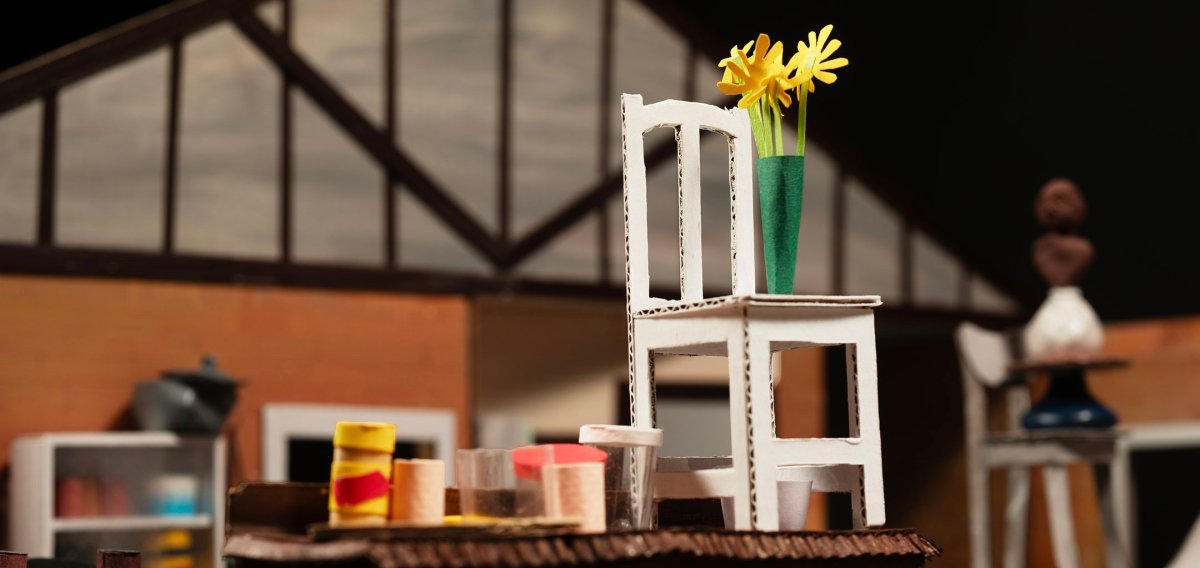
Artists Isobel Knowles and Van Sowerwine worked alongside a range of people impacted by floods in their communities to recreate their lost homes in replica form, with these items then scanned to create miniature virtual spaces to explore.
As participants view the resulting documentary, they see the reactions to these spaces and learn more about the individuals who formerly occupied the real life rooms, creating an instantly personal and emotional connection.
‘There’s something in immersive experiences, in how you position the user or the viewer … in how the person is experiencing the work,’ Sowerwine tells ScreenHub.
‘It’s about how you position that, then how you’re able to process and take in information, and the depths you can go to when you’re engaged on a different level, through all your senses.’
Connecting and developing empathy
As Sowerwine says, there is power in exploring very human circumstances in these virtual worlds.
‘We’ve always been interested in creating experiences for people and finding ways to deeply touch audiences to create an empathy and a sense of being in that person’s shoes,’ Sowerwine says.
For the artists, The World Came Flooding In was a product of an experiment with how VR can create worlds that can be fantastic and magical, but remain grounded in reality. As Sowerwine says, it’s a rich technology that allows for a beautiful freedom in creation, while allowing artists to tell more impactful stories.
‘We want to create something that speaks to people in a transformative way,’ Sowerwine says. ‘We started experimenting with different techniques and worked out that we could 3D scan miniatures … suddenly we were in an actual world, which was for us very groundbreaking.’
The tangibility of the virtual spaces in The World Came Flooding In are particularly transportive, adds Knowles, because it allows for the translation of history and memory through physical artefacts. While the world of the documentary is virtual, the items included within are clearly physical and hand-made.
They become important and familiar symbols for the experiences of the individual lives explored.
‘When we made our miniatures, it was like a prototype created with our own memories,’ Knowles says. ‘Then walking into that in a headset was like nothing else. It was so surprising, and so full of feeling.’
She believes the experience being in VR is key to its impact, and why audiences have responded so positively and emotionally about it.
‘This is really significant as a VR experience, that wouldn’t be echoed in any other medium,’ Knowles says. ‘For it to be interactive, for you to be able to walk around [these memories], something that actually really existed once … there was something very special about that.’
Per Knowles, people tend to be quite ‘moved’ when they see it, inspired by ‘quite big feelings’.
It’s the immersive nature of the project, and its creation as a VR experience, that strengthens the central exploration of personal loss and hardship.
Knowles also points out that VR experiences can talk directly to audiences, in a siloed world. When you’ve got a headset on, you’re experiencing events directly, to the exclusion of all else. That encourages a focused engagement that can evoke powerful emotions.
‘It connects, perhaps on a bigger level, to our feelings about being humans, and having objects that store memories, and where we live, the spaces we live in,’ Sowerwine says.
Practical learning and education through VR
With this ability to create immersive environments, VR and XR technologies can be transformative for education. Using a headset, viewers are embodied in virtual scenes, in new worlds, with new opportunities for play and exploration.
In the modern world, which is so doused in new, attention-grabbing technology, there is a need for a diversification of educational tools and methods of learning. As Seldon tells ScreenHub, it’s all about meeting the needs of learners, and creating the excitement to genuinely connect and engage with education.
‘In our modern age, where kids are bombarded with bright sounds and attention-seeking things … we like exciting things,’ Seldon says. ‘Humans like exciting things. Gamification of education is not playing a game – it’s taking the things that make games awesome, and putting them into a learning activity.’
An experience like Julaymba can be a particularly artful, exciting way to educate people of all ages – in this case, about the environment, and Indigenous histories and perspectives.
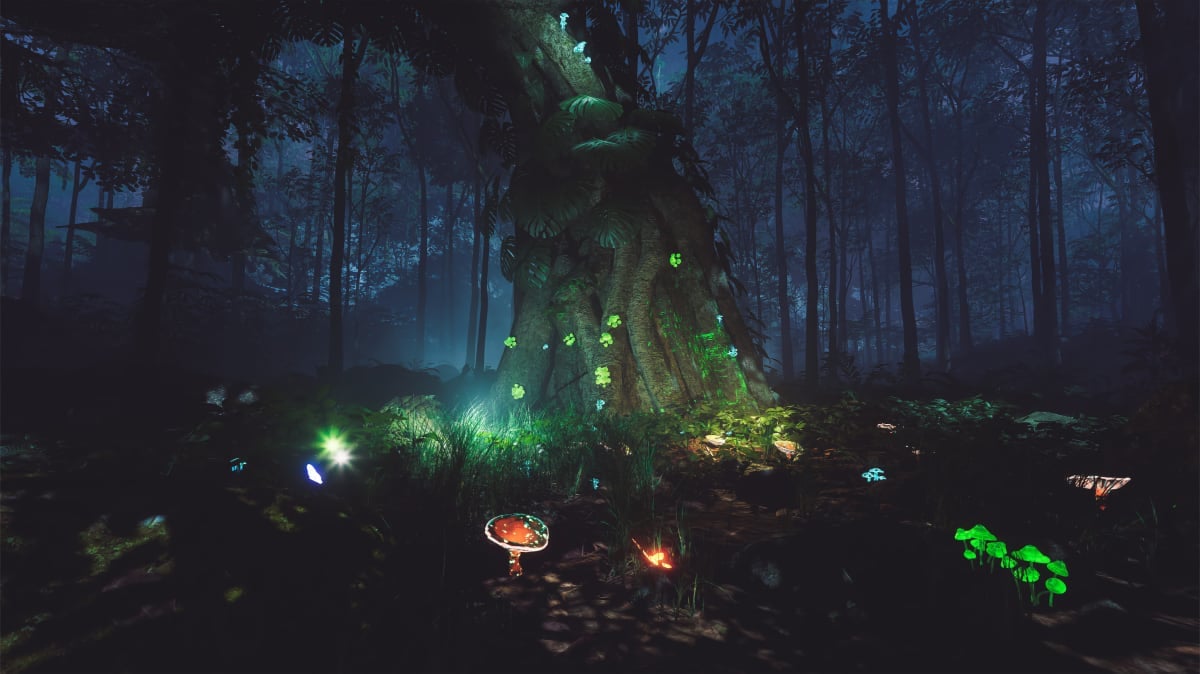
This VR experience, developed by the team at Victoria-based studio Phoria, is an education-focused experiential narrative game where players explore a rainforest and learn about the Eastern Kuku Yalanji Traditional Owners of the land, their forest management practices, and the importance of Earth stewardship.
Using the hallmarks of gamification – hands-on learning and activities during guided exploration – players can enter an enriching world to touch natural flora and learn about Indigenous language and culture through play.
Layered into Julaymba, narration from Eastern Kuku Yalanji Elder Richard Burchill paints a lush, moving picture of a virtual forest space. It teaches so much about the natural world, and brings audiences in close for a personal, intimate glimpse of culture and real beauty.
A new era for education and learning
As Seldon says, ‘There’s this assumption that a [learner is] wiling to sit through a 30-minute video and then answer multiple choice questions. No, they’re not.’
As the world changes, so must the tools used in education spaces – not as replacements, but as immersive add-ons that can build empathy and excitement, and meet people in the spaces where they are most willing to learn.
VR and its companion XR have been misunderstood in the common discourse, with so much of their usefulness and purpose obfuscated by an organisational push for aggressive monetisation or introduction in places where they don’t belong. But when these technologies are used artfully, with clarity around their purpose and use, they can bridge gaps in education and create more understanding and empathy in a society that’s beginning to lack them.
There remains barriers to the integration of this technology in educational settings, particularly for schools and other institutions that may lack the resources to support this uptake. But with continued improvements to accessibility, and a developing understanding of VR and XR more generally, there is hope they can be used with more meaning and impact in future.