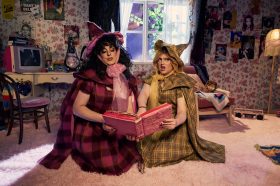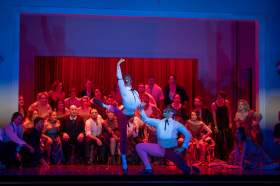

While most of us have at least heard of Summer of the Seventeenth Doll, the first two plays in Ray Lawler’s trilogy, Kid Stakes and Other Times, are much less known – and even more rarely performed. Forming The Doll Trilogy, Lawler’s epic and ambitious work of Australian theatre will be performed this month at Melbourne’s Red Stitch for the first time in more than 40 years.
The Doll Trilogy – quick links
Ray Lawler’s legacy
Lawler was born in 1921, into an era defined by the economic turmoils of the Great Depression and the impacts of the second world war, and his most famous play, Summer of the Seventeenth Doll, helped establish the early success of the Melbourne Union Repertory Theatre (now the Melbourne Theatre Company) in the 1950s.
When Lawler died in 2024, the company described the 1955 play as a turning point in Australian theatre history.
In the 1970s, Lawler went on to expand the world of The Doll, writing two prequel plays – Kid Stakes and Other Times – together becoming The Doll Trilogy.
‘A particular aim, when writing The Trilogy,’ wrote Lawler in the foreword to the 2015 published edition the trilogy, ‘was that the plays should serve as an acting challenge for a team of seven performers.’
Somewhat surprisingly, it’s not the MTC taking up that challenge, but a team of seven actors at Melbourne’s small but mighty Red Stitch, directed in this herculean task by Red Stitch’s Artistic Director Ella Caldwell, as the company stages all three plays for the first time since 1985.
‘There’s something about the ambition of Ray’s exquisite plays, being performed by a single ensemble, that just really aligned with Red Stitch – an actors’ ensemble,’ says Caldwell.
‘Ray Lawler was an actor as well as a playwright, and it’s a perfect fit for a project that really centres the actor’s craft and the transformation that those characters go through over the course of the three decades that the trilogy covers.’
ArtsHub: The Doll Trilogy review: Red Stitch makes a marathon feel like a sprint
The Doll Trilogy from 1937 to 1953
‘They’re stunning pieces of dramatic literature,’ Caldwell says. ‘As well as The Doll being a classic, the other two works are really extraordinary, and beautifully written.’
The three plays are set in 1937 (Kid Stakes), 1945 (Other Times) and 1953 (Summer of the Seventeenth Doll), all within the same loungeroom of a Victorian-era boarding house in the Melbourne inner-city suburb of Carlton, an establishment run by the acid-tongued, razor sharp, brook-no-fools Emma.
They follow the story of Queensland cane-cutters Roo and Barney as the pair spend their regular layoff season in the house with their love interests, barmaids Olive (Emma’s daughter) and Nancy.
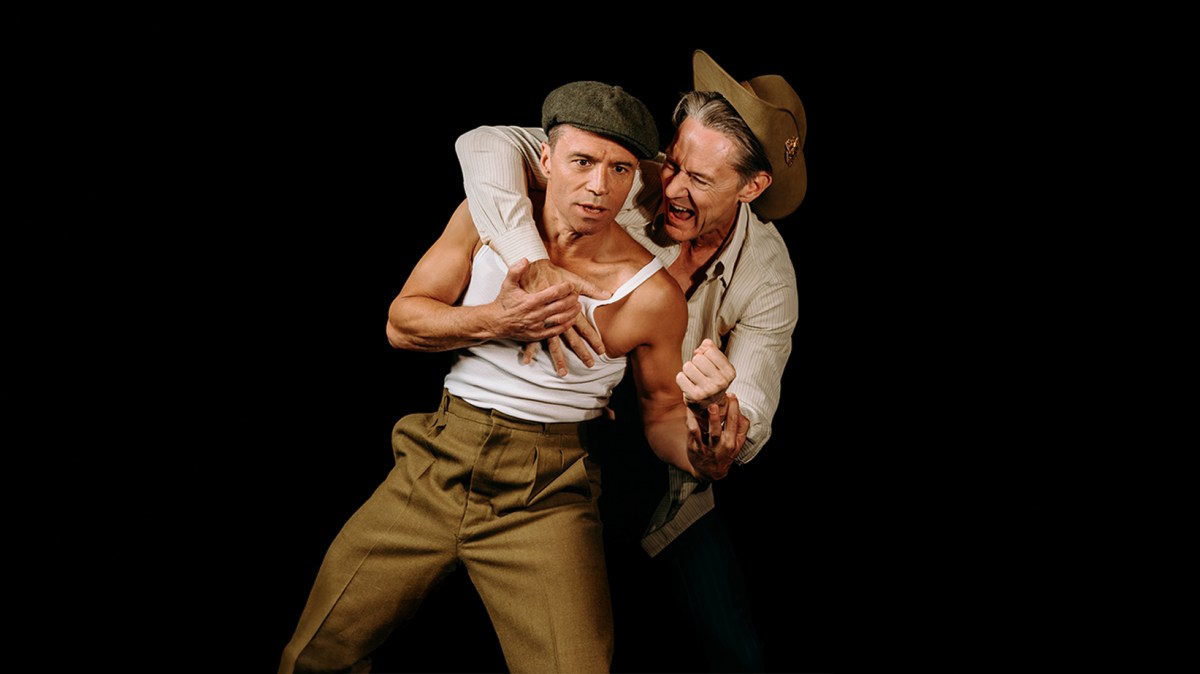
The ‘doll’ of the title refers to the carnival kewpie doll that Roo gives to Olive the first summer they spend together – a ritual exchange that is kept up each year, the growing collection of garish tokens becoming an important symbol of constancy and their love for each other.
In Kid Stakes, it’s the first of these summers – and the four have just met. In Other Times, it’s post-war, and cracks are emerging in the relationship between Nancy and Barney.
In The Doll, Nancy is no longer there, having decided to move on from her seasonal relationship with Barney and get married. In her absence, Olive has brought her co-working barmaid friend, the newly widowed Pearl, to come and join the partying and good times of the annual layoff season with the men.
But 17 years on – with 17 kewpie dolls strewn around the Carlton boarding house – the characters are aging, and things are changing.
Playwright Michael Gurr wrote in his foreword to the 2015 edition of The Doll Trilogy: ‘Because we know the conclusion – The Doll having been seen well before the two plays set before – there is a shadow over the joy of the plays Lawler set earlier in time.
‘It’s like flipping through photographs of your grandparents in their youth. Those sideways grins, holiday frocks and careless cigarettes: your smile has tears behind it because you’ve already been to their funerals.’
The relationships throughout the 17 summers are – in their own way – steady, if unconventional. Sexual and passionate, intimate and loving, existing outside of the social structure of marriage – the relationships are of their own free will, enabling each character to carve their own life and foster their own style of romantic love while claiming their own independence.
The Doll: the first and the last
The Doll, while the final in the trilogy, was the first to be written and produced. Originally conceived as a standalone theatrical work, it premiered in 1955 at the Union Theatre Repertory Company, with the young Lawler (then in his early thirties) playing the role of Barney.
It was a roaring success and went on to become the first Australian play to tour internationally, establishing itself in Australian literary and theatre canon.
The play’s strength rested in Lawler’s easy grasp of Australian vernacular and sense of humour. With honesty and integrity, he put a distinctly Aussie, working-class voice on our stages for the first time.
Read: My Brilliant Career review: a mostly stellar adaptation of Miles Franklin’s 1901 novel
Lawler’s depiction of a non-conventional love story that existed only during the five-month long cane-cutting layoff season presented women characters who set their own romantic agenda, outside of structures of marriage and expectations of monogamy.
And – despite The Doll ultimately being a tragedy – Lawler’s writing is funny. His characters are quick, strongly drawn and complex. And his writing provides a lot of rich material for an ensemble of talented actors. In 2026, the play and its characters still feel fresh.
Creating backstory to a classic
The two prequel plays were written by Lawler in the 1970s at the suggestion of The Doll’s first director and the founder of the Union Theatre, John Sumner, with the idea that a trilogy would provide some backstory to the characters.
‘Kid Stakes is just really the flush of youth,’ says Caldwell, ‘the lust and play and hope and optimism of being in your twenties. And then through Other Times, which is really under the shadow of World War II because it’s just as the war has ended, we have that huge societal shift, and at the same time, the characters are at this fulcrum in their life, where they’re having to grow up in a whole new way.
‘We see them go through huge turning points. We see them evolve from young people, and we see their failings.’
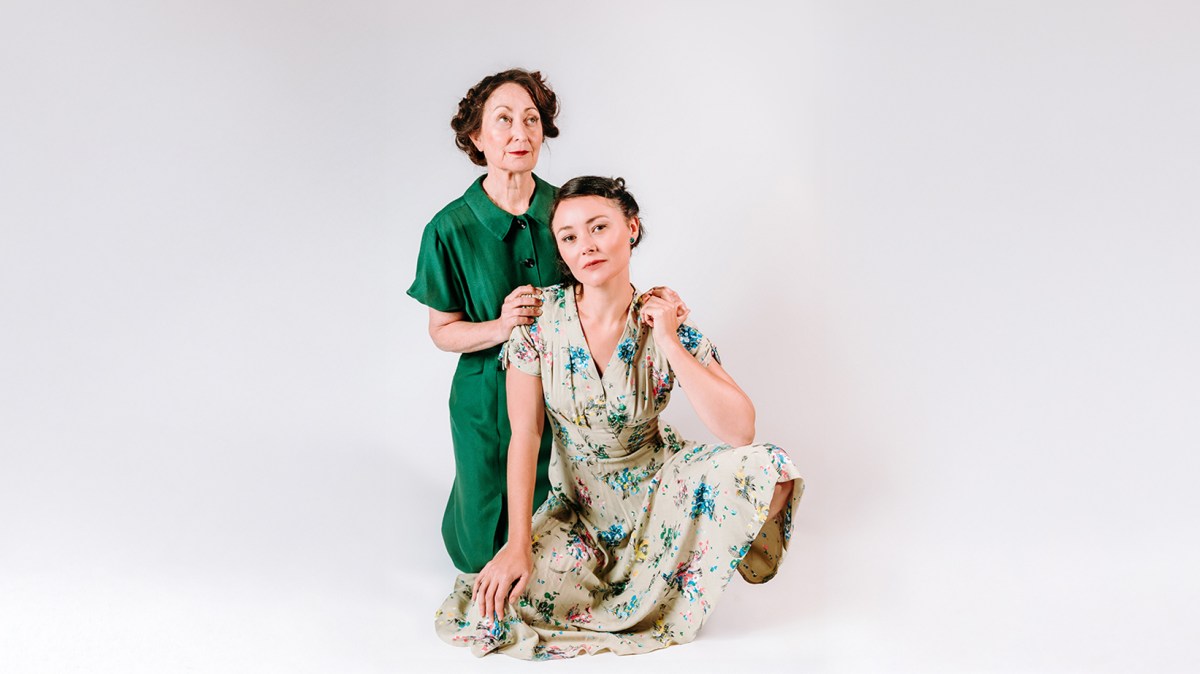
It’s this history and context, Caldwell says, that makes the characters more relatable and deepens the pathos of the plays because we understand them better.
We know where they have come from – and know what they’ve sacrificed to get there.
Caldwell adds that the friendships between the women in the play come into clearer focus when you see all three plays together. ‘And it’s interesting – given that Ray went back and wrote those plays afterwards – the resolve and independence and fight in Emma and Olive is much more resonant when you’ve seen all three.’
Why have we had to wait 40 years?
According to Caldwell, Lawler’s The Doll Trilogy is underperformed on our stages because it’s such a mammoth task to stage them all together.
‘It’s so demanding,’ says Caldwell. ‘It’s three full-length plays. Not the contemporary 80-minute straight-through piece, but a traditional three-act structure with an interval.’
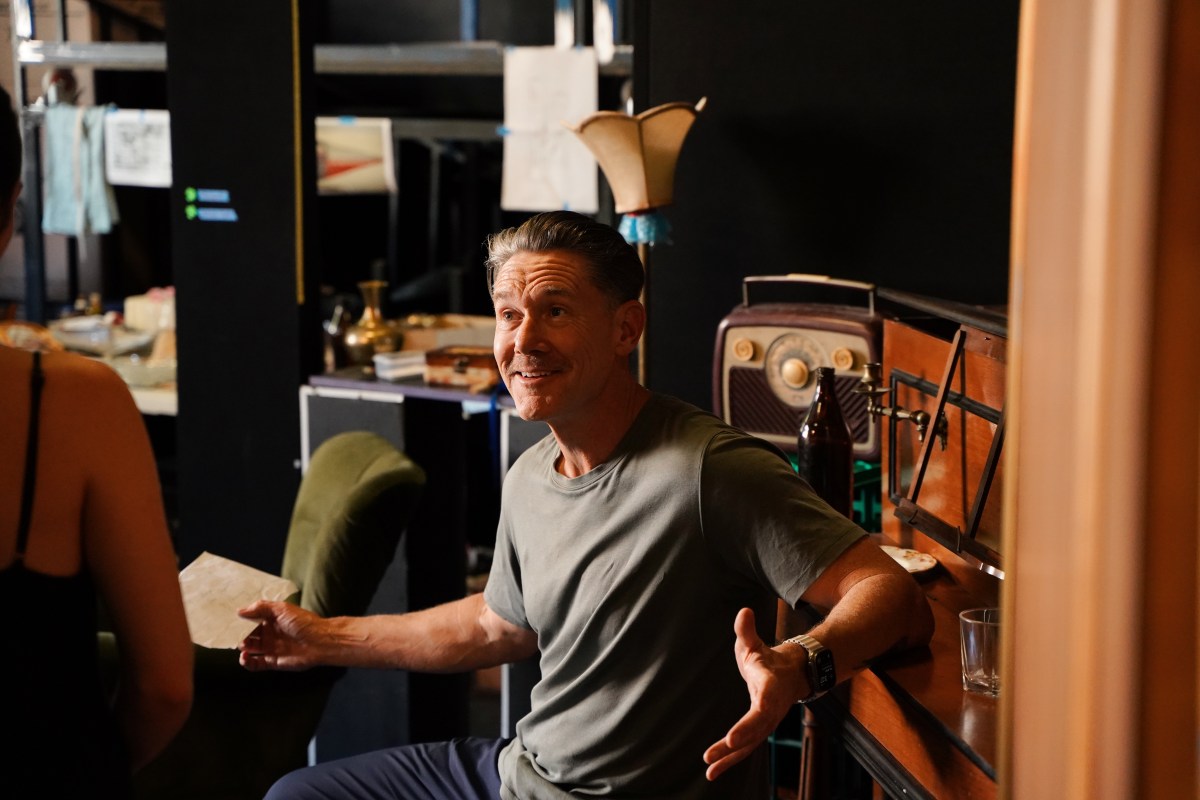
The creative, technical and logistical feat it takes to pull that off, says Caldwell, is an intimidating prospect for any theatre company, made more complex by the fact that the three plays span three decades of the 20th century, from the 1930s to the 1950s.
All the design elements have to reflect those changing times – the end of the depression, to the years after the second world war, and then into the mid-1950s. Each of the characters is aging, and at a different stage of life in each play – all while being played by the same actor.
‘Even just the costumes are three plays’ worth of work,’ Caldwell says.
Ray Lawler’s lifelong project
As an actor, Lawler toured with The Doll throughout Australia, reprising his role in the subsequent international tours to London’s West End, then on to Broadway in New York in 1958. In the subsequent decades, and again after writing the two prequel plays, Lawler made numerous revisions to his plays, tinkering in his precise way.
In his foreword to the 2012 edition of The Doll, Lawler explains: ‘Again and again, with particular plays, I find myself drawn back to working on them in an attempt to – what? Do justice to some inner vision of the play that seems beyond my ability to realise it, I suppose.
‘Certainly that has been the case with Summer of the Seventeenth Doll, and this publication of a final draft offers a chance to trace the development of the original work into life as the third play in a trilogy.’
The 2015 edition of the full trilogy was the final to be published, and it’s this edition that Red Stitch is presenting – one he never got to see staged during his life.
For Caldwell, rereading the trilogy after Lawler passed in 2024, it was the wistfulness about the realities of time passing that resonated. ‘I’m in my mid-40s, seeing teenagers turning into adults and grandparents getting older, and the trilogy itself is so much about that sort of passage of time and the transition of life changes – and that connects us to past generations of Australians,’ she says.
‘It’s a respect and understanding for what it is to grow older. By watching all three, they offer you that in this beautiful theatrical package.’