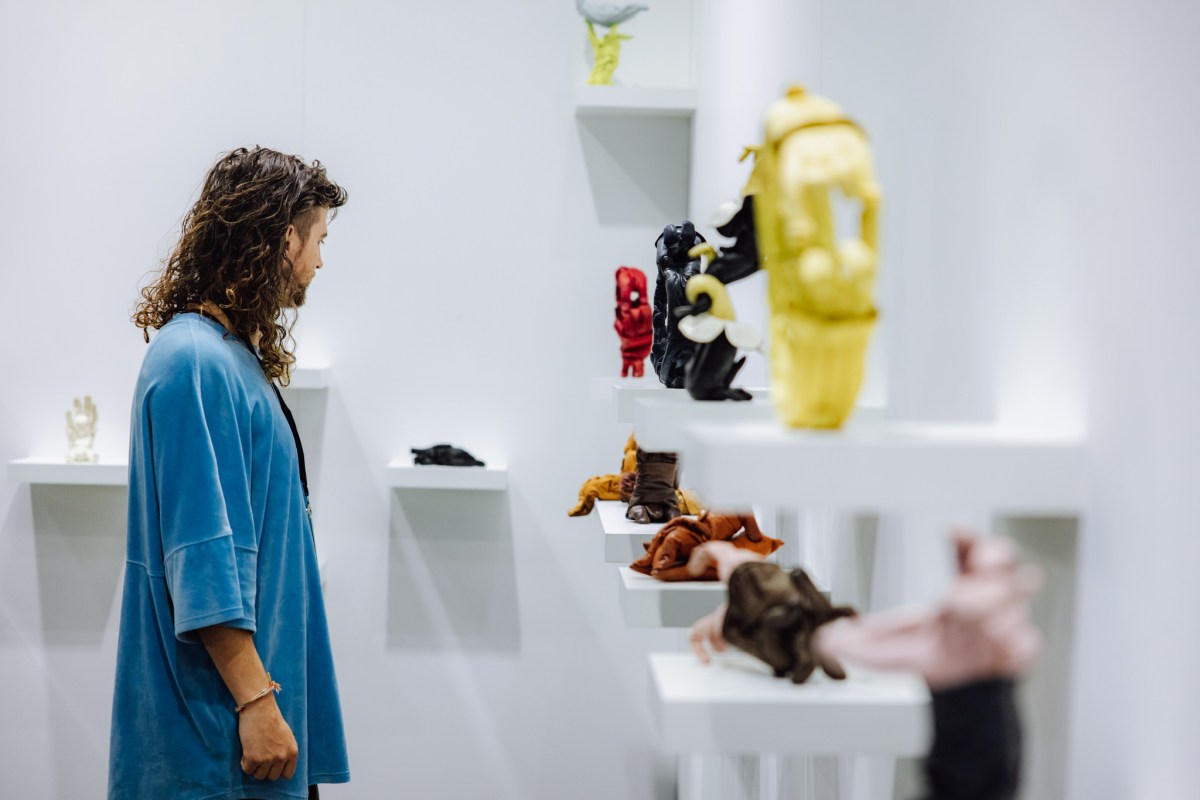
For decades, the ‘white cube’ display reigned supreme at the Melbourne Art Fair: stark walls, slick paintings and a clear, invisible line between the art we hang on walls and the chairs we sit on. But as the 2026 edition takes possession of the Melbourne Convention and Exhibition Centre next week, that line hasn’t just been blurred – it’s been erased.
The 2026 fair marks the most significant brand evolution in the event’s nearly 40-year history. After years of uncertainty, and with an anxious buzz building ahead of opening day, the question remains: has this reinvention finally paid off?
Following its near-collapse in 2016 – when a boycott by several high-profile galleries threatened the fair’s future – MAF has gradually rebuilt by leaning into Victoria’s identity as the ‘Design State’. The result is a hybrid event that is part traditional art fair, part collectable design salon, and unmistakably Melbourne.
Has MAF finally found its soul? Perhaps. Leaning heavily into new leadership, it is embracing the tension between art and design. In doing so, MAF hasn’t just survived its past crises; it appears to have designed its way out of them.
Melbourne Art Fair – quick links
The future is in the object
The gravitational center of this year’s fair is FUTUREOBJEKT, a 600-square-meter collectable design salon positioned as a ‘fair within a fair’. Here, functional objects are treated with the same reverence as painting or sculpture. FUTUREOBJEKT brings together more than 30 Australian and international designers working across industrial and object design, interiors, architecture and craft.
Central to this shift is the inaugural MAF x NGV Design Commission, awarded to metalsmith and jeweller Anna Varendorff. Known for her tubular brass forms that appear as monumental floor works and suspended light installations, Varendorff’s practice resists easy categorisation. Her 2026 commission is her most ambitious project to date.
Working under the moniker ACV Studio, Varendorff has developed an international following and was named Wallpaper* Designer of the Year in 2018. By acquiring her commissioned work directly into the National Gallery of Victoria’s permanent collection following the fair, the NGV is making a clear statement: design is not just functional, it is collectable.
Other highlights within FUTUREOBJEKT include Volker Haug Studio, which will debut its Murano Collection – a limited-edition series of lamps crafted from Murano glass in Italy. Known for his raw, brutalist use of brass and steel, Haug introduces a softer, painterly sensibility through the fluidity of glass.
Also generating significant buzz is the Sydney-based Studio Gardner, presenting works by Jumandie Seys and Pauline Esparon. Their material-driven practices favour raw textures and primal forms that feel unearthed rather than manufactured. For collectors, acquiring work here is a bet on the next generation of design leaders.
From boycott to a return of the heavy-weight pioneers
Perhaps the most surprising outcome of MAF’s design-forward pivot is the response from the fair’s former critics. In 2016, powerhouse galleries including Roslyn Oxley9 and Tolarno Galleries led the walkout that nearly derailed the event.
Their return in 2026 is a major endorsement. Rather than resisting the new model, these galleries have leaned into it, selecting artists whose practices naturally bridge art, craft and design.
Roslyn Oxley9 anchors the BEYOND sector with Fiona Hall, whose long-standing fascination with materiality and objecthood feels newly resonant in this context. Tolarno Galleries presents a solo booth of Hannah Gartside’s Bunnies: 40 small sculptures made from vintage women’s leather gloves that operate as both object and archive.
By showing works that emphasise craft and physicality, these veteran galleries are proving they can thrive in a design-centric room without sacrificing their conceptual edge.
New blood: a shift in the order
While there has been no public boycott this time, a generational shift is evident. Some older mid-tier commercial galleries have quietly stepped back, making room for a new wave of exhibitors.
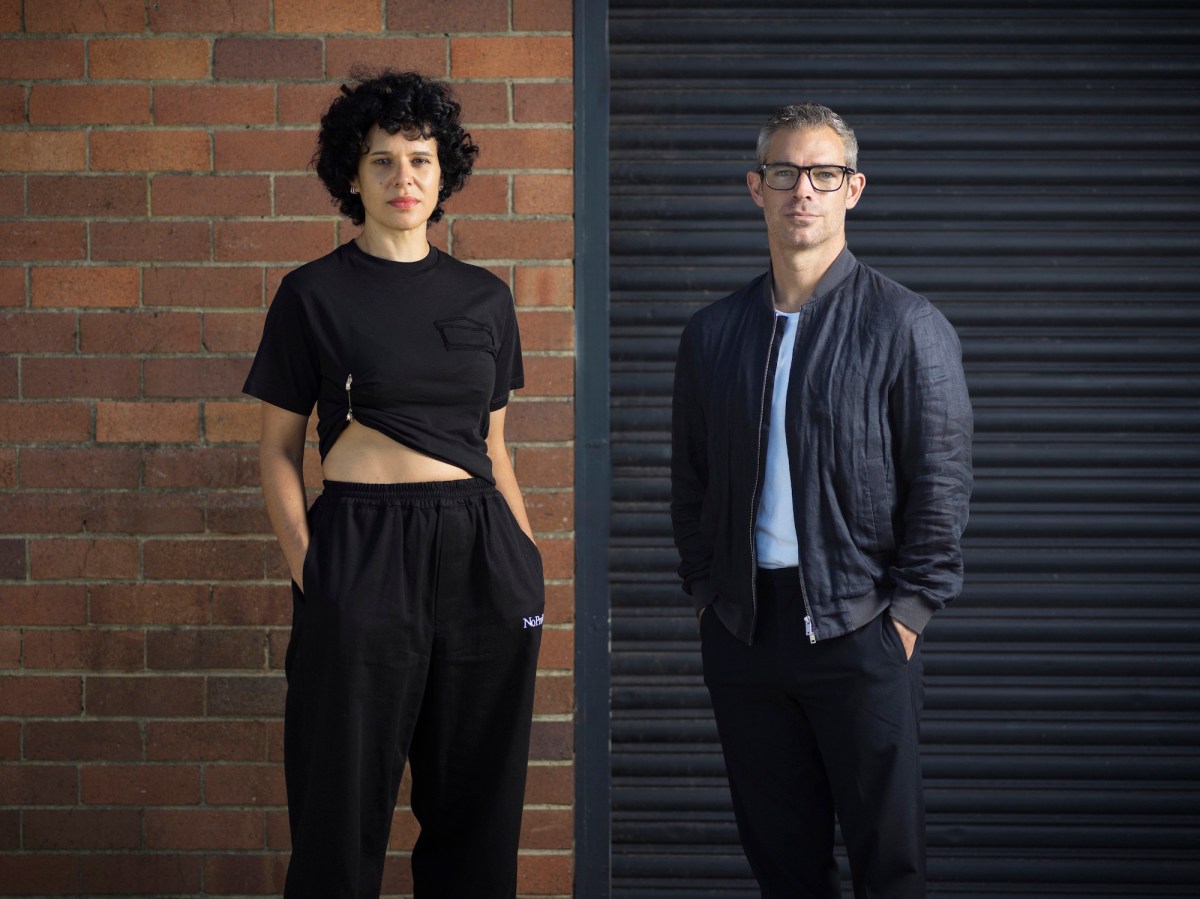
Part of the roadmap of MAF 2026 has been specifically highlighting galleries that have been operating for less than seven years, introducing more than 20 newcomers including Nasha, Animal House Fine Arts, Mary Cherry, PALAS and Haydens. These younger galleries are typically more agile and more comfortable presenting design alongside performative, digital and material-based art.
At the same time, Sophie Gannon Gallery has emerged as an ideological blueprint for the fair. Long representing both fine artists and designers, the gallery’s presentation of Elynor Smithwick’s Flashings series offers a contemplative counterpoint to the surrounding design installations, proving that painting still holds its own.
Similarly, Neon Parc marks its 20th anniversary with a solo booth for the late Elizabeth Newman, underscoring that rigorous contemporary art still has a place within the fair’s expanded framework.
Why the shift promises a more sustainable future for MAF
Purists will inevitably complain that MAF risks becoming a lifestyle showroom but by embracing design, the fair has tapped into a broader collector base: architects, interior designers and buyers who see their homes as curated ecosystems. Whether this translates into sustained sales will become clear once the doors open.
Crucially, the fair now positions itself as a curated institution rather than a purely commercial marketplace. That shift has brought veteran galleries back into the fold while allowing emerging spaces to coexist alongside them.
In a state that invests heavily in design as an economic driver, this realignment offers a stability the old art-only model struggled to achieve. The inclusion of the Victorian First Peoples Art and Design Fair further reinforces this approach, highlighting Indigenous design as living, functional history rather than something confined to a frame.
The bottom line? The pivot toward design is not a passing trend but a strategic recalibration. By broadening its scope, Melbourne Art Fair appears to have secured not just its relevance, but its future and economic survival.
Melbourne Art Fair will be presented from 20 to 22 February at Melbourne Convention and Exhibition Centre, South Wharf, with a VIP Preview Day on 19 February.
This article was updated after publication, at 7:44pm on Wednesday 18 February to remove a reference to Anna Schwartz exhibiting at the Melbourne Art Fair, which was incorrect.