For writers and directors who have made a name in theatre, transitioning to television or film might seem like the logical step. The screen industry can offer bigger budgets, bigger productions and a whole new suite of storytelling tools.
But how much do the skills translate between the different media? And how willing is the industry for writers and directors to move between stage and screen?
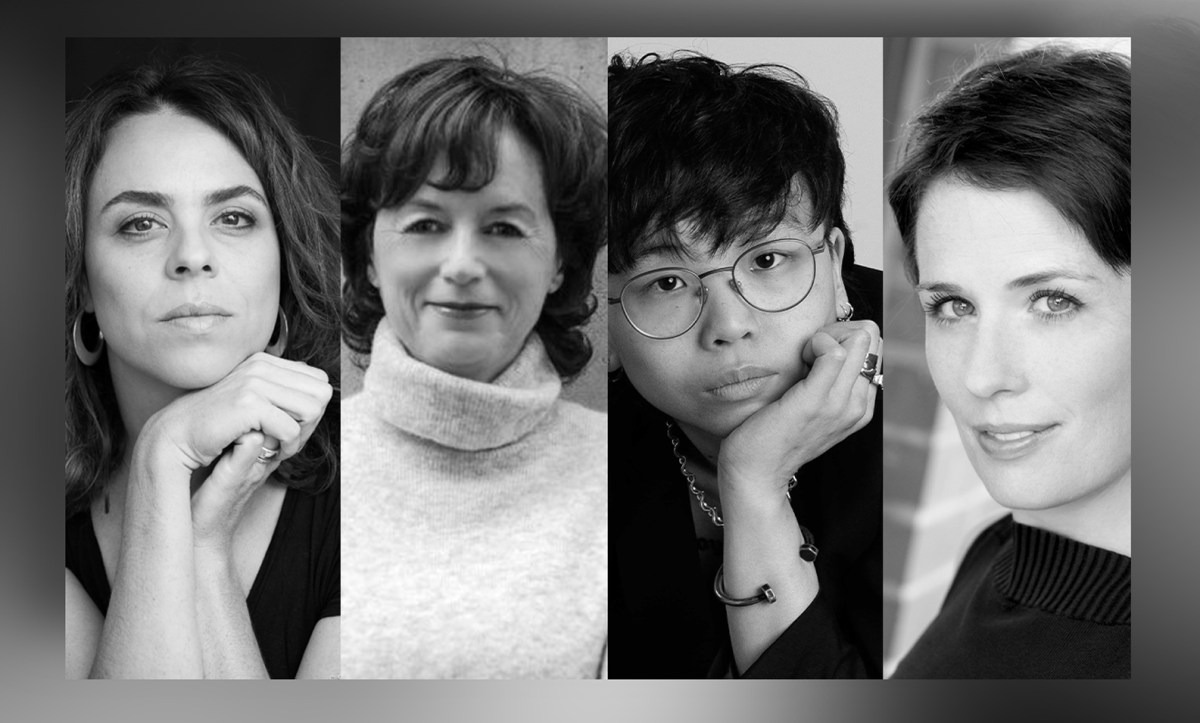
We talked to four writers and directors who have worked across both spheres on their experiences and what surprised them after making the move.
From stage to screen: quick links
From stage to screen: Leticia Cáceres
Ten years ago, Argentinian-Australian director Leticia Cáceres had completed three ‘incredible’ years as Associate Director with Melbourne Theatre Company, working on plays like The Distance and Birdland, for which she won Best Director at the Green Room Awards.
Despite being in demand in theatre, Cáceres decided to tackle new challenges in television and, with her creative partner Angela Betzien, applied for a Screen Australia program that aimed to help women and female-identifying artists get work behind the camera.
‘We were looking at opportunities that would allow us to reach broader audiences,’ Cáceres explains. ‘It’s very, very hard for Australian artists to get their work overseas, but it felt like the way to do it was through screen.’

Cáceres took up opportunities to shadow directors and observe writers’ rooms as she adapted to the new medium. She also says doing a director’s attachment on Fires was ‘instrumental’ in successfully making the transition.
‘I felt like I was moving to another world, and I’m a migrant, so I understand what it means to land in a place where you don’t speak the language. I had to learn to speak camera. I was really lucky to work with some very generous directors, some of whom had a theatre background, so they understood my limitations and really opened up the process to me.’
Cáceres also took evening classes at the Victorian College of the Arts, studying the fundamentals of film and television and making two short films.
‘I knew all [my theatre work] was not going to be enough if I didn’t demonstrate that I could film something and tell a story through the lens of the camera,’ she explains.
Eventually, Cáceres got her short films into festivals, which in turn helped her get into the Melbourne International Film Festival’s Accelerator program, paving the way for work directing television, including Bumpand anthology series Erotic Stories.
She has found that there is a fine art to preparing actors for screen work. ‘I used to panic about not having everything rehearsed and ready, but these days I feel much more comfortable working with actors who know their craft on screen.
‘We’ll have in-depth conversations about a scene and what it means, all of the things that we’d do every day in a rehearsal room at Belvoir, but we don’t actually do it, because we want to keep that lovely spontaneity that you can capture on screen where the camera gets so intimately in there.’
Read: 20 arts jobs to consider for a 2026 career change
From stage to screen: Elizabeth Coleman
An unusual example of a writer with concurrent careers in theatre and television, Elizabeth Coleman got her start as a trainee script assistant for Home and Away while also studying at the Playwright Studio at the National Institute of Dramatic Arts (NIDA).
She went on to have a successful dual career, penning plays including Secret Bridesmaid Business and It’s My Party (And I’ll Die If I Want To) and writing for TV shows including SeaChange and Return to Paradise. More recently, she’s added a third string to her bow, writing fiction with her Ted Bristol Murder Mystery series. Coleman says there are upsides to each different medium.
‘I really like the collaborative nature of writing for TV, but then sometimes that collaborative nature can tip into too much feedback from too many sources, which can be frustrating and sometimes compromises the work.’

Coleman says that while stage, screen and fiction are all, at their core, storytelling, each discipline requires different skills.
‘Writing a screenplay, you can describe a scene, and it’s left in the hands of some other incredibly capable person to make it come to life. But writing a novel, there’s nowhere to hide – it’s only you and the words. You have to paint all the pictures yourself and solve all the problems because you can’t cut out of a scene if it’s not working. It’s much more concentrated in that regard.’
Coleman’s advice to anyone hoping to work across stage and screen is to see as much as you can, but aim for quality as well as quantity. ‘Reading good work might not feel like you’re doing anything, but you’re learning good habits; it seeps in by osmosis. Read really good scripts and plays as well as seeing them, so you can compare what is working and what is not.’
She also says rewriting is where the ‘real writing’ happens, whether it’s for stage, screen or a novel. ‘I always call my first draft the “spew draft” because I just bash it out and don’t worry about whether it’s any good or not. I consider that a kind of blueprint, and then you just have to have the patience and tenacity to keep going. Unless you’re an unmitigated genius, that [rewriting] will be what makes all the difference.’
From stage to screen: Priscilla Jackman
What inspires an accomplished theatre director like Priscilla Jackman, who has plays like RBG: Of Many, Oneand White Pearl as credits to her name,as well as operatic works, to pursue a career in television?
‘I’ve always been interested in screen,’ Jackman says. ‘It’s an area that supports female directors and an exciting avenue to pursue for the depth of collaboration and the challenges in storytelling it offers. It’s deeply related [to theatre], and the skillset is transferable, but screen comes with a whole other skillset as well, so it feels like the right progression to make.’
Jackman says Australia’s relatively small theatre sector means there is an economic imperative to work across mediums: ‘It’s hard to carve out a career or even to make ends meet, no matter what level of success you’re having in theatre.’
As part of her career change, Jackman has completed director’s attachments on Optics and Bump: A Christmas Filmand has gained insights into the differing processes, including the incredible influence editing can have on the finished screen product.
‘You might do five different takes with five different emphases in the qualities of the storytelling and what the actor’s doing. But it’s not until you get to the editing suite that you’ll look at all of those and then make the judgment call. You’re actually creating the performance that the audience sees in the editing suite.’

Jackman has also found that the financial stakes in television can make getting a project up intensely difficult, even for an experienced screen director. ‘My lived experience is that although people say “We believe in you”, they won’t put their money where their mouth is. There are so many stakeholders and levels of production you have to get green lit, that it’s a lot more difficult to pave that pathway than you would hope.’
Still, there is plenty that is compelling about the screen industry for a theatre professional, not least the chance to make something with permanence. ‘The curse of theatre is that it’s so ephemeral,’ Jackman says. ‘If people haven’t seen your work, you have no real way of communicating it with them. Theatre is notoriously difficult to capture live, and we’re not doing enough, in my opinion, to capture theatre on screen in this country,’ she says.
‘With screen, there is something more timeless, that has a life beyond the experience of making it. For me, that’s really captivating as a director and a very exciting part of why I’m interested in progressing into screen.’
From stage to screen: Jean Tong
For this writer/director, stage and screen are ‘totally different playgrounds’ that require differing creative skill sets. ‘The visual storytelling in TV or film is quite different, and I have to slowly shift my brain and the way I think about action, whereas in theatre I’m really thinking about dialogue and that relationship between characters which you can really feel live.’
Jean Tong had established themselves as an exciting theatre maker, writing and co-writing queer-forward and pop culture-savvy works like Romeo is the Only Fruitand Flat-Earthers: The Musical before branching out into television, writing screenplays for shows like Heartbreak High and Safe Home. They’ve also directed theatre, including last year’s Dying : A Memoir at Melbourne Theatre Company.
Tong is currently working on the MTC black comedy Do Not Pass Goand recently came across an example of the different mechanics between screen and stage. ‘There was a moment where we all went “Ah, the jump from this scene to the next is just a hard cut”,’ they say with a laugh. ‘I didn’t even clock it until that moment.”

While Tong says that theatre generally ‘has a little more freedom and weirdness to it’, they have also found that a well-run TV project, like Heartbreak High,can preserve each writer’s individual vision. ‘That show in particular really let us foster our own sense of self, and I think that is quite rare.’
The very different ways theatre and television are consumed – one in silent stillness, the other often alongside distractions like phones and housework – make for different storytelling rhythms, Tong says.
‘In television, sometimes, the story gets pushed in a direction that is presuming that people aren’t paying attention, rather than saying “Hey, why don’t we make something that will make people pay attention?”
‘For theatre, I think sometimes we creep into the other direction. We’re so confident that they’re paying attention that we’re not challenging the content to be as focused and as careful as it could be. There are pitfalls in both directions.’
Read: So you want my arts job: Director, Independent Theatre
While Tong says moving from theatre to television involved a long process of developing new skills and rebuilding their place in a new industry, working across both has been richly rewarding.
‘The thing I love most about both is the collaboration. Being able to jump from one to the other has really sustained me across the last couple of years. I don’t know if I would be fully happy only working on one for the rest of my life.’