On the face of it, the new report card on the state of the arts in New South Wales includes several strong results, including skyrocketing attendance at the Art Gallery of New South Wales over the three-year period from 2022 to 2025, and growing economic results across the sector. But it’s worth recalling the shattering impact of Covid on the arts from 2020 onwards, which frames much of the state’s first ever Creative Statement to Parliament as a story of rocky recovery.
‘Attendance has continued to strengthen following the disruption caused by the Covid-19 pandemic, with attendance at live arts and cultural events [in NSW] increasing from 69% in 2022 to 77% in 2025,’ the report states. ‘Over the same period, the proportion of people expressing little interest in attending events declined from 19% to 12%.’
The report is intended as a baseline for understanding the health, contribution and impact of arts and culture in NSW and is set to be tabled every three years.
The inaugural statement gathers together existing data and case studies, but is also an intriguing snapshot of current arts policy interest areas: financial returns (including contributions to the night-time economy) and attendance figures, but also rates of arts participation, the inclusivity of arts organisations and arts experiences, and the positive health & wellbeing impacts of art.
Naturally, how we measure the impact of creative labour is an ongoing question – one tied up with how the sector sees its own worth as well as the fears of politicians (who must absorb or deflect scrutiny over funding decisions, as we’re seeing now with the investigation into Powerhouse Parramatta and its CEO).
The underlying message in this report, then, is less about the state’s capacity to produce great artists or grand works – although author Liane Moriarty and actor Sarah Snook both rate a mention – and more about how the arts is for everyone.
With that in mind, here are some of the key findings about how the arts is tracking in the state.
NSW Creative Statement to Parliament – quick links
The arts makes money but artists aren’t always getting paid
John Graham MLC, the NSW Minister for the Arts, Music and the Night-time Economy, introduced the new report with a string of impressive figures. ‘Between 2022 and 2025, NSW’s creative industries grew by 9.8%, contributing nearly $60 billion to the state’s economy. The broader NSW economy grew by 6.2% in the same period,’ he said.
This three-year growth is despite the modest contraction in the 2024-25 financial year, in line with broader economic conditions.
ArtsHub: Profits or losses for state theatre companies: key trends revealed
But to achieve these figures, the Creative Statement to Parliament takes an expansive view of the sector, ranging from First Nations cultural expression and the traditional arts sectors, through to architecture, fashion, design, digital games and ‘creative innovation in the food and beverage sector’.
By this definition – which includes creative workers in non-creative industries, say, a designer working at a bank – there are 329,248 creative workers across NSW.
Of these, only 67,013 are directly employed in creative industries – defined here as the performing arts, music, literature, visual arts, media arts, screen and digital games sectors – with a further 6435 working in cultural institutions.
NSW is also home to 64,399 creative businesses. In 2025, only 2.3% employed more than 20 people, while the majority (59%) were sole traders or non-employing, which hints at the precarity of large parts of the sector.
The report goes on to acknowledge that most of the near $60 billion output over the past three years comes from the ‘larger commercial segments of the creative industries’ such as ‘advertising, design, computer and software design, architectural services, broadcast television and newspaper publishing’.
Another telling indication of vulnerability came via a survey of over 600 creative workers, businesses and organisations that have engaged with the state government arts funding body Create NSW. More than half (59%) reported lower confidence in the financial viability of their practice, business or organisation than 12 months ago, while 26% considered it unlikely they would still be operating in a year’s time if current challenges persist.
The NSW Government report identified ‘rising costs, insecure incomes, changing audience patterns and global competition’ – issues that affect the arts nationally.
NSW’s cultural exports are big business

Despite challenging conditions, some are flying high. The first Creative Statement placed the value of NSW’s cultural exports at $2 billion in the 2024-25 financial year, accounting for 45% of all Australian creative exports. Yet growth lagged behind the national average, with the report pointing to increased competitive pressures.
The leading exports were in the areas of architecture, design and fashion, but some of the highest export growth areas were in visual arts, literature and music – and the report was not short on success stories.
‘In literature, Mosman author Liane Moriarty remains a global phenomenon with her latest book Big Little Truths, and on the stage, the Sydney Theatre Company received several Tony award nominations and won two for their production of The Picture of Dorian Gray with Sarah Snook,’ said Graham, pointing to a production that achieved success on Broadway and the West End.
ArtsHub: Sydney Theatre Company brings Dorian Gray home to hero 2027 season
It’s not all about inner Sydney
Earlier this year, academics at the University of Sydney found that artist populations across Sydney are shrinking, and becoming less culturally diverse. They put this down to a decline in creative spaces and the financial precarity of creative work.
While this research wasn’t referenced in the Creative Statement, the new report did provide a snapshot of where the state’s creative workers are based.
As of 2025, 16% of the state’s creative workforce now lives in Western Sydney, generating $7.5 billion in economic value for NSW. A similar number lives in regional NSW, with a $7 billion value.
While the Creative Statement estimates that further investment in Western Sydney’s creative industries could net a further $6.4 billion and 24,000 jobs, growth in regional areas faces unique challenges, including ageing venues and infrastructure, training and digital connectivity gaps, and rising insurance costs in areas prone to fire and flood.
Audiences are returning but they’re weighing costs
The Creative Statement records strong audience demand and engagement. In the 2024-25 financial year, 7.6 million people in NSW attended a cultural institution – a 22% increase from 2022-23 to 2024-25.
AGNSW was one of the success stories here, with attendance figures rising from 1,706,514 to 2,369,750 over the three-year period. The State Library of NSW and Sydney Opera House also recorded impressive climbs.
When it came to the performing arts, 5.1 million people, or nearly 77% of the state’s population, went to at least one live event in 2025.
Yet cost-of-living pressures are hitting audiences hard. The NSW Government report cites Creative Australia findings: for nearly six in 10, cost is the biggest barrier to attendance, and just over half have chosen not to go to events because of the price.
Distance and transport were also significant concerns, felt most keenly by people with a disability.
The Creative Statement concludes, ‘Improving access and affordability is both a challenge and opportunity.’
Creative precincts and night-time economies remain a policy focus
The ‘Carriageworks’ precinct model is expanding. In NSW, 21 councils have a current resolution to establish or pursue Special Entertainment Precinct status, allowing them to support live entertainment through late trade, favourable noise settings and ‘attenuation of new development’. Thirteen precincts are already live.
The Creative Statement also reported on the NSW Government’s ‘Vibrancy Reforms’, including changes to lockout laws, allowing four times more licensed music venues to access incentives in NSW.
We aren’t very good at measuring the human impact (yet)
The Creative Statement to Parliament was stacked with compelling case studies and contributions from leading arts figures, from playwright S Shakthidharan to filmmaker Darren Dale, musician L-Fresh, gallery director Maud Page and Camilla and Marc fashion designer Marc Freeman.
But the data on the human impact of the arts, particularly on health and wellbeing, showed number-crunching is still a relatively new dimension to arts policy thinking, with plenty of room for expansion.
The stats gathered into the Creative Statement were largely self-reported, with seven in 10 people in NSW saying creative experiences made for ‘a richer and more meaningful life’ and 58% saying the arts improves their wellbeing.
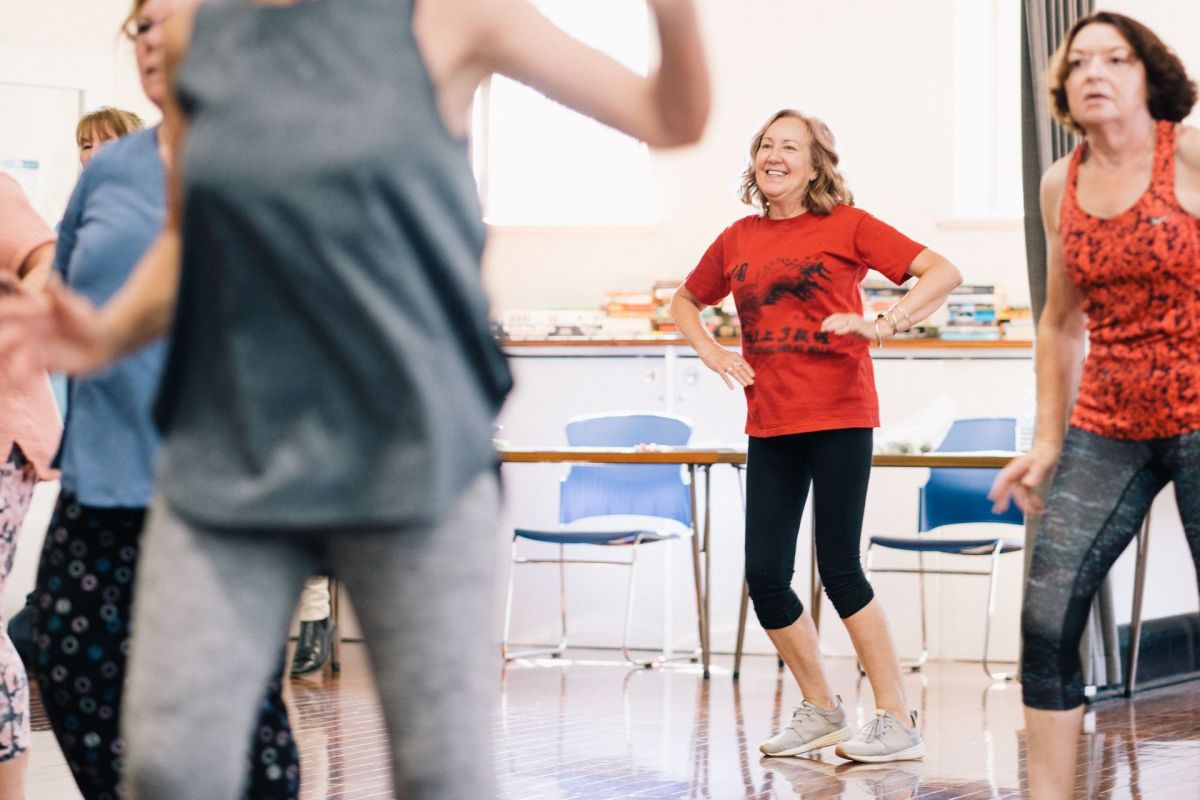
There were more interesting figures around arts participation, with 2.9 million, or 44% of NSW residents, participating in arts activities in 2025, such as making visual arts or crafts, writing, or dancing. This figure rises to 55% for Culturally and Linguistically Diverse communities and 76% among First Nations people.
A key finding of the Creative Statement is that ‘increasing the use of art and culture to help improve individual health and wellbeing holds the potential to produce social and economic dividends’.
There are big policy challenges ahead
In his introduction to the inaugural report, Graham acknowledged some of the battles that lie ahead for the state’s arts sectors. ‘Alongside our successes, there are great challenges and financial pressures, including the looming wave of AI, and calls for the removal of creatives’ rights to the ownership of their own work,’ he said.
‘We acknowledge those pressures. They are the reason why the first Creative Statement to Parliament is so necessary.’
But the difficulty of these looming copyright discussions should not be understated, particularly when Anthropic’s float in the US is seeing company valuations of $1.5 trillion thrown about. The bargaining chips are not equally stacked here, and nor is economic benefit the kind of argument that artists and creative workers instinctively reach for.
This tension is caught in the language of the NSW statement itself. The introduction to one section declares: ‘The value of arts, culture and creativity can be understood in many ways. It delivers economic and employment benefits and activates precincts. Experiencing and participating in creativity also strengthens communities, fosters wellbeing, connection and belonging, and helps shape who we are as individuals, communities and a state.’
In trying to cover all these bases – while also blending many of NSW’s arts sectors together – the state’s first Creative Statement has set itself an undeniably ambitious target, but its authors see room for growth.
‘Future statements will build on this foundation by strengthening the evidence base, improving sector data and developing a richer understanding of the social, cultural and economic contribution of arts, culture and creativity across NSW,’ the report states.
‘Together, these efforts will support informed policy, planning and investment decisions and help ensure that arts, culture and creativity continue to contribute to a vibrant, connected and prosperous NSW for generations to come.’