By Louise Martin-Chew, The University of Queensland
In the contemporary imagination, the word ‘avatar’ may conjure James Cameron’s blue Na’vi people.
But Cameron was partly inspired by the avatars (or incarnations) of the the Hindu deity Vishnu, who sent avatars to earth to preserve universal order.
For over 15 centuries, Vishnu has been seen as a sustainer and a guardian of dharma – order, morality and righteousness – who has access to ten or more human and animal avatars.
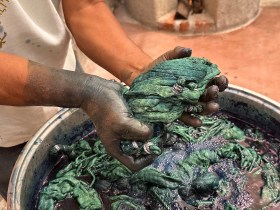
Mostly, Vishnu is depicted by artists with blue skin, marking his separation from humanity. He evokes the colour of the cosmos and, as his avatar Krishna, the deep blue of brooding monsoonal cloud.

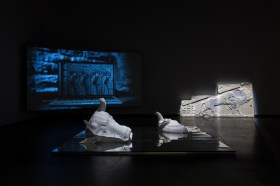
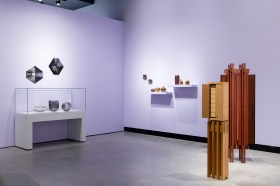
Avatar: Forms of Vishnu at the Art Gallery of New South Wales draws on these deep cultural roots. The gallery presents 200 artworks spanning 1,500 years, from international and Australian collections.
Many objects, notably early sculpture from Cambodia, have never before travelled from their home countries.
The highly crafted and carved objects open intriguing mythological narratives, exploring Vishnu’s long importance in Hindu cultures and to contemporary Australia.
A prescient exhibition
The exhibition takes audiences on a deep dive into the sumptuous colour, craft, tradition and artistry inspired by and honouring the avatars of this important figure.
Contemporary works add magic to the historic, conveying the continuum of tradition into current practice.
Avatar comes from the Sanskrit word avatāra, meaning ‘descent’. At the press preview, co-curator Chaitanya Sambrani called Vishnu a holistic presence, ‘a being that is everywhere, everything, and in everyone; an omnipresent force with different personas’.
For Sambrani, it is important to understand this presence exists ‘against the strictures of organised religion. We may have our own personal experience of Vishnu beyond the limitations of the self.’
Three years in the making, the exhibition feels prescient. Amid political division, ecological instability and debates around identity, Vishnu’s avatars – manifesting to create order from disorder – feel unexpectedly contemporary.
Enduring storytelling
The endurance of these stories is beautifully expressed. There is the juxtaposition of artworks old and new, in diverse media – textiles, carving, gold, embroidery, paint, sculpture, bronze, papercuts and watercolour.
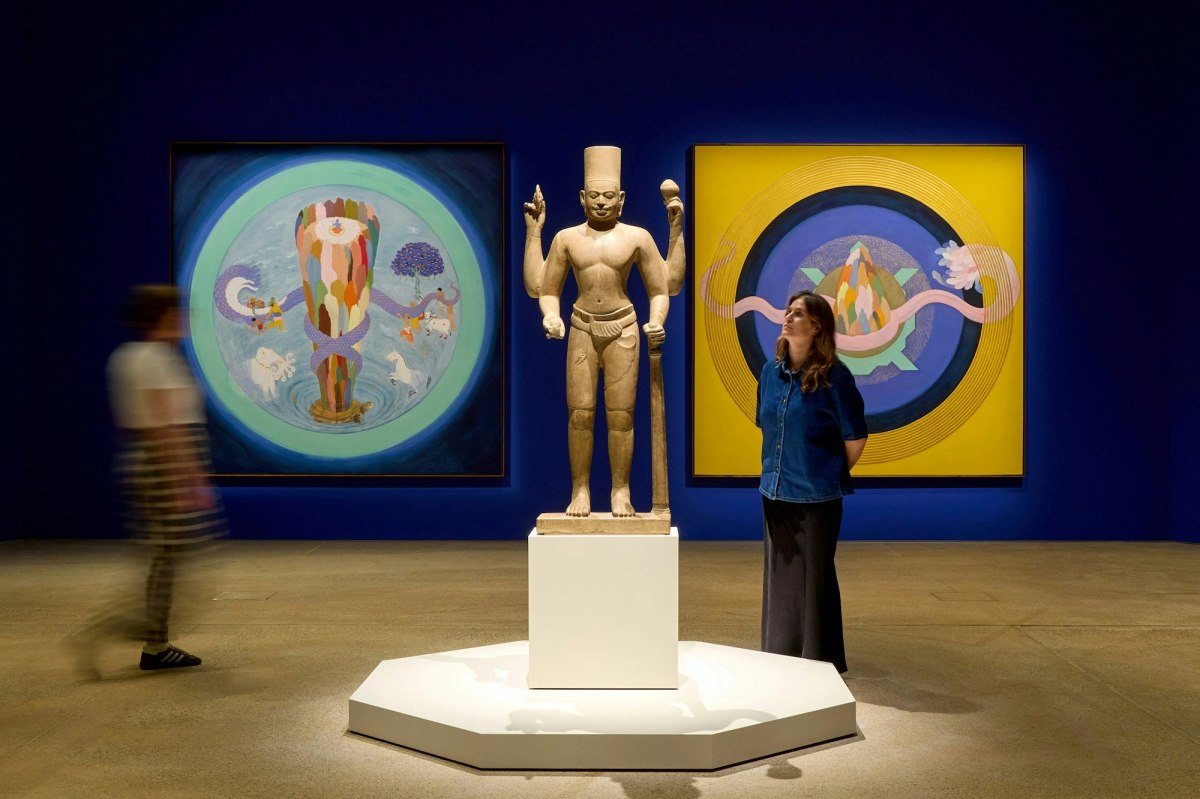
One work of carved sandstone from Cambodia in the early 800s depicts a four-armed lord holding a discus, conch, club and globe. Its simplicity – a naturalistic figure decorated only with a cylindrical headpiece and skirt cloth (sampot) – alludes to Vishnu’s status with the Khmer kings.
Behind this sculpture hang two large contemporary paintings by Desmond Lazaro.

Lazaro describes the foundational Hindu story in The Churning of the Ocean of Milk (2026), paired with his Mount Mandara (2026).
The first, a circular form painted in colours from hand-ground ochres, describes the coming together of gods and demons to churn the ocean to retrieve the nectar of immortality, releasing both poison and divine treasure.
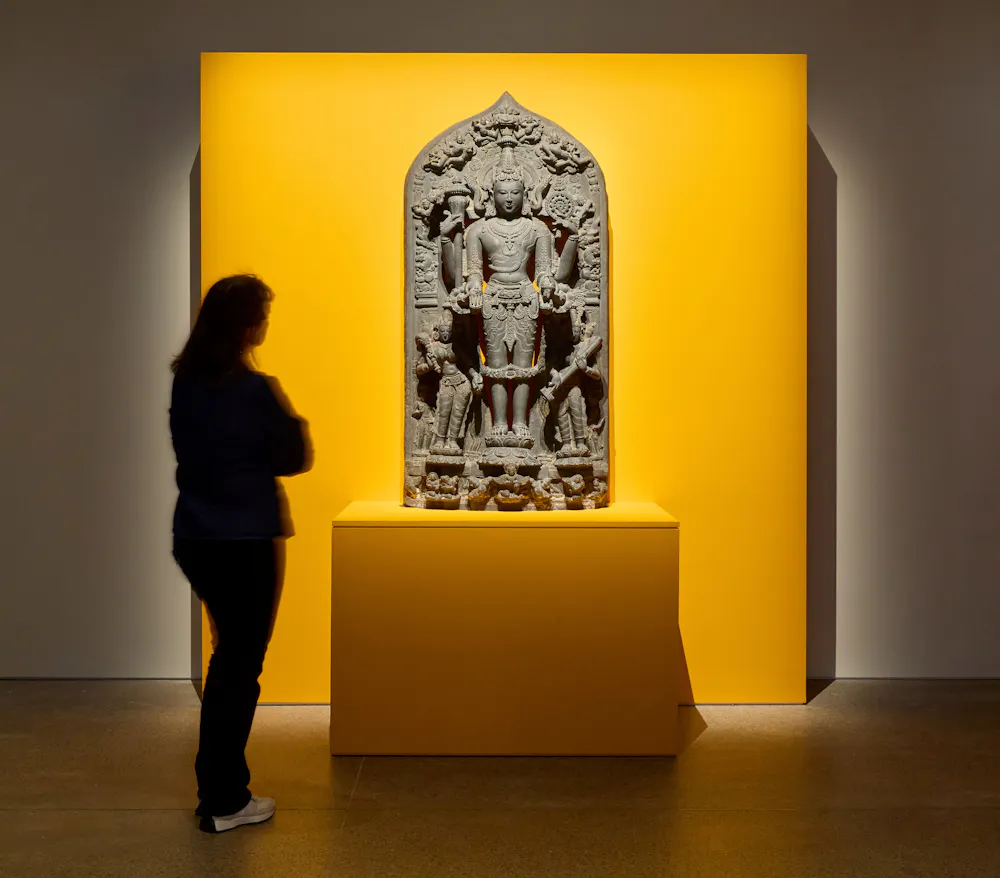
A soapstone carving of Lakshmi Narasimha, Vishnu’s man-lion avatar, from Odisha, India in the 1200s, is framed by Threshold (2026), a contemporary installation crafted in cotton and silk by Sumakshi Singh.

Elements highlighted for contemporary audiences include the feminist consciousness in these stories. The energy of the shakti from their female consorts is crucial to Vishnu’s avatars to complete their tasks.
Human transformation
The final theme of the exhibition is titled Vishnu’s Cosmos. The vibrant Kaavad shrine (2015) by Satyanarayan Suthar draws cars and planes together with gods and goddesses in a traditional kaavad (portable folding storyboard).
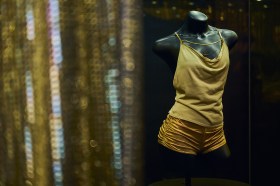
An intriguing series of printed oleographs (prints made to resemble paintings) from the art publisher Rami Varma Press (1894–1972) are sumptuously decorated with embroidery, cloth and sequins to honour the deities.

A sandstone carving of Vajimukha (Hayagriva or Kalkin) from the late 500s or early 600s guards this final gallery. The figure is bare-chested, with a simple skirt falling below the knee, and horsehead sitting naturalistically on human shoulders.
The head may refer to Vishu’s final avatar Kalki, prophesied to appear during a conflict-riddled time, promising a new age of truth and virtue.
This is the first Australian exhibition devoted to Vishnu, and the largest to focus on South and Southeast Asian art for 20 years. In this, Avatar acknowledges an evolving cultural landscape and the growing proportion of Australians with a South and Southeast Asian background.
In this exhibition, mythology is positioned as an adaptive visual language through which artists explore identity, resilience, morality, devotion and the potential in human transformation.
Avatar: Forms of Vishnu is at the Art Gallery of New South Wales, Sydney, until 5 October.
Louise Martin-Chew, Honorary Research Fellow, School of Communication and Arts, The University of Queensland
This article is republished from The Conversation under a Creative Commons license. Read the original article.
Discover more screen, games & arts news and reviews on ScreenHub and ArtsHub. Sign up for our free ArtsHub and ScreenHub newsletters.