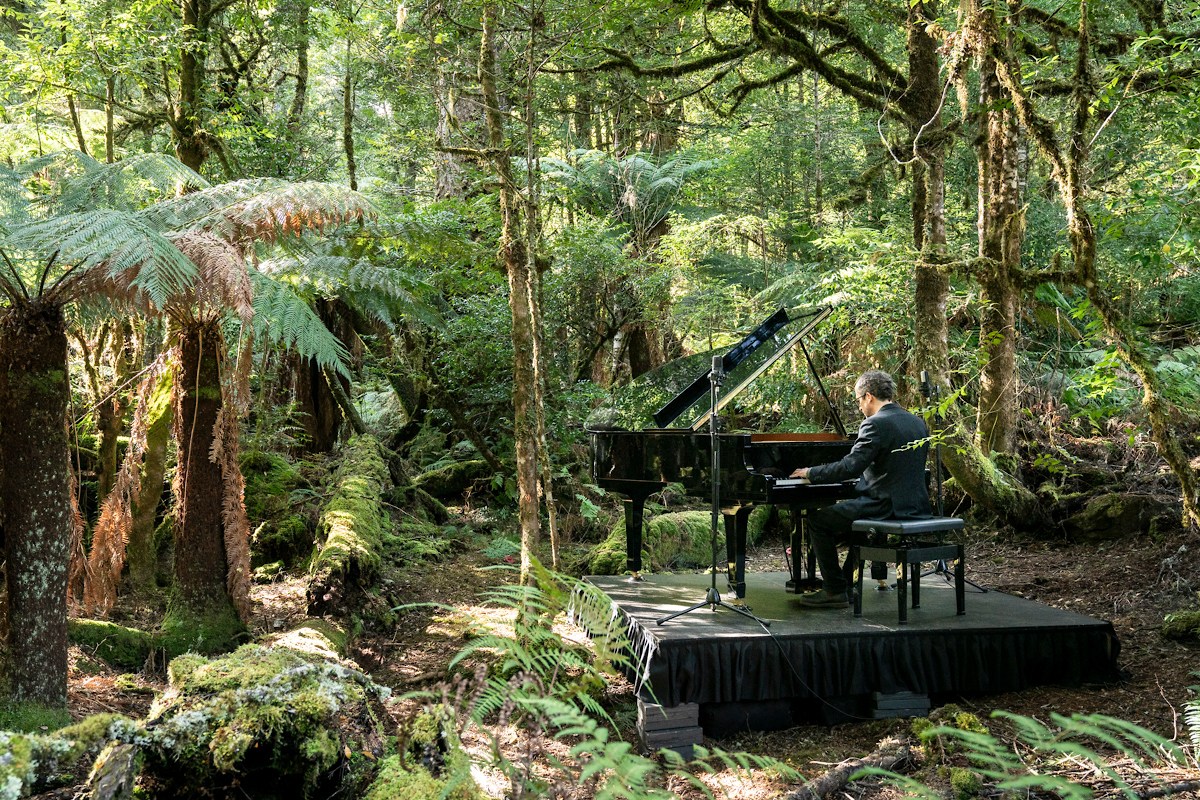
Takayna, also known as the Tarkine, is a vast, ecologically and culturally significant wilderness in northwest Lutruwita/Tasmania. Home to ancient forests that are rich with Aboriginal significance to the palawa pakana people, and providing critical habitat for threatened and endangered species, it faces threats from the logging and mining industries. One of the last wild places on earth, the Bob Brown Foundation is calling for World Heritage Status and returning Takayna to the traditional owners.
In 2015, the foundation started the annual Art for Takayna residency to raise awareness when Dan Brown and Jenny Webber took professional photographers to get high-quality photos of this wild and precious place. They called it Tarkine in Motion, and it became incredibly popular.
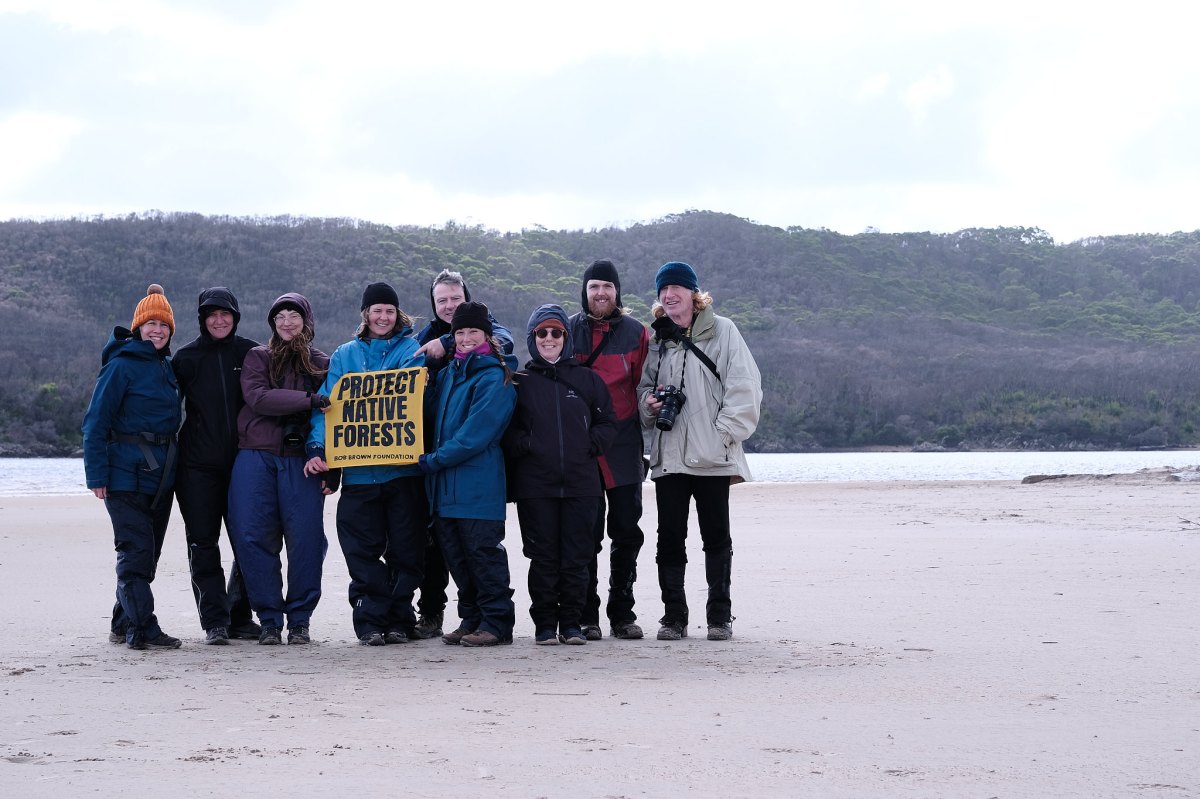
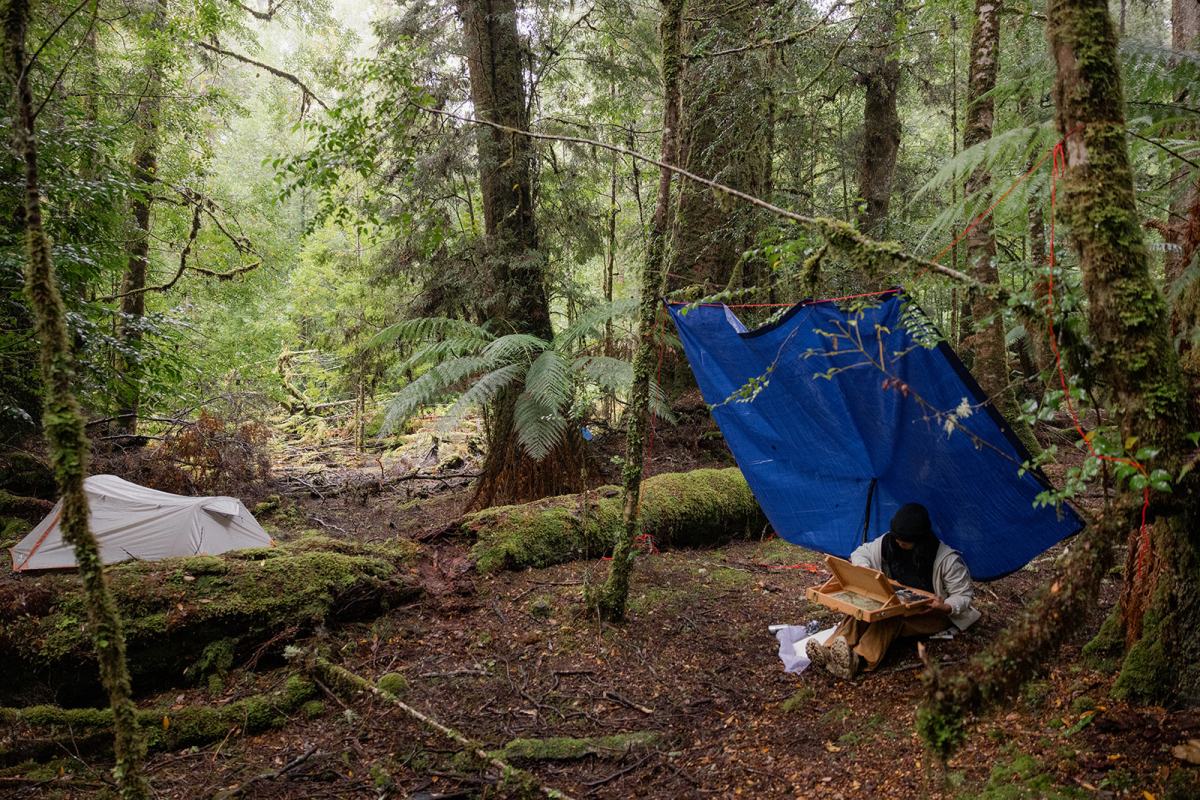
Roughly 870 artists later, the residency immerses creatives in a five-day camping experience in Takayna – where the weather can be wild, and nature fuels the senses. There are guided walks each day with scientists, activists and guides to encourage connection – and the use of creativity for environmental action.
‘The artists get to have an immersion with people who are experts in their field; they get to see it through a scientist’s eyes, an activist’s eyes, and sometimes we’re lucky enough to have some of the palawa pakana community come [so residents can] see it through cultural eyes as well,’ says Kat Traill, Event Producer at Bob Brown Foundation.
Art for Takayna residency – quick links
The role of art in protecting the Takayna wilderness
The Art for Takayna residency asks artists: how will your artistic practice contribute to the campaign to protect Takayna after participating?
In one way, participants create an artwork for the annual fundraising exhibition in Hobart, with a percentage of proceeds supporting the campaign. The contributions vary – from paintings and cartoons to installations and performances. And they are shown around the country to raise awareness. But that awareness raising continues in other ways too.
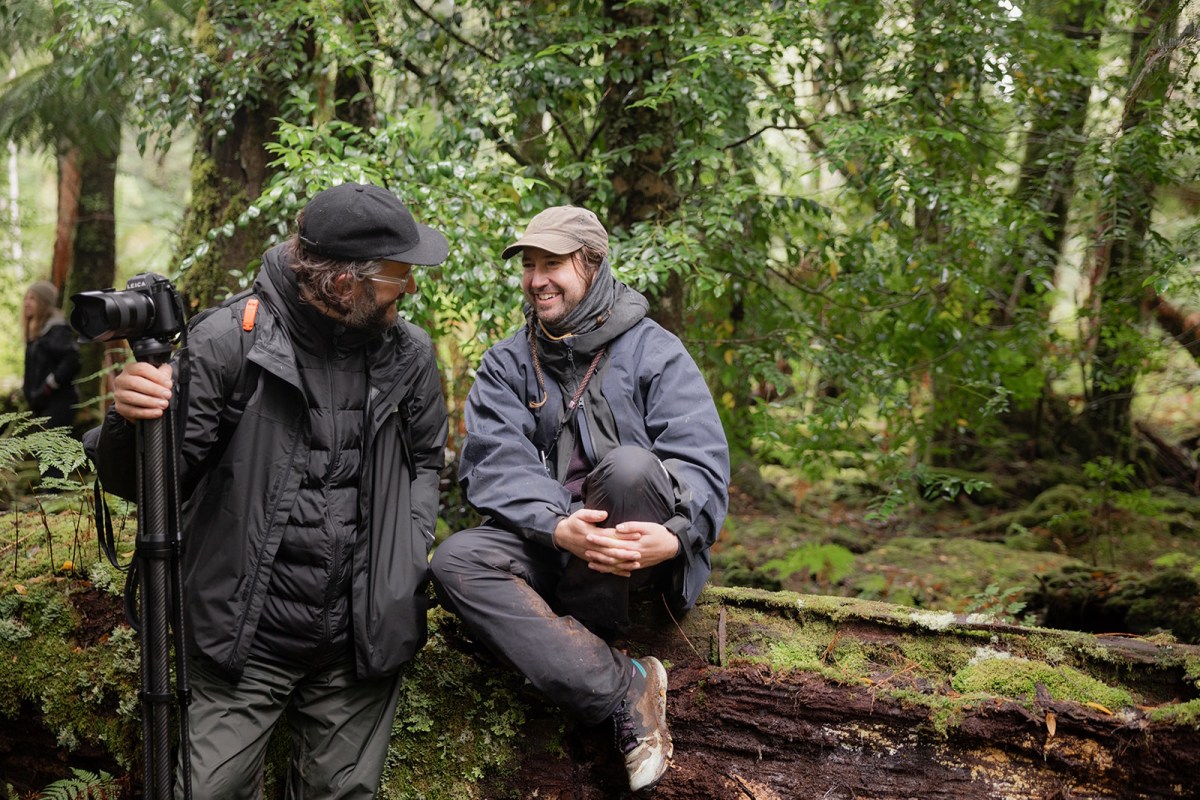
David Booth and Kristoffer Paulsen’s collaborative exhibition Takayna Forest Face is at CS Gallery in Caroline Springs, Victoria until 12 October. The works in this exhibition take the viewer into the forest and use personification to humanise the wildness, with large wooden boards crafted into eyes, noses and mouths, balanced on trees and into the damp, wet foliage. The bright colour palette of these boards evokes preschool aesthetics, sitting in contrast with the melancholic landscape.
Booth was on the Takayna residency two years prior and came up with the idea to make faces in the trees; he scouted the spots and returned to the studio to hand-carve the boards with the human-sized facial features. He collaborated with Kristoffer Paulsen for the photography, and they brought in the 50 shapes, with the process unfolding through walking, talking, playing and chasing the light.
For Paulsen, 2026 was his first year in Takayna, and it was incredibly cold and wet. The dark, moody composition of his photography reveals this sense of depth, one that continued in his personal life.
‘It was very wild and very untamed … It made you feel quite small in a lot of ways,’ Paulsen says. ‘The mighty forest in a constant cycle, breaking itself down and regrowing itself. It feels so ancient.’
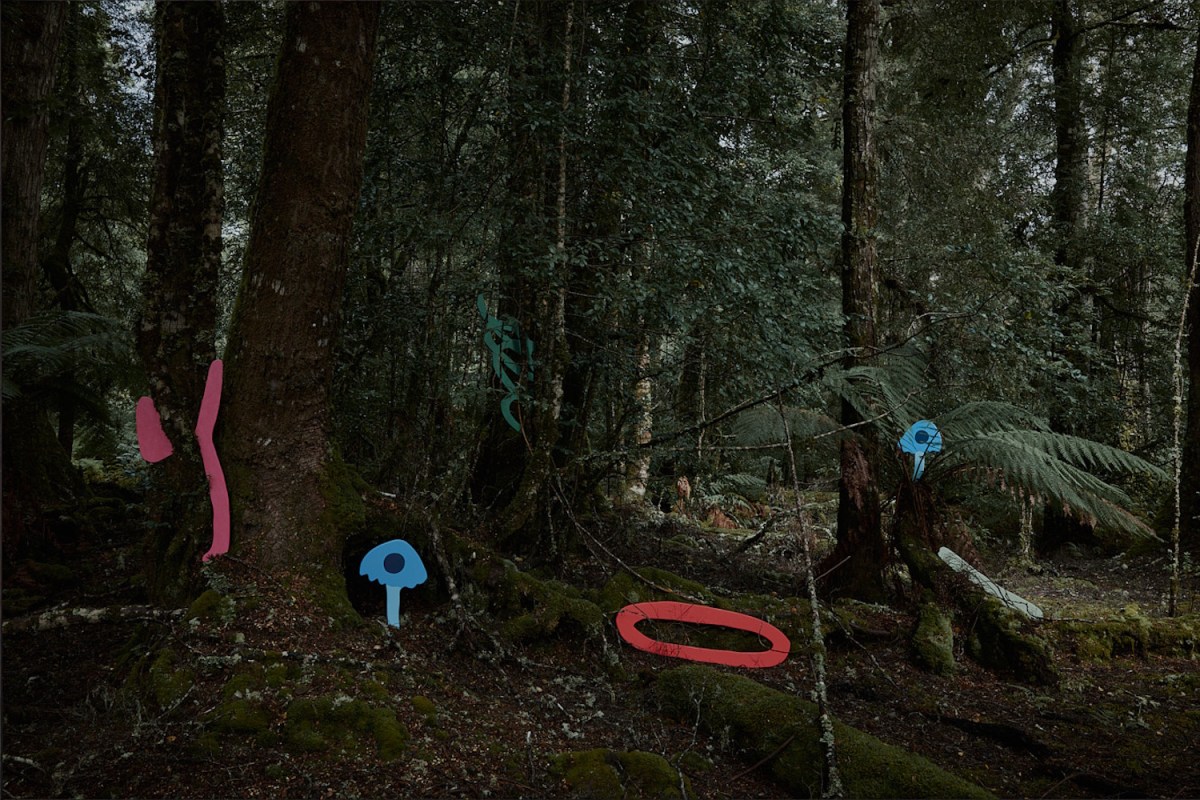
The nine final images preseted in Takayna Forest Face invite the viewer to get lost in the scene and find the face in the abstract placement. And in doing so, spend time with this ancient, slow-moving forest. ‘Photography is a great vehicle to show something for what it is … The environment is under threat,’ says Paulsen.
This mission, using art to change minds, is at the heart of what the Bob Brown Foundation is doing.
Breathing with the forest
The Tasmanian-born Booth is now an artist for the foundation. His art taps into a childlike wonder of the world, as well as a distinct nostalgia, in part inspired by growing up watching Bob Brown’s powerful documentary, Save the Franklin River.
Brown understood the power of art and images – they become accessible and relatable ways to process emotions and build connection. As Booth says, ‘The foundation has done a great job at incorporating teaching about the forest and the stories that have united people to stand up and protect a special place. After each visit, I’ve been left with a huge sense of privilege to spend time in such an ancient and unique place.’
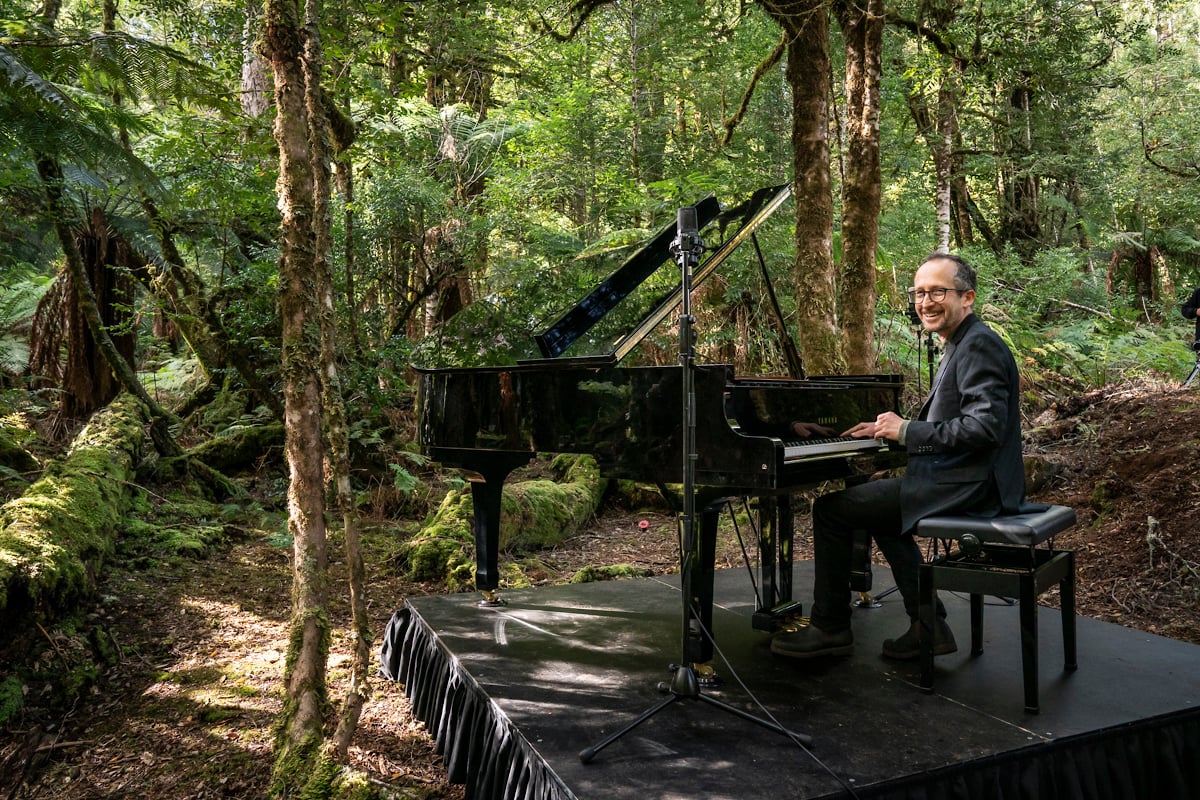
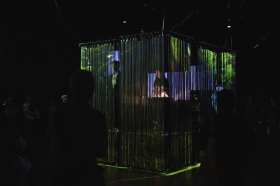
Iconically, musician Dave McEvoy brought a grand piano down to Takayna in 2025. The resulting performance comes to Adelaide’s Immersive Light and Art from 18 September to 10 October as part of South Australia’s Nature Festival in collaboration with the Bob Brown Foundation.
McEvoy has described his experience as ‘breathing with the forest’, immersed in the green space and 85% humidity. ‘It left me with an overwhelmingly positive feeling and incredible surge of wellness,’ he shared, also revealing that it inspired new directions in his music.
‘The music is so much slower than what I normally play in a city environment or in my normal environment. I think that’s an indicator of how our lives, if we’re more in touch with nature or living more sustainably, we probably would be a lot slower.’
Using art to drive change
Illustrator Trace Balla has dedicated her life to creating art for social and ecological change. Her new book Treeshape, published by Allen and Unwin, features the project’s main campaigners – Scott Jordan, Jenny Weber, Palawa activist Cody Gangell and Colette Harmsen – in softly drawn illustrations and photography from her residency, all to encourage protection of the vulnerable Takayna environment.
The residency has been critical to her practice as she raises awareness of nature. ‘Going on the guided walks and hearing from the guides and campaigners really helped it all sink in while we were there, as well as spending quiet time alone amongst the forest life,’ she says. ‘When I draw, I look closer and notice more and start to understand more. It is an intimate experience between me and what I am drawing.’
Landscape painter Chloe Caday also recently went to Takayna – her first residency away from her young children. She knew it would be an impactful experience, especially as her work reflects on place and what landscapes can mean to individuals.
Born in the Philippines and now based in Victoria, Caday often works in the Australian bush, and her practice is underpinned by deep involvement in protecting and preserving her adopted country. While in Takayna, her camp leader took her group to a 600-year-old eucalyptus tree marked for logging. It set a deep tone for the rest of her time there, on why she left her young family, and what she wanted to achieve.
‘The residency has raised a lot of questions in my own life and art practice and how I can utilise my art practice to drive change,’ she adds. ‘It’s an ongoing exchange, but months following on from the residency, I often find myself asking these questions, particularly when I am spending time at home in the bush and before I create new work.’
‘It reconfirmed my faith in humanity’
At the heart of the residency is protecting Takayna, which is constantly under threat from mining and logging companies. McEvoy says: ‘The Bob Brown Foundation are actively doing incredible work, physically stopping machinery from getting in there to log.’
It’s something that the First Dog on the Moon cartoonist Andrew Marlton felt as well on his trip in 2025. ‘From where we were in Takayna, we could hear the mines off in the distance at night,’ he says.
Marlton spent time with the activists who chain themselves to bulldozers, or who live in a gum tree for six months. ‘I’m wildly cynical,’ he adds. ‘But it reconfirmed my faith in humanity in ways that I wasn’t expecting.’
In First Dog on the Moon, Marlton pokes fun at the absurdity of what’s happening, also offering moments of comic relief. As a right-wing commentator described, it’s like comfort food for the left. But what happens when artists grow exhausted by the fight to preserve these places critical to biodiversity?
Marlton calls the activists ‘actual heroes … These are people who put their wellbeing on the line, who are willing to go to jail for this stuff. That’s heroic.’ Fundamentally, the residency offered him a chance to get out of his own head and build hope.