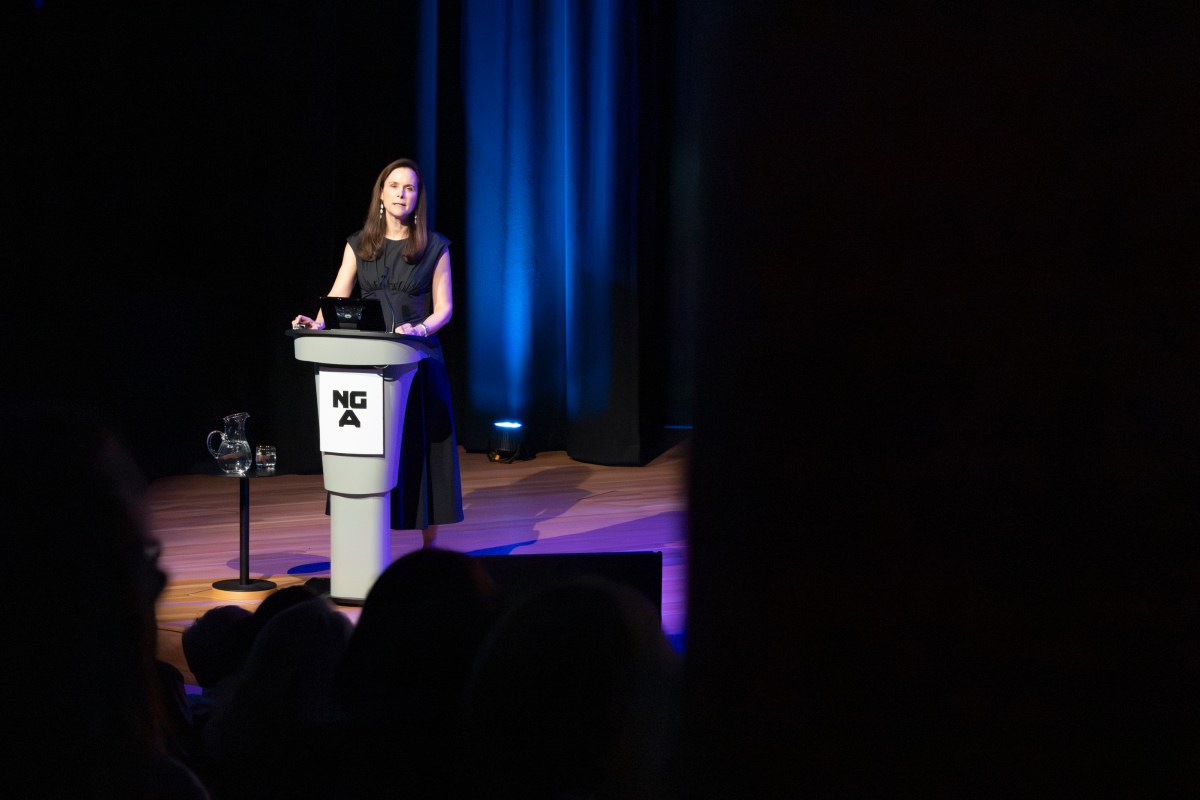
This year the Betty Churcher AO Memorial Oration at the National Gallery of Australia was delivered by Quincy Houghton, Associate Director for Exhibitions at The Metropolitan Museum of Art in New York – one of the world’s largest and most complex collecting institutions.
Over the past decade, The Met has navigated a period of intense transformation marked by financial volatility, leadership shifts, staff cuts, building projects and an industry-wide reckoning over the ethics of collecting.
While the museum remains a global titan, its recent history has been a balancing act between maintaining a 19th century legacy and adapting to 21st century expectations. What can Australian institutions learn from that challenging trajectory? ArtsHub delves into Houghton’s keynote.
Lessons from The Met – quick links
1. Early encounters with art shape cultural careers
Houghton began her lecture reflecting upon her childhood in Corning, New York, where exposure to art books sparked a lifelong engagement with visual culture. She recalls spending hours studying images from influential publications, particularly The Family of Man by Edward Steichen and a retrospective catalogue of photographer Diane Arbus from Museum of Modern Art.
‘I cannot tell you how many hours I spent looking at the photographs … entranced by the pictures and the stories that they told,’ she said, noting the long-term impact early cultural exposure can have.
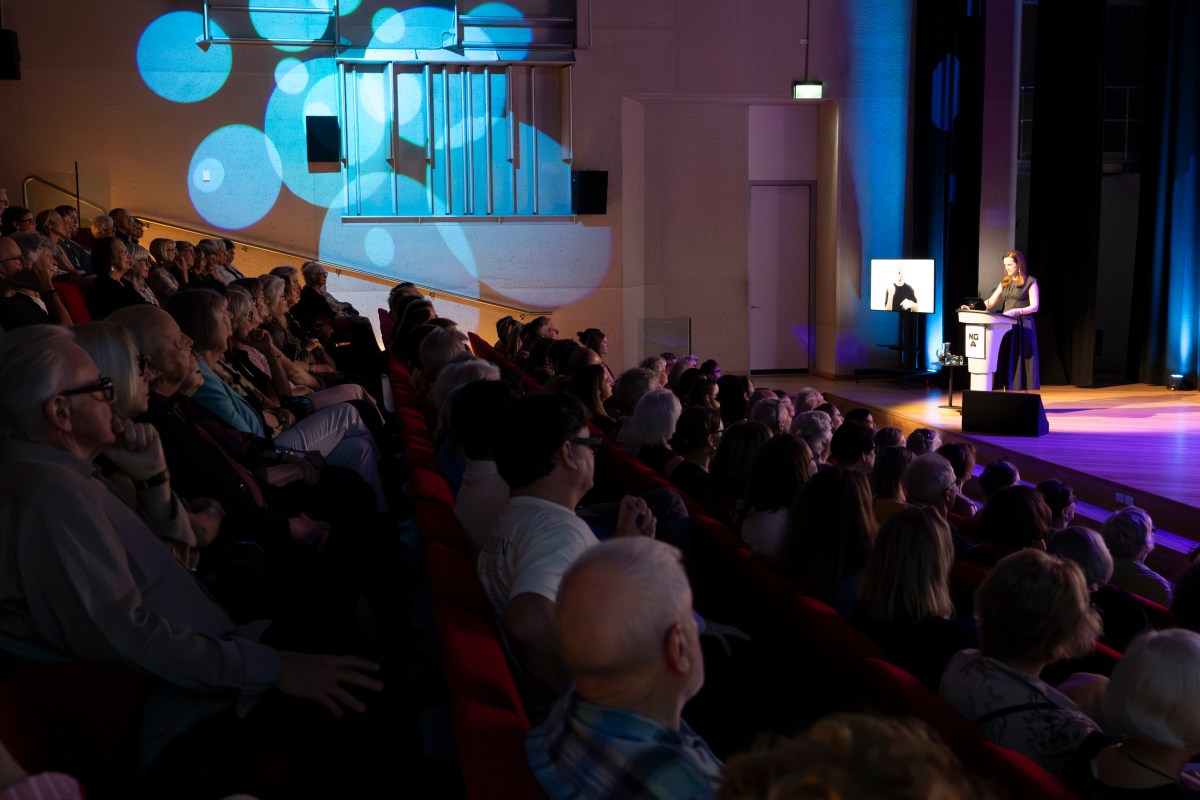
Houghton emphasised that cultural institutions must not only recognise their role as repositories of objects and exhibition makers, but that their publications can also inspire future generations of artists, curators and cultural leaders.
2. Collections should anchor exhibition programs
A central lesson from Houghton’s career – particularly her work at the J Paul Getty Museum in Los Angeles – is the importance of building exhibitions around permanent collections.
When the Getty Center opened in 1997, the institution needed to establish its identity. Houghton explained: ‘One priority we established early on, was that the exhibitions program would be anchored in the permanent collection.’
For museums today, this approach ensures exhibitions remain cost-effective and aligned with institutional strengths. It also reinforces the idea that temporary exhibitions should extend and reinterpret collection narratives, rather than operate independently from them.
3. There are times for both large and small exhibitions
Less really can be more.
While blockbuster exhibitions attract global attention, Houghton stressed the importance of smaller, tightly focused shows dedicated to specific works. She used an exhibition of watercolours by Paul Cézanne to demonstrate how concentrated curatorial inquiry can produce powerful visitor experiences.
‘Less really can be more with tightly focused exhibitions. I think they are absolute gems and often overlooked,’ said Houghton.
These exhibitions often require fewer loans and resources, and provide opportunities for emerging curators to develop expertise. ‘They’re great training opportunities for younger curators to learn the ropes,’ she added.
For museum leaders, the lesson is to maintain balance in programming that enriches institutional expertise.
4. Global partnerships expand museum impact
Houghton emphasised the importance of international collaboration. ‘Negotiating ambitious international loans … allows us to bring extraordinary works of art together under one roof.’ She added that these collaborations are essential to the success of global museums and demonstrate the power of cultural diplomacy, especially in our times.
She described the complexity of negotiating loans. For example, the need to design specialised transport crates that maintained humidity conditions to protect fragile icons from the Monastery of Saint Catherine in Egypt. Despite these logistics, she stressed that these kinds of loans strengthen institutional relationships and enable audiences to experience works that rarely travel. And audiences reward such efforts by attending.
She added that the great lesson here is recognising the time it takes to invest in and build those long-term relationships.
5. Don’t leave historical collections in the past
The most impressive statistic about The Met is not about exhibitions. It’s about our commitment to enhancing our permanent collection galleries.
Houghton spoke of the Getty’s exhibition of Bill Viola’s work that responds directly to Renaissance and Medieval works in the museum. She explained: ‘Contemporary artists whose practice was strongly tied to our permanent collection created powerful dialogues with historical works.’
For audiences, this approach bridges past and present, she said, and encourages visitors to see historical art through new lenses while allowing contemporary artists to reinterpret historical record.
Today, museums globally have increasingly adopted this model, recognising that contemporary commissions allow collections to remain relevant and intellectually dynamic.
In an extension of that, The Met is currently undertaking a decade-long initiative to renovate a quarter of its galleries, ensuring that narratives remain relevant and inclusive. Part of that has been an ongoing effort to ‘decolonise’ the galleries, rewriting labels and recontextualising how art is presented.
Following a massive four-year US$70 million renovation, the reopening of the Rockefeller Wing in 2025 – which displays arts of Africa, Oceania and the ancient Americas – demonstrates how institutions increasingly collaborate with source communities when interpreting collections. It involved an audit of provenance on all objects and the commissioning of contemporary Indigenous artists to show their work as a ‘living’ dialogue with culture.
Houghton concluded: ‘I actually think the most impressive statistic about The Met is not about exhibitions. It’s about our commitment to enhancing our permanent collection galleries – in the decade between 2021 and 2031, one quarter of The Met’s galleries will be renewed and refreshed with updated narratives, improving the way we present our collections in dialogue with the current time.’
6. Strategic planning shapes successful exhibition programs
It is the range and rhythm of exhibitions – the balance of the program – that is really the most important thing that we focus on.
The Met today consists of 21 different wings, which have a footprint of roughly four city blocks and a staff of almost 2000. Within that, Houghton oversees a program of around 35 to 40 exhibitions annually, across 19 curatorial departments and over 1.5 million objects.
Careful planning is essential, and the museum has a responsibility to carefully balance themes, scales and audiences, explained Houghton. ‘We look across multiple years to consider what shows are opposite each other, what spaces are up while others are down, what shows are in anchor spaces and seasons, what shows we can take more risks on, and the kind of counter program versus the ones we need to count on more for audience generation, and the right mix of thematic and monographic exhibitions.’
She continued, ‘Although a huge amount of time and effort and resources are spent developing each individual project, it is the range and rhythm of exhibitions – the balance of the program – that is really the most important thing that we focus on.’
Welcoming some 6.3 million visitors – 40% who have told the gallery they visit for name-specific temporary exhibitions – means that ensuring diversity and coherence within the overall program is critical. It is a great lesson that, regardless of institutional scale, exhibitions should be understood not as isolated events but as components of a broader institutional rhythm.
7. Exhibitions drive visitor engagement
For museums competing in crowded cultural landscapes – particularly in cities like New York – dynamic exhibition programs are essential for attracting and retaining audiences.
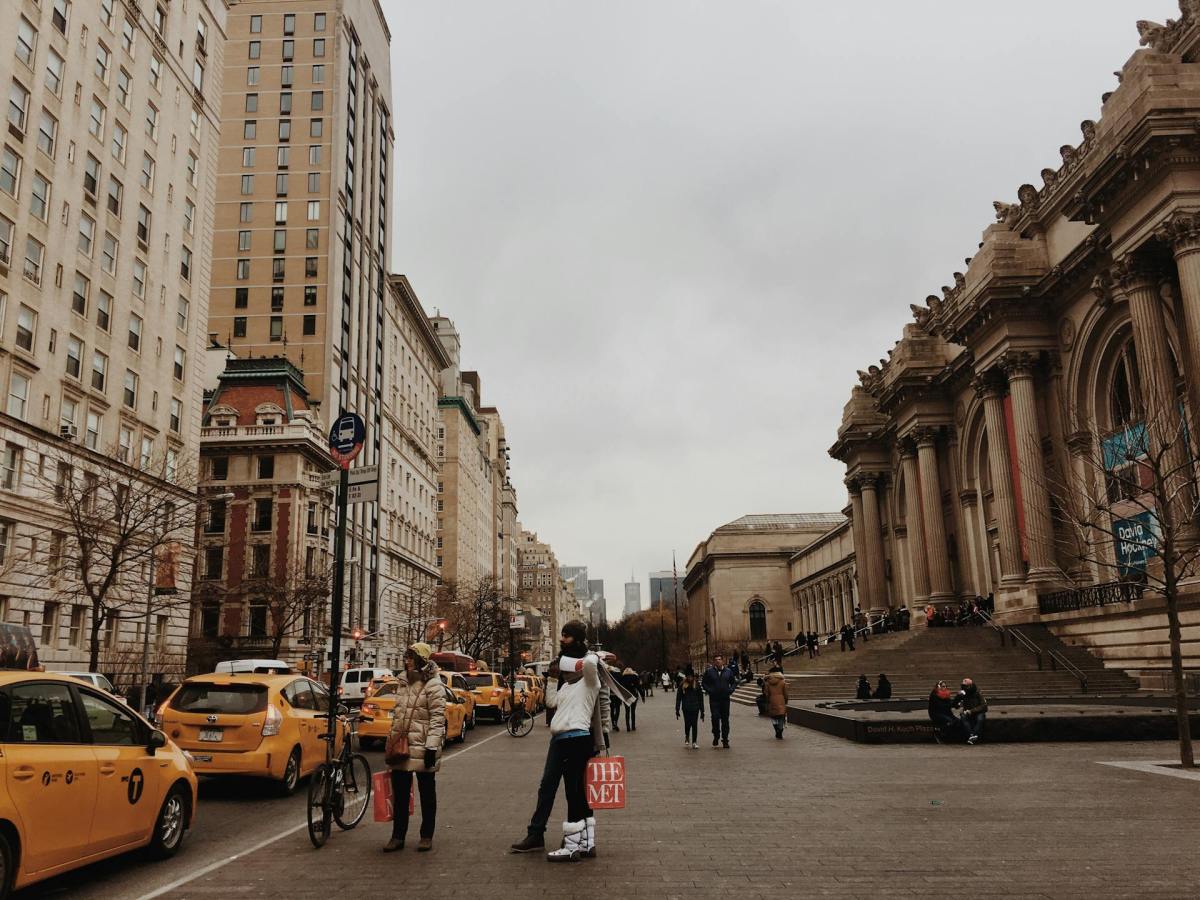
Following the Covid-19 pandemic, The Met saw increased local visitation, highlighting the need to cultivate and engage nearby communities as well as international tourists. Facing a pandemic shortfall of US$150 million in revenue – one it had addressed via the introduction of a US$25 entry fee in 2018, and has since raised – the museum had to design exhibitions that resonated both globally and locally, she said.
Touring exhibitions represent another strategy for extending institutional reach. Like the NGA, The Met collaborates with museums worldwide to circulate exhibitions and share its collections, including presentations in Asia and Australia.
‘These touring projects are important to us for a variety of reasons, including revenue generation, but most importantly, it’s about further developing our global presence,’ said Houghton.
8. Inclusive narratives and representation matter
Uplift the voices that still need amplification.
A major theme of the lecture was the responsibility of museums to broaden representation in exhibitions and collections.
Houghton highlights the importance of amplifying women’s contributions to art history and contemporary practice. She stressed that museums must actively shape inclusive narratives: ‘I believe it is my job – it is our job – to uplift women’s contribution to the arts, however we can.’
In response to an open letter from over 150 employees in 2020, the museum hired its first Chief Diversity Officer and committed to a multi-million dollar fund for initiatives centered on diverse art histories.
She spoke of The Met’s Women Dressing Women exhibition as a great example of the types of shows we need to do. ‘The exhibition celebrated and elevated the contributions of female designers, many of whom either worked anonymously or were overshadowed by the lead male designers of fashion houses.’
This commitment also extends to recognising historically overlooked communities, designers and artists, whose work has been marginalised within traditional museum narratives, in order to ‘uplift the voices that still need amplification’.
9. Museums are spaces for reflection and cultural understanding
Our job is to encourage people to appreciate and learn from the other, not be fearful of it.
During the pandemic closure of The Met, the empty museum steps – once filled with visitors – symbolised the loss of shared cultural space and reinforced the museum’s cultural significance.
Houghton said that when the museum reopened, the first visitor entering the building represented the renewed significance of museums as places of reflection and cross-cultural understanding.
‘Our greatest responsibility and gift … is to provide moments of reflection and joy,’ she reminds those working in the sector.
Houghton also argued that museums have a responsibility to foster curiosity about different cultures and encourage empathy rather than fear of difference. ‘Our job is to encourage people to appreciate and learn from the other, not be fearful of it – embracing instead of suppressing different cultures and cultural expressions.’
She continued that it is important ‘to offer a kind of safe haven for people in the midst of this crazy universe that we’re living in – for people to be able to come in, anchor oneself, look at collections across time, across place … I think one challenge is that we need to keep telling the stories that represent all of us. Some museums are feeling the pressure to be a little more selective about those stories. At The Met, we really want to make sure we are as comprehensive and inclusive as possible.’
The average duration of a visit to The Met is two and a half hours.
10. Museums work better together
When you work together with other institutions, you’re able to benefit multiple communities.
Houghton concluded by reminding the sector that it is important to share information and tips. ‘All of us are grappling with similar issues … [and] sometimes smaller museums have a really important different perspective on things,’ said Houghton. ‘They don’t have a huge team, and they really think carefully about how they spend their money, and that’s a good lesson for us.’
She is part of an international exhibitions cohort. ‘We share war stories, we share experiences, and we partner. When you work together with other institutions, you’re able to benefit multiple communities. You can share the costs a little bit more effectively. You can sell the book in more places. It’s really a win-win.’
Houghton added that there is very little heated rivalry between institutions. ‘Maybe there’s a friendly competition, but we work closely to make sure we’re not opening shows at the same time – we really navigate it like a shared space.’
And when it came to advice about starting out in the museum sector, Houghton said, ‘You have to be committed to working in nonprofits,’ adding that you will not always find the big salaries.
‘One thing that I say is, don’t be afraid to take a limited term job,’ she said. ‘A lot of people, particularly when they’re coming out of university, want a permanent job. Often there are end-dated jobs in museums, research assistants, or project specific jobs. Take those. They are great experience. I did that when I went to the Getty. It was a three-year job, and it turned into 22 years. Take the plunge.’