
As the end of financial year approaches, artists and arts organisations across Australia are preparing for one of the busiest fundraising periods of the year. For many, EOFY represents a rare window where donors are actively thinking about giving – and where tax deductibility can make a significant difference.
That’s where the Australian Cultural Fund comes in.
Run through Creative Australia, the ACF is a free fundraising platform that allows artists, collectives and arts organisations to receive tax-deductible donations for creative projects.
According to Tracy Woolacott, Australian Cultural Fund Manager, the platform was designed to ‘level the playing field in terms of fundraising in Australia’. In particular, artists and organisations do not need to have Deductible Gift Recipient status to use the ACF for fundraising.
‘Typically it tends to be the bigger organisations who can get [DGR status]. And that basically means that if someone donates to them, they can give them a tax deduction,’ Woolacott explains. ‘A lot of the sector – independent artists, small groups, collectives, even small orgs – can’t offer that same kind of perk as the bigger organisations. That’s where we come in.’
EOFY with Australian Cultural Fund – quick links
A free fundraising platform for artists and organisations
ACF supports projects across theatre, music, literature, dance, visual arts and more. Campaigns can be public crowdfunding drives or private donation portals for major gifts.
Woolacott says the platform removes significant administrative barriers for artists and organisations that may not have the time, staffing, payment portals or resources to manage fundraising infrastructure themselves.
‘If you’re an independent artist who doesn’t have much spare time to deal with admin burden as it is, we can relieve some of that,’ she says. ‘[Applicants] don’t have to set up their own [system], they don’t have to deal with creating their own platform or figuring out how to receive donations. We’re already doing that for them … It’s really cool, and it’s really effective.’
Applying is relatively straightforward. Users first submit a basic profile outlining who they are and their creative practice. Once approved, they gain access to the ACF dashboard, where they can create and manage fundraising projects.
Importantly, applicants do not need their own DGR endorsement to use the platform. The ACF platform allows users to offer that same tax deductibility.
The growth of the platform reflects increasing demand for alternative arts funding pathways. The ACF facilitated around $15 million in donations last year alone.
‘It’s really nice to see the increase in funding that’s going out to a sector that historically is underfunded,’ says Woolacott.
Why EOFY matters for arts fundraising
EOFY is one of the most active fundraising periods on the platform. Around 30% of all ACF donations are made during May and June, equating to roughly $4.5 million in donations.
Research from ntegrity shows that 59% of donors make spontaneous decisions around EOFY, making it an important opportunity for artists and organisations to engage supporters.
But Woolacott says successful fundraising is rarely about appealing to strangers.
‘Fundraising now is really focused on relationship building,’ she says. ‘I would say 99% of donors who come to our platform will receive a direct link from someone that they know, whether they see it on socials or an email blast.’
She encourages artists to think carefully about how they communicate the value and impact of their work.
‘If you are really good at articulating not just necessarily what your project is, but why it’s important, people will connect with that,’ she says. ‘No one’s going to support you if they don’t connect to what you’re doing.’
How The Women’s Club uses the ACF for sustainable fundraising
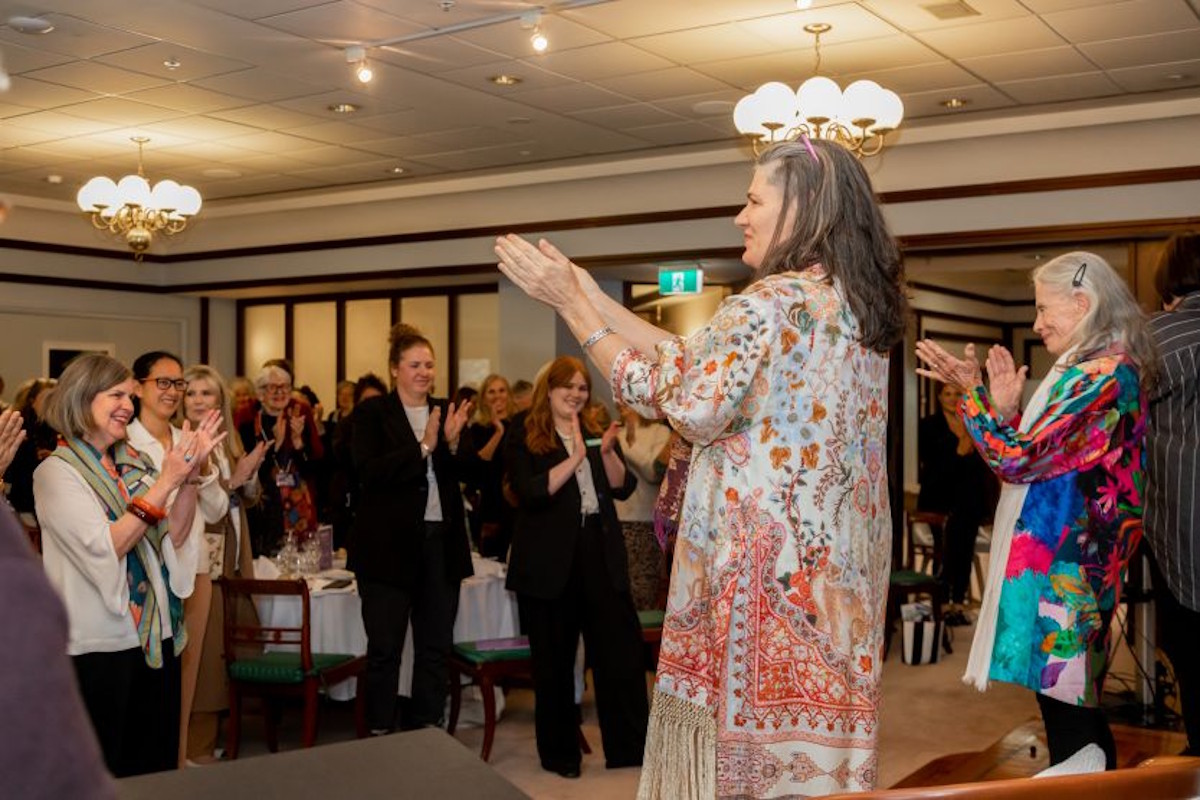
One organisation that has successfully embraced the ACF model is The Women’s Club – an organisation founded in Sydney in 1901 as a ‘sanctuary where women could gather, exchange ideas and enrich their lives’ – which uses the platform to support initiatives including the Rose Scott Women’s Writers Festival, which has been running since 2012.
‘The Rose Scott Women Writers Festival has a very clear remit,’ says The Women’s Club CEO Danielle Asciak. ‘It’s about creating a platform for women writers, for women’s stories and voices to be heard.’
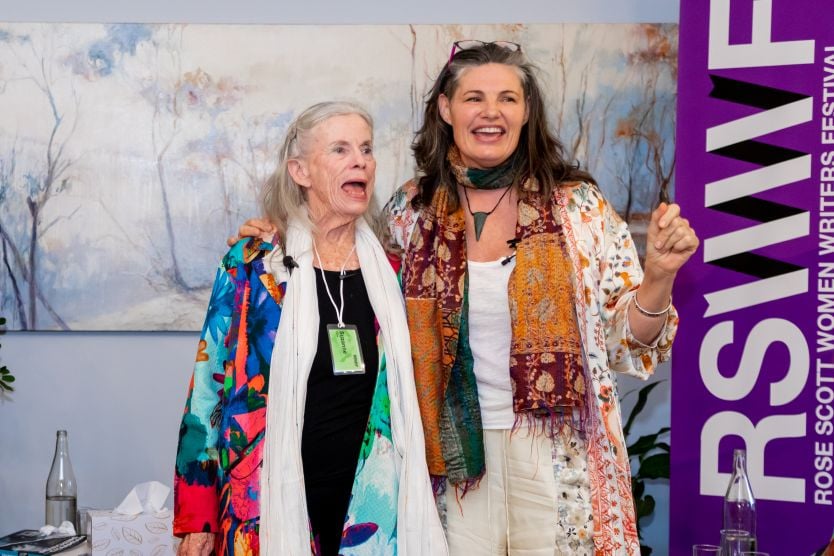
Named after journalist, suffragette and reformer Rose Scott, the festival presents panels, conversations and workshops that foreground diverse women’s perspectives and creative voices, and is designed as a safe space for attendees of all gender identities.
The organisation began using the ACF after recognising that its lack of DGR status limited fundraising potential.
‘The Women’s Club operates like a not-for-profit, but we don’t have DGR status,’ Asciak explains. ‘Any gift previously that’s been given to the club, it’s not tax deductible.’
‘The Australian Cultural Fund allows us to give tax-deductible receipts to our donors,’ she says, adding that in the past this has meant existing donors ‘could double or triple their donation to the Rose Scott Women Writers Festival’.
This isn’t Asciak’s first rodeo, however. Before she joined The Women’s Club, Asciak was touring around as an independent musician and cabaret performer, and she was able to use the ACF platform to successfully raise funds to support her art.
Nowadays, she says the administrative ease of the platform has also been invaluable for a small organisation without a dedicated fundraising team. ‘It’s very clean, it’s very easy to use, easy to link back to your website, and easy for your donors to navigate,’ Asciak says.
‘For a very small organisation with no [dedicated] philanthropy and fundraising team, having access to that platform is gold. It allows you to focus on the things that are really important … instead of fussing about on the administration side.’
Top tips for arts fundraising
Drawing on her experience with the ACF platform, Asciak has three main tips for arts organisations hoping to capitalise on EOFY fundraising.
Relationships are everything
Asciak says relationship-building is everything. ‘Fundraising really comes down to relationships and understanding your donors,’ she says.
‘If someone has capacity to make a donation and they’ve donated in the past, the first thing to do is to have a conversation with them about why they donate, what impact it’s having [and] what they would like to see accomplished with their donation.’
Don’t be afraid to ask
Asciak also encourages organisations not to underestimate the importance of directly asking for support. She recalls one early campaign where the organisation had nearly reached its target, but still needed an additional $5000.
‘I sat down with a member and she asked me, “What do you need to reach your target?” And I said, “$5000,” and she said, “OK, I’ll give you $5000”.’
Use strategic data
Asciak recommends using data strategically as well, particularly when identifying supporters who may already be engaged but haven’t yet donated.
‘If you look at anyone who has clicked on a link to donate but didn’t follow through, that’s who you want to target specifically the next time around with a personalised message,’ she says.
Supporting the future of the arts sector
Asciak believes grassroots arts organisations play a critical role in sustaining Australia’s creative ecosystem, particularly as funding pressures intensify.
‘We know that the grant-giving landscape is changing,’ she says. ‘A lot of grassroots organisations and small to medium-sized organisations have been missing out on funding because the pools of money are becoming so small.’
‘But it’s really important to be supporting those smaller arts and cultural organisations, because they create the pathway for emerging artists.’
For organisations navigating increasingly competitive funding environments, she sees the ACF as a practical and empowering solution. ‘Leaning on the Australian Cultural Fund is a really great vehicle,’ Asciak says. ‘It’s a really good value-add to those organisations.’