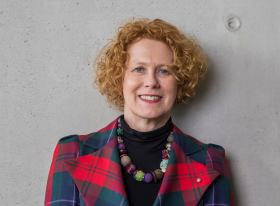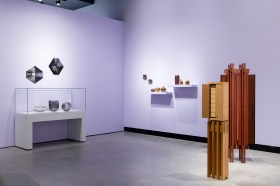
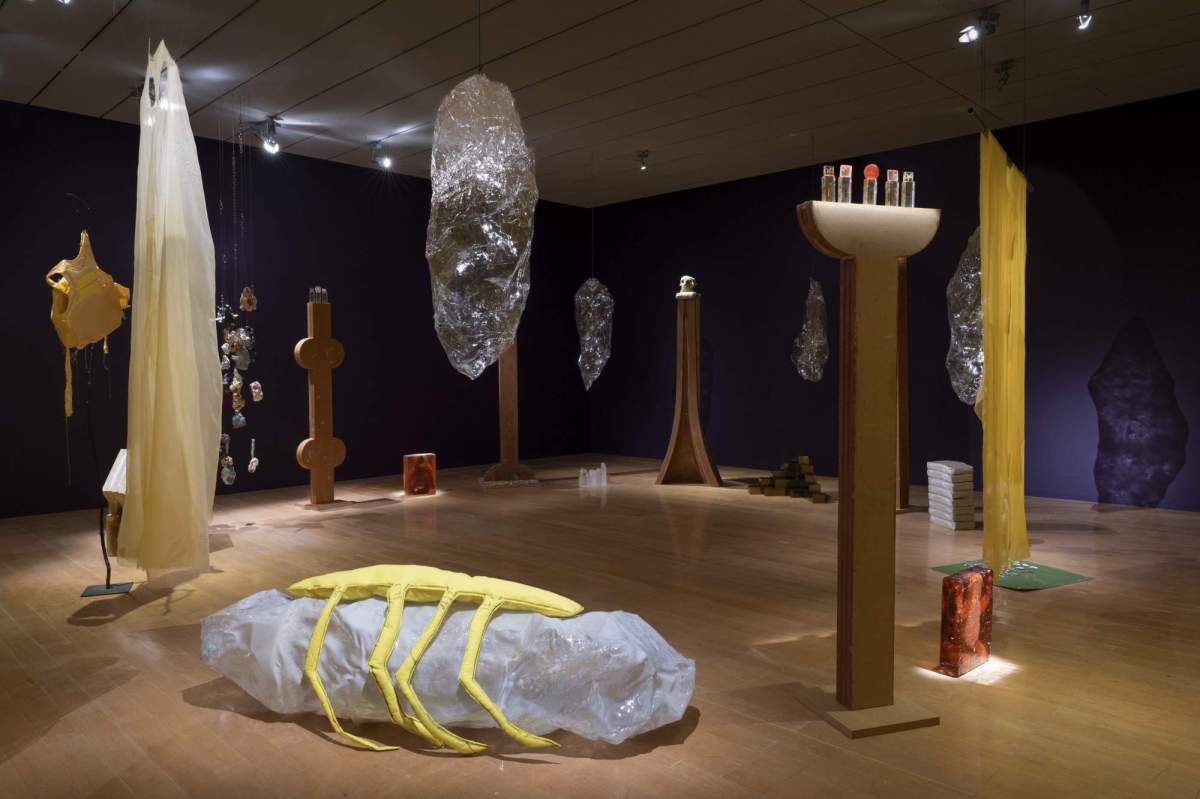
Now in its 18th edition, the Lyon Biennale of Contemporary Art is an esteemed European visual art event, and this year it feels especially resonant to the Australian arts sector, given its Australian-born, Berlin-based curator Catherine Nichols has invited a record number of Australian artists to participate.
With 16 of its 120 exhibiting artists hailing from Australia, what’s also especially striking about this strong representation is the way it sits within what is currently being described as a high time for our artists in France.
As a recent Australian Financial Review article points out, there is growing interest from French and European art collectors in Australian contemporary artists right now, with around 10 Australian commercial galleries being selected as first-time guests of honour at Paris’s next major annual art fair – Art Paris – in April 2027.
But despite what appears to be a moment for Australian artists’ work in France, our nation’s artists still face significant distance barriers when it comes to routinely engaging with France’s arts scene, including travel, costly freight and lengthy timeframes when exhibiting their work.
So, how exactly is this year’s Lyon Biennale, which opened on 19 September and continues to 13 December, achieving the feat of hosting such a high number of Australian artists in its program? And why are the selected Australian artists important to this biennale’s curatorial vision?
Australian artists at Lyon Biennale – quick links
How do Australian artists support Lyon Biennale’s vision?
The conceptual through-line to the 2026 Lyon Biennale is the theme of ‘passing from one dream to another’.
As its curator Catherine Nichols describes, her vision draws partly on German philosopher and cultural theorist Walter Benjamin’s famous project Passengen-Werk (The Arcades Project) 1927-1940, where the writer examines how (in Nichols’ words) ‘urban environments, particularly the Parisian arcades, shape the collective dreams and experiences of society’.
Benjamin’s text is widely known for its critiques of consumerism and the commodification of the everyday in industrialised societies, and in Nichols’ hands, these ideas are placed in a contemporary context to explore how modern-day economies assign and determine ‘value’ within volatile, highly changeable systems of exchange, labour and trade.
With 120 artists participating in her program, the 16 artists from Australia represent an unprecedented number – up from just one or two Australian artists in previous Lyon Biennales.
These Australian artists are Serwah Attafuah, Mikala Dwyer, Yuriyal Eric Bridgeman, Angela Goh, Matthew Harris, Timo Hogan, Kirtika Kain, Mai Nguyen-Long, Ida Lawrence, Nicholas Mangan, Angelica Mesiti, Hayley Miller-Baker, Jazz Money, Tina Stefanou, Thea Anamara Perkins, and Kaylene Whiskey.
(Alongside them are several New Zealand artists too, including Luke Willis Thompson, Sriwhana Spong and Fiona Clark.)
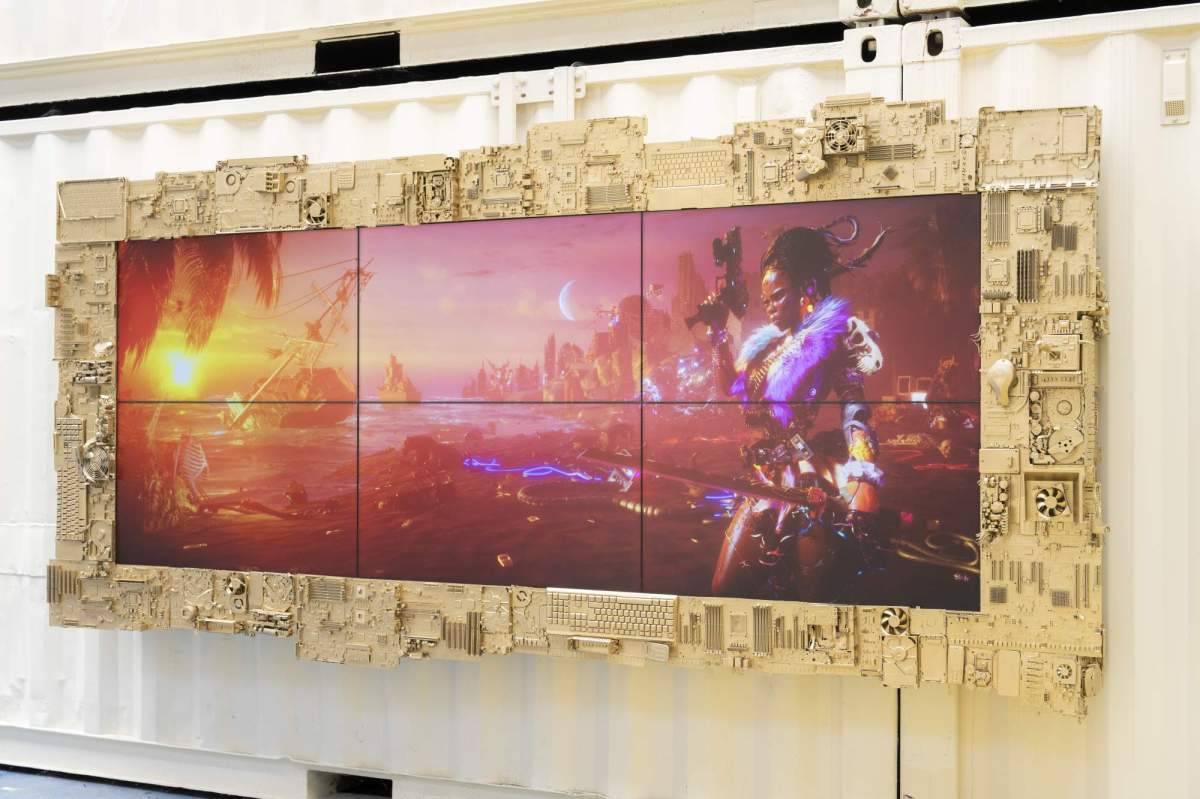
Interestingly, and as Nichols readily admits, her chosen Australian artists are a diverse mix, with disparate conceptual outlooks and styles of work.
In the curator’s words they are ‘a heterogeneous group … [whose] practices emerge from very different cultural frameworks and generations, with relationships to many places and histories’.
Melbourne-based artist Mikala Dwyer, for example, is known for her large, often playful, sculptural works that sometimes draw on ideas from art movements like Dada and Arte Povera. While an artist like Timo Hogan – a Pitjantjara artist and winner of the Telstra National Aboriginal & Torres Strait Islander Art Award in 2021 – instead maintains his practice around Tjukurpa (spiritual/ancestral creation stories) of his Country in the Western Desert/ Spinifex Lands of Western Australia.
When asked how her selected Australian artists relate to her key curatorial themes for the biennale, Nichols says that while she finds it difficult to isolate their work, ‘because the Biennale develops through relationships between works’, she highlights Kirtika Kain’s practice as engaging particularly deeply with ideas of social hierarchies and labour in ways that examine how value is assigned or withheld.
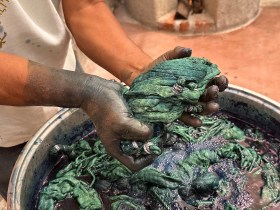
‘Drawing on [Indian] Dalit histories and thought, as well as lived and familial experience, Kain transforms materials associated with manual labour and exclusion into extraordinarily luminous surfaces,’ the curator says.
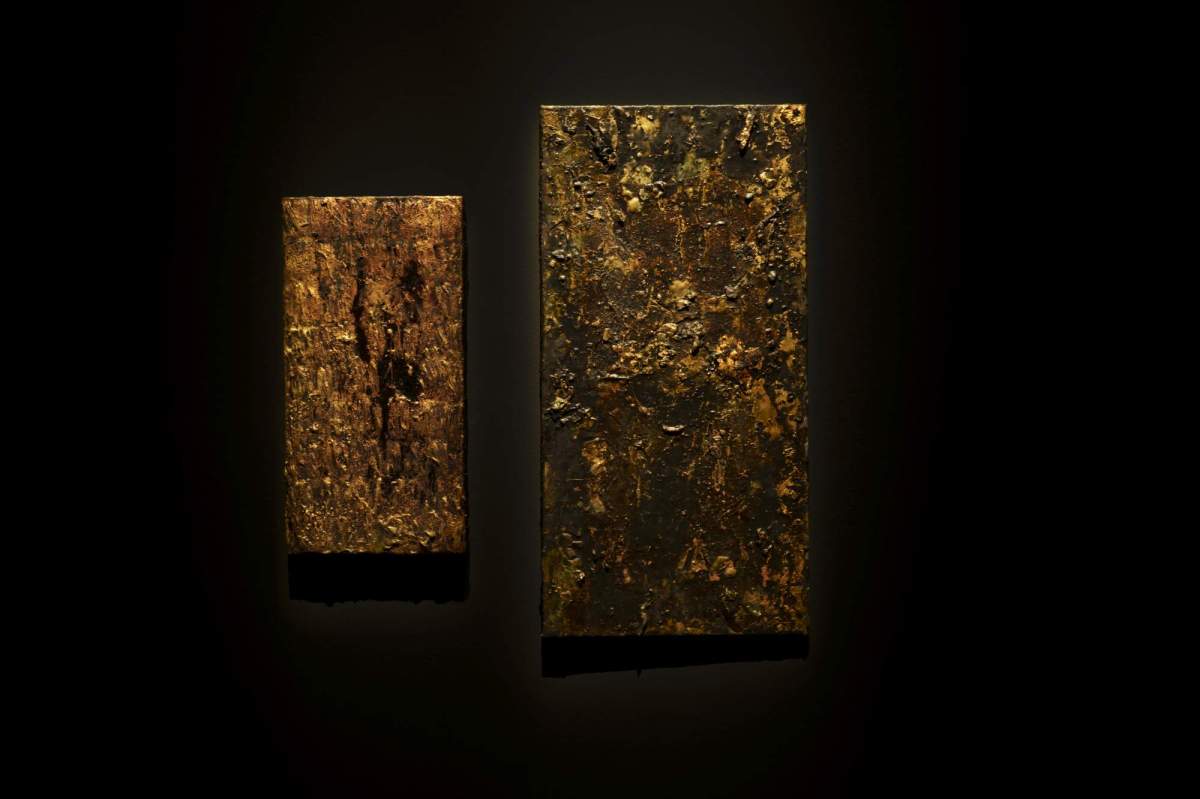
Nichols also references the relational thinking behind Australian First Nations artist Matthew Harris’ work, describing Harris’ biennale piece – which comprises 10 panels containing 39,000 painted rectangles referring to 39,000 First Nations cultural objects held in museum collections in Britain – as sitting in dialogue with Danish-German artist Birke Gorm’s ‘bag people’ work to ‘produce two very different images of accumulation and raise questions about what is held and by whom’.
Who’s helping cover costs of Australian artists at Lyon Biennale?
According to Le Monde, this year’s Lyon Biennale is being delivered to a total spend of Є8 million (approximately AU$13 million).
To assist the Australian contingent, the biennale received $100,000 in support through Creative Australia’s Arts Projects for Organisations grant program – a grant the funding body describes as supporting ‘the participation of 16 Australian artists, including artist fees, production support for new commissions and adaptations, First Nations cultural consultancy, public programming and residencies, international travel, and freight’.
Another important champion of Australian artists at this year’s Lyon Biennale program is the recently established French Australian Cultural Exchange Foundation.
Launched in 2024, FACEF is a cultural charity dedicated to strengthening cultural, artistic and intellectual exchanges between France and Australia. A diplomatic tool as well as a platform for cultural cooperation, FACEF works to foster the mobility of artists and cultural professionals, encouraging exchanges and supporting long-term collaborations between creative communities in both countries.
In 2026, FACEF is supporting five Australian artists to participate in the Lyon Biennale: Mikala Dwyer, Kirtika Kain, Nicholas Mangan, Jazz Money and Thea Anamara Perkins,
As FACEF CEO Cybèle Panagiotou tells ArtsHub, ‘The 2026 Lyon Biennale was among the five recipients of FACEF’s 2025 Visual Arts Resonance Grants which support the development of new artistic and professional connections between France and Australia’.
Panagiotou explains that FACEF’s Visual Arts Resonance grant program is the first initiative of its kind to create a dedicated framework to support a two-way cultural exchange between Australia and France.
‘Each year, projects are selected by an independent jury of international cultural leaders, bringing together diverse expertise and perspectives to the selection process,’ she says, adding that, as part of its focus on artists from the Oceania region, the biennale itself selected the five chosen artists for its application to FACEF’s Resonance Grants program.
‘Specifically, this grant support helps cover key costs associated with presenting these artists’ work internationally, including the artworks’ production,’ Panagiotou says.
‘Beyond the practical costs, it enables the artists to develop and present their practices in an international context, while engaging with artists, curators, institutions and audiences from France and beyond. It also creates opportunities to build new professional relationships and strengthen longer-term connections between the Australian and French arts sectors.’
A French-Swiss champion of Australian Indigenous art a key supporter
Apart from the FACEF, the other notable supporter of Australian artists at the 2026 Lyon Biennale is a French foundation that is exclusively focused on Australian Indigenous art and artists.
Established in 2018 by French-Swiss art collector and philanthropist Bérengère Primat, Fondation Opale is a contemporary art centre located in the city of Lens in Northern France, and is dedicated to the promotion of Indigenous Australian art.
After seeing Indigenous artists’ work exhibited in a small Parisian gallery over two decades ago, Primat discovered her overwhelming draw to this art and has since collected over 1900 artworks in what is now the largest privately owned collection of Australian Indigenous art in the world.
Her support for the Lyon Biennale helps six Australian First Nations artists – Matthew Harris, Timo Hogan, Hayley Miller-Baker, Jazz Money, Thea Anamara Perkins and Kaylene Whiskey – to exhibit their work in the program.
Strengthening the French connection
The months ahead could be a turning point for Australian artists in France. Panagiotou notes that now is a particularly exciting moment for both for FACEF and the Australian cultural sector given that, alongside the Lyon Biennale’s spotlight on Oceania, there are other major French cultural platforms creating important opportunities to showcase Australian contemporary art and culture in its region.
‘This includes Art Paris, which will put Australia in focus in 2027, Back to Back Theatre at the Festival d’Automne, and the strong Australian presence at the Rencontres d’Arles last year, [which are] all initiatives supported by FACEF,’ she says.
The focus on Australia as the ‘guest of honour’ of Art Paris 2027 will be shaped by Daria de Beauvais, Senior Curator and Head of International Relations at the Palais de Tokyo.
For the selected galleries, it will mean more than the chance to present work at a fair that draws over 85,000 people. Building on the interest created by the Lyon Biennale, the art fair program will include panel discussions with artists, gallerists and curators about the Australian art scene, and the Australian Embassy will be supporting by staging special events, private tours, exhibitions, performances and readings.
Also set to draw attention, Fondation Opale will be exhibiting at Art Paris too, alongside commissioning an Australian Indigenous artist to create a large-scale installation for the plaza in front of the Grand Palais.