

The National Film and Sound Archive has the mammoth task of preserving and sharing Australia’s audiovisual history, with decades of ground to cover through many layered mediums.
One of the largest parts of its ever-growing collection, and its most complex, is its storage of film reels, with each charting milestone moments in Australian and international cinema.
Each film is selected carefully, with a view to recording significant developments in history. It’s the NFSA’s stated aim of curating a collection of films with ‘cultural, historical and cinematic’ significance that drives acquisition of new items. Any film, including international titles, may be selected for its influence on film history, its innovation, involvement of Australian talent, or its impact on audiences and screen culture.
As well as digital films, the organisation’s collection also features special, preserved prints, including 16mm and 35mm reels that hark back to the early days of cinema. It’s all in service of creating an archive that fully reflects the nature of cinema and how it’s changed through the decades.
Preserving film history at NFSA – quick links
Eyes Wide Shut, Minority Report, and the importance of international film

To see the full scope of the NFSA’s work, one only has to consider the recent Tom Cruise-themed film festival at Ritz Cinemas in Sydney. Across a week of films, the cinema played host to two special NFSA-supported screenings, of 35mm versions of Eyes Wide Shut and Minority Report.
As the NFSA says, these films were initially preserved as part of the agency’s mission to archive films of great significance and influence.
‘Minority Report (2002) is recognised for its influence on science fiction cinema, technical innovation and its place in the career of Steven Spielberg. Eyes Wide Shut (1999) is recognised as the final film of acclaimed director Stanley Kubrick and for its performance by Australian actor Nicole Kidman, one of Australia’s most internationally recognised screen performers,’ said a spokesperson from the NFSA’s Enterprises, Collection Management and Curators team.
The films were also acquired for their significance as 35mm film prints.
‘At the time, the cinema industry was moving from analogue projection to digital technologies, placing 35mm exhibition materials at risk of being lost,’ the NFSA spokesperson says. ‘As cinemas and distributors began disposing of film prints, the NFSA actively collected selected titles to ensure examples of this rapidly disappearing exhibition format were preserved in the national collection.’
These film reels are pieces of history that go well beyond the screen. They represent the changing nature of technology, visions for the future and, as mentioned, a leading performance from one of Australia’s greatest actors.
ScreenHub: National Film and Sound Archive adds YouTube creator content
How film reels are preserved and kept at the NFSA
To keep all film reels at a quality they deserve, to ensure they can be used well into the future, the NFSA takes plenty of care in their storage. As the team says, reels are stored in a temperature-controlled environment and additional measures are taken when transporting films – particularly when they’re loaned to third parties, like film festival organisers or local cinemas.
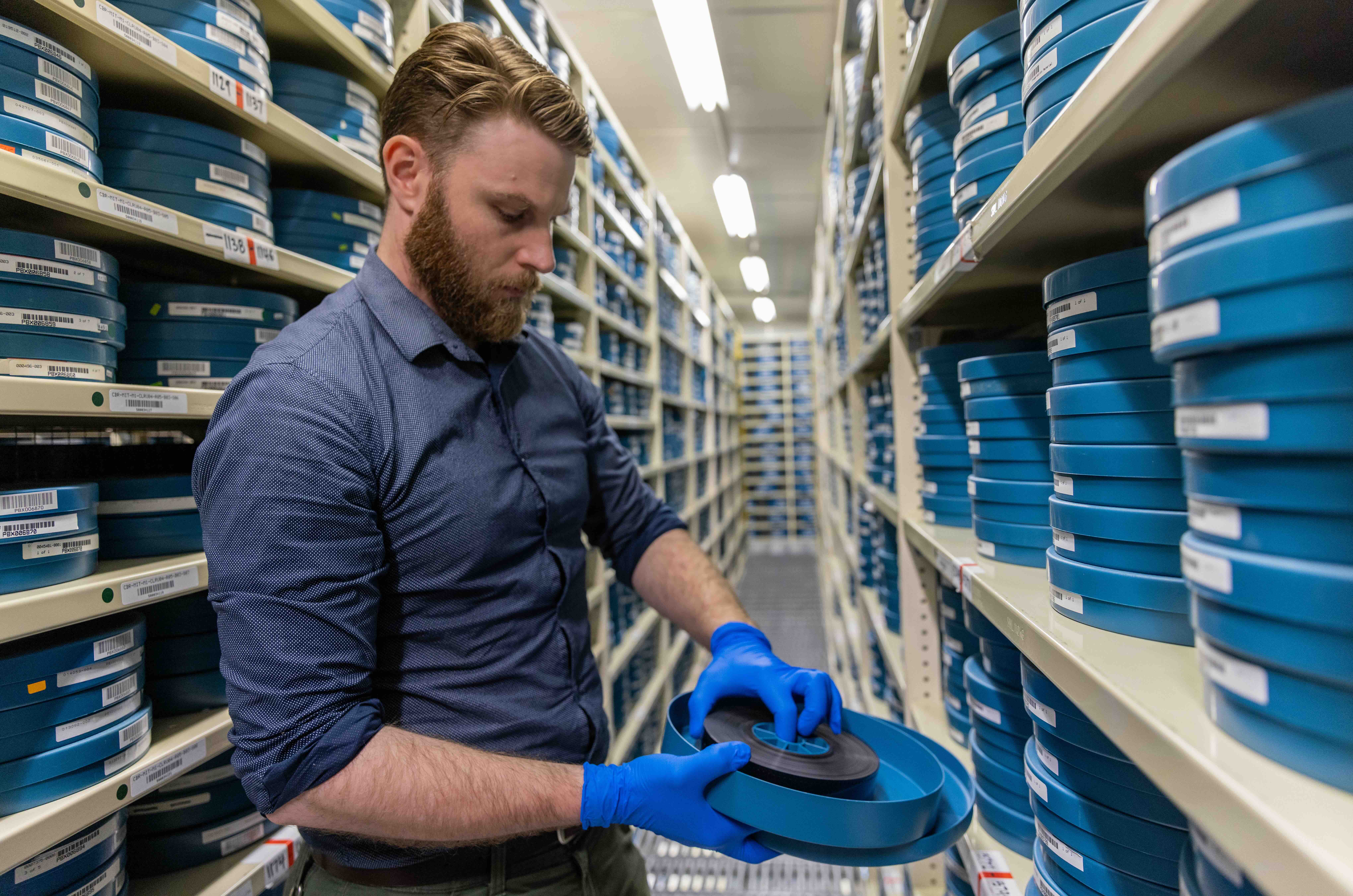
‘The NFSA’s screening print collection is stored within an environmentally controlled storage environment. The temperature within this environment is set at 16C with a relative humidity of 35%. Screening prints are stored horizontally within compactus units which facilitates easy retrieval and return of films and allows us to use the space efficiently.’
All films are tracked with unique carrier barcodes, organised by the NFSA’s Collection Management System, which is also marks out storage location.
In the case of cinemas requesting special prints, for festival screenings or other occasions, the NFSA team will prepare films with a ‘tight transit wind’ knowing that travel may loosen the reel.
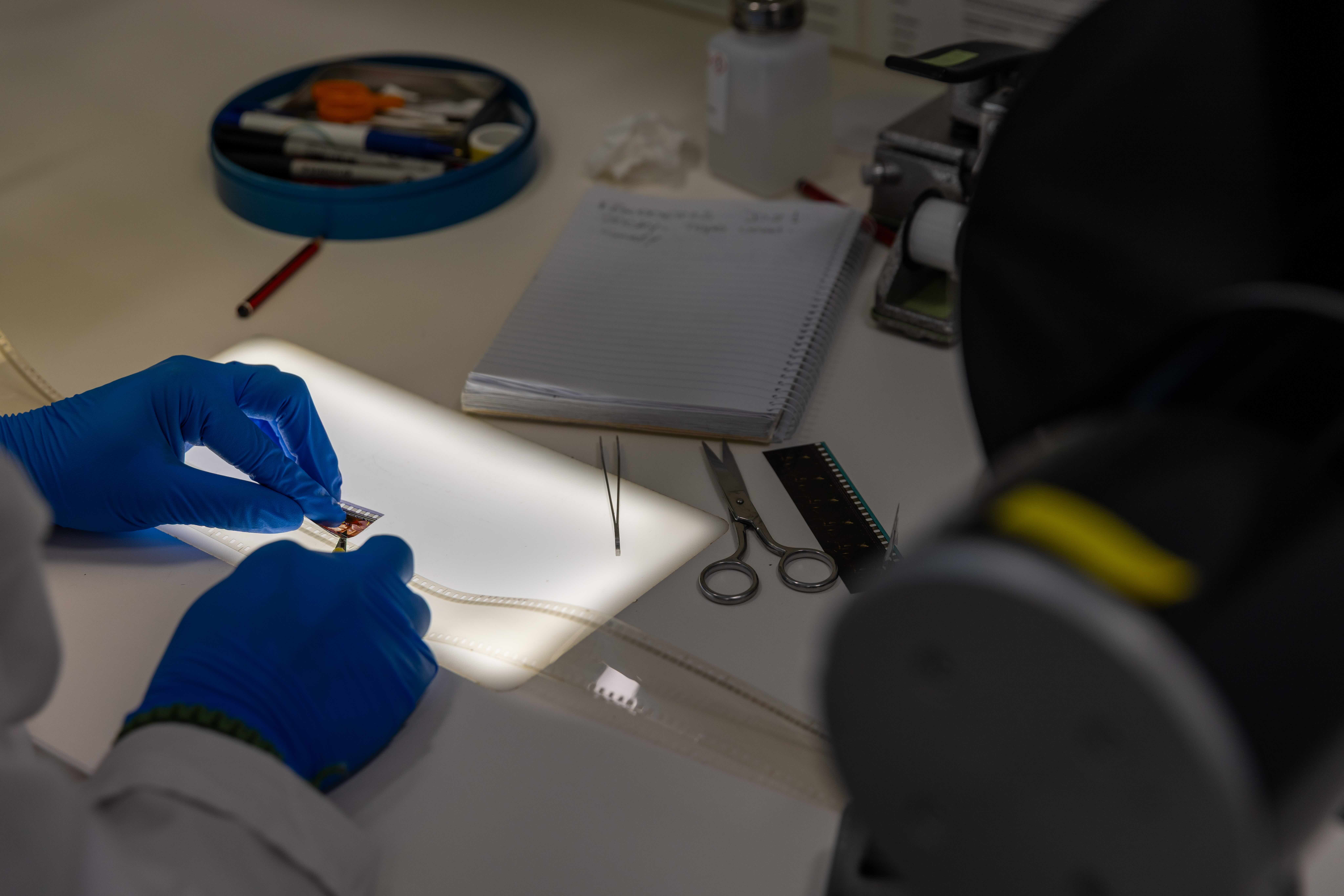
‘When films are returned to the NFSA, conservation staff prepare films for storage by undertaking a loose wind allowing for greater air flow in storage,’ the spokesperson says. ‘At both of these stages, conservation staff also conduct condition reporting, undertaking repair when required.’
Who can loan films from the NFSA?
The NFSA may loan out selections of its films for special purposes, although the process is complex and has many checks to ensure legitimate and thoughtful use of the archives.
‘Ideally, the screening loan process begins prior to a request arriving at the NFSA as rights holder or distributor permission is required,’ the team says. ‘Obtaining permission prior to processing helps ensure the resources we spend are for approved screenings and distributors often hold digital files they can supply directly.’
The screening loan program requires resources from ‘many different areas’ across the NFSA due to the complexity of film reel storage and maintenance. Theatrical prints are catalogued and stored offsite in temperature-controlled vaults. The team must also coordinate logistics, tracking and security requirements to ensure loaned films arrive safely, with additional appointments with conversationists for checks, repairs and cleans on either end of the loan process.
‘When a film is dispatched there is a “pre” and “post” screening check before the print is returned to our vaults. Minor changes in condition from playback are expected, and are seen as general wear and tear,’ the NFSA spokesperson says. ‘It’s important to note, screenings are a naturally destructive process.’
Up to eight weeks notice is required for theatrical loan requests from the NFSA due to the care needed in this process, as well as the requirement to notify rights holders and distributors, who are ‘under no obligation to respond in a timely manner’. The NFSA does have its own licensing and rights team to assist with any clearance needed depending on the nature of the loan (such as national or international film festivals) but resources are relatively limited.
Once the initial processes are cleared and films are able to be loaned out, reels will be primarily shipped via TNT or Fedex, but the NFSA does allow for clients to organise pick-up where possible.
As screenings are destructive processes, the NFSA will restore all reels that are loaned out. In addition, it aims to preserve films beyond their physical reels, with the NFSA Restores program creating high-res digital cinema packages – digital files with high-resolution video stored – to ensure films can be screened indefinitely.
The impact of sharing 16mm, 35mm and DCP format films
Once cinemas or festival organisers receive loaned films, there is a natural obligation to treat these reels with respect. All recipients are expected to enter into the Theatrical Screening Loan Agreement with the NFSA, which outlines film handling and loan policies.
Recipients are expected to have relevant professionals onsite to handle the print, although in rare cases the NFSA can also send a curator to accompany the film or introduce it.
Ensuring care and respect in the screening is essential, as sharing original film prints with audiences ‘offers something beyond the moving image itself,’ the NFSA spokesperson says.
‘It reconnects people with the material culture of cinema and the living traditions, skills and practices that surround film exhibition,’ the spokesperson says. ‘It reinforces the idea of film as a form of intangible cultural heritage, encompassing the knowledge of projectionists, archivists, laboratory workers and cinema-going communities.
‘A film print often carries evidence of its past use, from cue marks and splices to subtle signs of ageing. Unlike digital files, each print is unique, and its material qualities, film grain, colour, light and projection characteristics, contribute to the experience of the work.
‘Screening original prints also helps sustain specialised skills that are increasingly at risk of being lost. Film projection requires hands-on expertise and judgement, and public screenings keep this knowledge active and visible. At the same time, they reinforce cinema as a collective social experience.’
It’s this experience, and this appreciation, that guides the work of the NFSA and its loans program. As its spokesperson says, it provides a pathway to celebrating stories on screen and how they were created.
‘Sharing these culturally significant titles audiences, both new and old, is an important way to preserve our legacy, inform emerging creatives, and celebrate our nation and its peoples.’