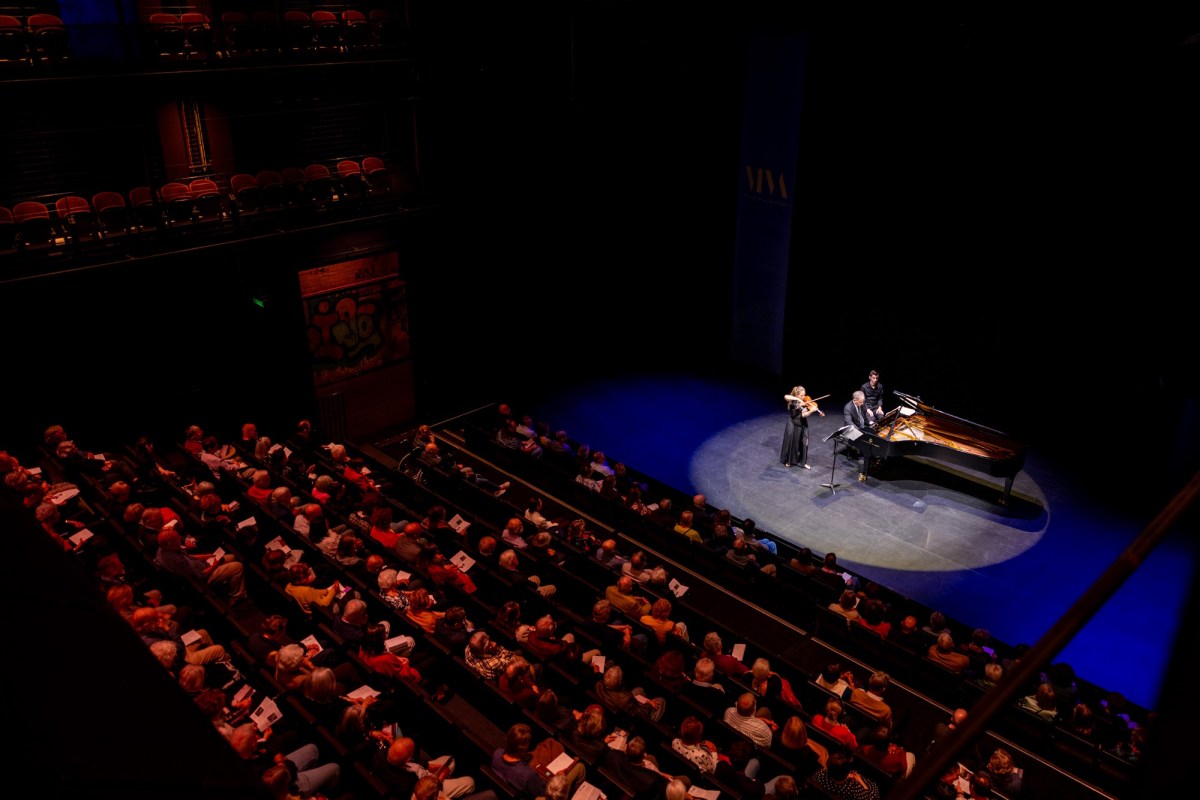
Musica Viva’s latest national seven-city tour started on a warm Sunday afternoon by the Brisbane River, at what is often seen as an alternative rock and pop music venue. Not the usual choice for classical music concerts, the Visy Theatre at the Brisbane Powerhouse afforded a bright and clear acoustic in an intimate, atmospheric space.
The program presented three virtuosic works for violin and piano from the early 20th century. Composers Debussy, Szymanowski and Stravinsky were all musically far ahead of their times, and were leaders in exploring new musical ideas and techniques, including Impressionist themes of sensibility and mood.
These works were presented alongside a contemporary 21st century work by British composer Charlotte Bray. Equally as exploratory 100 years later, Bray’s work asks similar musical questions to her predecessors, and this juxtaposition made for an enlightening and inventive concert.
The Fairy’s Kiss review – quick links
A seasoned partnership
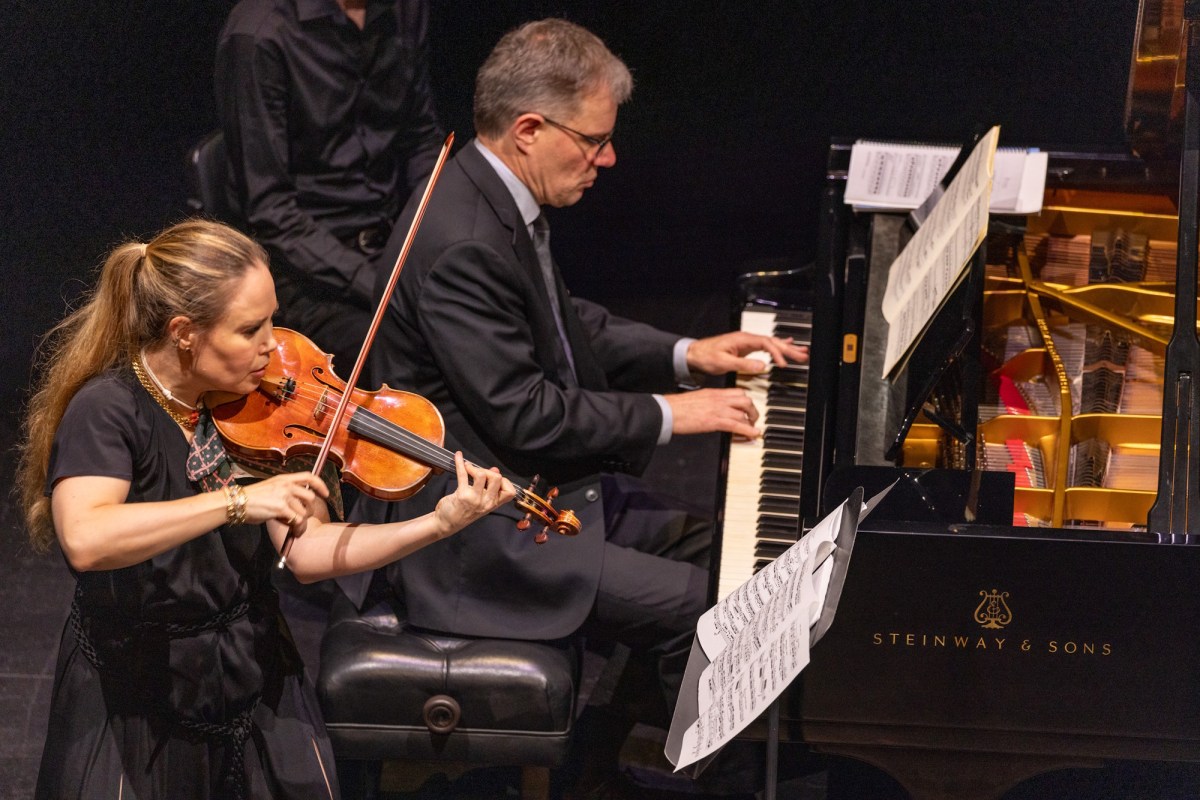
Violinist Leila Josefowicz and pianist John Novacek have been making music together for well over a decade and this showed in their exuberant and comfortable synergy on stage.
The works in the program were clearly chosen to illustrate the bravery of the composers in question, but they also highlighted the virtuosity and artistry of the players and their instruments. Moreover, this was not mere piano accompaniment to the violin. Rather, it was a partnership giving equal compositional weight to both instruments.
Debussy’s Sonata for Violin and Piano in G minor is a lauded work by the French Impressionist composer, displaying his trademark colourful sensuality. The work is unconventional in style and tonality though, allowing the soloists plenty of scope to improvise and demonstrate their virtuosity, which they did in spades.
Soft piano chords lead easily into the violin’s rich sweetness in the opening Allegro movement, delivering a joyous and emotive love song. It is followed by the Intermède, the light, humorous melodies from an ever-quickening violin interacting perfectly with the piano’s dynamics in a brightly optimistic melange of sound.
The Finale showed off Josefowitz and Novacek’s superb versatility and synchrony, in a frenetic dance where the violin rises poignantly over the vivacious piano to an exuberant and thrilling finish.
Extraordinary music, brilliantly played
Polish composer Karl Szymanowski is not as well-known as Debussy but he offers an original and unique inventive musical voice. His work Mythes consists of three tone poems that are based on Greek legends of Arethusa, Narcissus, Dryads and Pan.
It is highly complex music, using diverse innovations and techniques in both melody, dynamics and harmonics to create an extraordinary soundscape. While the work would test the most virtuosic of players, Josefowitz and Novacek rose brilliantly to the challenge.
The piano commences with shimmering in the top register through many trills and flourishes, which moves towards a dramatic and darkening middle register and then a grumbling underscoring of the violin with some powerful crashes.
The violin, meanwhile, enters with a high-pitched almost surreal aesthetic, displaying double and triple stops, glissandi and tremolos. The melodic narrative then shimmers above the piano, with powerful dynamics from both instruments that finally reach a harmonious and quiet ending.
From the UK to Australia
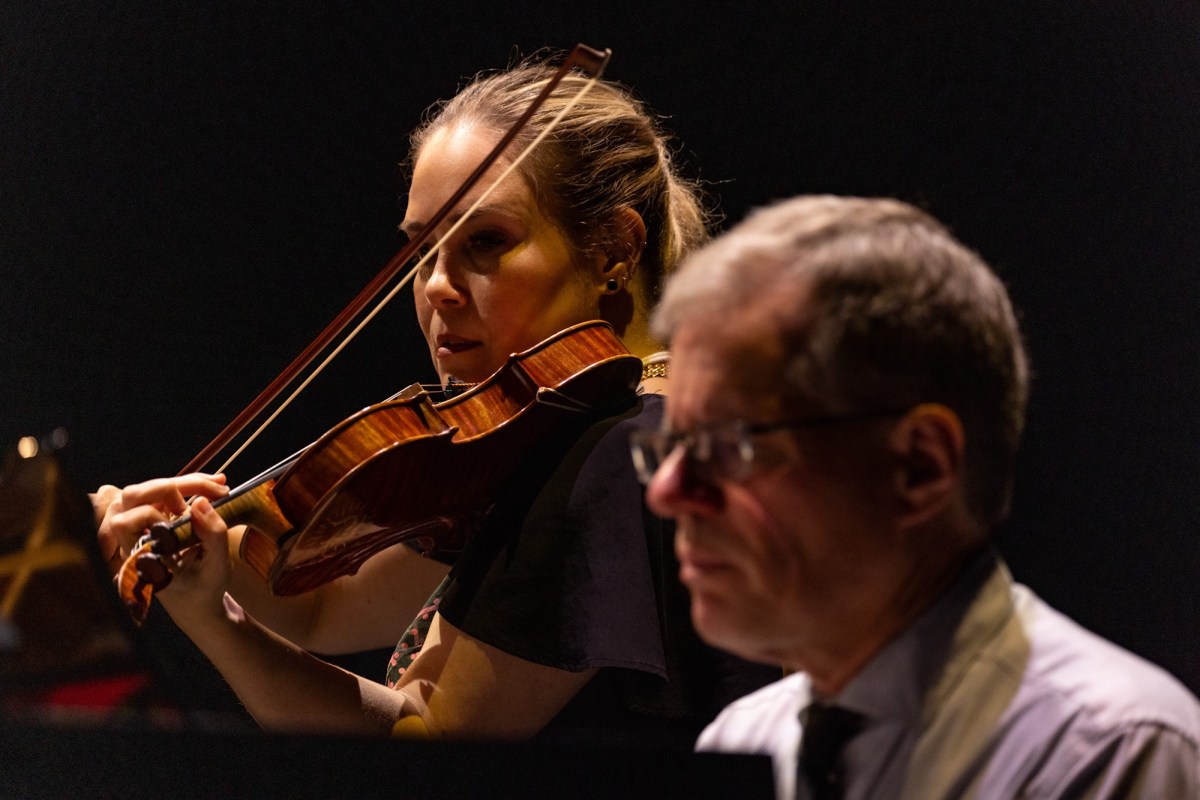
British composer Charlotte Bray’s Mriya had its world premiere in London in September 2024. This Musica Viva presentation, only its second performance, is its Australian premiere, and sees Josefowicz and Novacek repeating their London premiere performance.
Meaning ‘dream’ or ‘vision’ in Ukrainian, Mriya has political overtones and the composer cites it as being a response to the persistent struggle between the darkness of war and the dream of freedom. This is an emotionally charged work that uses a range of musical techniques to add textured layers and colourful variations for piano and violin.
Creating a strong dynamic from the outset, a level of discordance offers a haunting, mystical quality, which is wondrously crafted and amplified by the musicians. The instruments seem to weave in and out of each other’s sonic delivery with well-judged alacrity and speed.
Textures range from high screeches to glissandi, double and triple stops, pizzicato and ponticello from the violin, with carefully placed dark insistent piano notes. Ethereal and mysterious, but with a deep sense of foreboding, Mriya ends with a gentle violin melody and a throbbing piano, whisper quiet. It was a very moving piece indeed, and brilliantly realised.
Stravinsky’s Divertimento from Le Baiser de la fée (The Fairy’s Kiss) offers a lighter theme. Based on his own ballet alongside Tchaikovsky’s piano music, this work for piano and violin has a strong fairytale-based narrative.
Dance music underlies the four movements, which are distinguished by a wonderful palette of musical colours ranging from the sad folk song theme of the Sinfonia through to the joyous Dances Suisses, the bright yet ominous Scherzo and the various dance rhythms of the Pas de deux.
Josefowicz and Novacek entered into the spirit of this well-crafted work with an attention to detail and an agility and virtuosity that was as technically skilled as it was artistically delightful to watch. Their complementary interplay with one instrument taking over from another, swapping harmonies and melodies with joyous alacrity, was excellent. Dizzying in intensity, the program ended on a glorious high note, to rapturous applause.