In times of doom and gloom, can there be a more audacious, if not totally radical, artistic act than flipping the narrative and proposing that perhaps what we are seeing is less a system collapsing, and more one simply being released?
This was the launchpad for Dr Emily Cormack when curating the latest exhibition at Victoria’s TarraWarra Museum of Art – the anticipated return of the TarraWarra International exhibition series. Established in 2013, it has been on pause since the Covid-19 pandemic but now resumes with System Release.
Cormack’s proposition being that instead of looking for artists reacting to world events with despondency and pessimism, she would rather present 10 artists responding to contemporary worldwide precarity with explorations of possible futures and fresh systems of order.
System Release review – quick links
Order out of chaos
The 10 artists in from Australia, Aotearoa/New Zealand and Mexico are working in a wide range of mediums, but each has something to say about history, permanence and natural evolutions that are outside of the everyday.
Exploring the idea of expansive aeons dwarfing the petty concerns of a species that has only been on the planet for a fraction of the time it has existed, Melbourne artist Nicholas Mangan’s contribution, A World Undone (2012), uses three distinct mediums – photography, film and sculpture – to consider the 4.4-billion-year-old mineral zircon, sourced in Western Australia from some of the earliest sections of the Earth’s crust.
Whether crumbled in a slim vitrine, ant-farm like, exploding in slow motion in a mesmerising film clip (in a very dark room – watch your step) or juxtaposed in photographs with artefacts from Mangan’s grandfather’s mining days, the mineral speaks of ages past and a plausible future.
We may wipe ourselves out, but the literal ground beneath our feet will endure. After all, as Rocky Horror suggested, we are all ‘but insects called the human race, crawling on the planet’s face’.
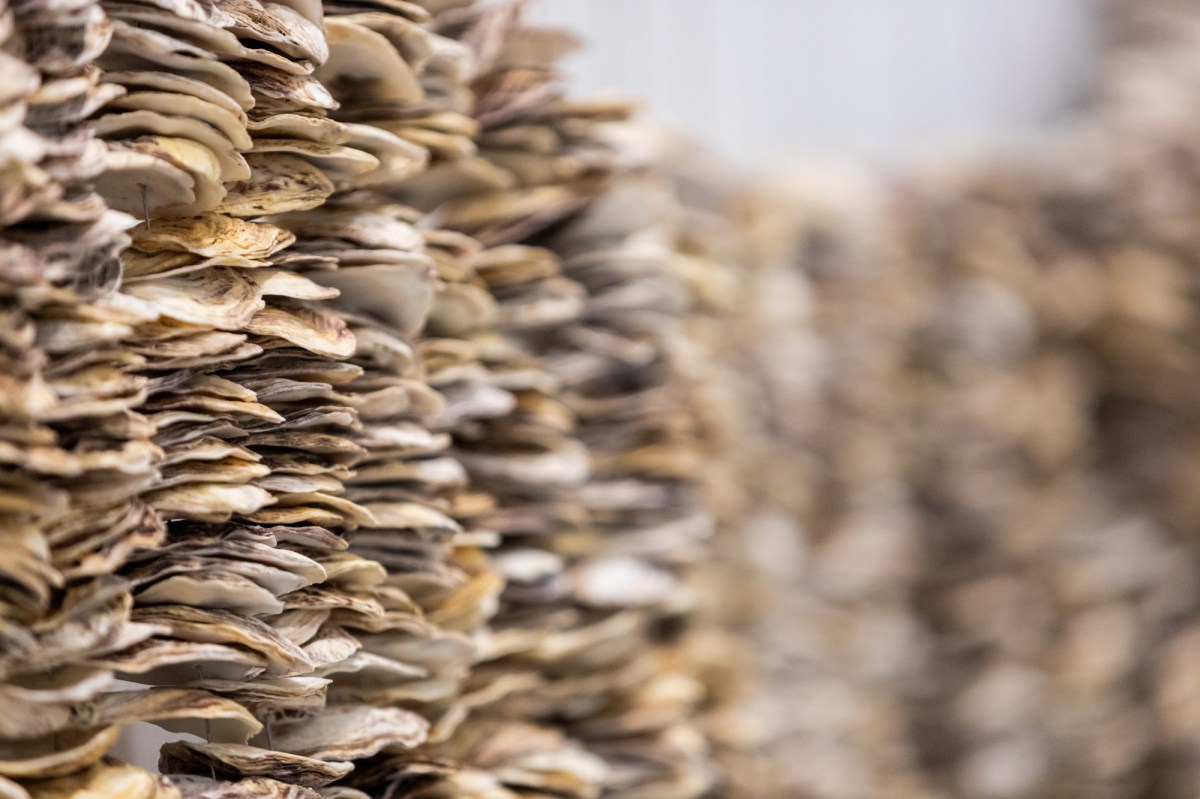
Quandamooka artist Megan Cope is working in similar territory, building on a practice that has seen her create regenerative artworks on Country with hand-made oyster poles as well as installations comprising mounds of cement oyster shells.
Her sculpture wall work in System Release, A great depression (2024), features hundreds (thousands?) of oyster shells threaded into a pattern that references both geological strata and middens that existed for millennia before colonialism destroyed them, repurposing the shells for building materials.
Cope’s practice speaks to Country, to living cultures, to reclamation and simple science – and in A Great Depression she’s also mindful of ‘reduce reuse recycle’ by sourcing oyster shells from restaurants. The work then also comments on the current status of oysters as a food of the wealthy and privileged – a long way from its traditional consumption as an everyday food by First Nations people living near the sea, or the working classes of England. It’s a powerful piece, with layer upon layer of meaning.
Up, up and away
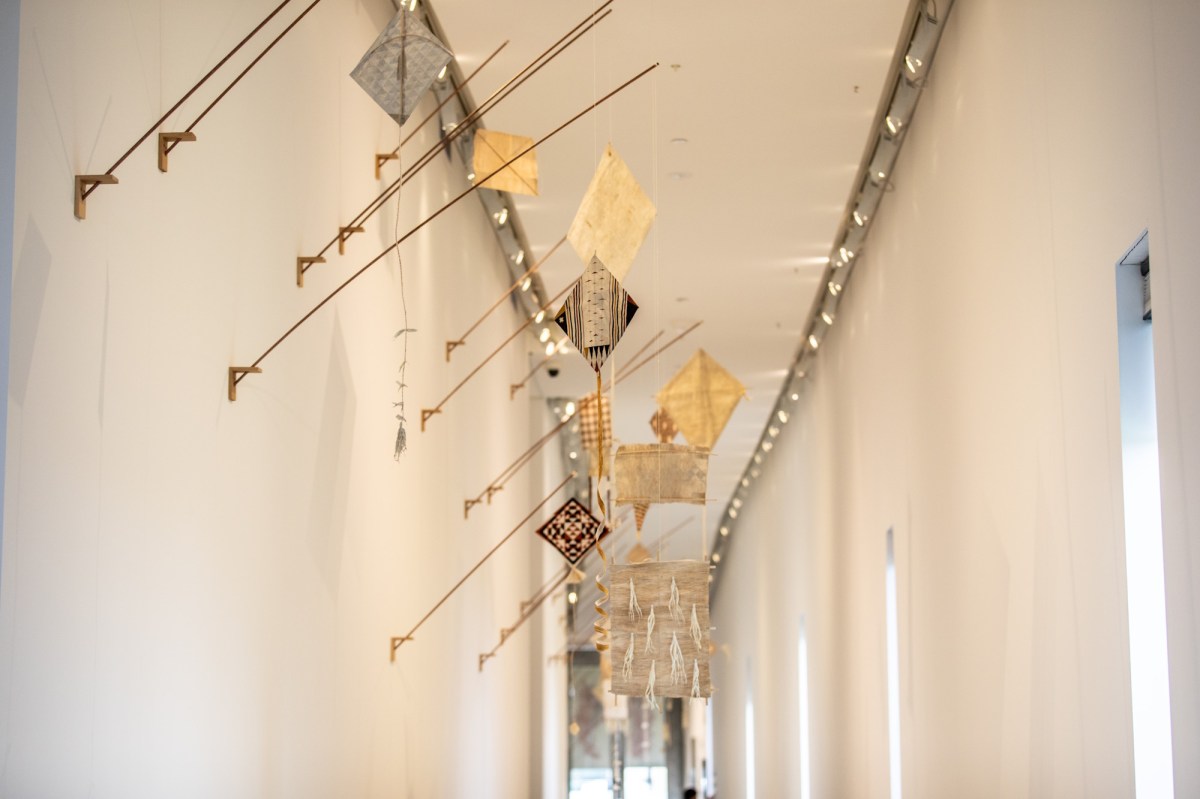
Less earth bound, but also referencing and revitalising ancient practices is Mana Taua: Flight or Fight (2023) – an extensive group of manu aute from Māori artist Nikau Hindin (Te Rarawa/Ngāpuhi, Tāmaki Makaurau/Auckland). These pieces are kites made from paper mulberry bark cloth, beaten and processed into a material that Hindin has then decorated.
Traditionally the kites would be used for navigation, communication and also messages to the gods, but as the plants used to make them dwindled almost to extinction, the practice followed suit, only to be revived and renewed by Hindin over a century later.
Another Māori artist, Shannon Te Ao (Ngāti Tūwhareta), presents the video installation Every day (I fly high I fly low) (2021). The three-channel work explores the role of the tīwakawaka bird in Māori mythology – a role that sees the little (about 16-centimetre) fan-tailed bird able to traverse the spiritual and practical worlds.
Perhaps the most simplistic and yet profound installation in System Release comes from Te Ao and Hindin’s countryman, Dane Mitchell. The sculptor was Aotearoa/New Zealand’s representative at the 2019 Venice Biennale and is now works across Aotearoa/New Zealand and Melbourne. Mitchell has hung Remembering and Forgetting Venn (2015), a large brass ring with the word ‘remembering’ inscribed within and ‘forgetting’ without. The work is linked to two tanks of homeopathic liquid outside the gallery, one of which is purported to assist memory and one to assist its erasure.
Getting the balance right
The first piece encountered in System Release is one of Mexican artist José Davila’s Joint Effort (2025) sculptures, featuring man-made and natural materials balancing and strapped in a delicate formation where each element is completely dependent on the others. Tension and balance speak to an easily disrupted harmony – one that can survive and thrive but only if the weighting is kept absolutely precise.
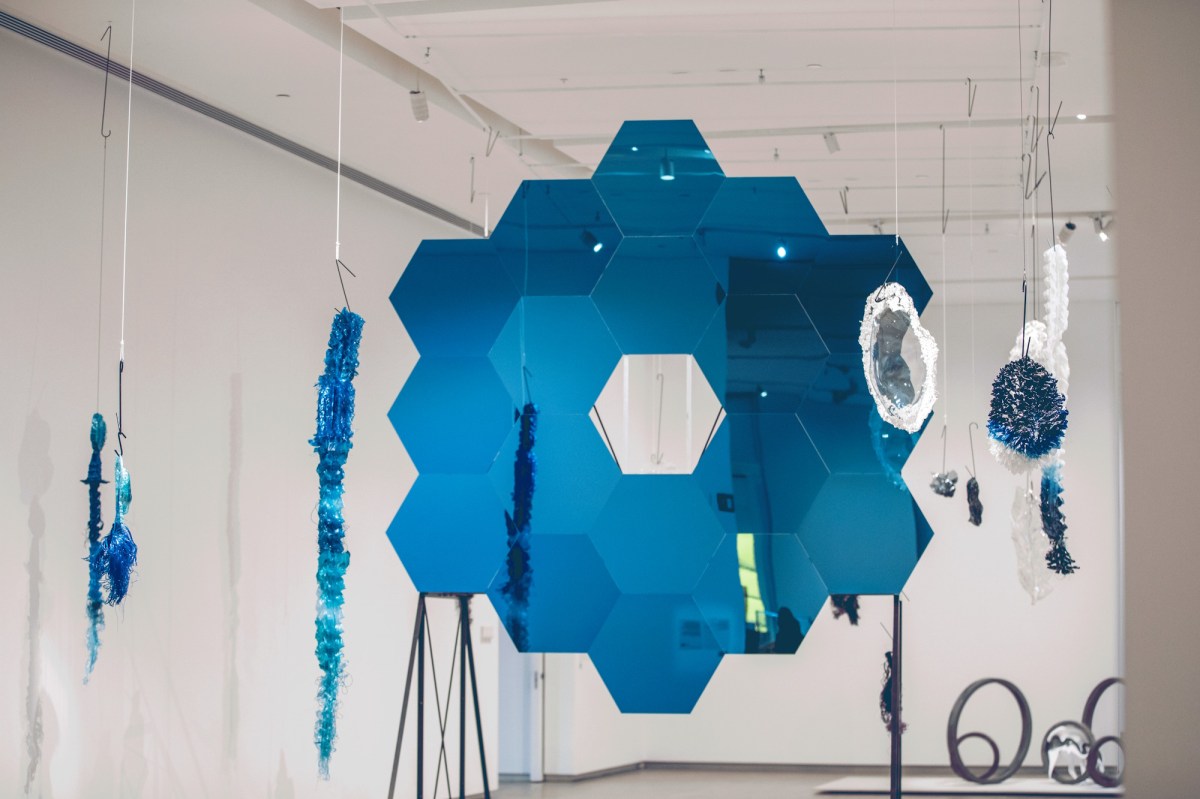
Alicia Frankovich (Aotearoa/New Zealand and Naarm/Melbourne) explores post humanism in her work Siphonophore-Sphere (2025-26). Stretching from an imagined seabed – so far down that the creatures dwelling there can only be conjured up through fertile imagination (via a 3D printer and blue hand dyes) – to the furthest reaches of outer space via a representation of the James Webb telescope, Frankovich appears to be reacting to the curatorial theme by suggesting there are ‘more things in heaven and earth (Horatio)’ and deeper oceans than we can possibly fathom – excuse the pun.
Siphonophore-Sphere perhaps also takes us right back to Mangan’s particles of zircon, witnesses to billions of years of change and evolution.
Whose view?
Artist Daniel Boyd is a Kudjala, Ghungalu, Wangerriburra, Wakka Wakka, Gubbi Gubbi, Kuku Yalanji, Yuggera and Bundjalung man from North Queensland and North Pentecost Island in Vanuatu. Covering the north-facing window at the back of the exhibition space, his work Untitled (2014) also considers landscape, but via the lens of different viewers.
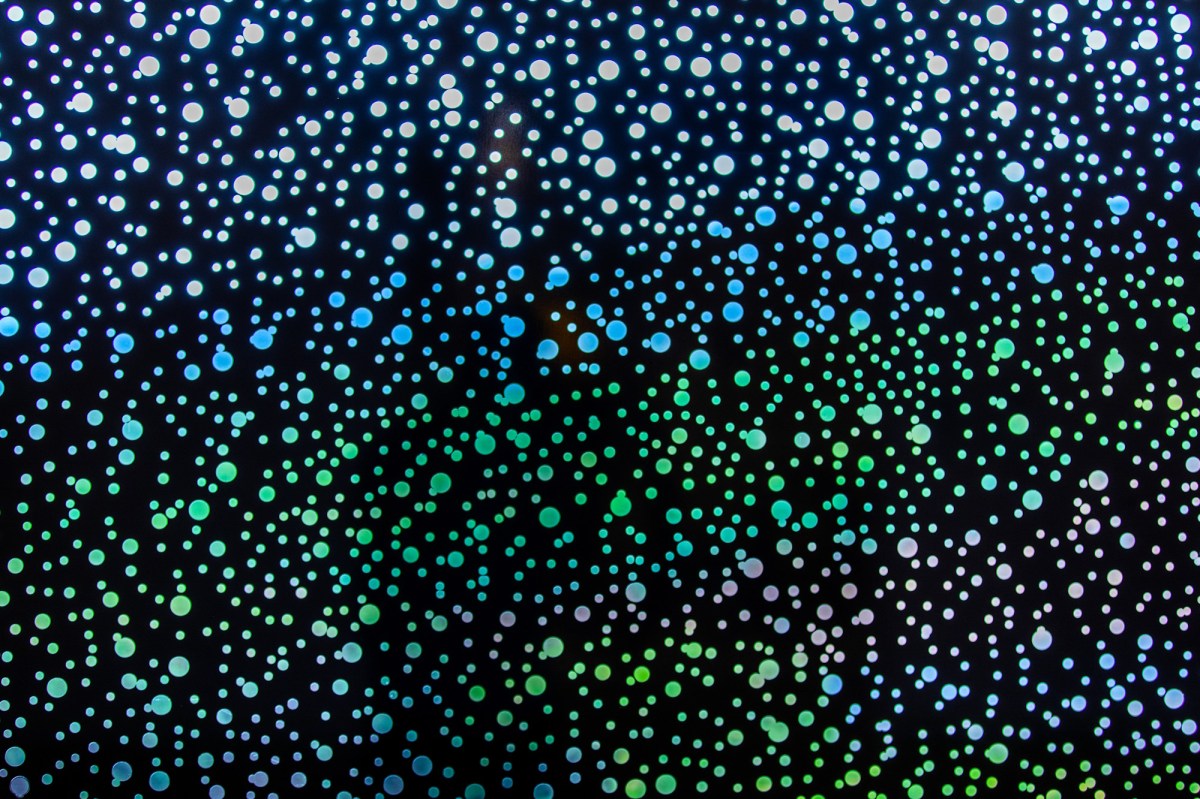
Untitled is a simple black background dotted with hundreds of round holes of varying dimensions. The result is a blurring of the view of the rolling hills and vineyards outside – a view that becomes clearer as you get closer to the window. Boyd’s work speaks to ideas of colonial ownership and the appropriation of not just the land but the ability to gaze upon it.
Perhaps the least optimistic visions belong to Melborne artists Marco Fusinato and Francis Carmody. In his contribution, Fusinato offers a series of large black and white screenprints from his DESASTRES series. Depicting a rough-cut diamond, a black expanse, an eclipse and a mosquito, the prints all pertain to greed, overconsumption, mining and the imminent collapse of the world as we know it.
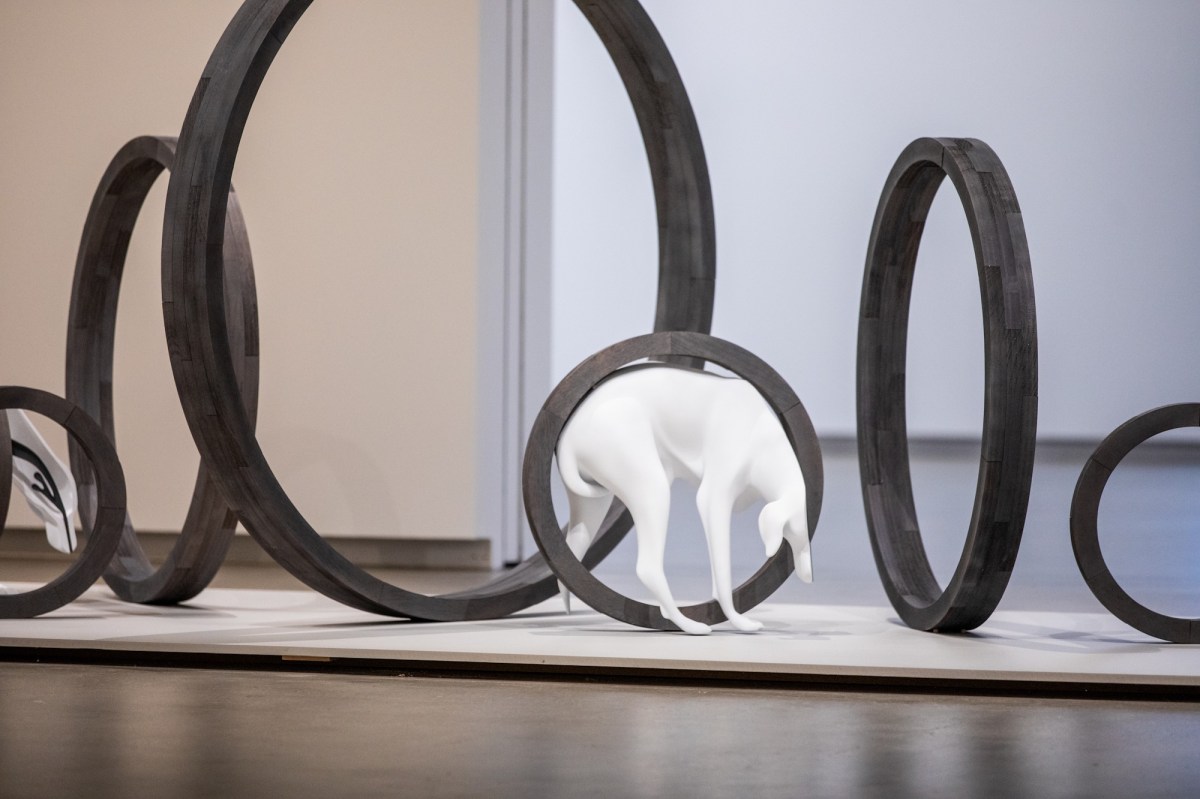
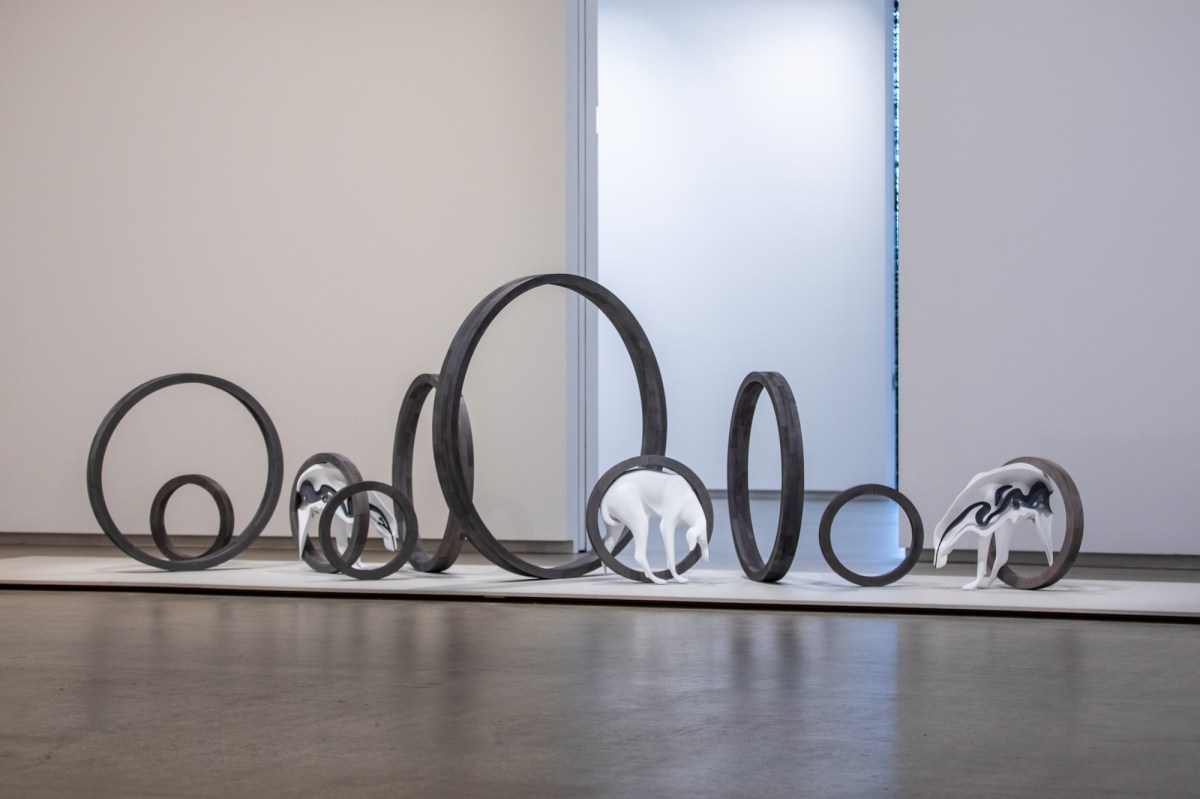
Carmody walks similar ground in Canine Trap III (2026), a sculpture of simplified dogs trapped inside circular bands, their intestinal tracts on display to suggest the never-ending cycle of appetite and consumption and the snares these forces play on all.