Mary Said What She Said has been hotly anticipated at this year’s Adelaide Festival, following on from its acclaimed seasons in Europe. The recognition has focused on the precise, obsessive performance by Isabelle Huppert, the supremely talented actor known as France’s Meryl Streep. A one-character show with an intense score, increasingly unhinged monologue and repetitive stage blocking, this play is like standing above a whirlpool that threatens to swallow you whole.
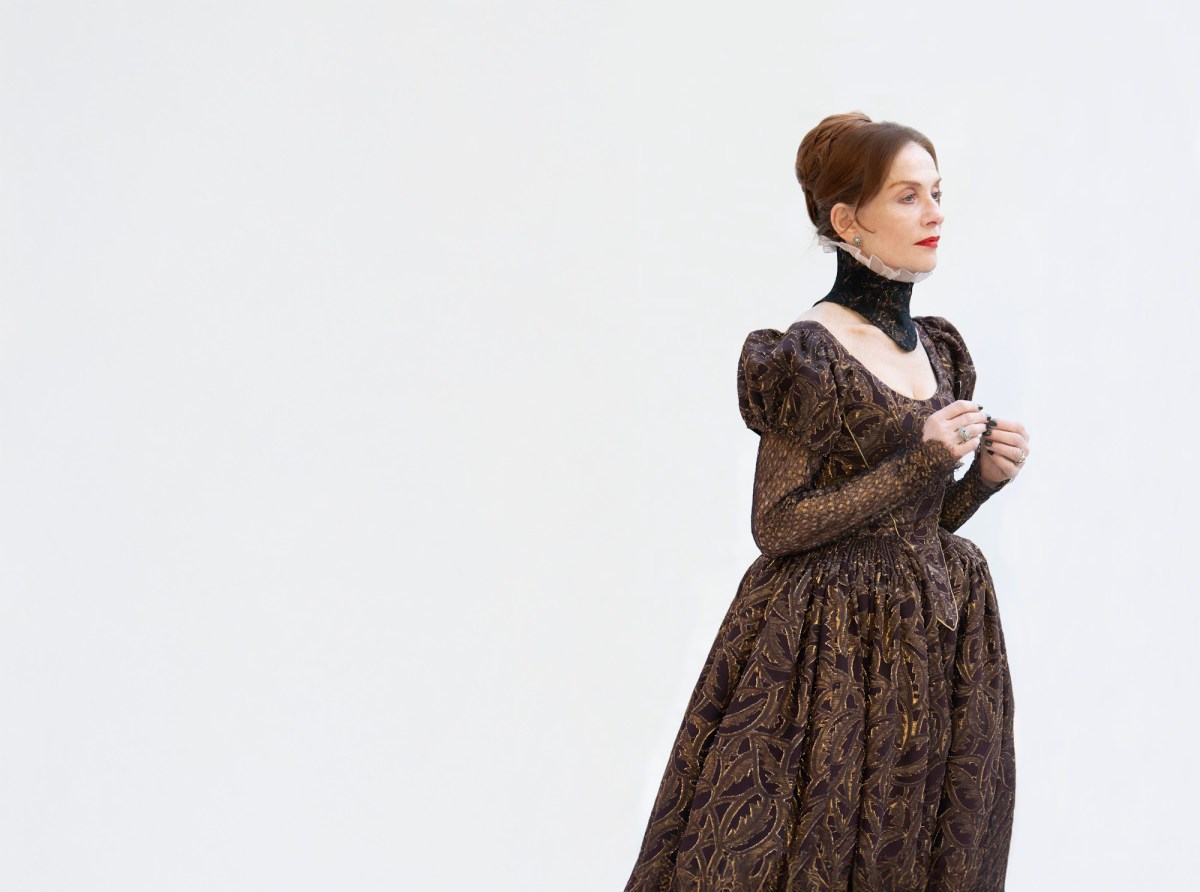
Directed by the late Robert Wilson, the play is a protracted intimate moment with Mary Queen of Scots (played by Huppert) in the final days before her execution. The emphasis is in the title of the piece – Mary was on trial, under suspicion of arranging the murder of her second husband, Lord Darnley, in order to marry her lover, James Hepburn.
With mounting religious tension and doubts about her capacity as a ruler, she had become a pariah in her own kingdom. In Mary Said What She Said, which is effectively an embittered diatribe against her treacherous betrayers, she is given a voice to protest her condemnation to death.
Mary Said What She Said review – quick links
Bringing the Queen of Scots back to life
The queen’s resolve, at once bloodthirsty, sorrowful and bitter, is portrayed wonderfully by Huppert. The progressive mania of her performance reminds me of her character in the film The Piano Teacher, and her disturbing portrayal of psychopathic manipulation and masochism.
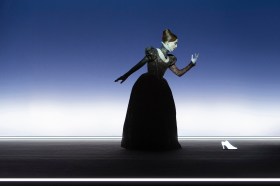
As Mary, she bellows, cackles, mutters and hexes. Throughout the entire first scene she is a silhouette, her body in Tudor dress, statuesque and her face in shadow, as she regales her audience with tales of her seductive powers as a young woman, her skin as fair and white as snow.
Of course, this evokes the French fairytale of Blanche Neige, or Snow White, and foreshadows the abandonment of her cousin Elizabeth I, Queen of England – the ‘poisoned apple’ is her betrayal.
An immensely challenging monologue
The strength of Mary Said What She Said is in the script, written by Darryl Pinckney, and delivered in French with subtitles on screen. Huppert reels it off effortlessly, sometimes barely pausing to breathe, alternately holding her body tight and unyielding, swaying, or pacing back and forth.
It has a relentless pace and frequent repetitive refrains, combined with the score by luminary composer, Ludovico Einaudi.
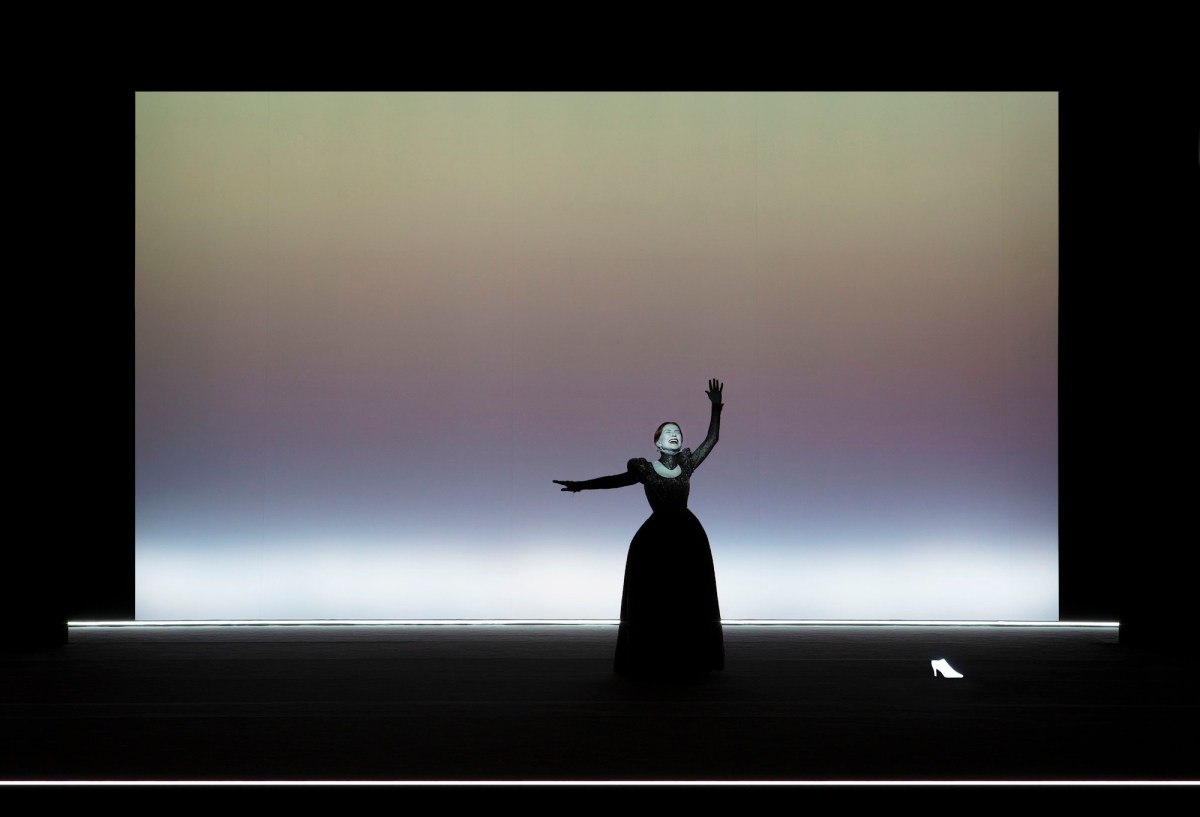
The physical theatre elements in Mary Said What She Said are also exceptional. Huppert is a master of stillness. In her menacing, stylised way, she often stands rigid, as if rooted to the spot, flailing her arms as if a dark sorcery were surging through her body.
In a few moments in the play, the stage falls to blackness and the spotlight zeros in on her face only, in a wide, wild, silent scream gesture.
This is not a relaxing play.
Delving into Mary’s life and mind
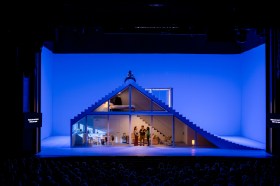
The set is sparse with heavy blackout curtains that seem to emulate the executioner’s guillotine as they threaten to close, only to halfway. The floodlit base of the stage and intense spotlighting gives Huppert the air of a hunted animal, and enhances her desperation.
At one point, the stage is filled with liquid-looking smoke. As she walks behind a translucent screen, a recording of her son’s childlike voice echoes through the theatre, showing how haunted she is by memory.
Her son, of course, is James VI, who had been separated from her, and became the king of Scotland at only 13 months old following his mother’s forced abdication.
Mary is a mother in this moment, not a murderess. She yearns for her son, calling his name, and he is nowhere to be seen, the echolalia of his voice resounding in voiceover.
Tender moments like this are in contrast to the end of the play, where, brutalised beyond redemption, the words drip like poison from her lips, as she says she will set the hounds on her betrayers and condemn them to be mauled to death. Huppert cowers and stoops for the first time, looking at once galled and vicious.
ArtsHub: Browse all Adelaide Festival 2026 reviews
In Mary Said What She Said, Wilson and Huppert have created a much more complex image of Mary than more romantic popular interpretations. Parallels might be drawn here with Lady Macbeth, yet it is hard to imagine anyone except Huppert able to claim such a ruthless, guileful character with such notoriety.
At ninety minutes, the play is testimony to the power of collaboration, as a world-class writer, director and actor converge to retell a historical story through a deeply intimate lens. Full of augury and pathos, Mary Said What She Said is overwhelming in its power to immerse audiences anew in one of history’s most profound stories of corruption and treachery.