After winning the NSW and Victorian Premier’s Literary Awards, and following well-received productions in both Melbourne and Sydney, Patricia Cornelius’ thoughtfully considered play Do Not Go Gentle arrives in Brisbane with high expectations.
The play follows a group of aged care residents who are fiercely protective of their right to remain relevant and defiant in their twilight years. In exploring ageing and dementia, Cornelius’ title from Dylan Thomas’ poem is rightly appropriate: ‘Do not go gentle into that good night. Rage, rage against the dying of the light.’
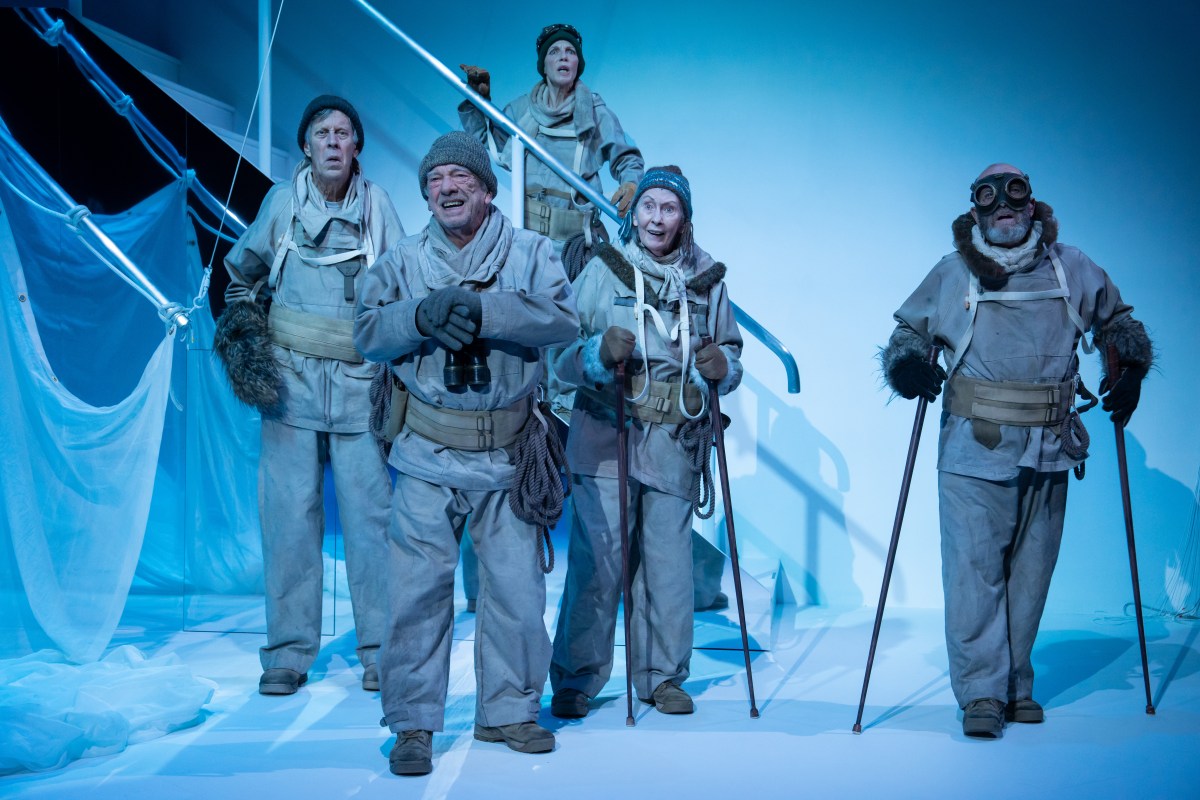
In a clever conceit, the five patients imagine themselves to be the brave explorers of Robert Scott’s ill-fated expedition to the South Pole in 1911. It’s a metaphor that transforms the residents’ spiralling downhill journeys into ones of great courage in the face of imagined danger and overwhelming odds.
Do Not Go Gentle review – quick links
Raging against the dying of the light
The five patients approach their situation in differing ways, each charting their own course through memories, desires and regrets with a mixture of determination, grit and dignity. Cornelius’ work is complex and multi-layered, with a second half seemingly better crafted than the first, offering opportunities for her characters to find meaning and purpose.
This new production from Queensland Theatre is directed by Heather Fairbairn and on opening night, Do Not Go Gentle felt under-rehearsed with some confusing messages, possibly due to production decisions.
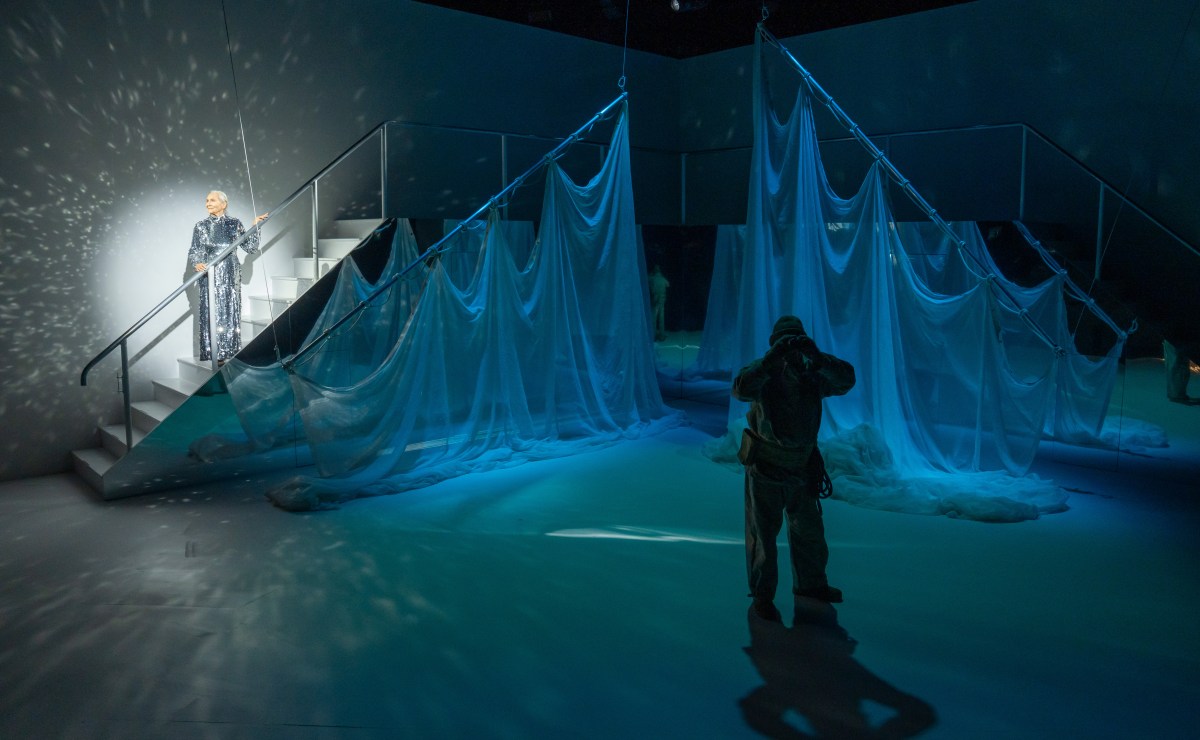
Antarctic imagery is front and centre, particularly in Act One, depicting the expedition’s struggle to reach the South Pole. The minimalist set design by Simone Romaniuk is a cavernous empty white stage with mirrored walls. It creates a monochromatic palette and abstract and shifting sense of space, and the set works best as a sweeping expanse of snow where actors ploddingly tow their sleds, accompanied by the sounds of cracking ice (sound design by Julian Starr) and bursts of light and shadow (lighting design by David Walters).
The interior scenes are less successful. An important part of Scott’s story, ostensibly set in a claustrophobic tent during a blizzard and discussing the all-important topic of sacrifice, fails to engage, as the actors could neither be seen nor heard properly. Other intimate scenes often lacked any relevant context within the drama.
Shedding the fantasy
Romaniuk’s costumes are well realised, introducing the five explorers in expedition clothing of the period, which gradually gives way to more contemporary dress in Act Two, when the play is predominantly staged in the aged care facility.
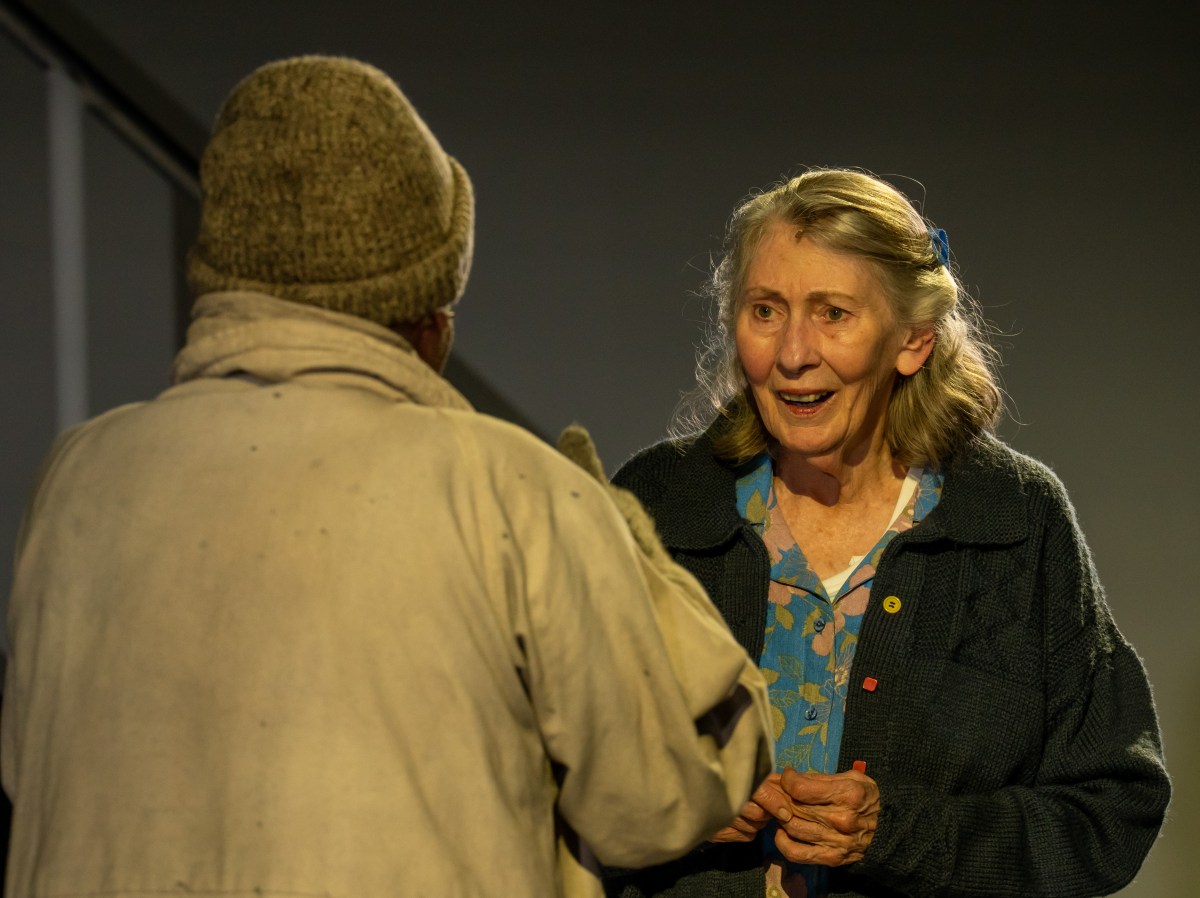
A group of seven experienced – and mostly older – actors are overwhelmingly splendid in their respective roles. The characters have their own personal demons, helping create both humour and pathos, with conflicting realities in their individual journeys.
Leading the expedition, Scott (William Zappa) does an excellent job of describing the journey in detail, drawing from Scott’s own diaries, while encouraging his four companions to go along with him. Self-doubt takes hold after the expedition fails; his frailty apparent in the final scenes in a heartfelt and poignant performance.
Jennifer Flowers is first-rate, offering a joyous, often comic and well-received depiction of Wilson/Mary. Her sunny and positive disposition, with a clear need for sexual love, does not detract from her capacity for generosity and friendship as she clings to life.
Bruce Spence is wonderful in the role of Oates/Titus, giving a strongly focused performance as he engages with his monsters, in the form of ‘wild beasts’. He gives a glorious funny speech about his inability to talk with men to a confused Evans, and delivers a final sad scene where he talks with his dead son. Steven Grives’ angry, objectionable Evans/Taffy rages constantly against the dying of the light, giving a highly credible performance and a moving final soliloquy.
Meanwhile, Christen O’Leary’s Bowers/Birdie/Claudia comes from a very dark place. Angry and brittle, she is fragile and fearful of a future where she cannot understand where or who she is. Failing to remember her husband or children is a defining emotional moment.
Composer Alan Johns includes a strident classical theme to open Act One with melodic music for the atmospheric start to Act Two. His composition supports and embellishes the arias sung by a beautifully played Marilyn Richardson as Maria. An elderly immigrant, formerly an opera singer, Maria’s dementia takes the form of her constant need to return home. Andrew Buchanan plays a number of supportive non-residential characters with panache.