I can feel it in every (carbon) atom in my body, not everyone’s going to love Carbon – an Australian premiere play by Italian playwright Pier Lorenzo Pisano. In the same way that, it seems, in our every increasingly atomised world, people don’t like having their views on issues challenged, don’t like being told they’re wrong, or that they’re missing the point, plays like Carbon are meant to be uncomfortable.
While this might sound like the theatrical equivalent of eating your greens, Carbon is also a mind-expanding, deeply philosophical, potentially paradigm-shifting experience – if you’re willing to settle in for the trip.
It’s that very rare artistic experience that has the capacity to render alien the familiar, making you see that the way you experience the world is just one type of perception, and questioning your understanding of what it means to be on ‘team carbon’, floating around on our planetary rock, in our particular arm of the Milky Way.
Carbon review – quick links
Interrogating the meaning of life
The play was first performed in 2021, won Italy’s most prestigious theatre award, the 56th Riccione Award, in 2022, and is now making its Australian premiere at Melbourne’s Red Stitch Actors’ Theatre.
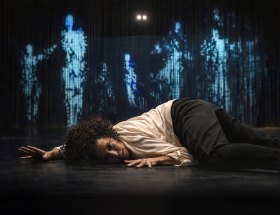
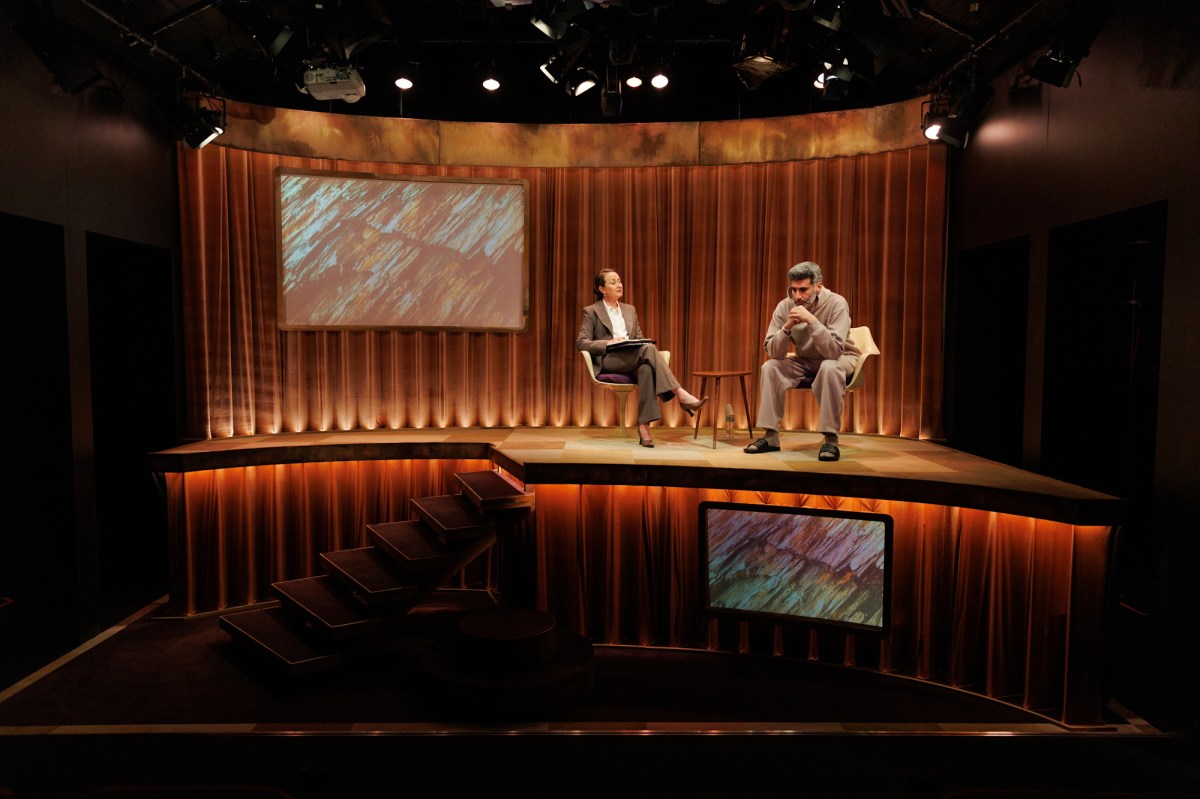
Structured in two parts, the primary narrative arc centres an interrogation, as an interviewer (Red Stitch veteran ensemble member Caroline Lee) questions a survivor of humanity’s first contact with alien life (debut Red Stitch ensemble member Pantazi Terzian), who is struggling to make sense of his sketchy memories of the experience.
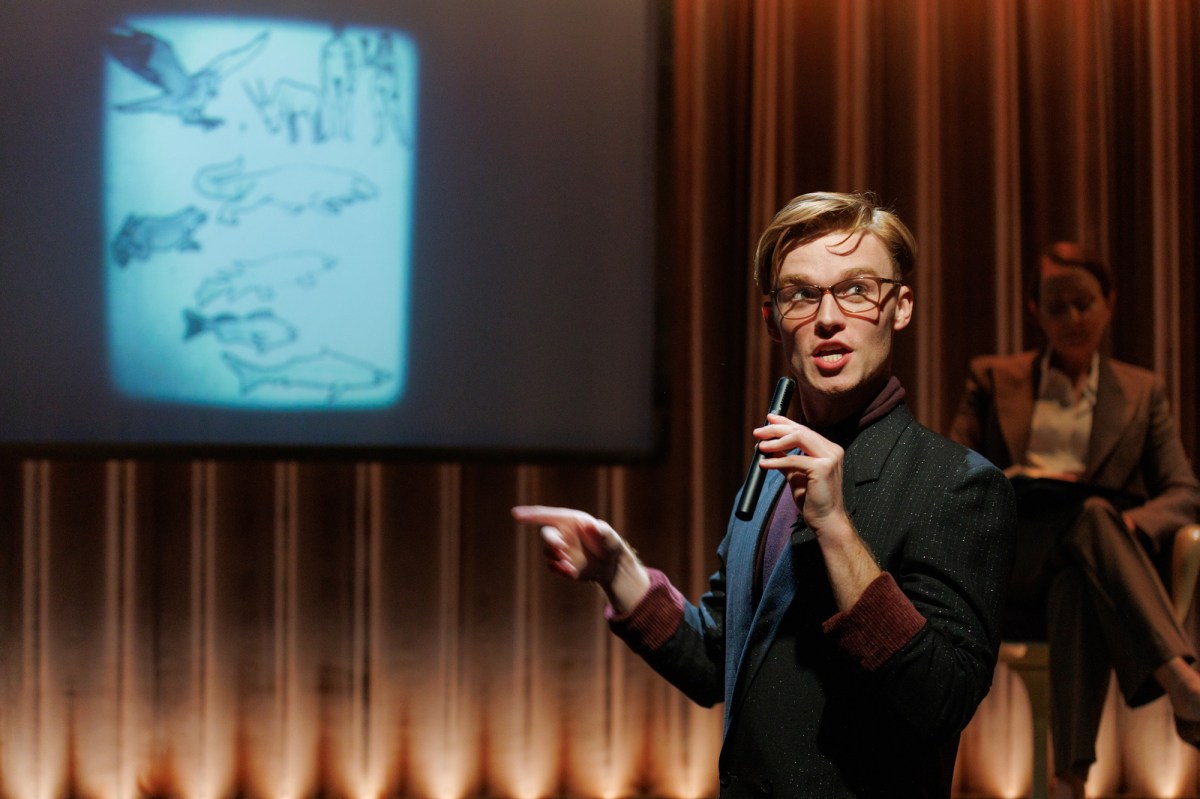
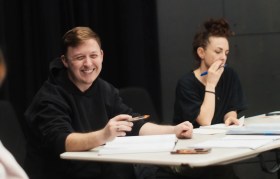
Interrupting this forward-moving, one-act scene is a parallel story that provides some existential comic relief: a youthful, charismatic presenter (Conor Leach) takes us through a projected slideshow, explaining the strange characteristics of carbon lifeforms – ‘carbon lifeforms’ being a stand-in for all of humanity.
Through his never-faltering smiles and droll asides, he skewers our species’ obsession with continuing to exist, to replicate, while we only truly care for those closest to us. With an ironic twinkle in his eye, he roasts the quaint drawings and artefacts included in the Voyager Golden Record – the images, music and sounds that were sent on the first Voyager missions in 1977, to introduce our planet and its residents to potential alien lifeforms who might find it.
Slow boil tension
Caroline Lee and Pantazi Terzian’s characters (unnamed in the play) are seated on modern swivel chairs on a raised mezzanine floor of stage as you enter the theatre. The set, by Anna Cordingley, is cocooned in lush, blush, floor-to-ceiling velvet drapes, highlighted by a warm accent lighting (by Richard Vabre). It conjures the fleshy and flashy: wombs, tombs and TV interviewer’s rooms.
Katy Maudlin’s direction is a masterclass in restraint, the performances infuriatingly precise: Lee as the interrogator and Terzian as the unreliable witness start the dial at virtually zero from the outset, Terzian exhibiting an almost bored level of non-tension, as Lee very gently but forensically prods him with questions about his experience with the non-carbon lifeform he encountered.
Having devoured all available video content of the encounter to help him make sense of his experience, he now no longer knows which memories are his own and which have been absorbed from what he’s seen from the videos.
Throughout most of the play, there is hardly any movement from either actor, barely a raised voice, as the tension ratchets up at a glacial pace, almost imperceptibly.
Team carbon
But don’t be fooled, and don’t look away. This play is luring you in, and its rewards, if you’re up for waiting for them to reveal themselves, are vital and heartbreaking. This is a slow boil, and you won’t know you’re cooked till after the lights finally go out.
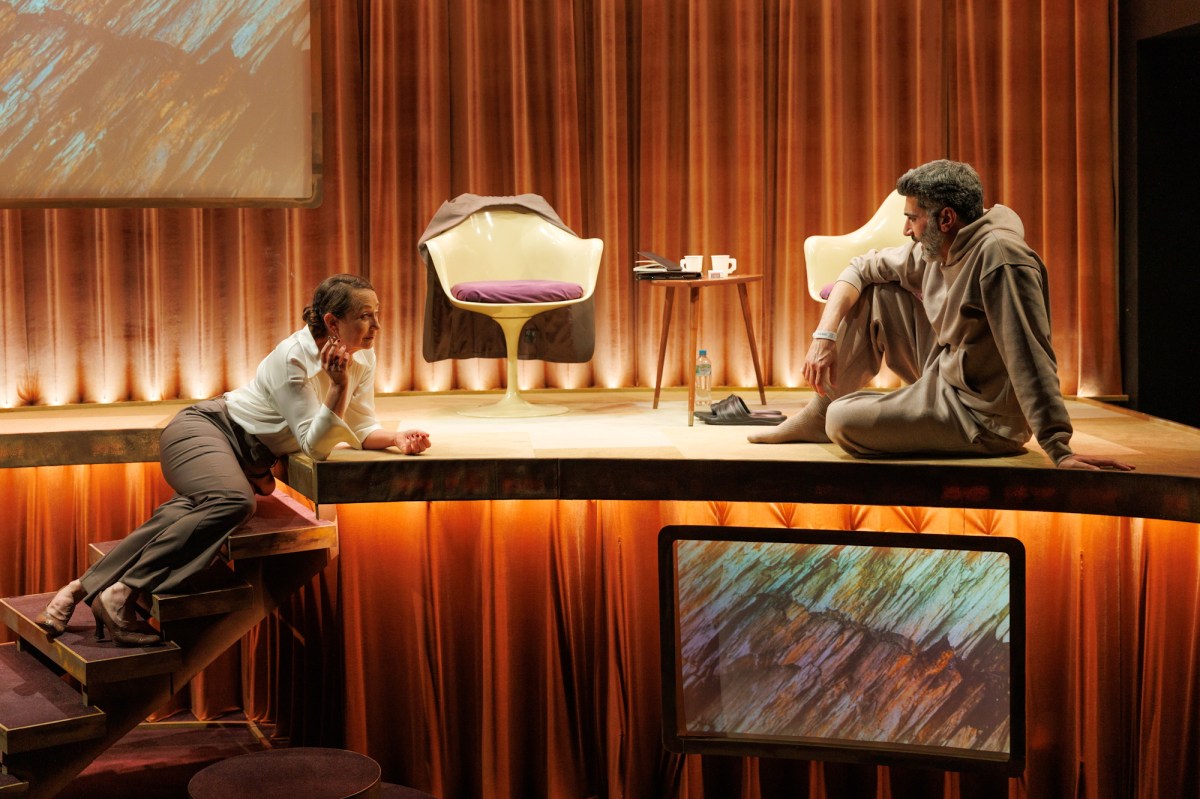
Terzian’s character explains early in the play that his first encounter with a non-carbon-based lifeform left him feeling protective of all carbon lifeforms – that it was ‘team carbon’ against everything else. The new enemy, so fundamentally strange, threw into relief the closeness of all life that has evolved on our planet.
Like Terzian’s character, Carbon left me bereft, with a deep feeling of sadness and embarrassment about humanity – our naivety and inherent contradictions and frustrating inability to make good decisions, collectively, for the good of all of us – but also with a very strong sense of connection to our planet, and all the life that it sustains.
Because really, it’s all we’ve got. And we’re all we’ve got.
Carbon is just the play we need right now: a proper dose of theatrical medicine to help us see things anew, ignite our empathy, and help in some small way to unlock a sense of collectivism and care for our planet and all ‘team carbon’ lifeforms we share it with.