Crossing the Divide, the latest production from Shock Therapy Arts, explores how our national identity has developed since the days of the early settlers – and in this thought-provoking play, those issues are still to be resolved.
Shock Therapy Arts was founded on the Gold Coast in 2015 by Co-Directors Sam Foster and Hayden Jones, with the aim of delivering high quality theatre in schools for young people. For over two decades, the company has produced original live theatre themed around relevant social issues.
Seeing theatre as a powerful form of expression and communication, they aim to tackle complex and difficult questions without preaching any specific messages. In this vein, Crossing the Divide takes as its starting point the 1813 expedition of Blaxland, Wentworth and Lawson, who travelled west from the Blue Mountains across the Great Dividing Range to find and sequester land for the new colony.
Crossing the Divide review – quick links
Grand ambitions
The geography of the range offers an allegory for current national divisions. In the play, some 200 years later a high school history class sets out on a two-day trek across the Great Dividing Range to learn about the earliest interactions between colonists and Indigenous people. This unveils some unpalatable truths, which the play aims to expose and analyse.
Historically accurate, this 55-minute play is tightly written and well researched by Sam Foster, Hayden Jones and Benjin Maza. Moving swiftly between scenes of the three explorers and their convict servants to modern day episodes of the school history class trek, we also encounter a teacher, Indigenous tour guide and an eco-lodge host.
Unfortunately, with only three actors playing a total of 13 roles, and with limited costume changes and few props, it took a while to determine individual characters. There was no program or a list of roles to assist the audience, and while this might be fine in a school setting, where students presumably have some pre-knowledge, it did not translate easily to a stage show.
An intermittent lack of vocal projection by the cast also failed to help the audience follow the storyline or catch the throw-away meaning of jokes.
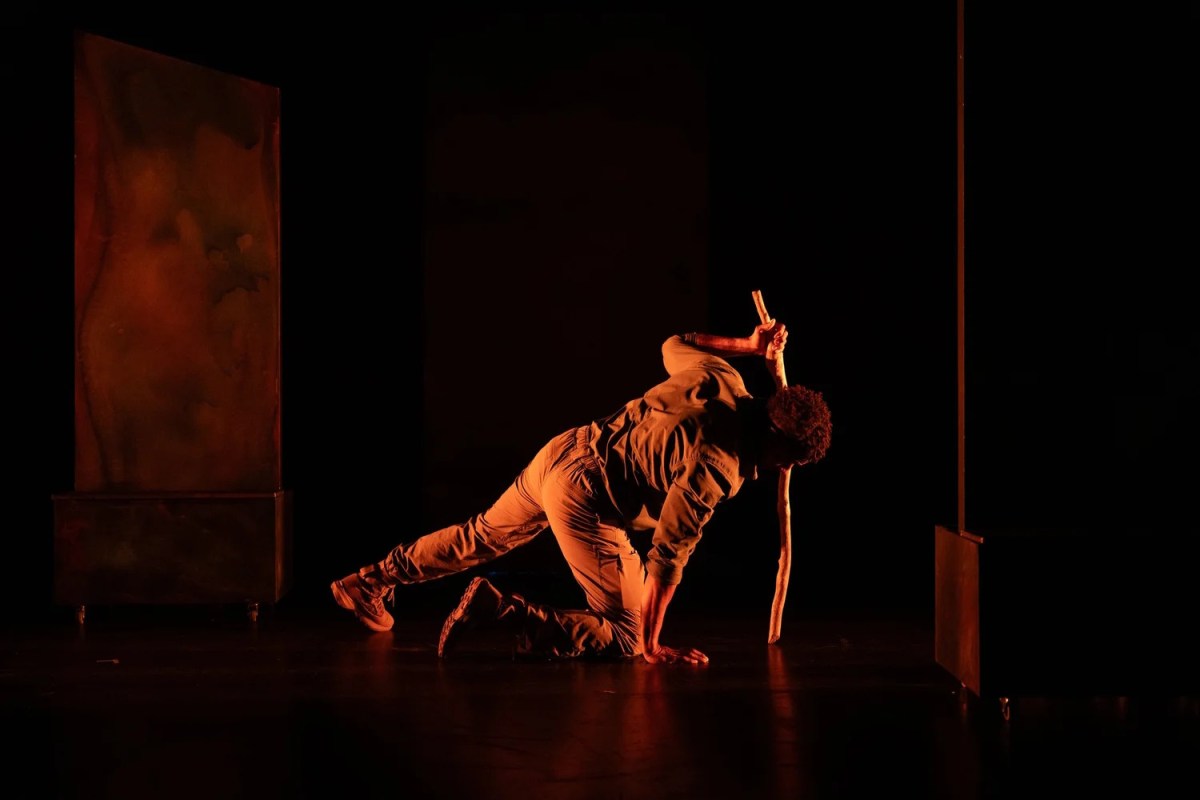
The script does, however, offer a potent mix of storytelling and educational facts, humour and drama, the whole interspersed with music. A hip hop artist and drummer, the composer and audio designer Dobby delivers music that is mostly upbeat, with relatable pop tunes. Maza sings well, accompanied by guitar, banjo and drums, and the opening song, What are we fighting for?, offers a contrary and distinctly Indigenous perspective.
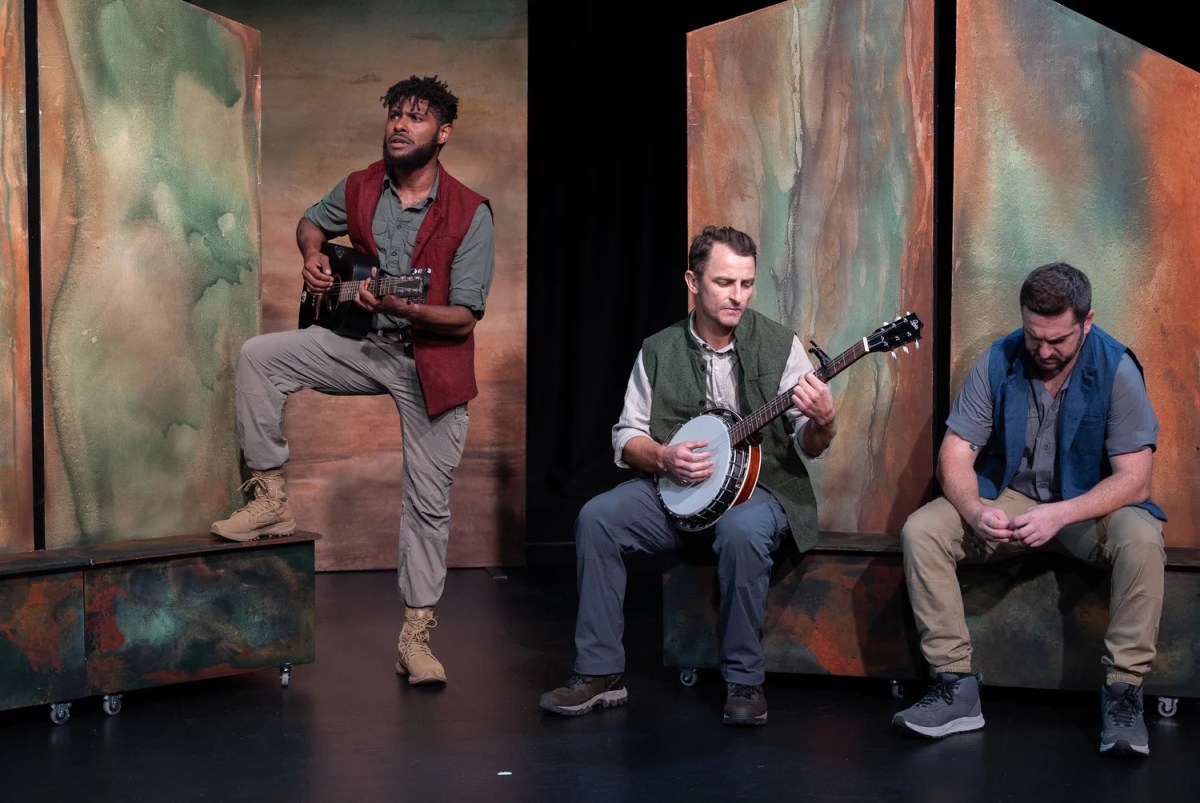
The set consists of a series of painted hanging cloths, representing the Great Dividing Range in an abstract style with bold, earthy colours. A number of smaller similarly painted trucks are used to differentiate scenes and create seating areas, among other effects. This kept the action flowing, with changes in mood, time and place also enhanced by atmospheric lighting.
Small ensemble takes on many characters
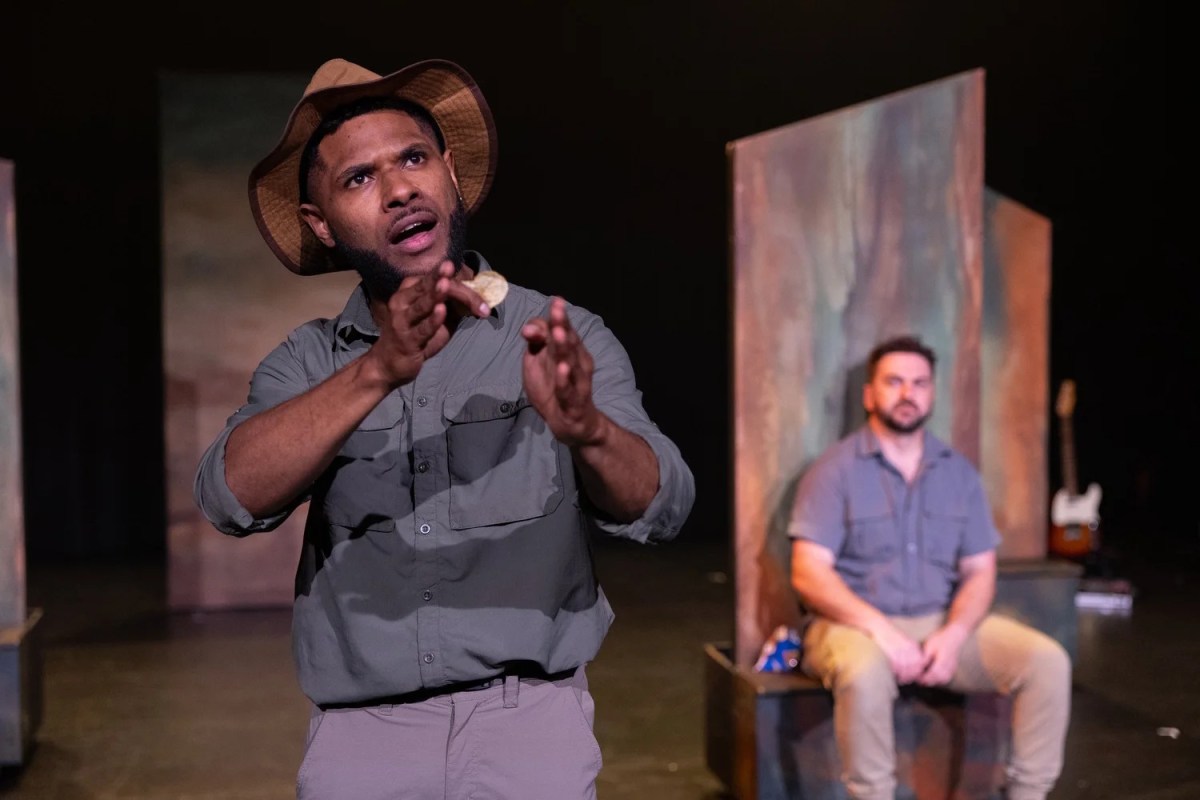
The three authors and actors work hard to create myriad characters. Maza’s major role is Liam, a scholarship student from the Torres Strait, who becomes increasingly uncomfortable defending his background and experience as a First Nations person.
Maza manages this well and with great dignity. He is equally as impressive as tour guide Lionel, explaining in a matter-of-fact way how the frontier wars came about. His cameo as an exchange student, trying to learn Australian rhyming slang without much success, is very funny.
As Blaxland, Foster offers a steely authority, solely focused on growing the new colony by finding land for the settlers. Foster also played Vlad, a Russian-accented, larger-than-life eco-lodge host, and gave a nuanced performance as the working-class student Blaydon, as well as the convincing Irish convict Samuel.
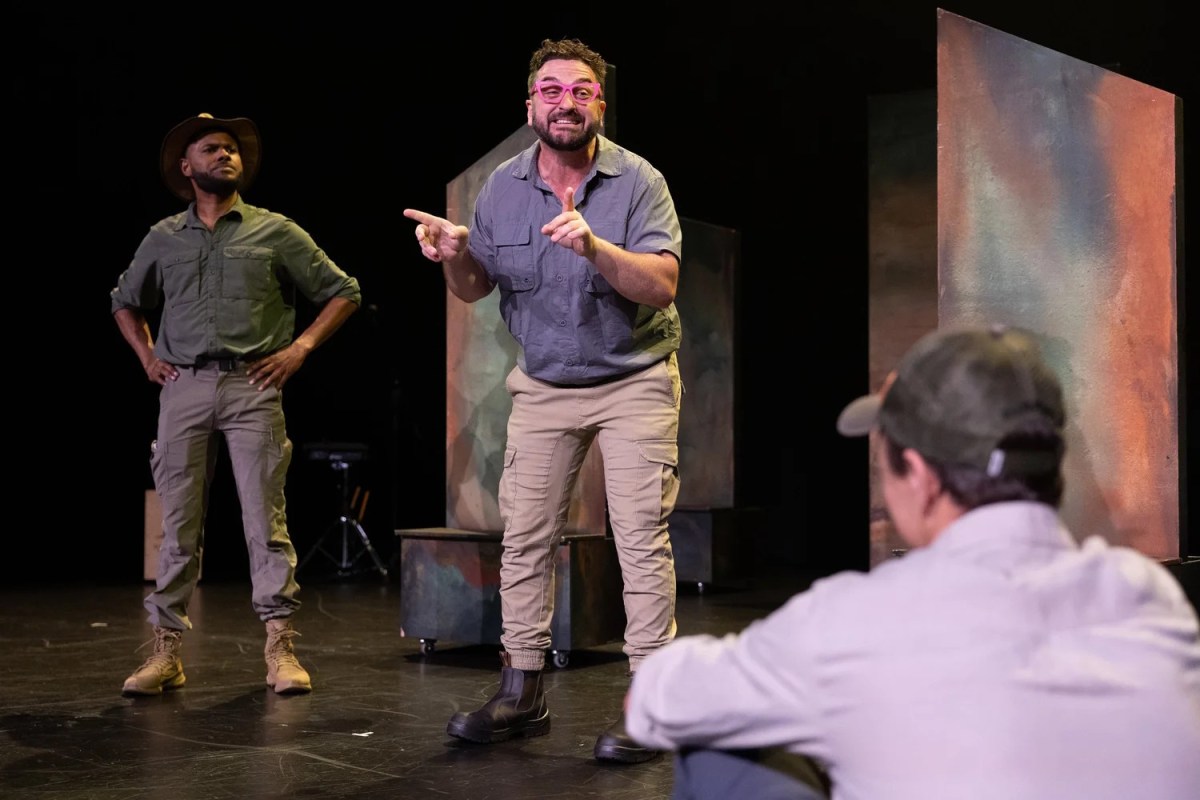
Jones played the only teacher, Mrs Dampier. With her pink spectacles, poor posture and limp, Mrs Dampier is designed to be humorous. Beautifully observed, Jones creates a delightful and well-appreciated character.
Changing roles completely he then plays the rich, entitled student Max, with his lack of empathy and understanding of those less fortunate, as well as Liam and Indigenous people. The scene where he and Liam almost come to blows is one of the best in the play.
Crossing the Divide first played in South East Queensland schools in 2024 and will continue touring in 2026, such is the power of this style of theatre. This production was also chosen to open Queensland Performing Arts Centre’s recently introduced new Creative Learning Program, which seeks to offer live theatre opportunities to students and young people. This play is both relevant and important, as it asks difficult questions that we are often all too reluctant to discuss.