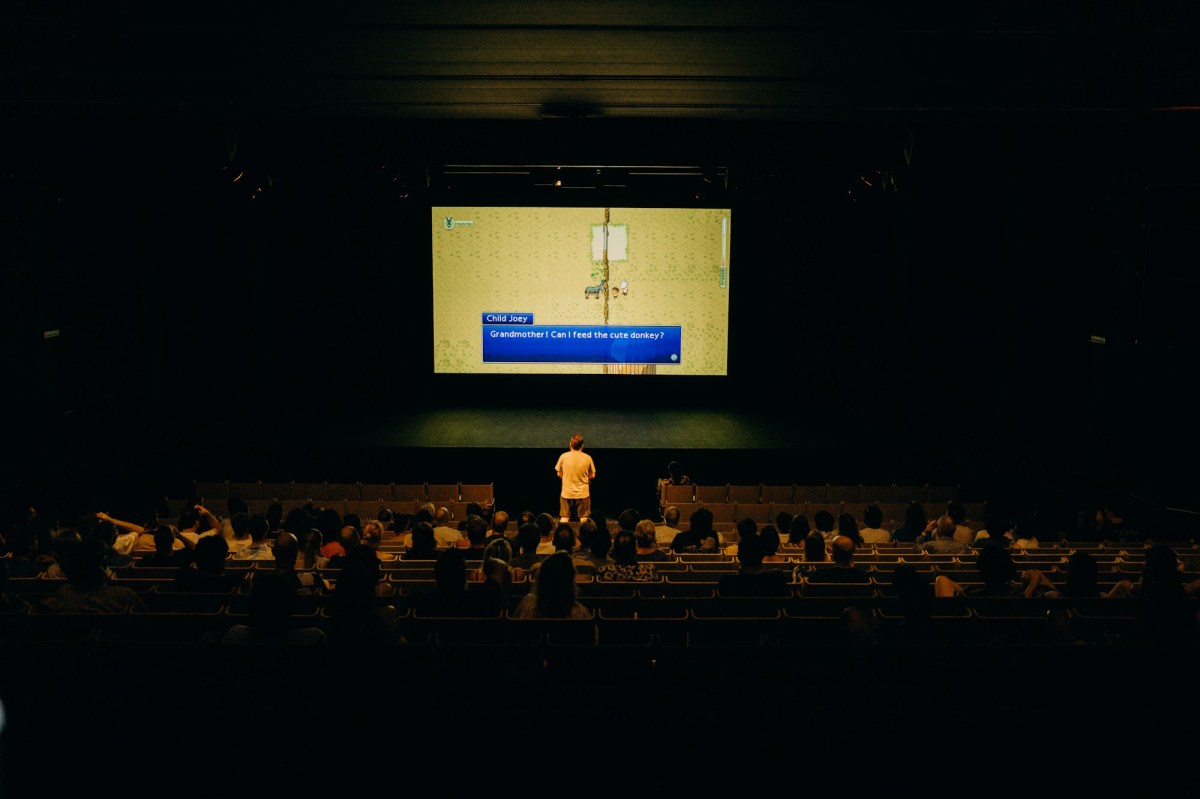
Many festival shows begin with a singular person in front an audience of more than 100 people, but rarely has that person just stepped up from the audience themselves to lead a pack of unemployed donkeys to revolution. Asses.Masses is an overwhelmingly delightful durational feat that manages to be both a nostalgic trip and a radical experiment in collective negotiation.
The premise is deceptively simple: one controller, one screen, and a room full of people navigating the social contracts of the question, whose turn is it anyway?
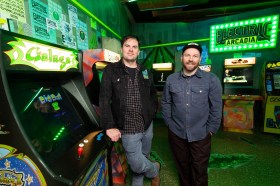
But as the hours tick by – eight in total by the end – this ‘single-player’ game transforms into a complex embodiment of what one of its creators, Patrick Blenkarn, calls the ‘politics of the basement’.
It is a beautiful mirroring of the content and themes of the game – an exploration of collective action, unionism, the politics of oppression and groupthink.
Asses.Masses review – quick links
A video game led by a donkey
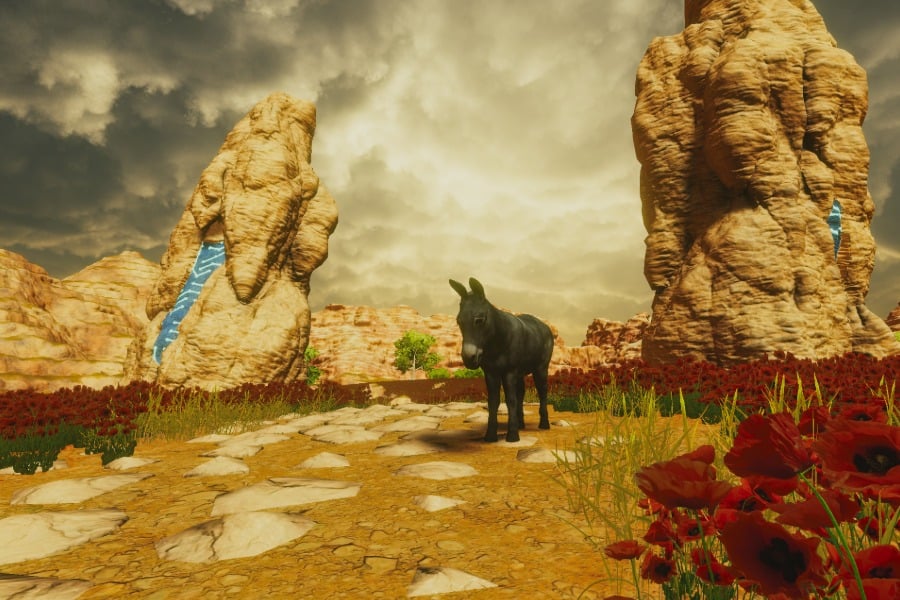
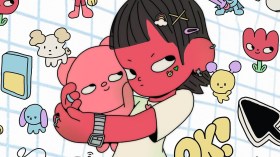
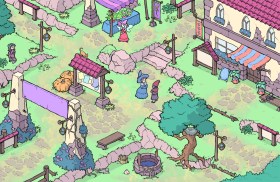
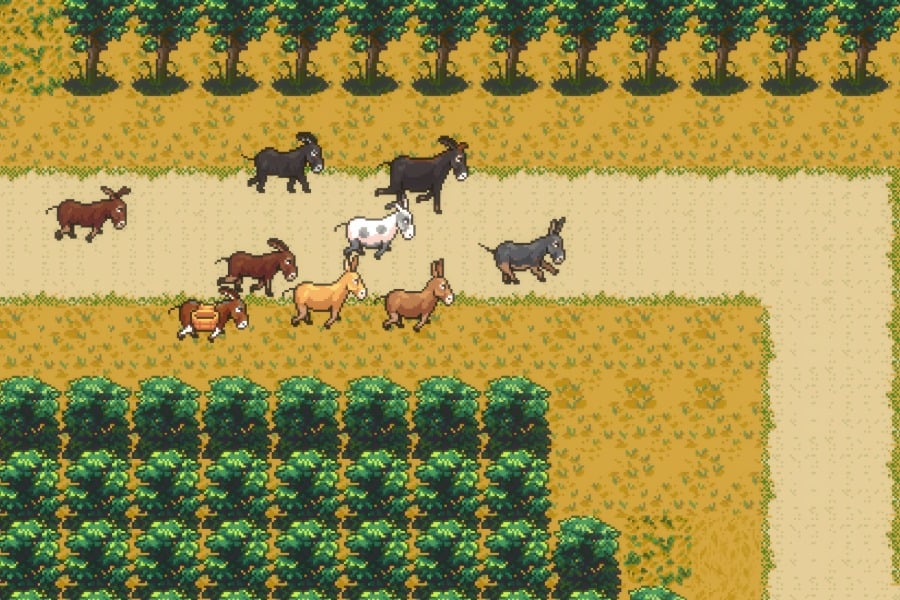
Visually, the game itself is a relentless shape-shifter. It begins with the charming, 2D nostalgia of a Pokémon-style open world video game before subverting expectations with 3D open-world exploration and a swag of breakout mini-games.
The perspective frequently cracks open into a lush, 3D sandbox where our donkey protagonist gallops through open plains. The score is a particular standout, shifting historical gaming styles effortlessly with 8-bit inspired nostalgia, gentle indie folk and sprawling guitar swells moving into a techno rave that serves as the backdrop to a mass donkey orgy.
The gameplay, while impressive in its discrete design elements, triumphs most in its ability to sustain a level of difficulty and gameplay that is just as accessible and well pitched for non-seasoned gamers as those who have double-jumped their thumbs to RSI.
Spectator gaming is nothing new; fans have long watched others play in the high-stakes arenas of StarCraft championships or the chaotic ‘crowd-play’ of Twitch Plays Pokémon. However, Asses.Masses strips away the professional hierarchy and the competitive edge.
Unlike the polished elitism of Esports, this is unhierarchical and fiercely collaborative – and most noticeably programmed in an arts festival and staged at the Sydney Opera House.
Negotiating a new world order for donkeys
The house lights remain dim but on throughout, allowing and encouraging the audience to move around, heckle and debate. From the first five minutes, the crowd is ‘all in this together’, shouting directions like a The Price Is Right studio audience.
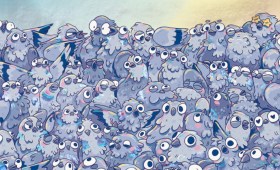
The ‘ass’ jokes are, predictably, relentless. We participate in naming one of the herd, joining the likes of ‘Smart Ass’, ‘Hard Ass’ and ‘Sad Ass’, to lead the charge into the digital abyss.
But beneath all the puns is a fascinating psychological shift in the group. The early hours see the crowd start sassy and ready to agitate, taking cues from the in-game text. It’s masterfully scripted, and a direct descendant of the LucasArts golden era; the game carries that Monkey Island DNA, where the dialogue is sometimes bawdy, often silly, and always deeply irreverent.
Because of the strength of the dramaturgy, by the final hours, the room is passionately at full volume, debating moral choices and championing ideas for a New World Order for donkeys.
Living with collective choices
The game’s themes of rebellion are mirrored perfectly in the audience’s own decisions and response to a singular controller and over 100 people in the room. As the intervals pass, the casual ‘does anyone want a turn?’ energy tightens into a palpable tension about who gets to hold the controller. You find yourself supporting decisions you didn’t make, and learning to live with the ‘complicity’ of a collective choice that wasn’t yours.

While the sleepover vibe was occasionally hampered by lacklustre snacks – a dry curry sausage in a bread roll is no revolutionary’s fuel – the intermissions gave further invitation for discussion, analysis, reflection and connection with others in the crowd.
After one such interval, a small group of audience members addressed the crowd to ask for kindness in our collective approach to the player, a request met with applause and agreeance from the crowd. These moments, unique only to the experience that day, make the art of the live experience obvious.
Asses.Masses highlights the possibilities of theatre by breaking the silent collective experience we are used to. It is a Lord of the Rings-level epic that leaves even non-gamers such as myself wanting to dig out my GameBoy Color and lead a revolution.
For anyone looking to walk into a theatre and experience that art can still be a site of genuine, messy, democratic protest, this show is essential. It’s a riot that proves the best way to build a new world is to play.