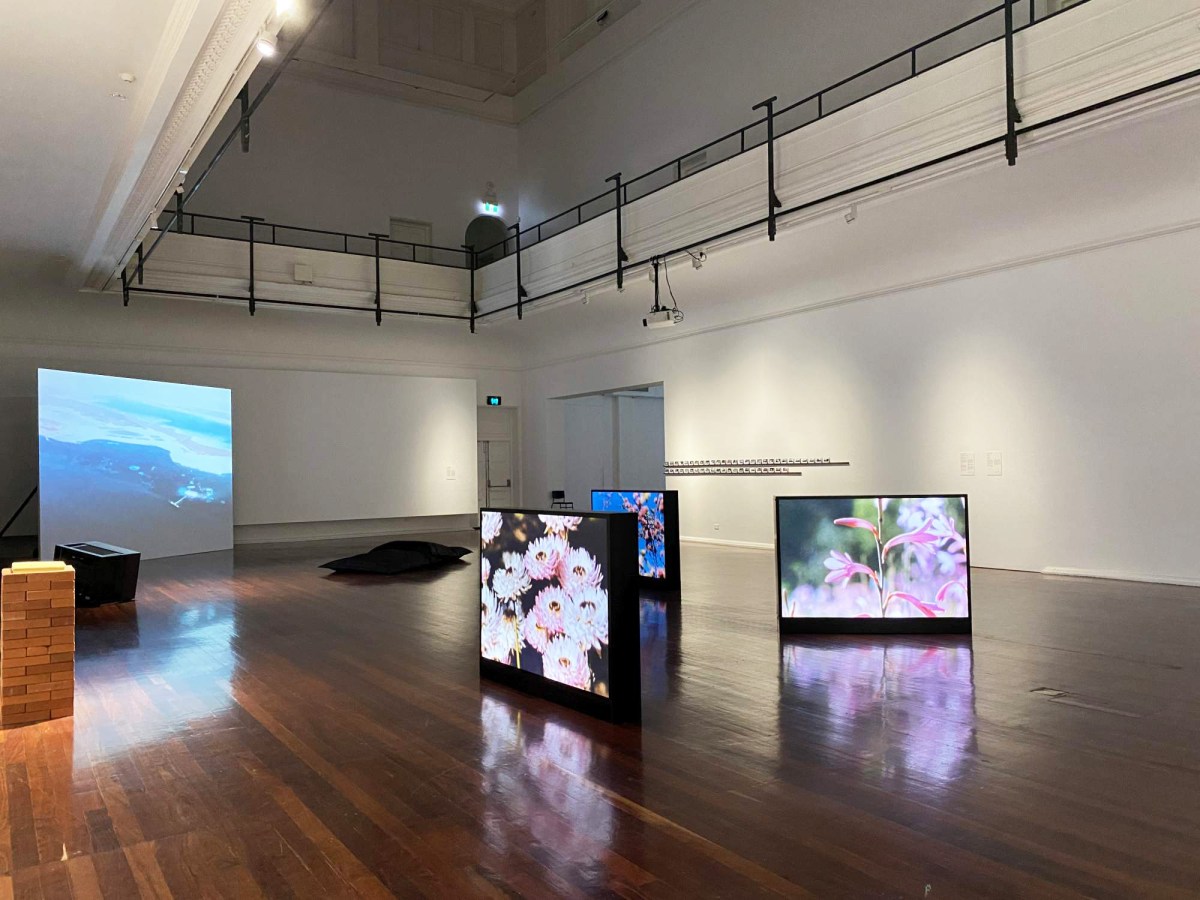
Alana Hunt is an artist whose forensic approach to investigating the all-too-often invisible or ignored political injustices in our society have, to date, informed an impressive array of sharply produced, quietly powerful installation works.
A notable case in point is her series A Very Clear Picture (2019-23) and its short film Nine Hundred and Sixty Seven (2020-21). This film documents the high number of exemptions granted by the state of Western Australia since 2010 to ‘destroy, damage or alter’ Aboriginal cultural heritage sites that, as per its Aboriginal Heritage Act (1972), were supposed to be strictly protected.
Narrated by former Rinto Tinto CEO Sam Walsh, this particular work stands as a powerful provocation on the inexorable ties between governments, corporations and individuals when it comes to ideas of profit-driven growth economies and the fragility of our on-paper laws amid these cycles of power and politics.
But for Hunt’s solo exhibition at PICA, A Deceptively Simple Need, the artist’s focus is firmly on property and housing. This exhibition, curated by Jasmin Stephens, takes a particular interest in the contradictions inherent in the idea of building and owning homes on unceded Australian territory.
Alana Hunt’s A Deceptively Simple Need review – quick links
The deceptively simple need for a home (on other peoples’ land)
From the outset of this show, Hunt is not shy in making these political themes obvious to viewers. At the gallery’s entrance, the artist has placed an oversized slogan-washed welcome mat on the floor. While mimicking the ubiquitous Bunnings-variety design, it’s also a clear sign of protest against modern Austalia’s systems of home ownership.
In place of the typical ‘a man’s home is his castle’ routine, Hunt’s welcome mat message takes its cues from housing and human rights researcher Kevin Bell, a former Supreme Court Judge and the author of the recent Housing: The Great Australia Right.
As Bell has written: ‘In Australia the origin of the idea that housing is to be valued primarily as a commodity for producing private wealth is colonisation. It is part of our creation story’.
These words (and this work) set a fitting tone for many of the other pieces in this richly layered show. The exhibition space is dominated by a large central installation screen work, Displacement and Replacement (2025). Placed in adjoining galleries are smaller Polaroid photographic works from the series When we win lotto (2025) along with two other short film works, the deceptively simple need for a home (on other peoples’ land) (2025).
Alana Hunt asks probing questions about Australian home ownership
Taken together, these works read as a biting exposé of what one could argue are the questionable foundations informing modern-Australia’s systems of land acquisition, property development and home ownership.
Especially effective in this regard is the piece Bricks and Mortar (2025). At first glance it appears a simple time-looped film of brick-laying tradies at work on a construction site, but it soon reveals itself to be the opposite of an ode to Australia’s construction-fuelled economy.
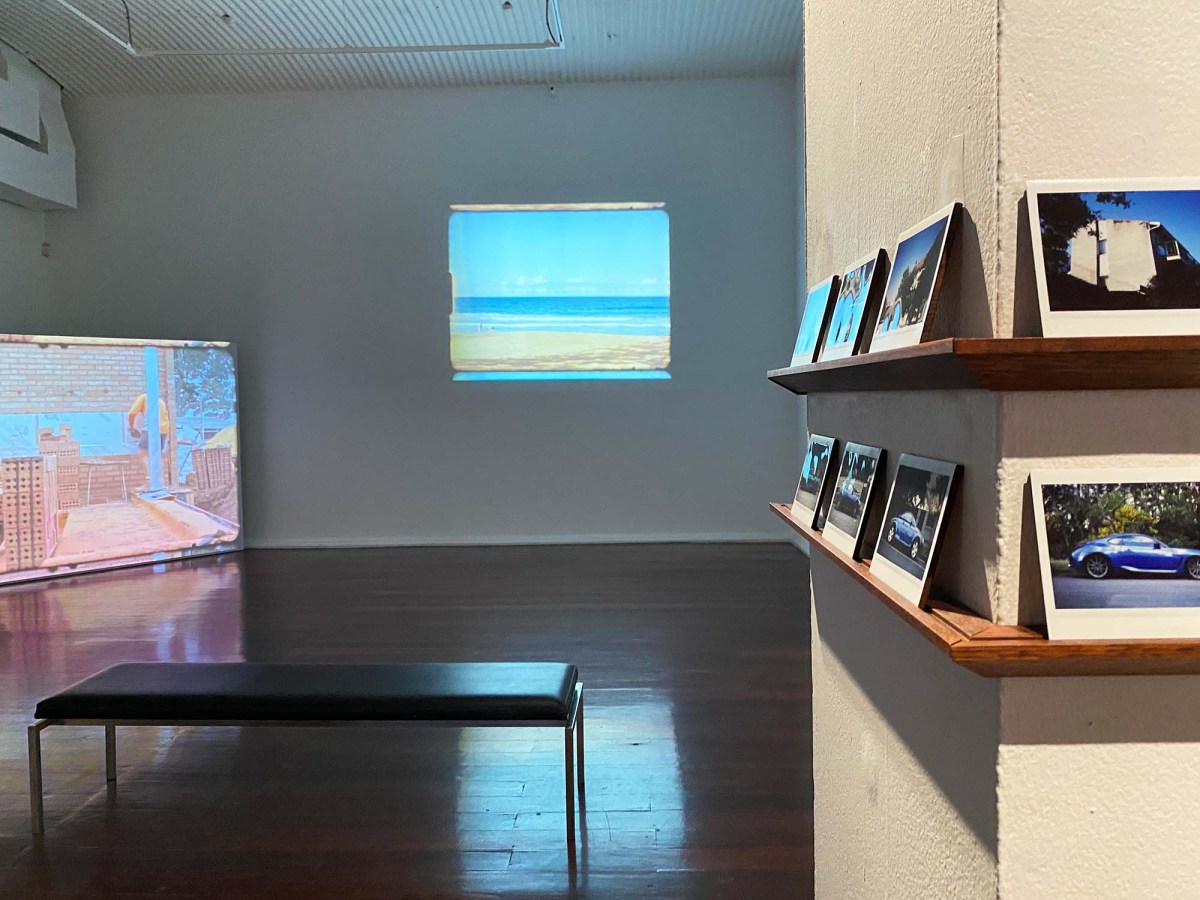
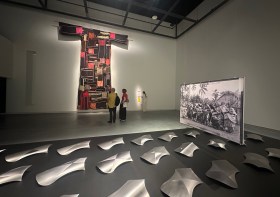
Similarly, the exhibition’s central work, Displacement and Replacement (2025), uses archival film footage of Pilbara mining towns. This footage was originally recorded by the WA Government for promotional purposes in the ’60s and ’70s, but here it is used to reflect on the state’s growth-cycle patterns of development and wealth accumulation, which have come at the expense of the Traditional Owners’ cultural custodianship and the region’s ecological stability.
And while many of the works in this show take a wide-angled view of these themes, in the end, it’s the artist’s personal experiences which inform its most urgent ideas.
As someone who grew up moving from one rented home to another no less than 14 times through her early years, Hunt is someone who can speak from personal experience about life-long housing precarity.
These deeply personal reflections on what it means to have a home in modern Australia sit in parallel with the artist’s wider investigations into the housing crisis on a societal scale – offering viewers space for deep reflection on these challenging subjects and the difficult history that informs how we got here.