For a place built on make-believe, Melbourne’s Luna Park is making a surprisingly real investment in artists.
The 113-year-old amusement park has spent the past several years bringing contemporary art and live performance back into its precinct, including appointing Melbourne’s legendary purveyors of provocative performance, Finucane & Smith, as its first company-in-residence.
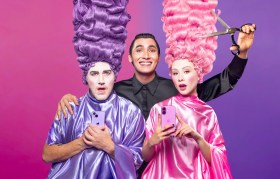
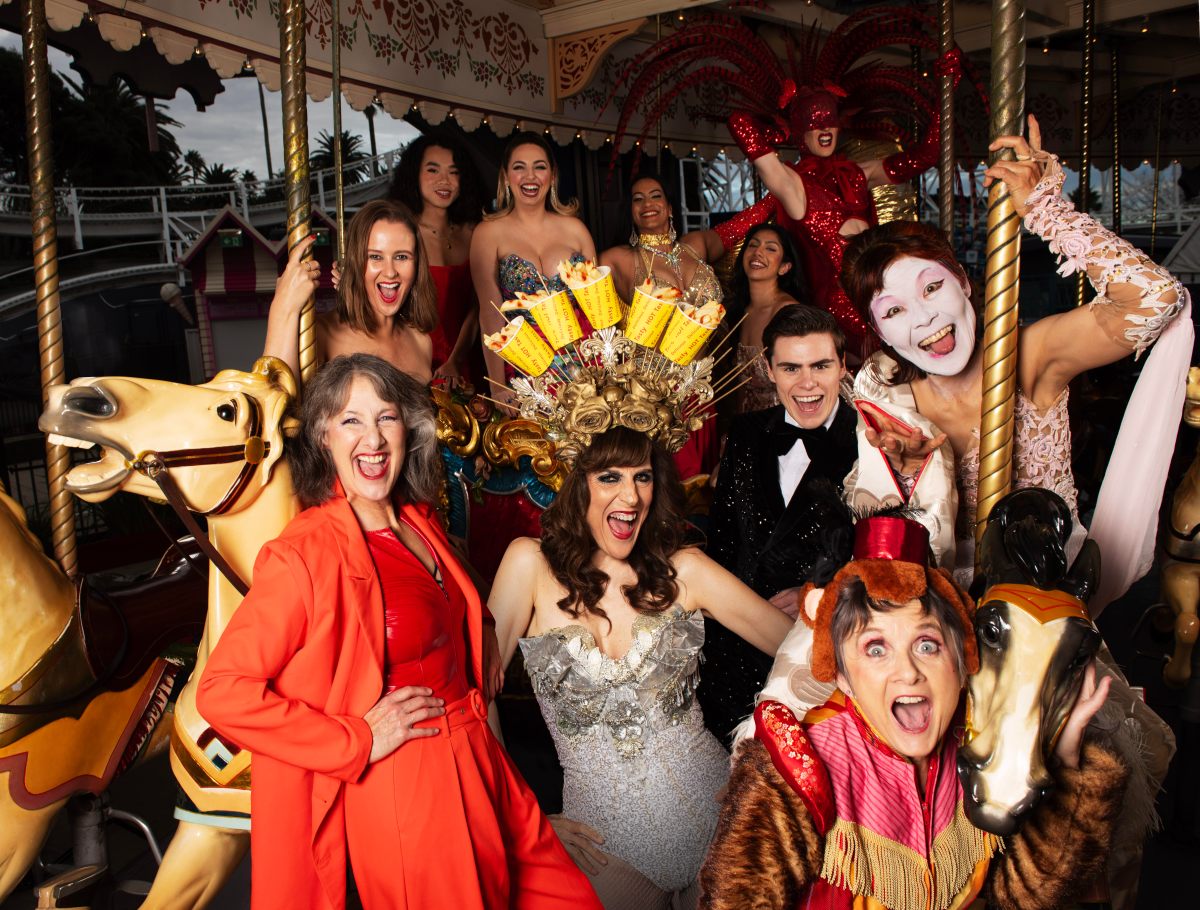
The company’s eight-year relationship with Luna Park has now produced Dance Palace. Celebrating 30 years of Finucane & Smith, this sprawling variety show will reopen the newly refurbished Luna Palace building with burlesque, cabaret, circus, dance, live art and the promise of ‘plenty of hot chips’.
Finucane & Smith’s Dance Palace – quick links
Finucane & Smith celebrates 30 years at Luna Park
It is an intriguing proposition: rather than treating art as an occasional embellishment to a tourist attraction, Luna Park is making artists part of its identity. And not just any artists.
Finucane & Smith’s work is provocative, queer, exuberant and deliberately difficult to categorise – the kind of art that feels far removed from the sanitised nostalgia sometimes associated with heritage attractions.
For co-founder and ‘Queen Provocateur’ Moira Finucane, the partnership makes perfect sense.
‘Heritage amusement parks, of which there are only a few left in the world, were havens for the wild, the unabashed, the unexpected, the freak, the fun,’ she tells ArtsHub. ‘Our artists fit so well amidst that.’
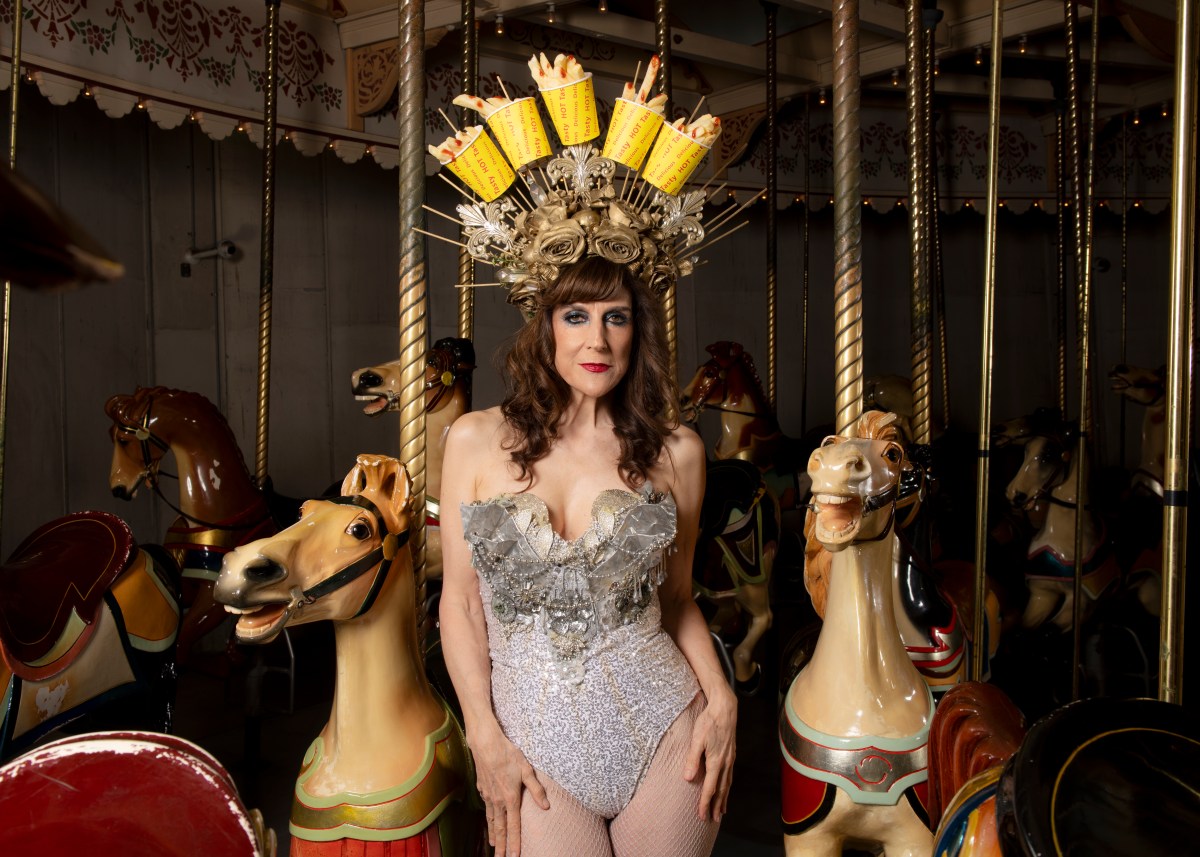
For decades, Luna Palace was home to key Luna Park attractions including the Penny Arcade and Dodgems, in more recent times, however, the more than 100-year-old building has fallen into disrepair and been closed to the public for safety. Its reopening comes after a cash injection from the Victorian Government.
Dance Palace, running from 20 August to 12 September, will see around 30 artists cascade through Luna Palace, ranging from burlesque and Bollywood belly dance to First Nations music, Butoh, torch songs and contemporary circus.
Among them are Finucane & Smith regulars including gender transcendent diva Mama Alto, legendary feminist performance artist Maude Davey, Butoh goddess Yumi Umiumare and glittering Indian boylesque from Govind Pillai, alongside Yorta Yorta Taungurung legend Glennys Briggs, country star Ian Muir, showgirl/showghoul Bendy Ben and a host of other performers.
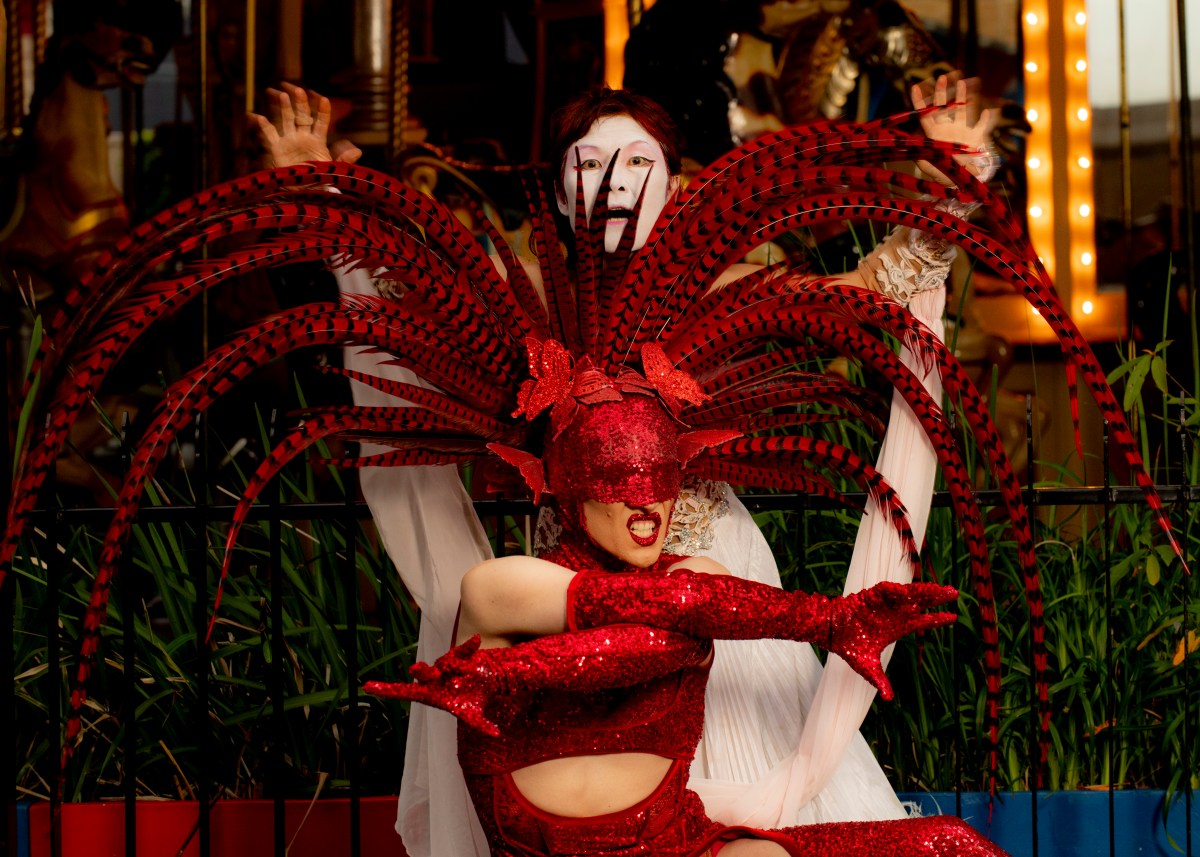
The result, Finucane promises, will be less conventional variety show than ‘cabaret carnival’ – a form the company has spent three decades stretching, exploding and reinventing.
That commitment to making art accessible extends to the ticket pricing, with Dance Palace offering a deliberately broad scale starting at $18.88 ‘Peanut Gallery’ cheap seats through to deluxe table seats for $118.88, as well as free tickets for audiences who otherwise couldn’t afford to attend.
ArtsHub: More Australian performing arts news and reviews
From Melbourne’s nightclubs to the world
Finucane’s route to becoming one of Australia’s most distinctive cabaret artists was anything but conventional.
She trained as an environmental scientist and spent a decade working in human rights. However, after moving to Melbourne in the early 1990s, she found herself immersed in the city’s vibrant underground and queer nightclub culture.
‘It was wild,’ she recalls. ‘There were operas, there were monologues. It was the good, the bad and the ugly, all held together by gaffer tape.’
That became her training ground.
In the midst of the AIDS crisis, Finucane recalls that Melbourne’s underground scene was producing politically charged, sexually liberated and often completely unfunded work. She saw something in that work that deserved to travel beyond the nightclubs where it had originated.
Finucane & Smith came about from an artistic partnership between Finucane and her partner-in-life to this day, the award-winning playwright and director Jackie Smith.
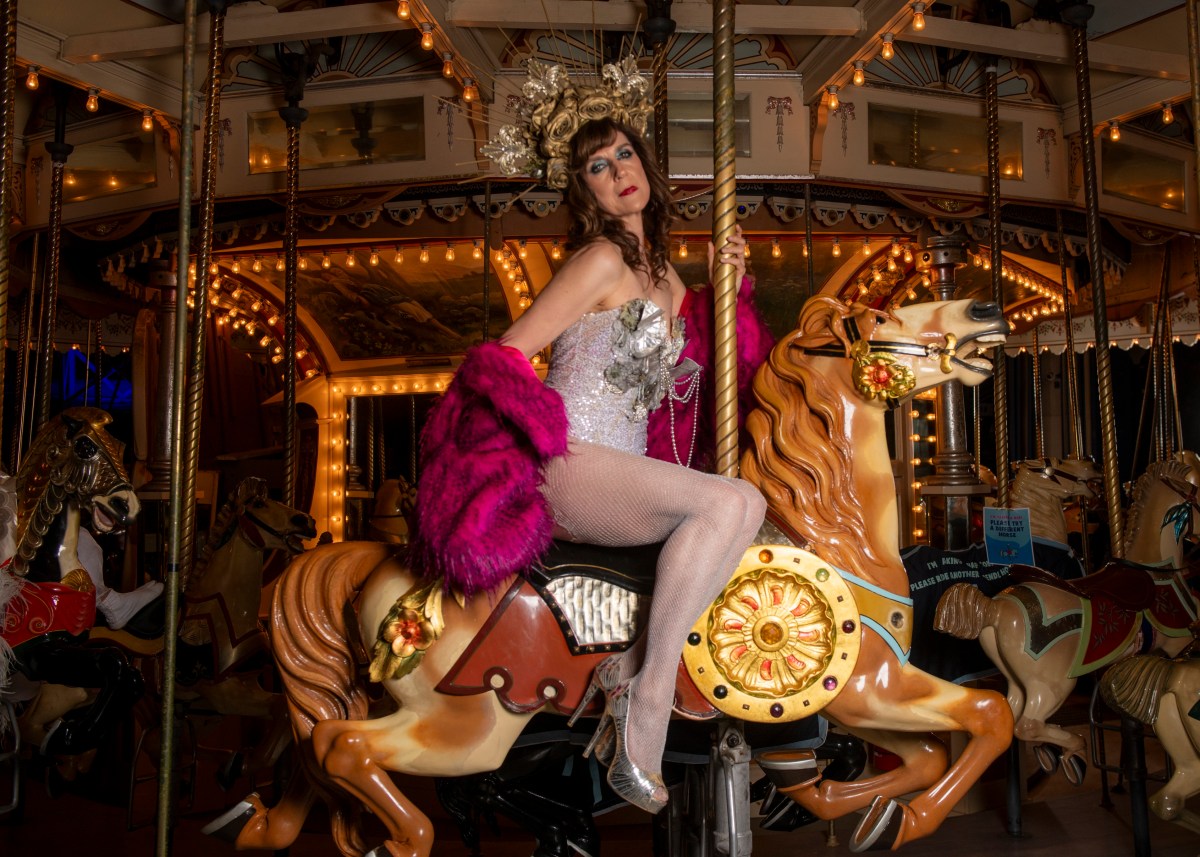
ArtsHub’s previous reviews describe the company and its productions as ‘a fabulous, overflowing, disturbing, uncanny cult’ and ‘so richly layered and textured that meaning can be found in every spangle and feather’.
The company’s philosophy was established early: take the raw, strange and extraordinary work of the underground and put it in the spotlight, inviting as wide an audience as possible to be dazzled by it – and changed by it, perhaps.
That impulse produced The Burlesque Hour, the show Finucane describes as a work that people repeatedly told them would not succeed. It went on to win numerous awards, tour internationally and reach hundreds of thousands of people, helping redefine what cabaret and burlesque could look like for a new generation.
Its fundamental idea was deceptively simple: work that originated in queer and underground spaces on shoestring budgets could be extraordinary art, and there was no reason it should remain there.
‘We’re not keen on genres’
That refusal to stay in one artistic box has become a defining characteristic of Finucane & Smith.
The company has now created 36 full-length shows, presented work in 19 countries and more than 160 Australian towns, engaged more than 200 artists and reached more than a million audience members. It has done so without ongoing government funding.
Finucane says the company’s focus has increasingly been on bringing lesser-heard voices into its work – not as a diversity exercise, but because it makes for better art. ‘Beauty is complex and multifaceted,’ she says.
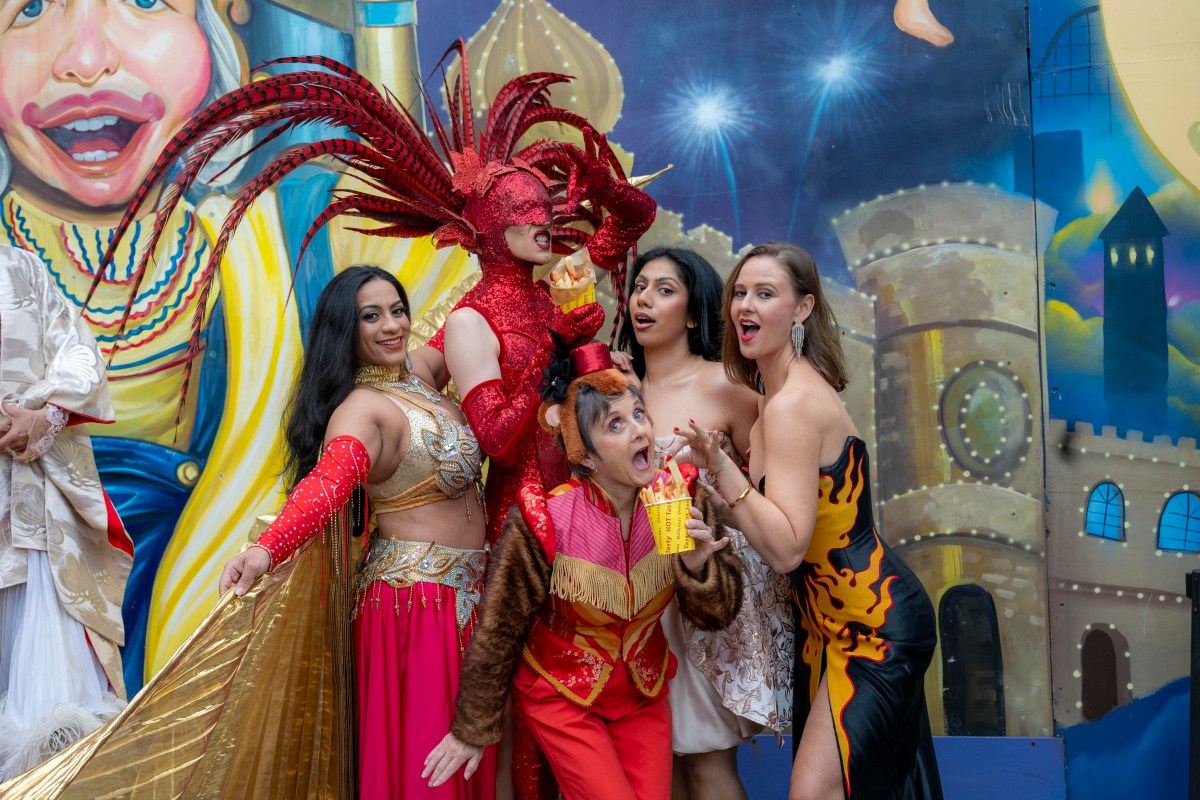
That philosophy is visible in Dance Palace, where a glittering burlesque performer might be followed by a live performance of a First Nations song, an Indian classical dancer by a torch singer, or a Butoh artist by a disco diva.
‘There’s something about desire and women being allowed to express desire in a way that is unpunished, unashamed, and is generous and confident and comfortable in all of its diversity,’ Finucane says of burlesque at its best.
Her own performances emerged from that tradition of using spectacle, humour, sexuality and theatrical excess to create unexpected encounters between people.
Keeping the art of amusement alive
Luna Park’s investment in Finucane & Smith is part of a broader commitment to restoring art to the park.
The park has restored its ornate carousel and worked with contemporary visual artists, including Mark Ogge. Finucane sees the restoration as symbolic: Luna Park has not simply preserved its past but brought its colour, detail and artistic spirit back to life.
Finucane’s company has previously created work around the park’s history, performed at its birthday celebrations, and led audiences through the historic Ghost Train, uncovering some of its handmade artefacts and stories.
Now, after five years of refurbishment, these rabble-rousing performers are reopening Luna Palace with Dance Palace.
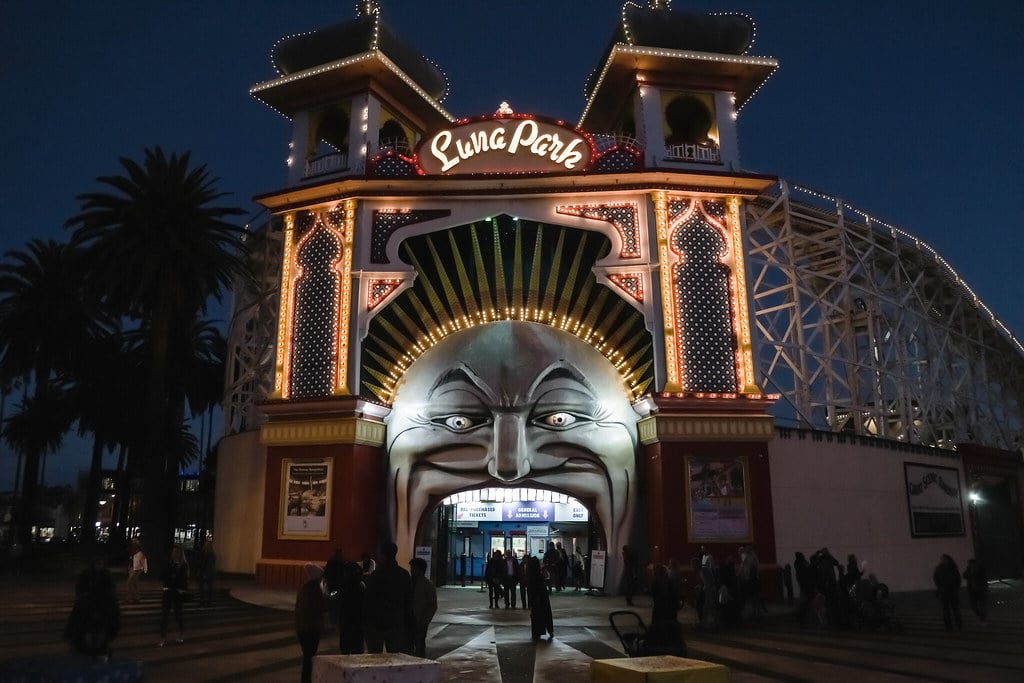
For Finucane, there is something fitting about that collision of heritage and contemporary art.
‘What makes Melbourne important is not all the big buildings. It’s the culture of the city,’ she says. ‘You take that culture away, and you’ve just got people going to work and looking for a good sandwich.’
‘Luna Park is honoring its own history – the people that went from town to town telling stories [and creating] circuses and sideshows and heritage amusement.’
‘Their genius is that they know that the iconography of that park is made up by everything from kids coming to believe that the elephants are real in the little elephant ride, to people like me also investing in that magic, and that’s what makes that park come to life.’
And that may be the most compelling thing about Luna Park’s investment in artists. Its rides, lights and historic architecture provide the spectacle, but artists provide the unpredictability – the sense that something strange, funny, sexy, moving or entirely unexpected might happen when you walk through the gates.
‘You can go there and buy some fairy floss and jump on a ride and have the time of your life,’ Finucane says.
‘And you can go [to Luna Park] and see artists who have won between them nearly 80 awards … and still be welcomed, and still all under this incredible idea of ‘What is fun?’ What does fun look like when we embrace each other and enjoy each other, and see each other, and welcome each other?’
For a heritage amusement park, that sounds less like looking backwards than keeping the magic alive.