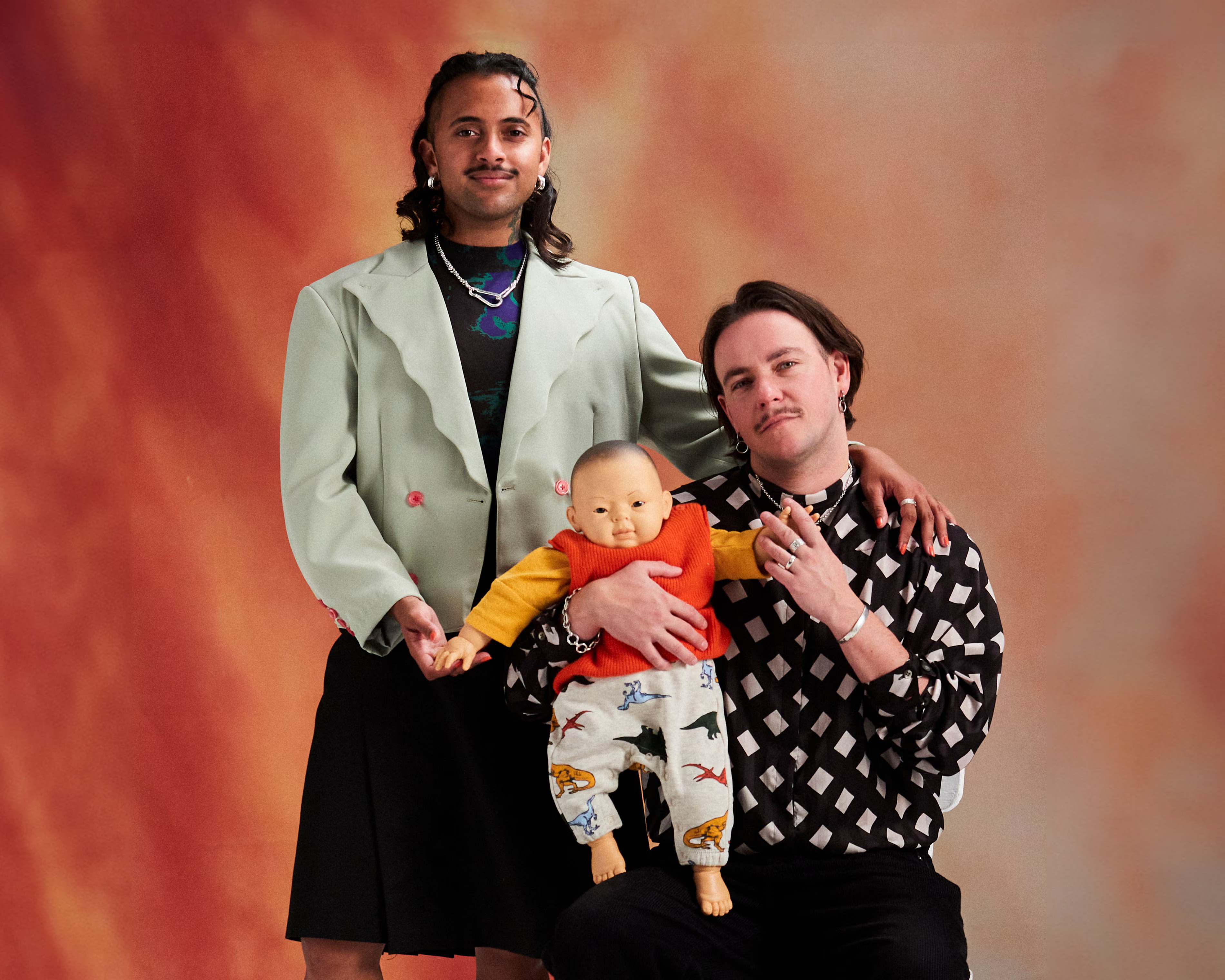
In a time when the trans community is under increasing scrutiny and often downright attack, the latest show from Krishna Istha is either the bravest and most admirable case of standing up to be seen or a flagrant case of poking the bear. Maybe it’s both. But, after listening to them speak, all you can think is, more power to their elbow.
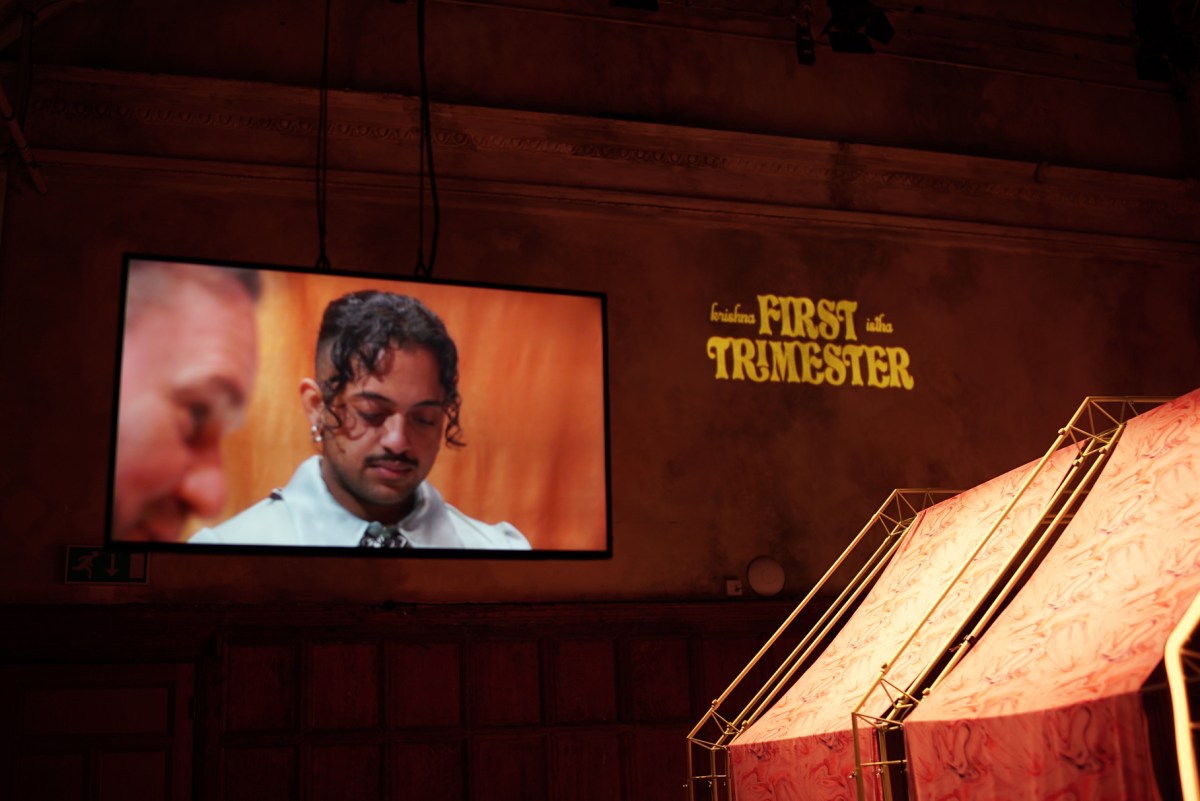
The London-based performance artist, writer, comedian and theatre maker is in Australia now for the last week of Melbourne Fringe, bringing their provocative show First Trimester to local audiences. It’s the first part of a planned trilogy (to be followed by Second and Third Trimesters, naturally) and is an innovative piece of performance art in which Istha appears on stage and talks to a selection of locals, interviewing them under the spotlight in their search for a potential sperm donor to help them and their partner begin a family.
And it’s Istha who’s planning to have the baby. You can feel the blood starting to boil in some quarters at the mere thought.
Krishna Istha’s First Trimester – quick links
The seed of an idea
Talking to the warm and engaging performer, it feels impertinent and not a little invasive to start querying Istha about their journey to parenthood. But then if someone is using such a private and personal part of their life for their art, surely all bets are off? And anyway, as Istha is quick to point out, there are clearly plenty of people in the world who have no hesitation about trampling over such boundaries.
‘It’s interesting. We say it’s private, but often straight people tell us when they’re trying [to get pregnant], which is not private at all,’ they say, adding how often newlyweds have to face such intrusive questions as “when are you having a child?”’
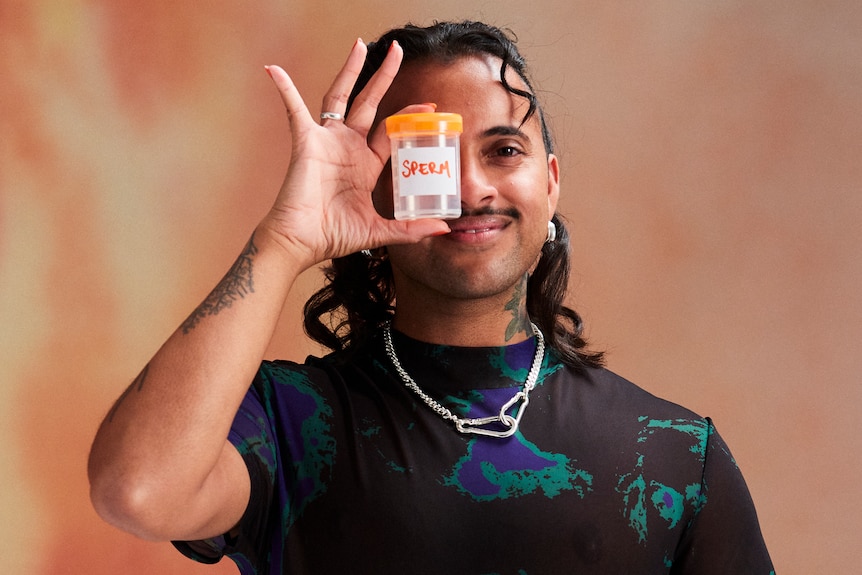
The inspiration for the Trimester trilogy came organically, says Istha. ‘It was actually a couple of years ago when my partner and I were talking about having a baby and we started working on sperm and looking at websites. We realised that all of the information that we were getting were things that we didn’t necessarily care about – things that were superficial, with a bit about what people look like.’
During their research, Istha made a half-joke about how great it would be to actually speak to the potential donors and ‘really understand who they were and what their personality was like and what their values were and what they cared about otherwise’.
They add: ‘And the trilogy started from that thought – what if we could speak to all these people in real life?’
Istha’s international tour
First Trimester has already been touring for over a year, visiting such disparate locations as Auckland, Copenhagen and Dublin, but Istha says the responses have been fairly consistent. ‘I think it resonates with queer people everywhere to some extent but obviously different places [have different reactions] because the participants are local. So the people in the audience get their own specific context from it.’
Some aspects have been unexpected though, and this goes back to the aforementioned idea of bear poking.
‘We first made [the show] in the UK where there’s such a massive backlash against trans people, and it’s only increasing day by day,’ they say. ‘But definitely when we started, the most surprising thing was how open many people were to having that conversation on stage and also giving sperm – people that might not necessarily know much about trans people or queer people but were there to have a conversation without any prejudice or assumptions.’
That was something Istha didn’t expect ‘when there’s such heightened anti-trans rhetoric,’ they say. ‘To see that everyday people sitting across from you don’t think like that was a really amazing thing to take away.’
Istha admits, however, that the show has been performed in ‘places where that level of anti-trans sentiment doesn’t really exist,’ noting that venues outside of the UK’s capital weren’t clamouring to book the show. ‘We actually only did it in London. Surprisingly, we didn’t get any other tour dates in the UK, but we did almost immediately have international dates, which I think does say a lot about what the climate is like.’
And have they found any perfect donors so far?
‘Definitely,’ they reply. ‘We’ve got a shortlist and I would say there’s at least one person from everywhere [we’ve performed] that we’ve connected with, who we think would make a good addition to our lives in some way.’
The opposite has also happened. ‘We had a serial donor in the UK, who’d somehow found out about the show. He either came from, or was visiting from, America. We didn’t quite understand. He was sort of boasting, “I’ve got 80 kids across the world.” We thought, definitely not you and no one else should go for you either!’
Continuing the journey
The follow-up show in the trilogy, Second Trimester, has yet to be fully fleshed out but will be informed by experiences Istha’s mother revealed when Istha told her of their plans. ‘I’m going to be performing with my mum, hopefully when I’m pregnant or at least on the next part of the journey. When I told her I was trying to get pregnant, she freaked out because she had had life experiences that I didn’t know about to do with pregnancy and childbirth and parenthood.’
Compounded by their mother’s revelations, Istha is well aware that even if they and their partner do find the perfect donor, it doesn’t mean everything will be smooth sailing. ‘That part of the show will be able to adapt to the real life experience that we may be going through. So we don’t know. It might not work. Then again, it might work, but might not go well. We just don’t know what’s going to happen.’
And this leads naturally to the final part of the trilogy, dubbed Third Trimester, which will take the form of a documentary or film. ‘Because we wanted to archive the process of this as well,’ explains Istha.
‘Because initially, when my partner and I were looking online for how two trans people might go about having a baby, or what you might consider in terms of the legality in medical [considerations] and everything else we didn’t quite have, we couldn’t find the right information to help us through that.
‘And the only reason we had access to this information was because of queer and trans friends we had in our lives who had already done it. So a big part of the trilogy became us being able to archive it for other people to access in the future quite easily online, so they may get access to information that we couldn’t find ourselves.’
Read: Melburnians urged to become action heroes at the 2025 Melbourne Fringe
It’s at this point that this becomes one of those articles where the writer inserts themself into the story. As a bit of a beige-and-boring cis she/her, sperm is one thing I cannot offer, but I do have a decidedly unusual queer family unit, and when Istha hears about it, their response is: ‘I’ve got so many questions for you!’
Everywhere that First Trimester is staged, the local participants are sourced by a call-out for potential sperm donors to get in touch. They go through a selection process to determine whether they will be one of those appearing on stage with Istha to continue the conversation in front of a live audience.
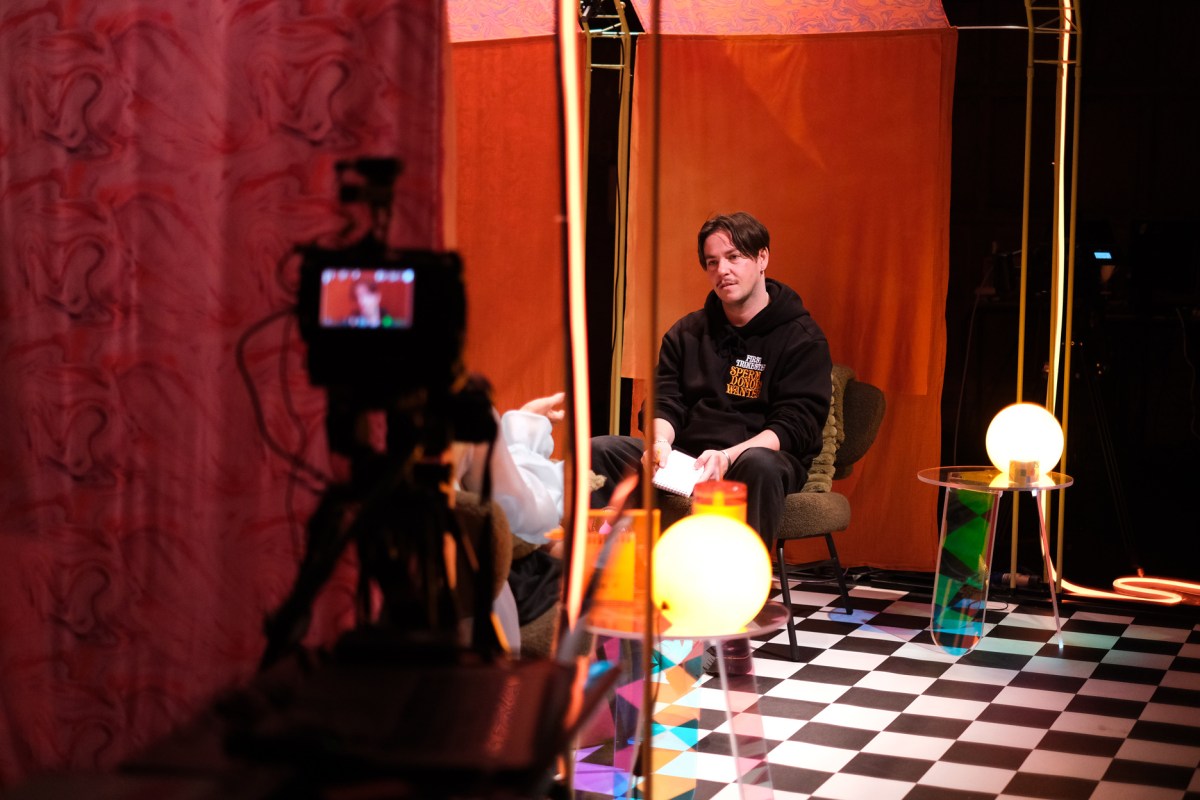
The long and the short of this part of the conversation is that I too agree (more than happily) to be included as one of the local participants.
After talking to Istha, a phone chat with producer Ruby Glaskin runs me through the process. She explains how, as a participant, I will sit in a green room beforehand, so as not to be too intimidated or influenced by those coming onstage before me.
Then I’ll be ushered onto the stage during a musical break, wired up with a lapel mic and shown where to sit, with a couple of cameras also capturing the conversation for future reference, and potentially as part of Third Trimester.
All of this will be signed off on consent forms first, of course, and there will also be safe words nominated in case anything gets too overwhelming or triggering. She adds that a question generator assists by pumping out random questions so that nobody gets asked the same set of questions as anybody else.
And if you want to know how that all turns out, you’ll just have to book a ticket and see for yourself on Friday night.