
To interview Suzie Miller is to understand, swiftly and without needing to ask, why taking her work from the stage to the page appeals to the biggest Australian name in theatre over the past decade.
The science graduate-turned-lawyer-turned-writer behind Prima Facie and Inter Alia, the award-winning stage successes that she has now adapted into novels, often has much more to share than can fit into a tightly structured 90-minute script.
The manosphere. Why today’s fathers are often leaving their sons’ education about sex and relationships to porn. That mothers are still largely expected to shoulder the bulk of the emotional labour of parenthood. The dance required of women to balance high-achieving careers with their families. How women collaborate. Carving new paths and improving the status quo for those who follow. Each comes up naturally in our conversation. Most sit at the heart of Inter Alia, her new novel.
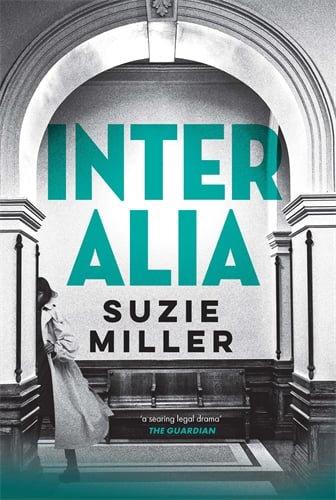

‘What’s wonderful about writing a novel is that I can include all of the things that I couldn’t include … in the play,’ Miller tells me.
With Inter Alia’s jump to the printed page, ‘writing the book allows me to show you more, and talk directly to a reader through the character of Jessica – because it’s a first-person story – but also give you some history and some context.’ she says.
‘Some of the ideas I get to write out further, really write into and develop the complexities of the issues, and how she sees it from her perspective.’
Suzie Miller on writing Inter Alia – quick links
When one hit inspires another
Inter Alia tells the story of a London judge who is renowned for pushing back against the victim-blaming way that sexual assault cases have typically been presented in court. Jessica Parks would’ve been the ideal jurist to oversee the proceedings in Prima Facie, Miller’s earlier sensation about a barrister trying to bring the colleague who raped her to justice. Then her own teenage son is accused. He denies it. As a mother, Jessica desperately wants to believe him.
The play of Inter Alia premiered in 2025, quickly becoming a West End smash-hit, with Rosamund Pike’s powerful lead performance winning an Olivier Award. The legal drama transfers to Broadway this November, again starring Pike. In-between, the production wowed audiences globally via NT Live, including in Australia. The novelisation released on 29 September.
Miller says she was always going to write Inter Alia this way, and that she talked to the director about the conversation she wanted to have. (Lee Lewis helmed Prima Facie in Australia, while fellow Australian Justin Martin did the honours on both Prima Facie and Inter Alia in the UK.)
It was the response to Prima Facie from men and boys that put that plan into motion, however, with Miller penning a work ‘really aimed at mothers of boys and fathers of boys,’ she says.
Inter Alia ponders ‘a very knotty problem,’ she says. ‘I feel like it’s so current that I’m constantly talking to people about the issues that it raises.’
The struggle of raising teen boys
The play arose from ‘a question in my mind,’ Miller explains, about when boys become teenagers ‘and their mothers no longer have the same access to their inner workings’.
She asks, ‘Why aren’t men of their late 40s and 50s that are fathers, why are they not taking up the baton and saying, “Let me take over now that they’re about to be young men?” Why are they so silent?
‘They say they’re allies of women and they want to be supportive and they’re really anti-violence against women, but they’re not having the tricky conversations that mothers have had with their boys up to 14 – and it’s after 14 that boys are at their most vulnerable.’
What is and isn’t spoken about with teenage boys, and by who – about sex, relationships, consent, porn, peer expectations, vulnerability, casual misogyny, toxic masculinity – is crucial in Inter Alia, as Jessica grapples with her family’s path to her son facing a sexual assault charge.
How the internet fills in the gaps, but without proper context, proves as much a concern, particularly in a book adaptation that Miller hopes will help her male readers realise they ‘have a responsibility here to talk to young men,’ she says.
‘I feel like this is the book that I really need to write to just change how little boys are viewed, and how we can actually intervene, and that people are not powerless against the internet – and also enlist men.’
Conveying toll of emotional labour
With the play and the novel both framed from Jessica’s perspective, Inter Alia also continues to examine a topic that’s long been a focus for Miller: the emotional labour that women are expected to undertake, mothers especially.
A resonant line about halfway through the book, when Jessica can’t hold back her tears, captures the impact of carrying that weight. ‘It’s a lifetime of picking myself up and continuing,’ Inter Alia’s protagonist reflects.
Miller says, ‘What I like to do is have this idea of making the invisible visible, or actually talk about the invisible – and that’s the invisible workload, the invisible emotional load.’
As Inter Alia fleshes out the dynamic in Jessica’s household, including with her barrister husband, Miller digs into that emotional labour and ‘the invisible jobs that women do every day’.
She provides ample examples, many of which have popped up in her work. ‘It goes to the fact that women walk in a room and they’re already computing who’s in that room and how they’re being perceived. And if there’s men in that room, they can very quickly pick up if they’re being perceived as sexual or aggressive, or whatever it is that men put on a woman who walks into a room in a certain way,’ Miller says.
‘They’ve got all these tracks in their brain going at once, figuring out what the dynamic of the space is. Especially when you think of women in high-level positions, when they walk into a space and they’re in the minority in terms of gender – and they’re aware that there’s all sorts of assumptions about why they’re there, how they’re presenting themselves, whether they’re being seen as being overly flirtatious or overly assertive … I think every woman in the world understands that.’
Then, at home, women are ‘juggling a huge emotional landscape and a lot of unrecognised industries that people don’t even know they’re doing,’ Miller continues. ‘And the thing is that so much of that is fundamental to raising a child.’
She continues, ‘When you drop them at school, [it’s] having that conversation with their teacher where you’re just trying to carefully explain something in a way that’s going to help your kid rather than make it harder for them, [and] the idea that when there’s an urgent issue, they always call mum, not dad.’
Navigating the intricacies of a marriage between two people working in the same field adds another layer in Inter Alia. ‘In the book, one of the things that I really wanted to point out with Jessica is she’s also dealing with her husband’s ego, because she’s slightly more successful than him. And as a woman, that wasn’t expected.’
The power of the first-person approach
On the stage, Miller gives voice to Jessica’s experience – and that of every woman who has shared her experience, either whole or in part – in a literal fashion. Pike utters every thought and feeling coursing through Inter Alia’s protagonist directly to the audience, and narrates everything else happening throughout the play.

Seasoned viewers of Miller’s works will recognise the approach. In Prima Facie, actors such as Sheridan Harbridge, who originated the role of Tessa Ensler in the Australian seasons of the show, and Jodie Comer, who won an Olivier Award for the West End run and a Tony on Broadway, both do the same.
Miller’s RBG: Of Many, One, starring Heather Mitchell as US Supreme Court Justice Ruth Bader Ginsburg, employed that structure as well. Her latest play, the AFLW-centric Strong is the New Pretty, may divide its attention between eight onstage performers, but every character that its female cast brings to life also speaks straight to theatregoers.
ArtsHub: Strong is the New Pretty is about more than women kicking goals
On the page in Inter Alia, the first-person perspective continues. Given Miller’s aim to actually discuss what normally stays invisible for women – and to have women lead that discussion – it couldn’t be more important. ‘I feel like that is fundamental, because traditionally we haven’t had that,’ she says.
She’s also rallying against sexist comments at the beginning of her playwriting career two decades back. ‘When I was first writing for theatre, I remember being told, without someone even being abashed about saying it – because I wrote a play that had a female protagonist, they said, “If you don’t have a male protagonist, no one will go”,’ Miller says.
‘I thought, “Are you serious? 52% of people that go to the theatre are women, and they buy the tickets for the men as well. Don’t tell me that even they won’t go”. But then I thought that we’ve all been brainwashed into thinking that it’s the hero’s journey. Well, it’s not always. Sometimes it’s the heroine’s journey.’
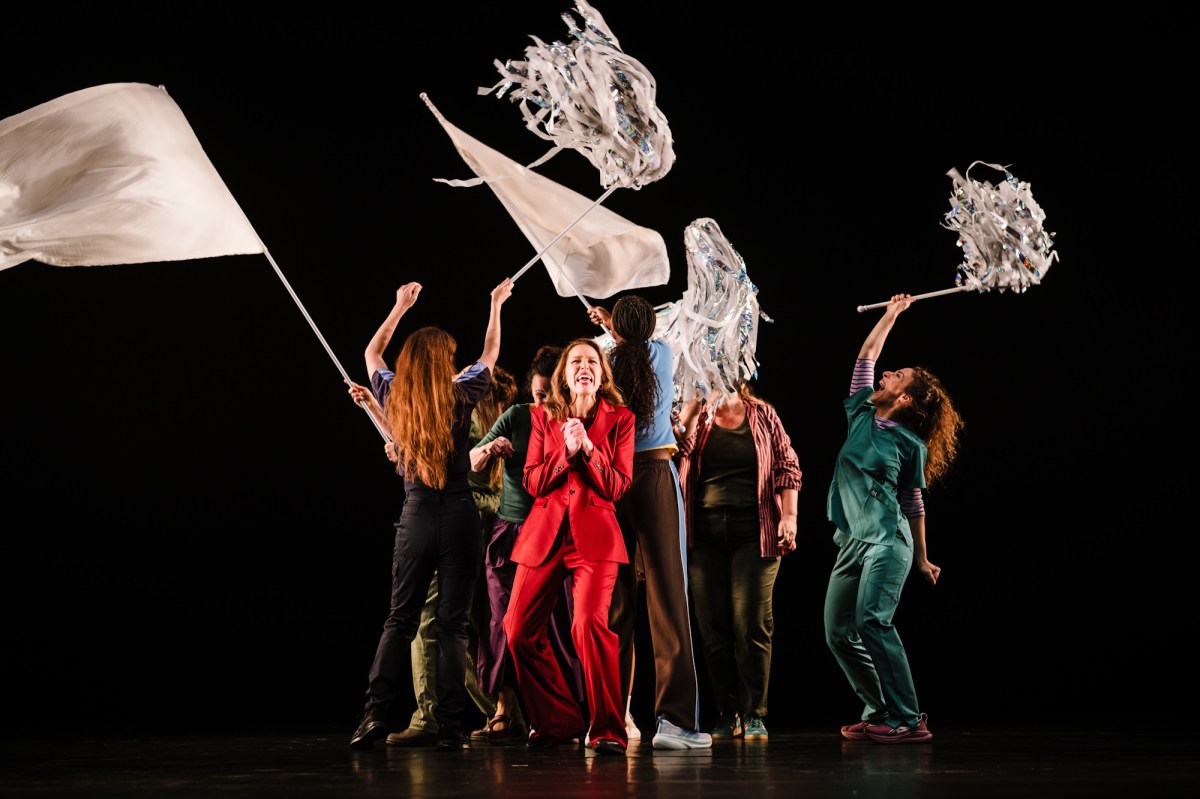
She continues, ‘But even aside from that, sometimes it’s not about heroes and heroines, it’s about collaboration, which is what Strong is the New Pretty is about. There’s a different way of thinking about story and management that’s not always about a man fighting his way to the top and planting his flag.
‘As a feminist, I think that women manage differently and do things differently, by virtue of being left out of so many different paradigms of society. And they’ve learned to work around that, and work in the underground of that, and work together to make things happen.’
Passing the baton
In Strong is the New Pretty, ‘kick it to me’ is both a repeated line of dialogue and a key theme – that women can, should and do help pave the way for others. A professional, national Aussie Rules competition for women, on the same standing as the men’s game, would not exist without efforts spanning decades and generations, even if those initially pushing for change didn’t get to show off their Sherrin skills at the sport’s highest level themselves.
On- and off-stage, Miller has embraced that thinking. ‘I’m going to make sure it’s easier for the women coming up behind me,’ she says. ‘I’m a really big believer in going, “I want to make sure that I pass the baton”.’
That runs through Inter Alia’s narrative too. As Miller says, it’s ‘the idea that as women we pass the baton, and we do the leg of our run, and we help other people do the leg of our run for the greater good of all women, rather than just ourselves’.
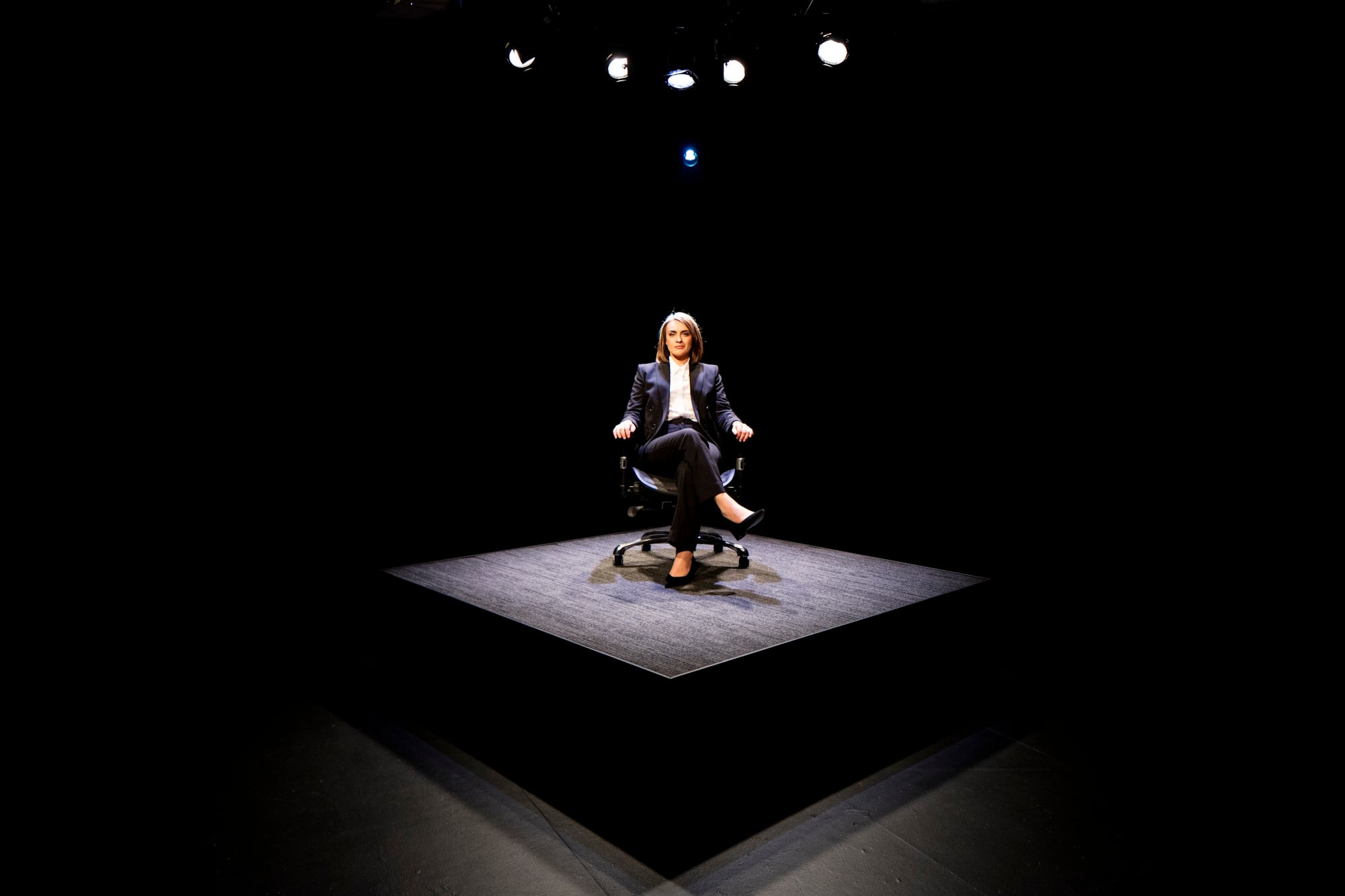
Prima Facie has lived up to that notion in a tangible way. Not only has it been presented in a whopping 52 countries so far – ‘and when I say 52 countries, it’s not 52 productions, because there’s 20 productions in Germany, so that’s hundreds of productions around the world,’ Miller says – but it has also sparked real change beyond the theatre.
Thanks to Prima Facie – so, thanks to Miller – UK courts reformed how they handle sexual assault cases, including the instructions given to juries. At the Old Bailey, a group of barristers formed The Examination of Serious Sexual Assault, or Tessa for short, the name of play’s lead character. In Northern Ireland, watching the recording of the theatre production is now built into the training for judges.
There’s also an element of passing the baton in how Prima Facie and Inter Alia are now travelling into new mediums, sharing Miller’s messages with those who haven’t caught the plays. Prima Facie is now journeying into cinemas, not just via NT Live but as a feature film starring Cynthia Erivo. The movie premiered at the Toronto International Film Festival in September, and releases in Australia in January.
With the launch of Prima Facie‘s film adaptation, the new stage play Strong is the New Pretty at the Brisbane Festival, and the novelisation of Inter Alia, September has been what Miller calls ‘a crazy, crazy month’.
It’s been a time she wouldn’t have dreamed of – ‘absolutely not, never in a million years’ – back when she was swapping her legal career for writing and being told not to focus on women. Back then, she says, ‘I was just hoping that eventually somehow I could write a female into a story and someone would understand them.’
Right now, ‘the confluence is quite bizarre, because it’s three different mediums. And also at the same time, I’m also working in television in London. So I’m in a writers’ room the whole time.’
Miller is also hopping between topics across works. ‘I’m talking about Inter Alia and the manosphere, and then I’m talking about AFLW and women and how they fight to be visible, and at the same time I’m talking about Prima Facie yet again with a different actor.’
Using storytelling to evoke empathy and encourage change
To say that Miller understands the power of storytelling, and how to harness it too, is clearly an understatement. That awareness and ability harks back to her legal days.
‘I would tell a story to one judge a day, and I would talk about my client and give a really empathetic version of their world and why it was complex, and why they shouldn’t go to prison,’ she says. ‘And I found that I could tell a story in a way that could actually elicit an empathetic response and a readjustment of the paradigm of that person’s life.’
Now, ‘I feel like that’s what I do, or I attempt to do, in my writing. The difference is, of course, I had one judge a day that would go, “Yeah, OK, I haven’t thought of it like that before.” But now I have hundreds of people in the theatre a night, up to a thousand a night.
‘Or I have multiple readers at any one time all around the world that are having that experience of hopefully empathising with my characters and just thinking about stuff.’
When Miller states that ‘all I ever want to do is start conversations’, she gives voice to a dream that’s become a fact of her life. No one sees or reads Prima Facie or Inter Alia without carrying these stories’ searingly honest and empathetic explorations of vital but rarely discussed topics into their daily existence.
‘The fact that Prima Facie changed the law was beyond my every imagination,’ Miller says. ‘But I feel like we’re having a dialogue amongst readers, amongst audiences, amongst spectators. I feel like once we start conversations, people do actually go, “Oh, I see now, I didn’t realise before, but now I can understand what that experience might be, so now I have a bit more sympathy there rather than just a pretty black-and-white response”.’
As potent as her approach is, Miller’s work isn’t altering human nature. Rather, she’s capitalising upon it. ‘I think people, when they see an injustice, do actually want to say, “Hey, that’s not right.” But they have to see it first,’ she says.
‘Sometimes to see it, they have to have a complex story, by which they don’t resist the story. And through empathising with the character … and watching the experience of that character, they go, “Well, this could happen to me or my family. What do I believe about that? What do I think about that? And if I feel like that, then I want to keep having the conversation towards change”.
‘And to me, that’s everything.’