Which stories are considered worthy of being shared on our stages, and whose lives are too often relegated to the margins? And in an algorithmically-polished market where aesthetics are dialled towards aspirational upper class fantasies of excess, when do we actually see the realities of working class lives, represented with dignity?
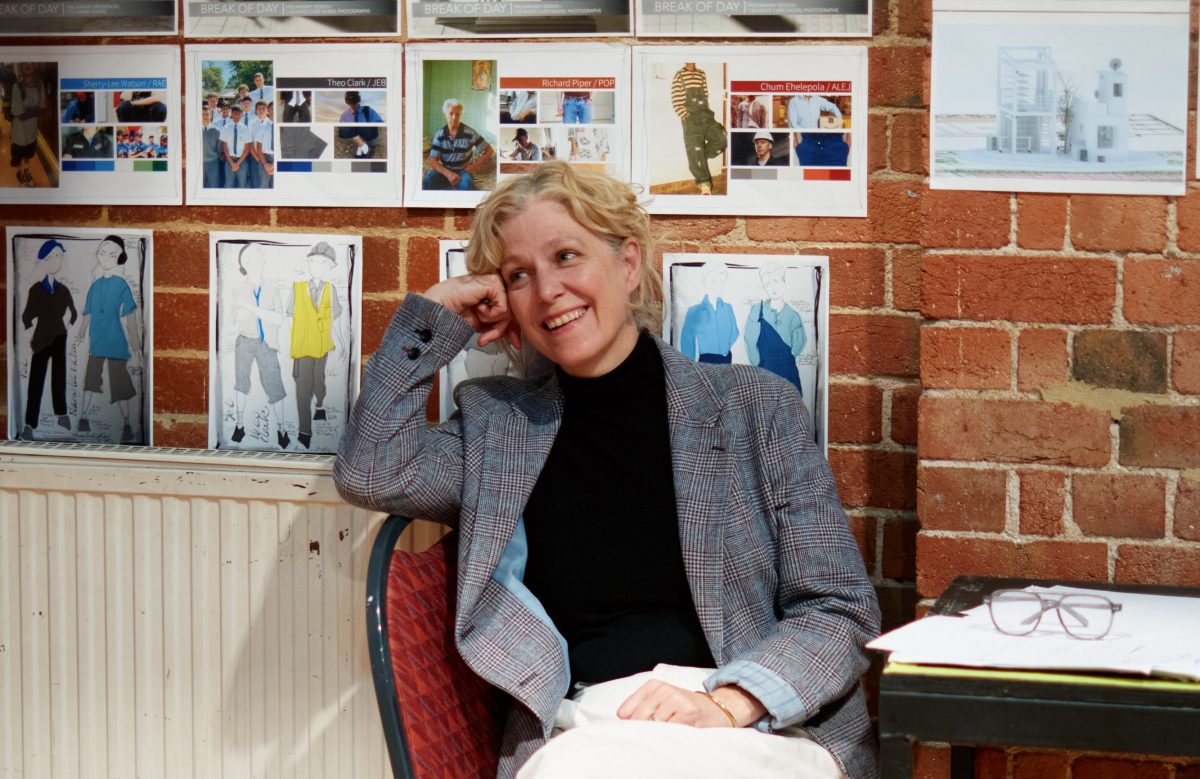
For Director Sarah Goodes, these questions are at the heart of Break of Day, a new Australian play from playwright Steve Rodgers that debuts this week at Melbourne’s Malthouse Theatre after winning both the Rodney Seaborn Playwrights Award and The Australian Writers Guild Prize for Playwriting.

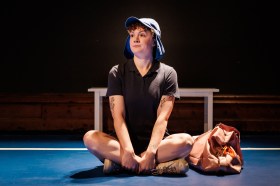
Set in the tiny fictional town of Burra Creek – forgotten by the NBN and home to the world’s largest online retail warehouse – the play follows Pam (Kat Stewart), a single mother working two jobs, and her daughter Rae (Heartbreak High star Sherry-Lee Watson), who is approaching the end of Year 12 and beginning to imagine a life beyond the town.
Their world is one defined by economic pressure, limited opportunity and long working hours. It is also one filled with love, ambition, humour and the complicated business of trying to build a better life.
Sarah Goodes on Break of Day – quick links
Beyond The Castle: telling stories of working class Australia
Goodes, whose acclaimed works include Sydney Theatre Company’s Julia and The Talented Mr Ripley, believes that Australian audiences don’t see enough of lives like this on stage or screen.
‘You just very rarely hear stories from these areas,’ she says.
‘Whenever we do [stories about] working class Australia, we usually do kooky [comedies] like The Castle. Whereas [Break of Day], it’s a far more serious piece – there’s beautiful humour in it, but it’s a real drama.’
The daughter of an army officer, Goodes moved around a lot as a child, spending ‘a lot of time on the Hume Highway’. She recognises something of the regional towns she encountered in Rodgers’ script – places that can seem small from the outside, but contain people with lives and aspirations as vast as anywhere else.
For Goodes, the challenge – and the power – of Break of Day is in making those ‘small lives’ feel anything but small.
‘When there’s not enough money, when you don’t have a choice about where you work, there’s no opportunity to look back. You’re in survival mode,’ she says. ‘And in those towns, there’s that feeling of you either get out or you’re stuck.’
But Break of Day is not interested in reducing regional or working class Australia to hardship narratives. Instead, Rodgers – who draws on his own upbringing – has written a serious drama about people whose circumstances may be specific, but whose emotional lives are expansive.
Building a whole town on stage
Goodes’ first instinct when reading Break of Day was cinematic: she imagined an aerial shot looking down over the town before moving into the lives of its inhabitants.

Goodes and designer Anna Cordingley set about constructing the whole world of Burra Creek on a revolving stage – the action moving between the cramped apartment Pam and Rae share and the cavernous factory where Pam spends her nights.
This staging also gives physical form to the play’s sense of time – a ‘love letter to shift workers’ that follows the rhythms of people who work through the night while the world around them sleeps.
‘It’s got this real sense from the beginning of the piece that something is set in motion, and we’re following it through. It’s got a Greek-like feel to it,’ says Goodes.
From Burra Creek to Willy Loman
There is an intriguing coincidence surrounding Break of Day’s debut season. As Rodgers’ play opens to Melbourne audiences, so too does Arthur Miller’s Death of a Salesman – with the acclaimed Australian production starring Anthony LaPaglia making a comeback with a major national tour.
A famous play from one of the biggest names in American theatre, and the premiere of a new Australian story. Each starring a beloved Australian actor playing a parent grappling with the perils of capitalism while dreaming of better lives for their children.
The two plays are separated by decades, continents and vastly different social contexts. But for Goodes, they share an important understanding: dramatic stakes do not belong exclusively to people living extraordinary lives.

She recalls Miller’s argument that the protagonist of Death of a Salesman did not need to be a king for his downfall to carry the full force of tragedy.
‘It doesn’t matter the fall from grace that character has – it doesn’t have to be a king, it can be a salesman,’ says Goodes. ‘But if you set up the stakes strong enough … the fall from grace or the moment of transgression, can be as dramatic as King Lear if all those stepping stones are in place.’
To her mind, Rodgers has achieved something similar with Break of Day, constructing characters and relationships with stakes that the audience will become deeply invested in.
‘I was struck by the pressure of the piece, the pressure that these people’s lives are under,’ she says.
What happens when a tech giant comes to town?
Both mother and daughter are in transition, and neither is quite prepared for what comes next. Those personal transitions unfold against the broader pressures facing Burra Creek.
A major company arrives in town, promising economic opportunity. (The business is never explicitly identified as Amazon, but the parallels are clear.)
Break of Day asks what happens when large economic forces descend on small communities promising jobs and prosperity, only to leave when the financial equation no longer works.
‘These companies turn up in these towns … filled with all these promises,’ says Goodes. ‘But they’re economic machines. As soon as they stop making their money, they’re out of there.’
What remains is a community left to ‘pick up the pieces’.
Rodgers’ writing embeds these questions within the characters, rather than turning them into talking points. ‘You feel these pressures with these characters in real time,’ says Goodes.
Sarah Goodes’ shared language with Kat Stewart
Break of Day sees Goodes once again teaming up with actress Kat Stewart, the pair previously collaborating on the critically acclaimed and extensively toured production of Who’s Afraid of Virginia Woolf?, originally presented by Red Stitch Theatre.
‘Kat’s an incredible actor,’ says Goodes. ‘We’ve worked together so closely over years … so having that shorthand with her is amazing. Knowing how she works in a room and what she needs is really great too.’
When Malthouse invited the pair to pitch a project together, they initially considered returning to a classic, looking to great American playwrights like Sam Shepard and Edward Albee, but nothing felt quite right.
Then, Goodes suggested this script from her old friend Steve Rodgers. Despite being nominated for multiple awards and winning a couple of them, Break of Day had never been picked up for production.
Stewart read it and loved it. Malthouse loved it too. Suddenly, the timing was right.

Finding the right time for a new Australian play
‘Sometimes a play gets done when it’s ready to be done, I think,’ Goodes says. ‘And there’s something about it arriving at the moment that seems really poignant. It really seems to be a piece for the times.’
That commitment to developing Australian stories also extends beyond theatre. Goodes recently co-founded Jackaranda Productions with actor and producer Diana Glenn, with the aim of developing new Australian work for the screen and exploring how stories might move between stage, film and television.
The company is already interested in taking Break of Day to the screen. But for now, the story belongs to the stage.