There’s a lot riding on Powerhouse Parramatta, a building the Hon John Graham, NSW Minister for Arts, dubbed ‘the only cultural centre in Western Sydney’ at the media preview last week, a day ahead of the 7 November public opening.
It’s a misnomer, since the new museum is the only state-run, but certainly not the only, cultural centre in the west, and it’s one which is quite telling of the public attitude towards the museum.
The Powerhouse has a storied history in Sydney. Its unique focus on science, design and technology has enamoured generations of Sydneysiders, the annual school excursion to visit the Ultimo site’s steam train a core memory for many. Today, technology has never been a more important point of focus. Bringing the Powerhouse into a new era should be an opportunity to create vital discourse around our day-to-day interactions with tech, especially for suburban Australians.
The new branch of the museum opened with five marquee exhibitions, all running indefinitely while the future of the institution’s leadership remains unsteady. Spanning technological development, local history and international multidisciplinary works, they each find a different entry point for what a ‘Parramatta’ Powerhouse could mean for its artists and audience.
Does the museum want to carve a place on the map for Western Sydney’s diasporic and thriving artistic communities, filling gaps in the cultural landscape of the city? Or does its grander ambition to be an international calibre museum leave only a glancing connection to the region it now calls home?
All of these considerations have set quite a high bar for the $915 million development. Suspended CEO Lisa Havilah, who has led the charge on the Powerhouse Parramatta since 2018, has historically been a strong advocate for bringing art institutions into Western Sydney, and filling them with art and artists from Western Sydney itself.
It’s unclear how connected the Powerhouse’s opening slate of programming is to Havilah’s vision, but taken together, the opening exhibitions form an incoherent mission statement. With unconsidered infrastructure and little throughline between the showcases, the five exhibitions have much to say about the site’s possibilities and very little about what it can do for us now.
Powerhouse Parramatta review – quick links
A confusing entrance
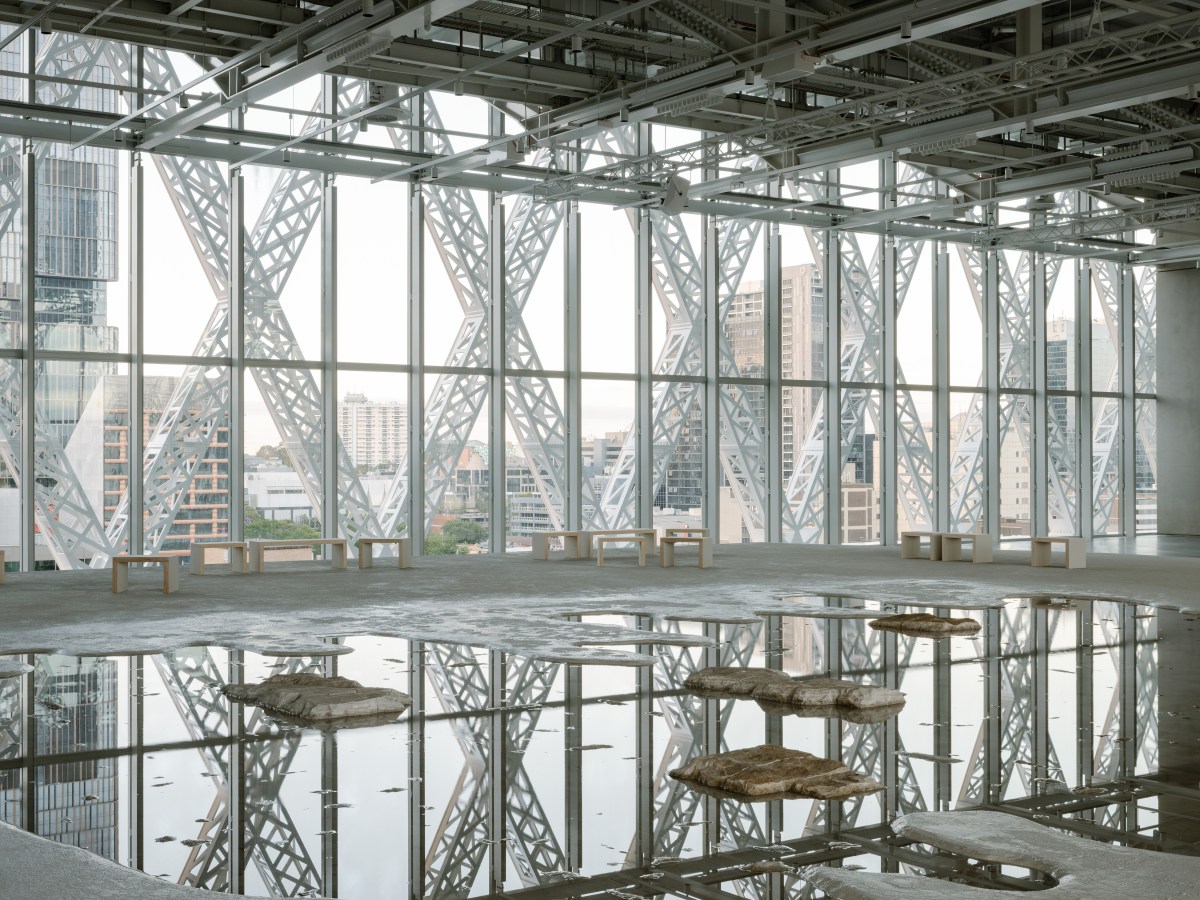
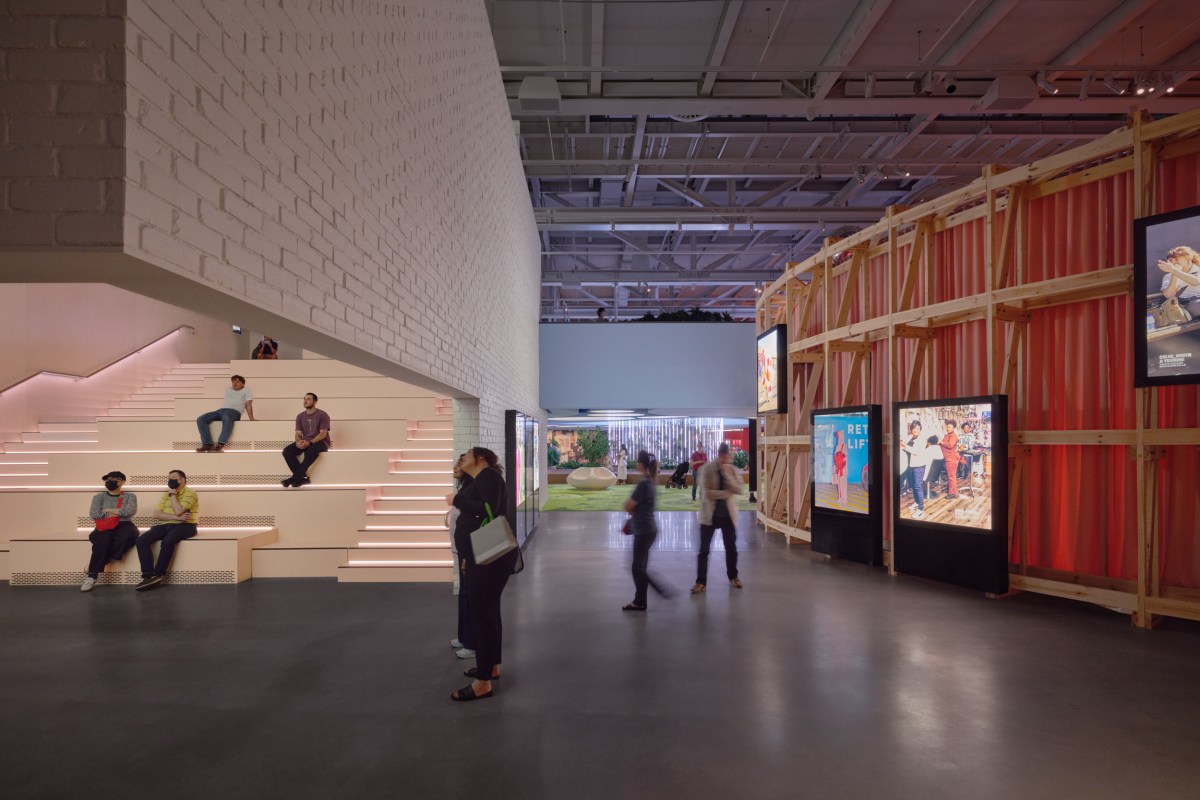
That incoherence starts with the building itself. Designed by Japanese studio Moreau Kusunoki and Australian firm Genton, the facade is an architectural triumph, creating a concrete and metal cage that frames the skyline of the burgeoning ‘second’ Sydney CBD. Yet the internal space is lacklustre and cavernous.
The high exposed ceilings feel (and potentially are) unfinished, and to be blunt, the lighting situation is awful. I heard several complaints from older and low-vision patrons that walkways are difficult to follow, and I saw someone tumble into a wall in one of the dark video rooms.
In the exhibition spaces, nearly every placard is printed on reflective metal sheets, tucked away in corners or on back walls. Under spotlights and with low-contrast text colour, it’s difficult to discern why the objects are featured, a detriment to the Powerhouse’s vast collection.
Wall text is reserved almost exclusively for quotes, with little on the broader themes of each room, dubbed ‘acts’ by the curatorial team. Minimalism, as an architectural and curatorial pursuit, has been mistaken here for elegance, without considering the building’s demographics.
It draws into question who the museum was designed to be accessed by. The lack of signage and directives for engaging with the space – such as interactive exhibits that provide little guidance on their bounds – are exclusionary to audiences who don’t frequently visit galleries, a major concern for an institution aiming to ‘bring’ arts to the west. To those audiences, I would imagine the vagueness of the building would feel intimidating, if not uninspired.
Powerhouse’s Ultimo history casts a long shadow
It’s hard not to compare Task Eternal, the paid exhibition on the ground floor that looks at the history of flight, to the nostalgic Powerhouse Ultimo site. There, several planes were suspended in permanent flight across the building. Caught in motion, they created moments of true awe that I vividly remember falling in love with as a kid.
Here, five historical planes are stacked in a neat vertical tower surrounded by empty airspace. It’s a dull presentation, lacking the sense of freedom and wonder that made the original Powerhouse so captivating, and that same note can be applied to the rest of Task Eternal.
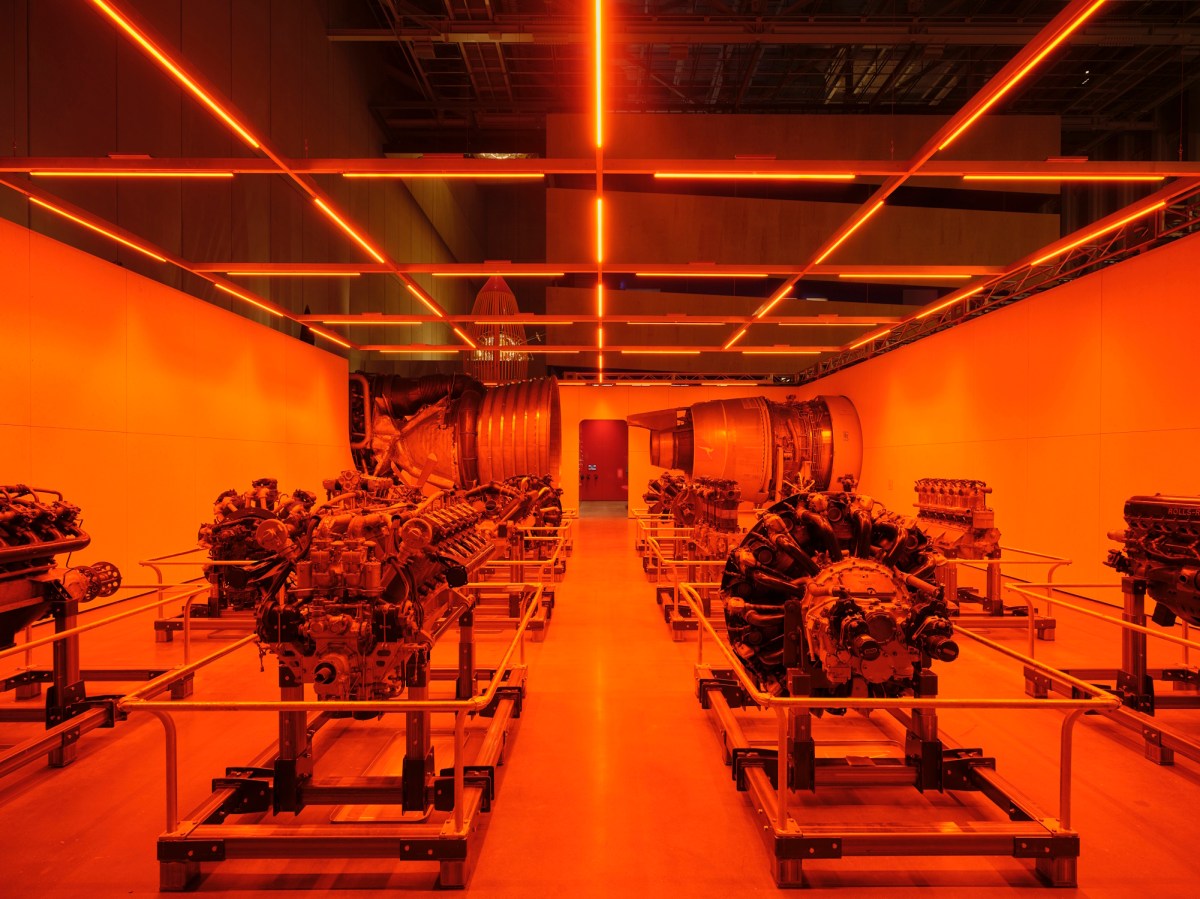
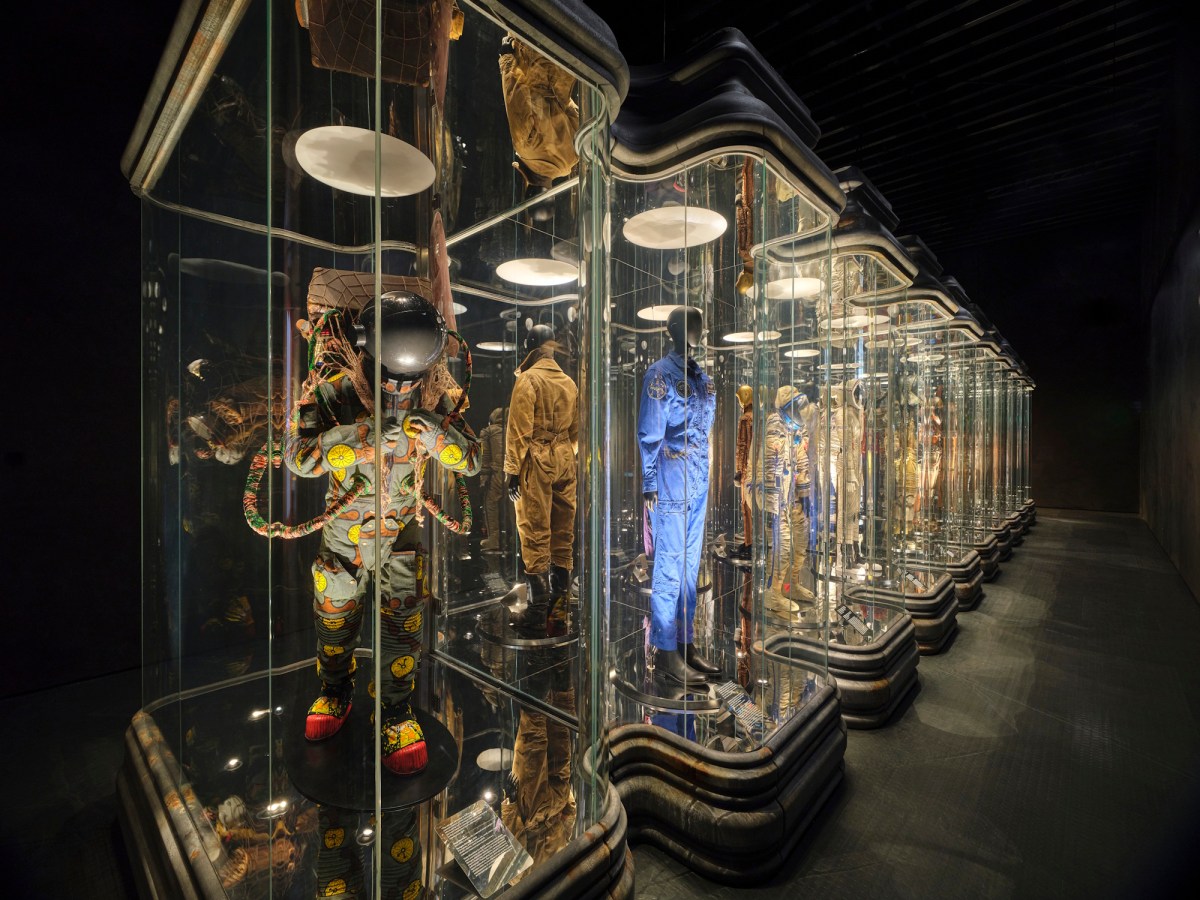
In one room, an assortment of plane and rocket engines are bathed in harsh orange light, rendering the space sepia and visually melding the metals together. In another, the curation of real spacesuits, fictional spacesuits from film and television, and Mugler fashion pieces inspired by futurism seems to have little to say beyond ‘these are all spacesuits’.
Certain pieces justify their inclusion, such as Ella Sutherland’s gorgeous Cursor (2026), a commissioned assortment of screenprints based on meteorological data from the Western Sydney International Nancy-Bird Walton Airport. Too many pieces, though, seem to be included simply because they’re in the Powerhouse collection.
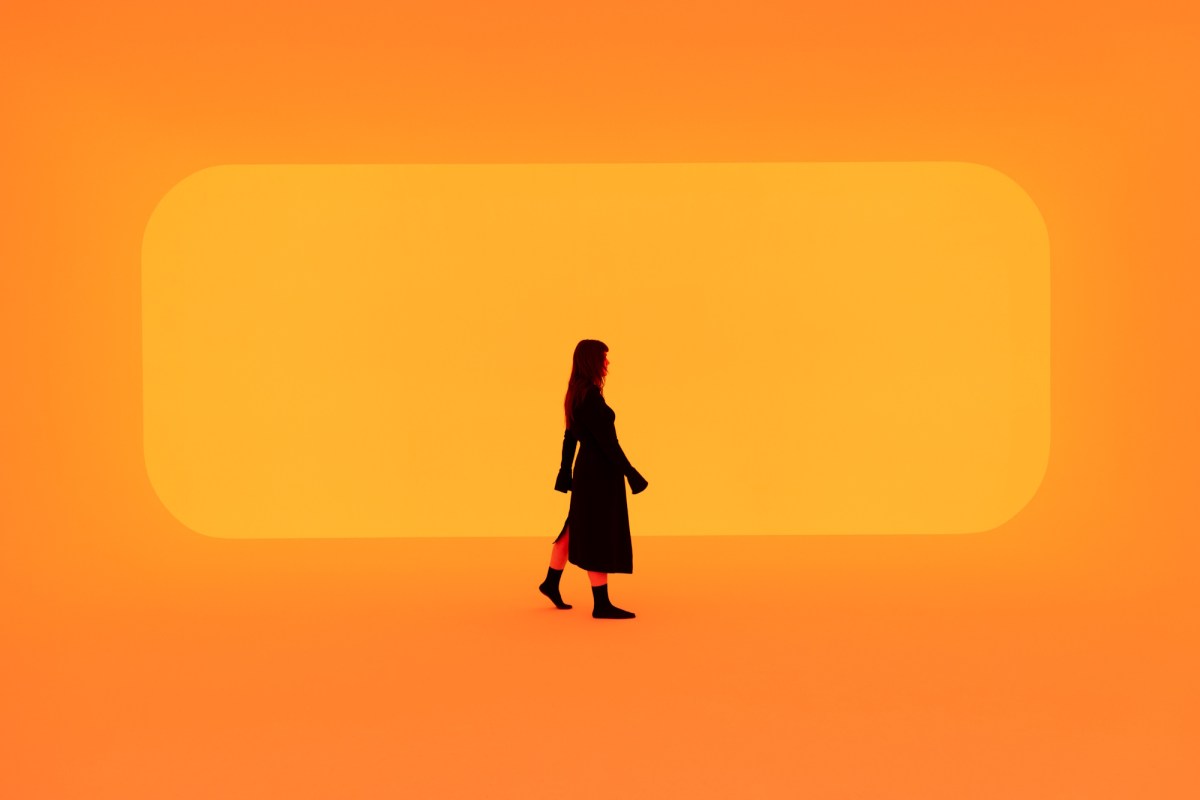
Task Eternal is structured around Ted Chiang’s short story The Tower of Babylon (1990), whose pivotal moment involves rising into space and returning knowledgeable, changed. Here, James Turrell’s Shangri La (Over the Hump) (2026) represents this vital part of the journey.
The immersive work is mesmerising, a disorienting walk towards an illusory foggy cliffside, and it perfectly suits the narrative, yet it’s a paid add-on. It’s not uncommon practice to separately price prominent works, but it is a disservice to the community the Powerhouse is aiming to reach by financially isolating such a vital part of the exhibition’s throughline.
Conversely, the free Overflow exhibition, residing on the third floor, is perfectly suited to the space. A widescreen looms over an elevated concrete slab, glass walls on either side situating the Powerhouse on the precipice of the city and suburbia.
Working with seven First Nations-led community organisations, filmmaker Ivan Sen’s mini documentaries loop in front of a pool of tidal water, which rises and falls 10mm every half an hour. Patrons are invited to take their shoes off and walk through the water while watching the rivers and waterways depicted on screen.
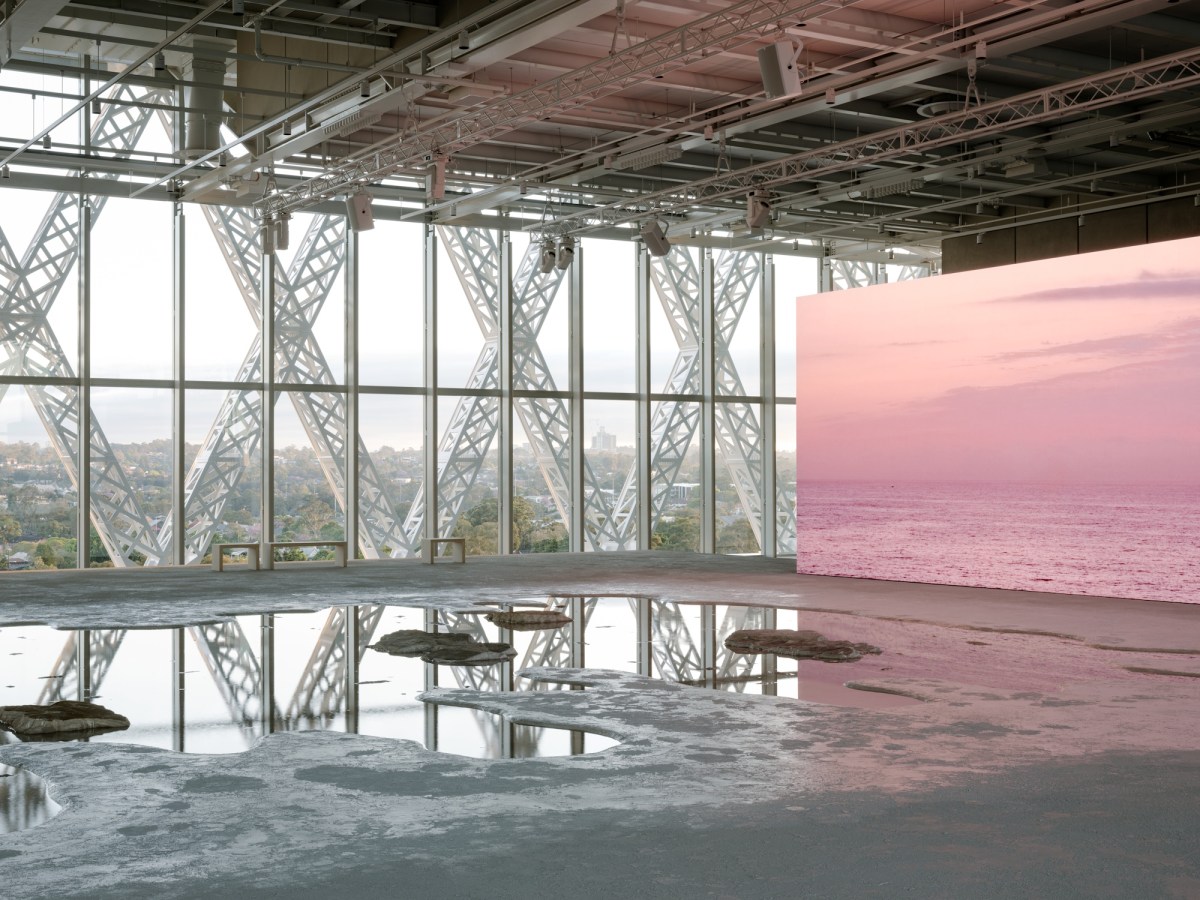
It’s a real moment of serenity, overlooking the Parramatta River while considering water and Country, and it’s one which is vitally needed in the middle of the concrete imposition of a building.
Too much polish, not enough personality
The international grab is Es Devlin: The Turning, featuring five interactive commissions specifically timed to your walkthrough. Devlin, a British artist renowned for her concert tour designs for celebrities like Beyonce and Lady Gaga, plays with scale and temporality to consider how an audience can slow down and truly take in the world around them.
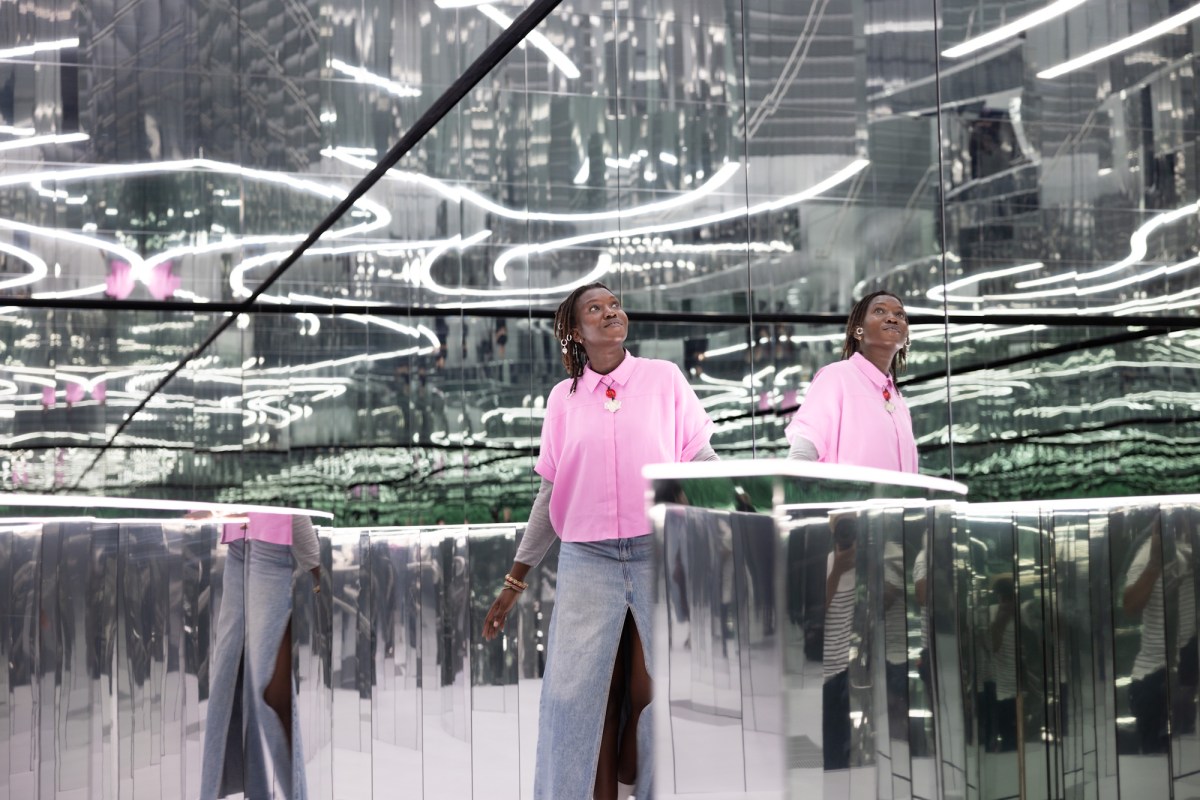
The opening video montage Forest of Us seamlessly collapses into a mirrored labyrinth, leading to the monumental light-up sculpture Memory Palace. Devlin, in a booming voiceover, builds a path out of the maze by listing moments that shifted human consciousness, asking us to remember ‘the library at Alexandria … the Block in Redfern … the steps where Greta Thunberg sat’.
The final ask is to ‘remember the room in Parramatta’. It’s cheesy lip-service, and an unnecessary attempt to ground Devlin’s work in Western Sydney, considering she candidly admitted to the media she hadn’t even heard of Parramatta before being first approached by Havilah.
Overall, it’s a showcase with a firm path, which works for her specific intention of slowing down an audience in the attention economy. Strangely, the children’s exhibition The Dark has a similar sense of intention, but the effect feels over-curated.
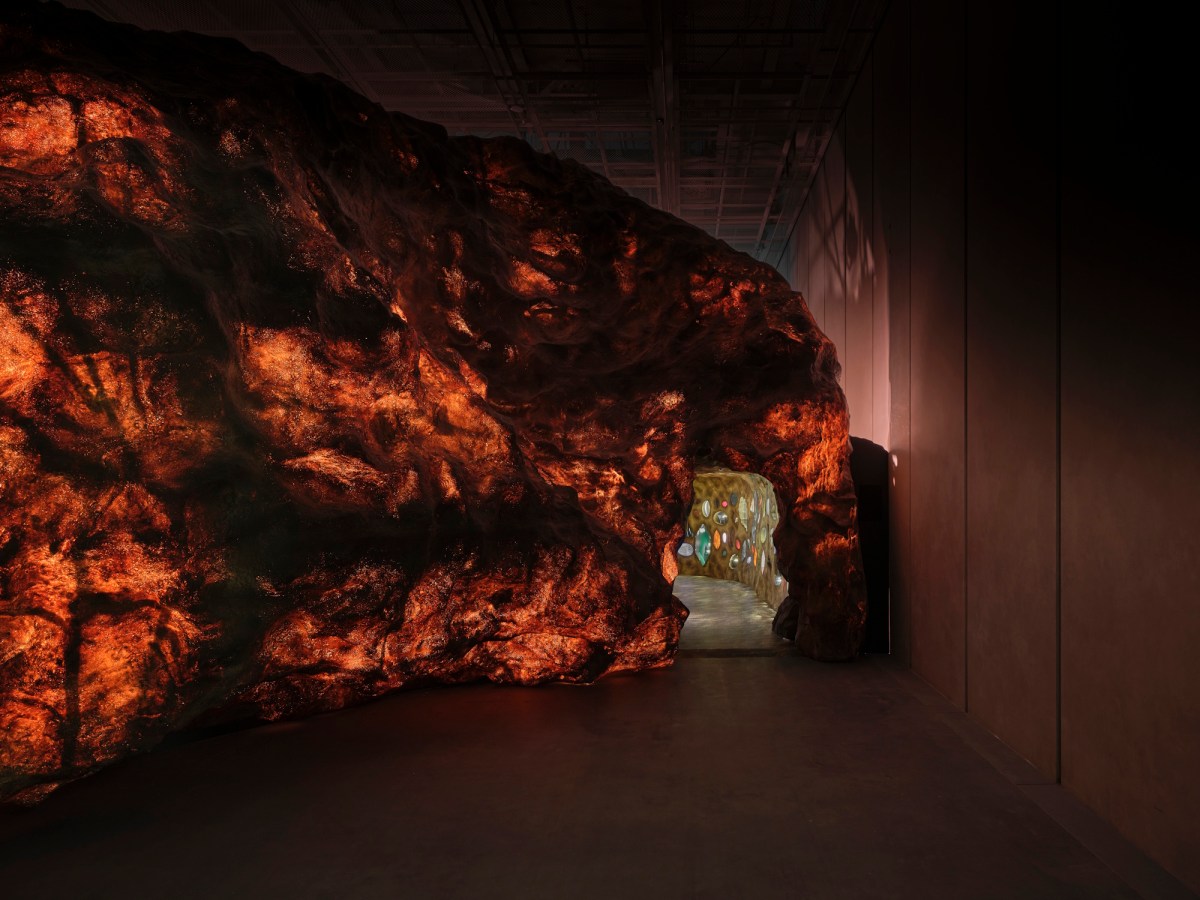
The Dark is a tunnel network stuffed with highlights from the Powerhouse collection, including a corridor of UV-lit objects and another with crystals. At the entrance, phones are locked in magnet bags, a response to kids seeking playrooms away from technology.
Considering this forced presentness, there’s a surprising lack of interaction and freeplay in the exhibition, with a set linear path and only two rooms featuring moveable set pieces. The final room, dubbed Accumulation, features objects volunteered by local kids, such as a Pencil case (Rhapsody Hayes, age 10) or Tidda doll, ‘Loana’ (Remi Holub, age 8). Each tag ends with ‘Western Sydney’, with no further provenance identified.
While the official count varies, consensus suggests that ‘Western Sydney’ comprises at least 400 suburbs. The Dark, and Devlin’s oblique references, paint Western Sydney as a monolith, a significant discredit to the vast racial and immigrant diaspora of the region, and how each suburb’s identity has been shaped by these communities.
Insteading of engaging in cultural hybridity, it feels as if the Powerhouse is trying to patronisingly introduce culture to an area devoid of high arts. It’s a shame, since this could’ve readily been achieved by pairing the international showcases alongside exhibitions curated by and for Western Sydneysiders.
The Mall: everything that Powerhouse Parramatta could be
There’s a single exhibition that has this glimmer of cohesive potential. The Mall is an international study in the history of shopping centres, which started spreading in Australia based on models of Western Sydney centres.
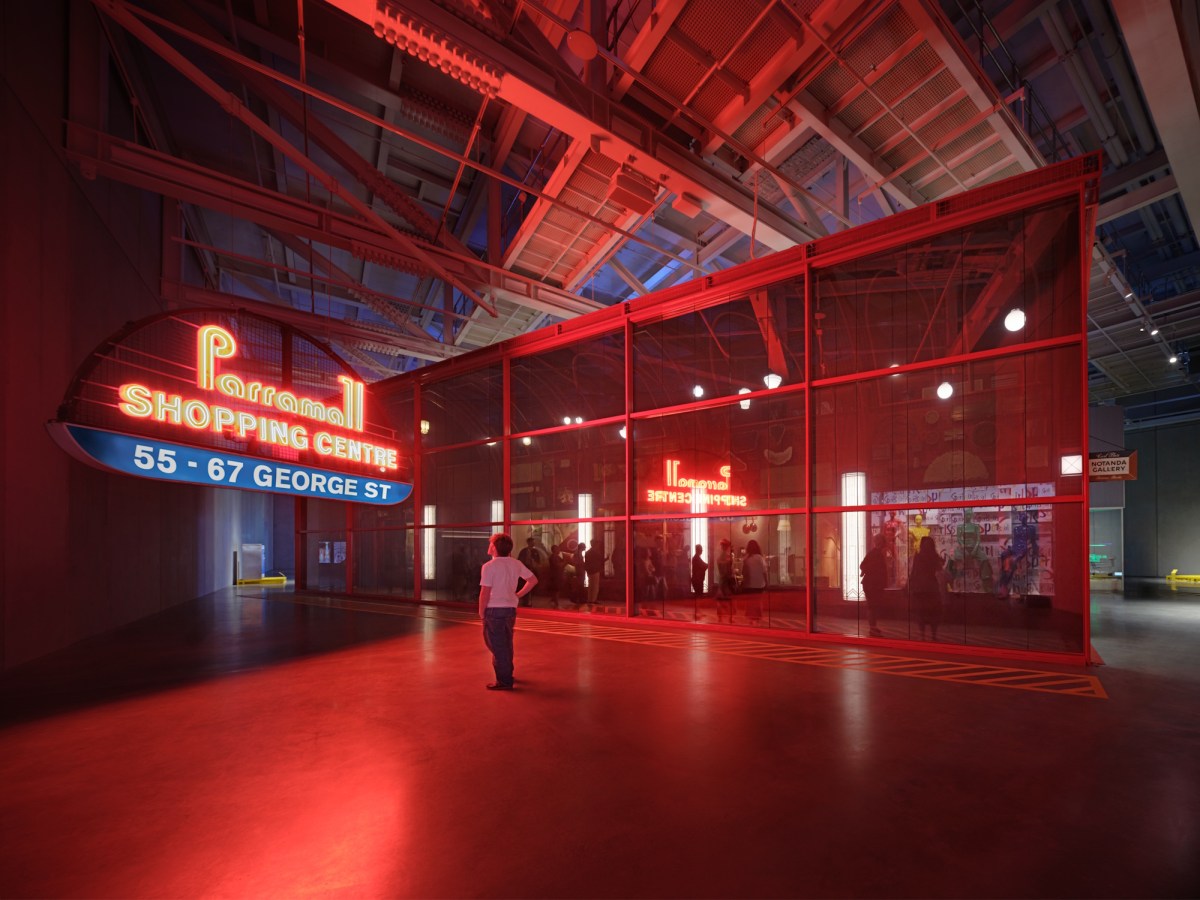
Across two storeys, it features furnishings from the QVB and original Parramall, archival photographs from concerts and events held in Westfields, and an assortment of David Jones’ posters (great timing) that capture the magic of their shopfront Christmas displays.
Smart finishings like a touchscreen directory and full-scale model of the original Roselands water feature situate this study as in-community, and it works. My dad was a security guard at Roselands shopping centre, my mum worked around the corner from Bankstown’s Compass Centre, and my siblings and I grew up in Liverpool Westfields. I was raised by the Western Sydney shopping centre, and this was the exhibition that made me proud to be a Westie.
It’s not without flaw – there’s this irrevocable feeling that the exhibition was squeezed into an abandoned warehouse and not a nearly $1 billion purpose-built arts complex – but The Mall is the clearest vision for what the Powerhouse Parramatta could and should be.
Western Sydney needs considered investment
Western Sydney’s state-run cultural institution can’t simply be a replication of the broader city’s artistic ambition. Transplanting exhibitions that were better at the Ultimo site, or forcing artists to reference suburbs they don’t understand, will simply turn away the crowds already scared of travelling on our new metro.
ArtsHub: Western Sydney shines in the Biennale of Sydney
To survive, Powerhouse Parramatta needs to cultivate its art on the area’s terms. It needs to build on the diverse lived experience of Sydney’s largest assortment of diasporas, each harboring distinct languages, lives and cultural understandings. It also needs exhibitions that feel built-for-purpose in the newly developed space.
You don’t bring fine art to the West, or curate exhibitions from an outside perspective. Instead, you hand over the keys and let Western Sydney show you the art and history we already have. You can see this happening with the extensive and locally curated opening festival.
Bring that heart to the exhibitions, and the building will come to life.