Sadly, cancer will touch almost all of us in some way or another during our lifetimes, whether we experience it ourselves, or care for a parent, child, lover or best friend. According to statistics from Cancer Australia, there were just short of 170,000 new diagnoses last year, with over half a million people living with cancer and slightly more than 53,500 related deaths.
Celebrated Melbourne author Helen Garner’s semi-autobiographical novel The Spare Room details her personal experience of caring for good mate Jenya Osborne, who the writer took in while Osborne was underwent alternative therapies – a course of treatment that brought both rage and despair to Garner during that emotionally volatile time, as bitter reality crashed into her imagined truth of their precious time together.
Pulling few punches, though playing with the timeline and renaming Jenya as Nicola while Garner retained Helen, The Spare Room was published in 2008 to critical and popular acclaim. It inspired both the 2025 play by Eamon Flack and now the Victorian Opera of the same name by composer Jane Hammond and long-term collaborator and librettist Therèsa Borg, with director Sarah Goodes marking her opera debut and joined by conductor Phoebe Briggs.
We spoke to Hammond and Borg about the operatic journey of adapting such a deeply personal story, and casting sopranos Natalie Jones and Antoinette Halloran as Helen and Nicola.
The Spare Room opera – quick links
Finding Helen’s voice
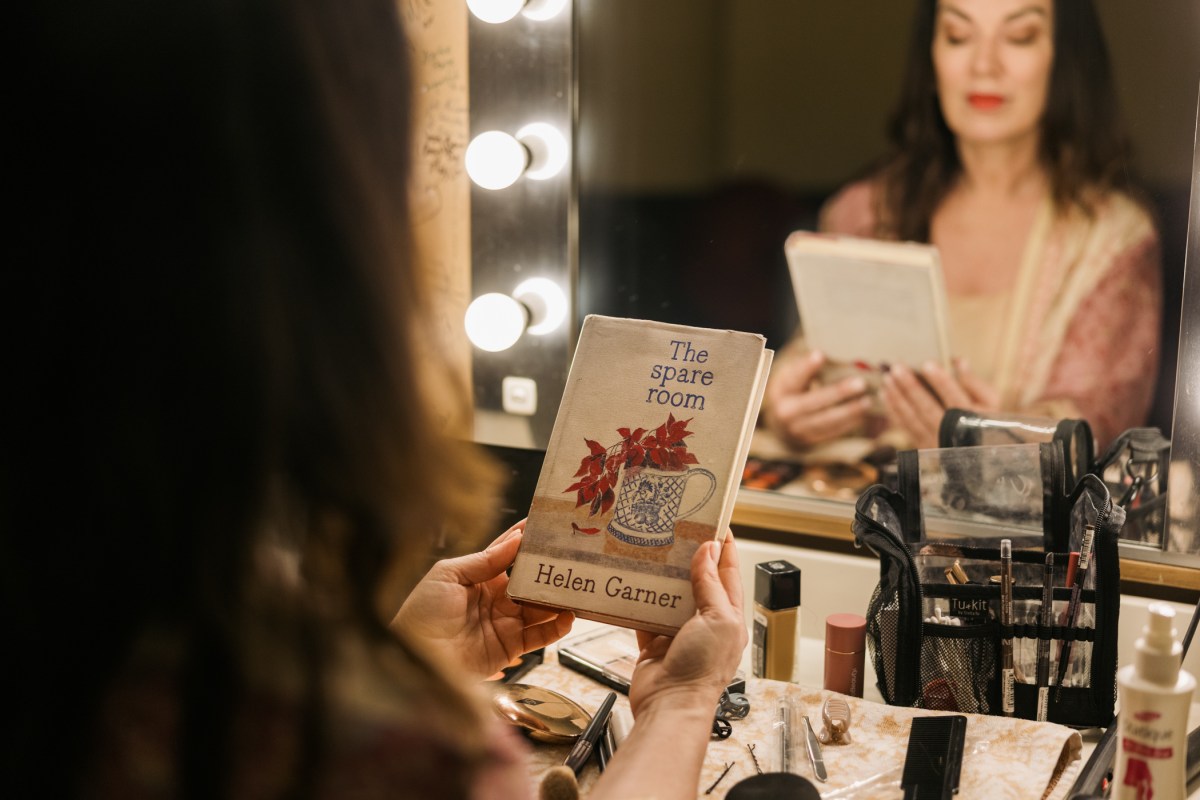
Borg hadn’t expected it to be so easy, convincing Garner to hand over such a personal story. ‘But she actually gave me the license the first time we met, which brought me to tears,’ she says.
‘Helen asked me, “What did you think would happen?” And I said, “I just hoped that you might like me a little, and then we could keep talking.” That was a huge privilege, to have Helen’s trust from that first moment. She’s been extraordinarily generous.’
Garner’s writing has long intrigued and inspired Borg. ‘What I really admire about Helen, and I think why so many of us are drawn to her work, is her capacity for self-scrutiny is always front and centre,’ she says.
‘I find that’s not only courageous for her, but it also emboldens me to look at myself and be frank about what I see. Our character of Helen, in the opera, is very aware of her strengths and also of her weaknesses.’
That frankness about who we are is at the heart of the operatic form. ‘In a way, The Spare Room is quite a traditional operatic story,’ Borg insists. ‘It’s the story of a diva who has a nurse, and in this instance, the nurse has a bit of a rebellion.’
Ironically enough, given the strength of Garner’s presence both on the page and behind the scenes, who would play Nicola was front of mind when the process of casting The Spare Room began.
‘Jane and I were both fixated on Antoinette as Nicola from the very beginning,’ Borg says. ‘Antoinette is Aphrodite incarnate, and the obvious pick. Then we really had to pick each other’s brains on who would be right for Helen. We wanted somebody clever with that capacity for self-scrutiny and understatement.’
Natalie Jones had recently returned to Australia after many years in Sweden with her family. ‘As soon as we knew she was in town, we wanted her,’ Borg says. ‘And then the luxurious bit is that Jane was able to write vocal music with their voices in mind, which is a treat.’
The sound of The Spare Room
It’s been a roughly five-year journey since Hammond began tinkering on the piano to construct The Spare Room’s soundscape, and then fold in Jones and Halloran’s unique voices.
‘Natalie’s a coloratura, so she’s got this brilliant top note, a sparkling sort of vocal ability that really cuts through, just like Helen does,’ Hammond says, and Borg agrees, ‘Very direct and precise.’
Getting that voice right was vital to the journey of adaptation. ‘It’s a very difficult but compelling book,’ Hammond says. ‘The domesticity is very intense, but succinct, and Therèsa has done a very good job of cutting it down, working closely with Helen, finding a way to expand that world from the novel to the stage.’
The musical cues were already on the page. ‘Helen references Bach a lot in The Spare Room, but also elsewhere, and she told me that she’d been listening to Three-Part Inventions at the time of writing it,’ Hammond says. ‘So I quoted some of that piece in the opera, as well as Helen’s jazz references and the flamenco theme.’
Music is an important part of Garner’s life. ‘Helen plays the ukulele, so one of the things she said to us was that she wanted a chorus of them in the opera,’ Hammond reveals. ‘We want everyone to smile when they hear them, so the ukulele players are there on the stage.’
Hammond wanted to mount it like a Benjamin Britten chamber opera. ‘So it’s wonderful, each of the musicians come in and get a chance to actually play solo, so we have these special instruments like bass clarinet and alto flute that really get featured.’
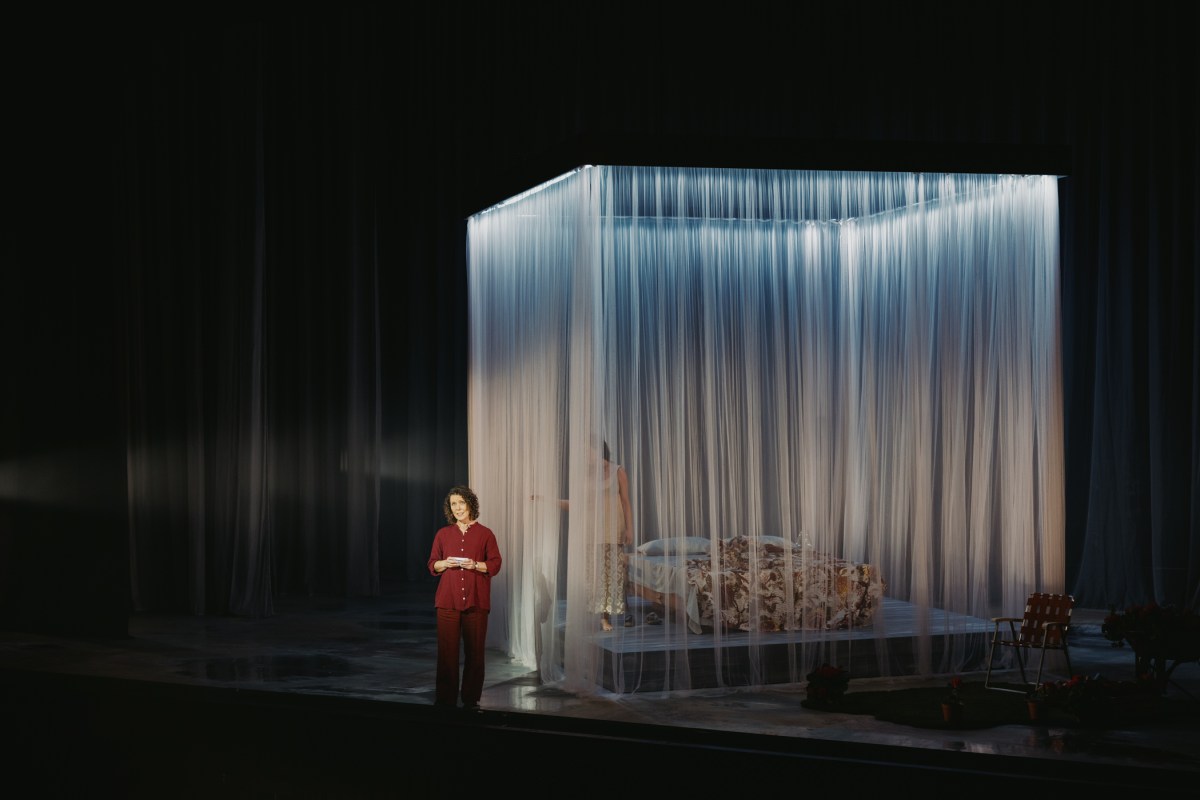
This front and centre presence of music helped inform Hammond’s score. ‘They were all very strong sounds, and I wanted to create worlds for each of them,’ she says. ‘And for me, that was about instrumental colour, yes, but also the sort of musical language I used.’
Both Hammond and Borg have lost parents in the last year, and that further informed the sound of The Spare Room. Hammond’s mother loved to play opera at home, while Borg’s father, a market gardener, dreamed of becoming a professional singer. ‘So opera was always in our heads,’ Hammond says.
A very Melbourne story
Hammond and Borg were determined they wanted a woman director for The Spare Room. Victorian Opera artistic director Stuart Maunder took them to see Julia, as directed by Goodes and it was a lightbulb moment.
‘Sarah’s very deft, and knows how to thread magic,’ Borg says. ‘Before the final transformation that Justine Clark did into the character of Julia Gillard, she spoke in her own voice, but just every so often there’d be like a little detour, vocally and I thought that was so intriguing and inviting.’
That Goodes also loved The Spare Room and had, at some stage, attempted to secure the license herself, sealed the deal. ‘She was startled by the synchronicity,’ Borg says. ‘Sarah used words like liminal, mysterious and haunted, which Jane and I had bandied about.’
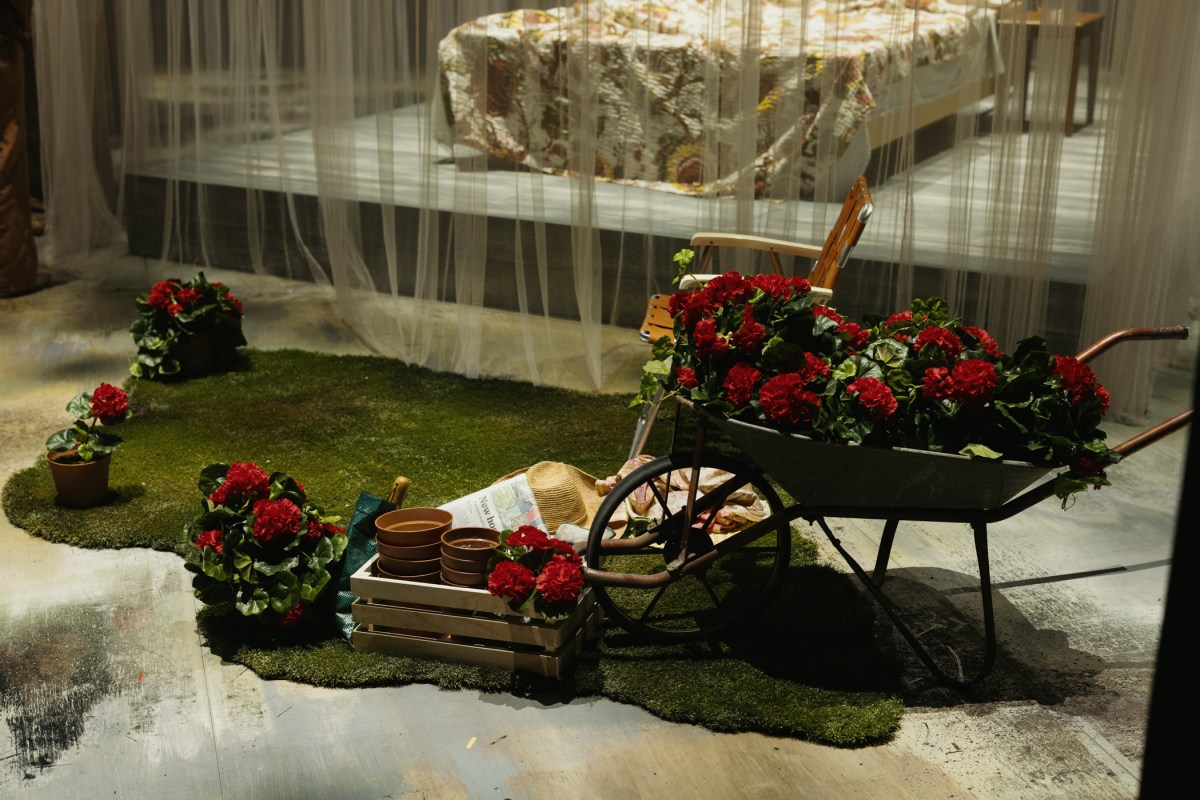
They were all on the same page, with Hammond and Borg’s making sweet music together. ‘I love that Therèsa has a background as a singer, producer, director and writer,’ Hamond says. ‘So she brings that depth of knowledge and understanding. We tend to come from the same base point of feeling it on the stage.’
Much like Garner’s forthright voice, they level with one another. ‘We’ve worked together for a very long time and developed an ability to be honest with each other about where the work’s going,’ Hammond adds. ‘That collaborative process is such a joy, so we can just have a bit of fun with it.’
Borg feels equally sure of their approach together. ‘I’ve always been aware that Jane’s a musical genius. We’ve been friends for nearly 40 years now, and what I love about our meeting place on story is the excitement we generate in each other. We laugh a lot, and with this one, we’ve cried a lot as well.
‘Because this was so such a personal sort of story for us, coming from much lived experience, there was this real joy of our friendship and our lives meeting our art.’
And that art meets in music. ‘Jane allows my musicality, because we both came from music. And so, every so often, we’d have a marvellous conversation about whether something was a duet or a trio, and how this world might be evoked, musically, trying different jumping off points, and that was really fun too.’
As was the very Melbourne-ness of The Spare Room’s operatic realisation.
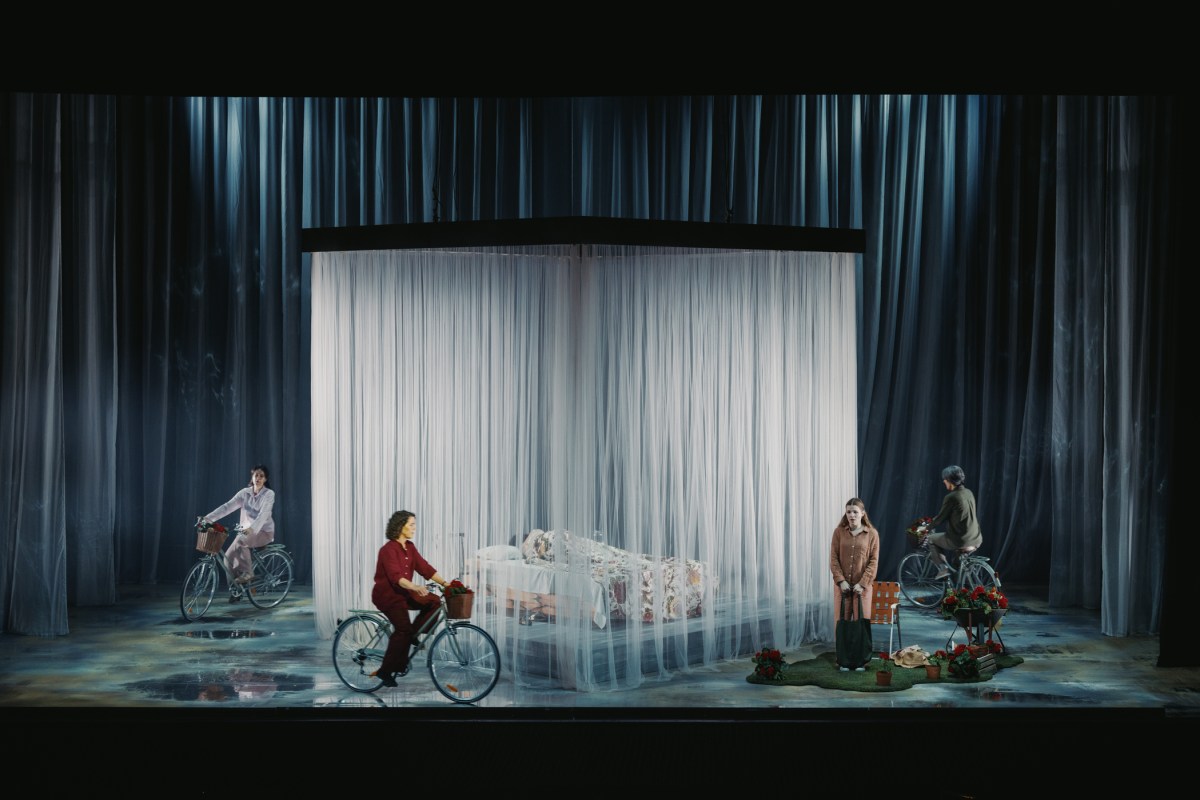
‘Sarah and I were laughing the other day,’ Borg says. ‘There’s a scene that she’s staged with bikes and we’re like, “We’re doing a Helen Garner story. There are bikes on stage. She’s carrying a coffee cup. This is peak Melbourne.”‘