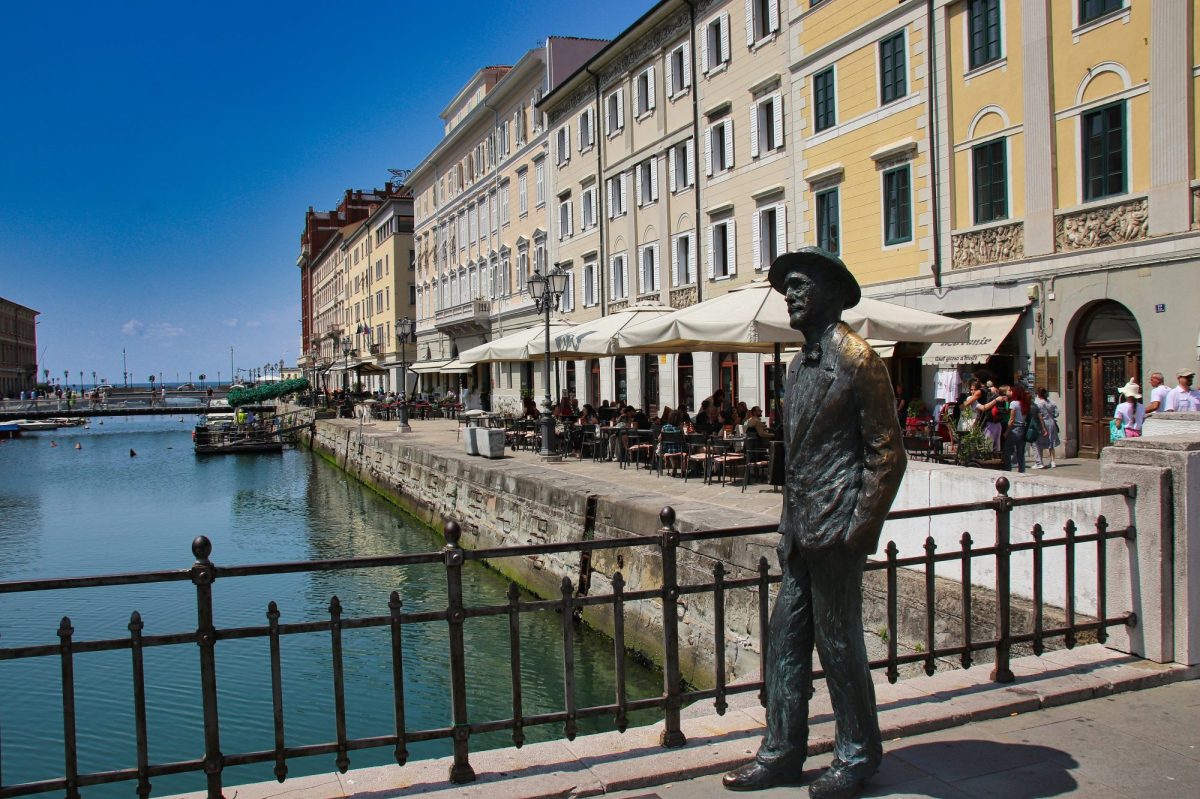
Why would I be marking Bloomsday this year, the annual celebration of James Joyce on 16 June, when I never have before? Because I’ve finished it. Ulysses. Finally. After four valiant but failed campaigns in the last 20 years, I got to the end. I’m still a little surprised there was no participation medal and token Guinness waiting for me as I crossed the line, cramped but triumphant.
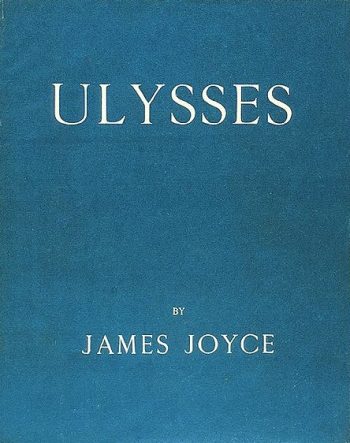
Joyce’s novel, published in 1922, is lauded and lampooned for being difficult, pretentious and a masterpiece of Modernism – the best/worst/hardest/funniest/most profane book ever written.
Its notoriety saw it banned in in the US until 1933, copies seized and destroyed in the UK until 1936, and banned in Australia until 1937 – after which is was still restricted by customs ministers into the 1950s.
For readers, it remains a monument, the literary equivalent of climbing Everest, swimming the English Channel or any other, ultimately arbitrary and maybe pointless, test of the human spirit.
Accordingly, I took it on this time only after a gruelling training regime: chewing through a couple of Dickens’ beefier classics (pah!), Moby-Dick (child’s play), and the first chapter and a half of Proust’s In Search of Lost Time (OK, that one’s still beyond me), fuelled by the nagging sense that everyone else who had read it (or pretended they had) believed they were somehow better than me.
Which is pretty much how I felt while I was reading it, my self-regard rising with every new gain on my tablet. At 12% complete, I was 12% better than everyone that wanted to read it but hadn’t; at 33% I was a third of the way through; at 61% complete, I could look down my nose, through swollen eyes, at even the past versions of myself lying spent and defeated in the Dublin gutters.
Taking on Ulysses – quick links
Ulysses – the plot’s the easy bit
The plot itself is well-known and not particularly complicated. Thirty-eight-year-old father, husband and advertising canvasser for the Freeman’s Journal Leopold Bloom is going about his day – Thursday 16 June 1904. He’s a man of intellect but also, unmistakably, a man beholden to pleasures of the flesh, as becomes obvious the first time we encounter him:
Mr. Leopold Bloom ate with relish the inner organs of beasts and fowls. He liked thick giblet soup, nutty gizzards, a stuffed roast heart, liverslices fried with crustcrumbs, fried hencods’ roes. But most of all, he liked grilled mutton kidneys which gave to his palate a fine tang of faintly scented urine.
Three chapters before getting to Bloom, we begin that same day with 22-year-old Stephen Dedalus, an impoverished medical student and aspiring poet dressed in mourning black, living with his friend Buck Mulligan in an otherwise abandoned Martello Tower in Sadycove, beset with guilty memories of his mother and his refusal to kneel and pray at his her deathbed:
Her glass of water from the kitchen tap when she had approached the sacrament. A cored apple, filled with brown sugar, roasting for her at the hob on a dark autumn evening. Her shapely fingernails reddened by the blood of squashed lice from the children’s shirts.
Ashplant in hand, Stephen finishes his breakfast and heads out for the day.
The two men and their stories duck and weave each other throughout, sometimes crossing paths unknowingly, before eventually – in Chapter 15 – spending time together in Dublin’s red-light district.
Simple, right?
Would I recommend Ulysses?
When I mentioned to a friend recently that I’d read it (what can I say? It just slipped out), they asked if it was worth it and – more trickily – whether I’d recommend it to someone who’s not a big reader.
That’s not an easy question to answer. I’ve done my fair share of endurance sports (cycling) in my time, during which there are inevitably moments, more than a few, in which you’re cursing yourself for your hubris. During those events, there are also moments of optimism, of grace, of being glad you’re out there in the rain and cold. And of course, when you finish, when you’ve completed the challenge, you can often feel a mix of exhaustion, satisfaction and intolerable smugness.
That’s pretty much how Ulysses was for me. Fog so thick I couldn’t see, sleet driven horizontally by vicious squalls that seemed to be saying: ‘Give up now, Paul, there’s no shame in it – go get yourself a nice warm cup of Terry Pratchett.’
And yet there were sentences, whole passages, that kicked me hard – and happily – in the existentials:
Hold to the now, the here, through which all future plunges to the past.
That Ulysses is an uneven reading (and emotional) experience is no surprise.
By design, there’s no uniformity of style. Its 18 chapters – or ‘episodes’ (as in acute medical episodes) – unfold with varying levels of difficulty. Some (and here, episodes four and six come to mind) are actually quite easy to get through (I’m talking relatively), providing a clear narrative, beautifully vivid details, astounding observations mixed in with the joyously mundane, a sense not only that you know exactly where you are (both physically and inside characters’ heads) but that you’re happy to be there. Episode 8, Lestrygonians, set during Bloom’s lunchtime, is one such example:
From Butler’s monument house corner he glanced along Bachelor’s walk. Dedalus’ daughter there still outside Dillon’s auctionrooms. Must be selling off some old furniture. Knew her eyes at once from the father. Lobbing about waiting for him. Home always breaks up when the mother goes. Fifteen children he had. Birth every year almost. That’s in their theology or the priest won’t give the poor woman the confession, the absolution. Increase and multiply. Did you ever hear such an idea?
How I enjoyed those flat and downhill stretches! How wrong I’d been to think this book would bend me to the point of breaking!
Conversely, some chapters, in particular the double whammy of Episodes 14 (Oxen of the Sun) and 15 (Circe), had me gasping for air, flooding with lactic acid and questioning my sanity.
References and allusions to the classics abound – most notably Homer’s The Odyssey, from which Ulysses takes its loose framework of course – but also broader Greek, Roman and Norse mythology, the Bible and a host of other, more arcane religious texts and doctrines – a great deal of which I didn’t get, apart from (in some instances) being able to think: Hmm, I think that might be an allusion to… something else.
Given that, it’s something of a blessing to be able to read Ulysses in our internet age. When I (frequently) googled to ask what (TF) was going on, I was often surprised by the answer.
I found the excellent Ulysses Guide particularly helpful. In Episode 14, the above-mentioned Oxen of the Sun, it came as genuine news to me while I was reading that it ‘takes place between 10:00 and 11:00 pm at the Holles Street Maternity Hospital, where Stephen is continuing his bender with three medical students (Dixon, Lynch and Madden) and a few other miscellaneous Dubliners (Lenehan, Punch Costello, and Crotthers).’
A great deal of my life has been taken up proofreading while working in classic ‘attention to detail’ jobs, and yet – even after reading that explanation and rereading the chapter – I still had no earthly idea who Punch Costello was.
Not least because, in that same chapter, ‘Joyce uses a series of 32 parodies to represent the “embryonic development” he identified in the schema as his technique for the Oxen of the Sun episode. These parodies chart the growth of literary style from preliterate pagan incantations into Middle English, followed by the Latinate styles of Milton, imitations of satirists such as Swift, and eventually 19th century novelists such as Dickens.’
As the Ulysses Guide points out, with admirable understatement, ‘none of that makes it particularly fun to read’.
The twists and turns of Ulysses
There are countless twists and turns, turnings-inside-out of language, and a disregard for quotation marks. Neologisms such as ‘mrkgnao’, ‘poppysmic’ and ‘weggeboble’ abound, as do mind-boggling portmanteaus (‘contransmagnificandjewbangtantiality’ to name just one). Punctuation is either missing in action or punched midway through sentences like a rushed library stamp.
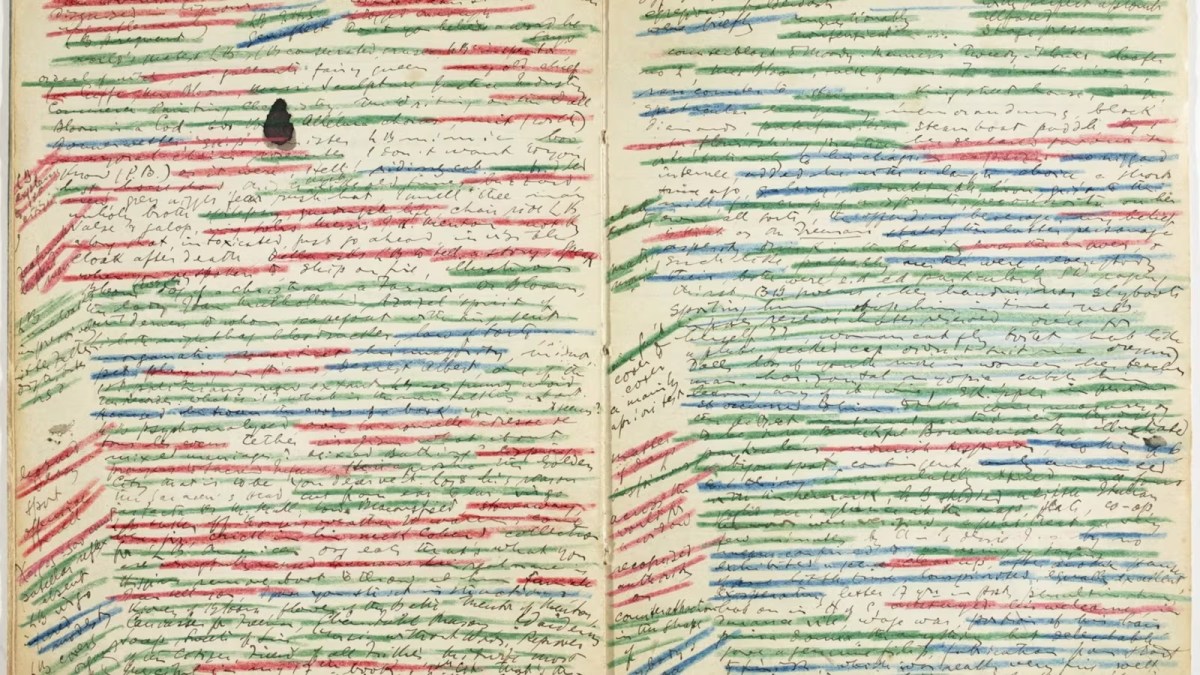
As an author, I can’t imagine submitting anything of the sort to a publisher, unless for a many-years-in-the-making practical joke they’d almost certainly not find funny. And that, mind you, would most likely be in a Word doc, with modern amenities such as track changes. One can only imagine what its original publisher, Sylvia Beach, founder of the famous Parisian bookstore Shakespeare and Company, must have thought and felt on seeing Joyce’s crayon-covered, handwritten pages.
Reaching the final episode, Penelope, came with a certain relief that there wasn’t too long to go, but also the joy of its exhilarating, grandstanding prose. It comprises a 45-page unpunctuated stream-of-consciousness soliloquy inside the head of Molly Bloom, wife of Leopold – known as Poldy to her.
It’s the first time she appears in person in the novel, although we know – through Bloom’s insinuating thoughts and the sometimes lewd comments of other characters – that she’s an opera singer of some repute, the daughter of an Irish military officer, and is having an affair with the sleazy manager of her upcoming concert in Belfast, Hugh ‘Blazes’ Boylan.
While the portrayal of Molly is celebrated for its unapologetic (even revolutionary for the time) focus on female sexual desire and bodily autonomy, it is also – inevitably – seen, and challenged to varying degrees, as a man’s (Joyce’s) idea of the sorts of things a woman might be thinking about, such as:
…if he wants to kiss my bottom Ill drag open my drawers and bulge it right out in his face as large as life he can stick his tongue 7 miles up my… Etc.
Personally, I loved her – or Joyce, I suppose – for closing out the novel with such an insanely paced, wholly unpunctuated screed; almost as much as I loved the feeling of getting to the end of it.
Would I read Ulysses again? Well, yes, I plan to. Would I have another (fifteenth or sixteenth) tilt at Joyce’s subsequent and final novel Finnegan’s Wake (1939), written over 17 years of failing eyesight and transcribed in part by fellow Irish author Samuel Beckett, a work (considerably) more difficult and challenging than Ulysses, even just in the hope of getting beyond my previous PB (halfway through Page 1)? I don’t think so…
Happy Bloomsday!