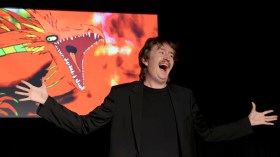
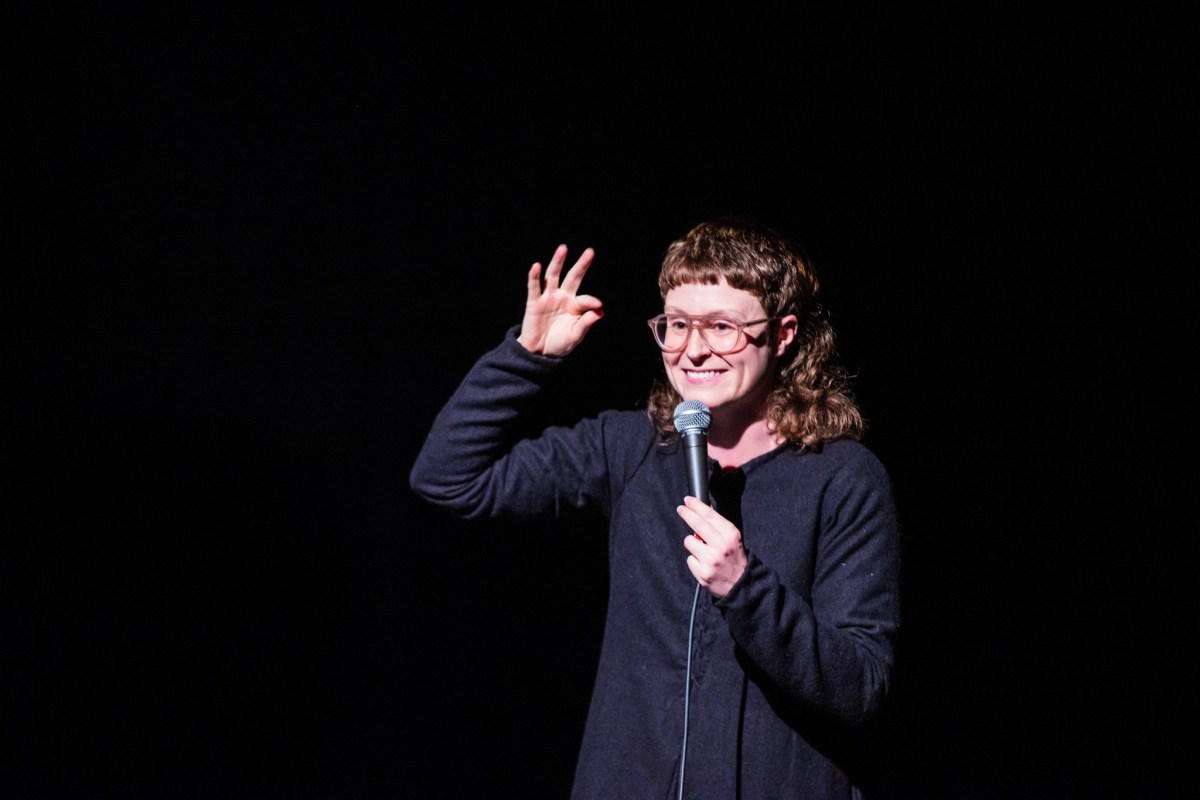
‘I hate it.’ ‘Deeply disengaged.’ ‘Like being trapped.’ The comedians I talked to for this piece didn’t mince words in expressing their distaste for social media.
To make matters worse, the all-powerful algorithm remains as inscrutable as ever, meaning that even paid promotion can be frustrating and scattershot.
While there is now a mountain of evidence that time spent on social media is bad for our mental health, it’s not the case that comedians can simply disconnect during a festival run; it’s still a vital source of promotion, if not the key driver of ticket sales.
ArtsHub talked to five comedians on how they navigate the social media world during festival season.
Comedians on surviving social media – quick links
Gemma Caruana
A lot of it is out of our control. Even when you pay for ads, you’re not guaranteed it’s going where you need it to go.
Pivoting away from autobiographical narrative cabaret to a state-of-the-nation sketch show format, Gemma Caruana’s new Adelaide Fringe show Rage Bait surveys her experiences with contemporary bugbears.
‘I curated a list of all these things that make me mad and then found a way to inject comedy and music into it,’ she explains. ‘It also has an overarching message throughout the show of validating our emotions and holding space for feeling everything because we are living in such a heightened political climate.’
Caruana says the challenge of navigating social media during the upcoming festival run has been on her mind. ‘I feel like I’ve got good at understanding social media and how to reach people there, while also learning that I hate it. I’m terrible, though, because I’m stuck on it like everyone else. Unfortunately, it’s our main way to reach people now.’
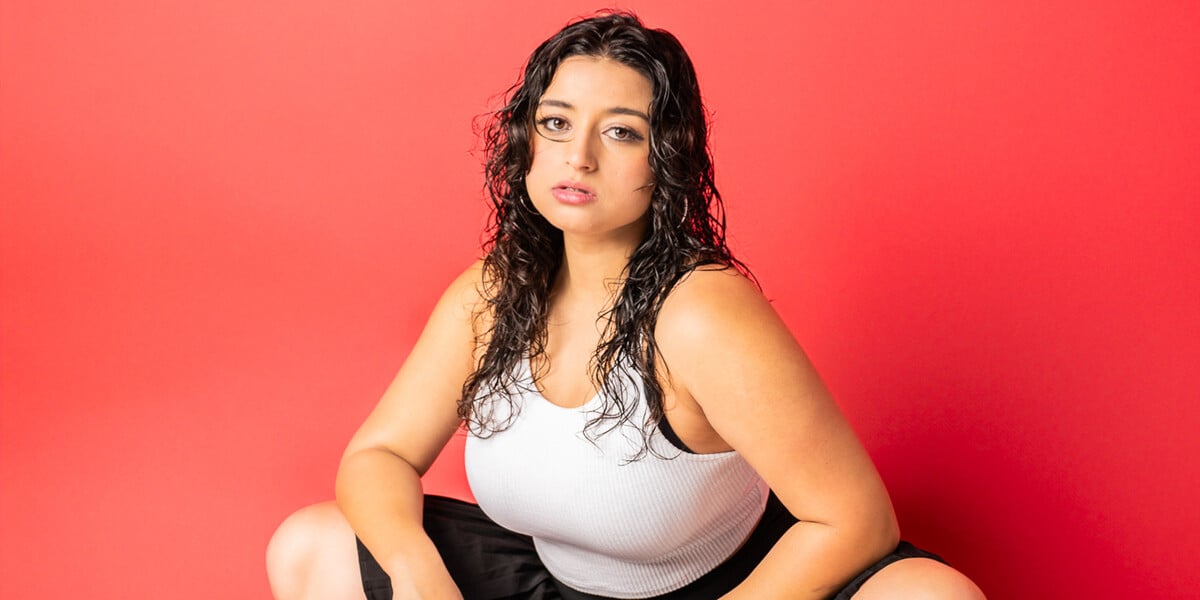
‘A lot of it is out of our control. Even when you pay for ads, you’re not guaranteed it’s going where you need it to go. We’re all learning on the job, whispering to each other, “I heard if you post at this time, on this day, you’ll get better engagement,” and trying out all these different strategies.’
Caruana has seen some benefits from her social media; some fans originally found her work online, and she enjoys the detailed information the platforms provide about who is engaging with her content. On the other hand, her experience producing shows for others and running their social media profiles has shown her the value of separating the performer and the promotion.
‘That [set-up] saves the artist from being directly engaged with the online perception of themselves, which can be so damaging – the negative comments or lack of engagement – and it just takes something off your plate.
‘[Social media] is a job like any other, and if you can afford to palm that off to someone else and properly pay them, then I would love to give someone that job.’
Gemma Caruano: Rage Bait is at the The Courtyard of Curiosities at the State Library, Adelaide from 20 February to 1 March as part of Adelaide Fringe.
Anthony Locascio
I have learned to detach myself from it because otherwise it really is just a nightmare. I’m not going to sugarcoat it. It’s like being trapped in this spiral of being a perennial performer.
Getting offline is one thing, but how about disconnecting from all technology and spending 10 days in a silent Vipassana meditation retreat? That’s what Sydney comic Anthony Locascio did recently, an experience he recounts in his new show, The Divine Comedy.
‘The first four days were hell, then it was really boring, then sort of perfect,’ he explains. ‘By the time I finished, it was the greatest thing that I’ve ever done in my life and changed everything about my perspective on myself and the world.’
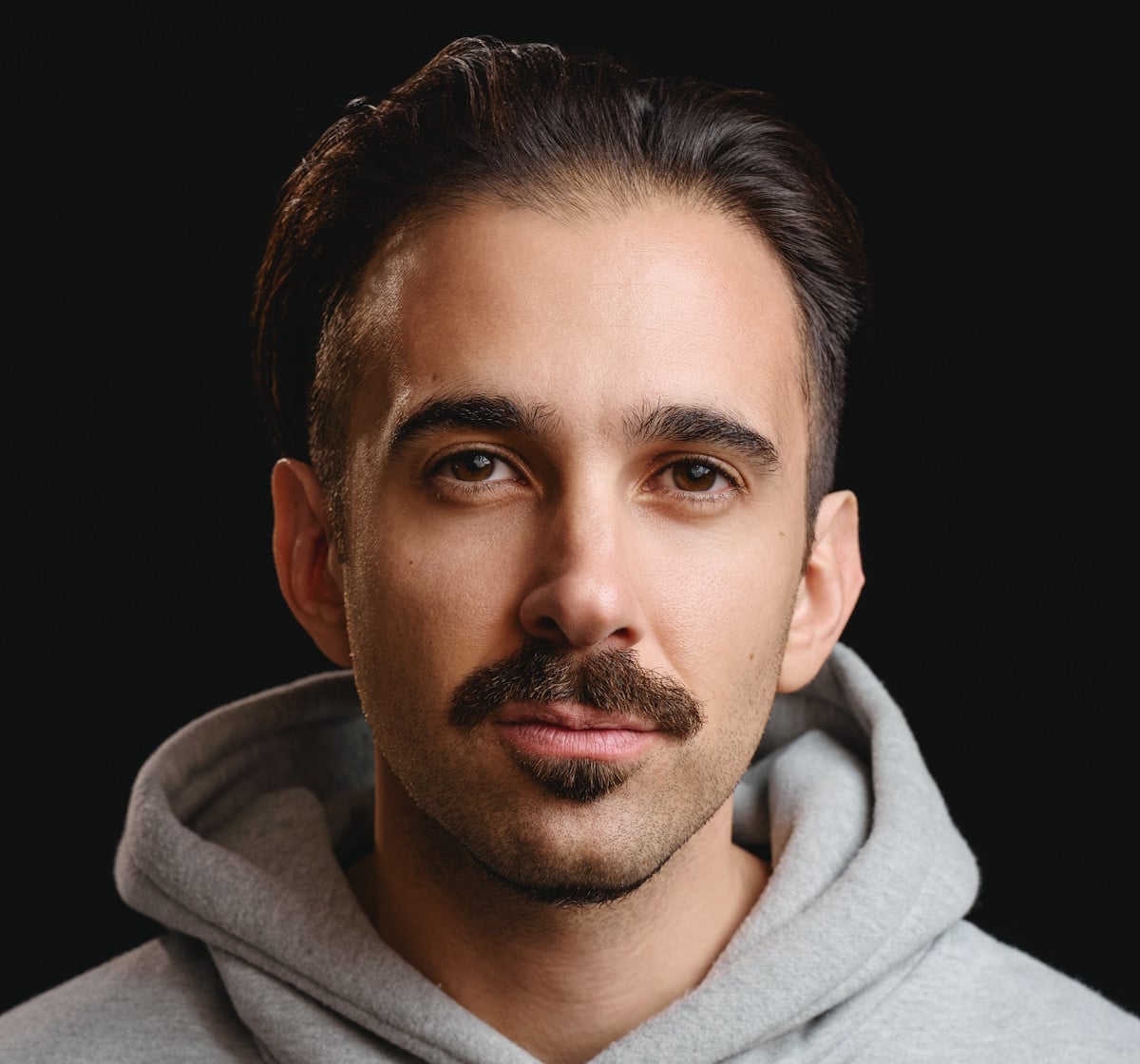
For the most part, though, Locascio is very much on what he calls the ‘hamster wheel’ of social media, however frustrating it is to him. In his last special, Pappou, he discussed getting negative comments and even death threats on his social media content, a downside of his comedy finding a wide online audience.
While he has built up a healthy social media following as an independent comic – he has more than 70,000 followers on TikTok – he says it’s still ‘trial and error’ to see what content will work and whether it will translate into ticket sales.
‘I still go to cities where my social media metrics say that I have a lot of fans but I struggle to sell tickets even though I’ve placed Meta ads, so it’s tough. I have learned to detach myself from it because otherwise it really is just a nightmare. I’m not going to sugarcoat it. It’s like being trapped in this spiral of being a perennial performer.’
‘I’m on [social media] every day, but I try to keep the relationship at arm’s length. I go on, I do whatever work I need to do – upload something, do a bit of engagement – and then go away.’
While Locascio has experimented with posting crowd work clips, he now feels that taking a camera tripod to gigs in the hope of capturing shareable content isn’t for him. ‘I find if you do that, you’re needlessly going into crowd work. It also means that you can’t be present in the room, which is your first mission, and as a consequence, it’s just inauthentic.’
Ultimately, for Locascio, social media is a means to an end, a way to promote his real passion. ‘It’s not typical to my generation, but whatever; I love watching specials, I just love the long-form stuff.’
Anthony Locascio: The Divine Comedy is at Storyville, Melbourne from 7 to 19 April as part of the Melbourne International Comedy Festival.
Anisa Nandaula
Now, people want a personal connection with the person that they’re going to see.
‘Punchlines all the way through’ is how Anisa Nandaula describes her show this year. ‘The title of the show is No Small Talk, so there’s no fluff; it’s like a conversation that you’d have with a really, really good friend.’
One of the fastest-rising stars in Australian comedy, Nandaula was nominated for Best Newcomer at the Melbourne International Comedy Festival last year and has built a massive online fanbase, with more than 600,000 followers on TikTok and over 400,000 on Instagram.
Despite these eye-catching numbers, social media is more functional than fun for Nandaula. People trolled her in her early days online, though she’s too tuned out now to know whether that negativity continues. ‘I’m so deeply disinterested,’ she says. ‘When I’m going on the app, it’s because I’m trying to sell tickets and connect with the people I want to connect with, so I don’t even notice any trolls.’
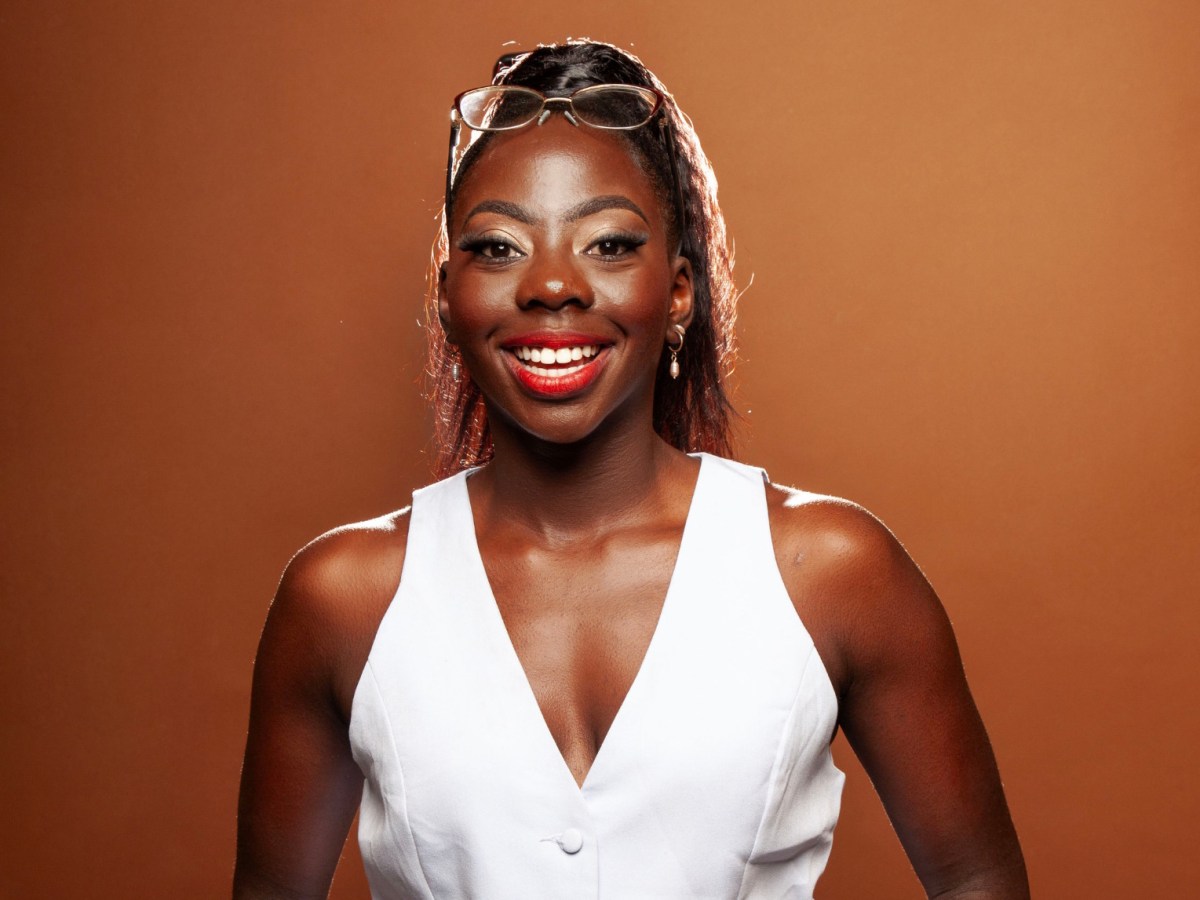
One thing Nandaula has found effective is using social media stories to remind fans that she’s on tour. ‘I’ll use stories to create an urgency around buying tickets,’ she explains.
Creating content specific to wherever she is that day has also been a winner. ‘I’ll make sure I’m posting daily, just some funny content, like when I was in Perth, I’d post something about the people I met or something about the suburb. That would usually get people interested, and people who had never heard of me came [to shows] because of those videos.’
While Nandaula doesn’t want to spend too much time on social media, she notes that posting content is only half the job. ‘It’s imperative that as people comment, you stay online and have a back and forth.’
She has found that a shameless approach to promoting her show is best. ‘As soon as anyone comments, regardless of what they say, I’ll reply “Please buy a ticket to my show” and I say that to every single comment.’
Still, Nandaula says opting out of social media is ‘100% unfeasible’ for comedians of her generation.
‘Maybe 10 years ago you could do that, but I think that audience is gone. Now, people want a personal connection with the person that they’re going to see.’
Anisa Nandaula: No Small Talk is at fortyfivedownstairs, Melbourne from 26 March to 19 April as part of the Melbourne International Comedy Festival.
AJ Lamarque
I’m not really social media-first, so I’ll do something and completely forget to take a photo because I was just enjoying the moment.
For his festival show this year, A Beginner’s Guide to Ancient Egypt, AJ Lamarque is delving deeper into a subject that’s been a passion since he took a class on hieroglyphics on a whim during a year abroad.
The show offers punters the opportunity to ‘get nerdy for an hour’ on a favourite topic, and it’s also part of an approach to life as a comedian that has worked for Lamarque – having completely separate pursuits and social circles, rather than spending all his time doing comedy or hanging around comedy clubs.
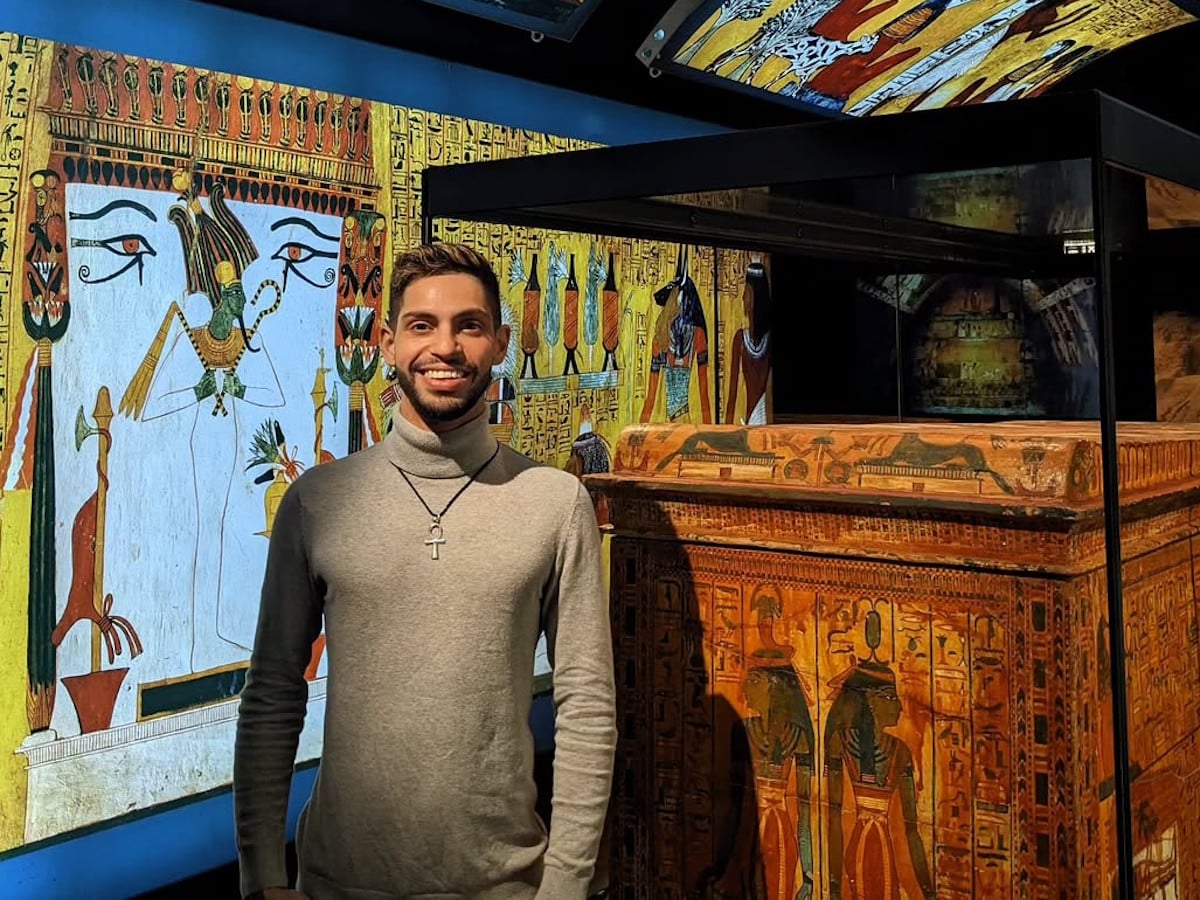
As well as his interest in Egyptology, he also plays basketball for an LGBT+ team and is an advocate for the sport, bringing him into a world where nobody is interested in ticket sales or festival club line-ups.
While Lamarque plans to promote his show online come festival time (he’s on the usual TikTok, Instagram and Facebook), he’s very aware that anyone following multiple comedians can find their social media feeds can become saturated with posts about upcoming shows. ‘Even if they’re friends of yours, they might feel like it’s too much … I try to do [promotion] in more subtle ways,’ he says.
‘If I could have a semblance of a career without social media, I would not be on it very much at all, but it’s a necessity for what I want to do.
‘But I’m not really social media-first, so I’ll do something and completely forget to take a photo because I was just enjoying the moment. I do find it a bit overwhelming in that aspect.’
Lamarque, who has previously written about the disproportionate impact viralism has on casting decisions for ArtsHub, says one upside of social media is that it can take your work to an audience who would otherwise never see it. ‘To be walking around Miami and have someone randomly be like: “Oh, I saw your series” is wild when there are people on the Sydney comedy circuit who don’t even know I exist,’ he says.
Recently, Lamarque found that spending time learning about Meta advertising has enabled him to reach an engaged audience.
‘The downside is you’ve got to pay, but it’s [driven] an uptick in social engagement and conversion and also less hatred online. I’m finding new people who like my vibe and what I do and are willing to come along to stuff.’
AJ Lamarque: A Beginner’s Guide to Ancient Egypt is at Storyville, Melbourne from 7 to 19 April as part of the Melbourne International Comedy Festival.
Scout Boxall
Most of the comics that are reaching the greatest heights have very good boundaries around their screen time for their mental health.
In their acclaimed God’s Favourite, which is returning to the festival circuit this year, Scout Boxall tells the story of an excruciating night without their bipolar medication. While doing such a personal show every night could be taxing, Boxall says they looked after their mental and physical health – including steaming their vocal cords and resting under a weighted blanket in a darkened room – through the show’s initial run.
The focus on their health paid off, and they thrived during the season. ‘Honestly, a lot of burnout is cured by external validation,’ they say. ‘Because the show did well, I was like: “I reckon I can have a bit more of this!”’
Boxall, who has previously written about the issue of burnout in Australia’s comedy festival circuit, says they’ve seen more of their peers prioritise wellness during festivals, including trying to stay off their phones and social media where possible.
‘This is an industry and a lifestyle that can be incredibly taxing. Most of the comics that are reaching the greatest heights have very good boundaries around their screen time for their mental health. They’re not just getting fuck-eyed every night and doomscrolling into oblivion. They’ll have their management post [social media updates] for them. They’ll run or play netball, have some life outside of comedy.’
In Boxall’s case, swapping screen time for weightlifting has been a winner. ‘You really do need something that can balance you and ground you outside of the industry. Physical movement and being alive in your body are huge, and I do think it makes you a better performer. Also, it’s just nice to walk into a gig and be like, “I’m the most jacked person here!”’
Scout Boxall: God’s Favourite is at the Trades Hall Meeting Room, Melbourne from 26 March to 5 April as part of the Melbourne International Comedy Festival.