This is for general information only and should not be interpreted as legal advice. If you are considering taking industrial action you should approach your relevant union or seek your own legal advice.
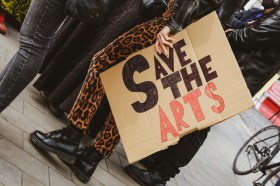
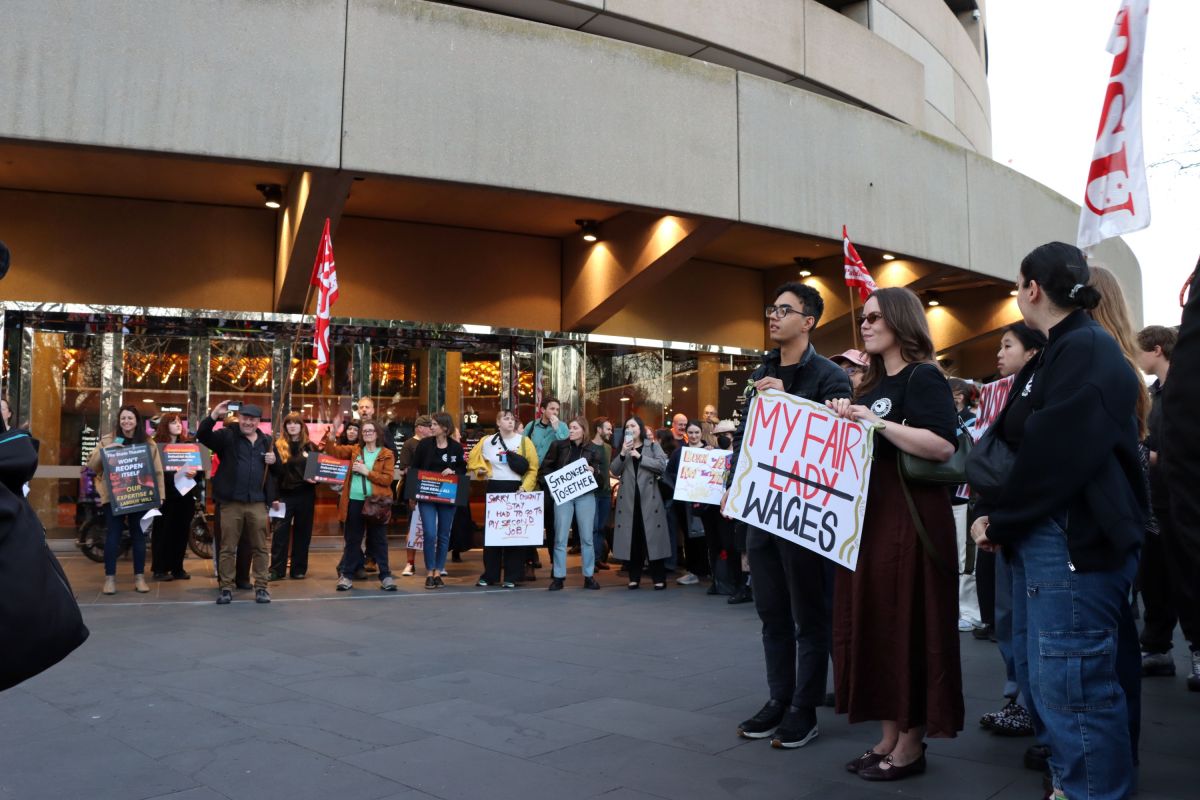
In the last few weeks, Arts Centre Melbourne arts workers have staged multiple 24-hour stoppages of work as part of negotiations for a new enterprise agreement with their employer, which is reliant on government funding for survival.
Ahead of the second strike, an ACM spokesperson told The Age, ‘We respect the right of workers to take protected industrial action, and we’re working closely with our team and their unions to progress a new agreement.’
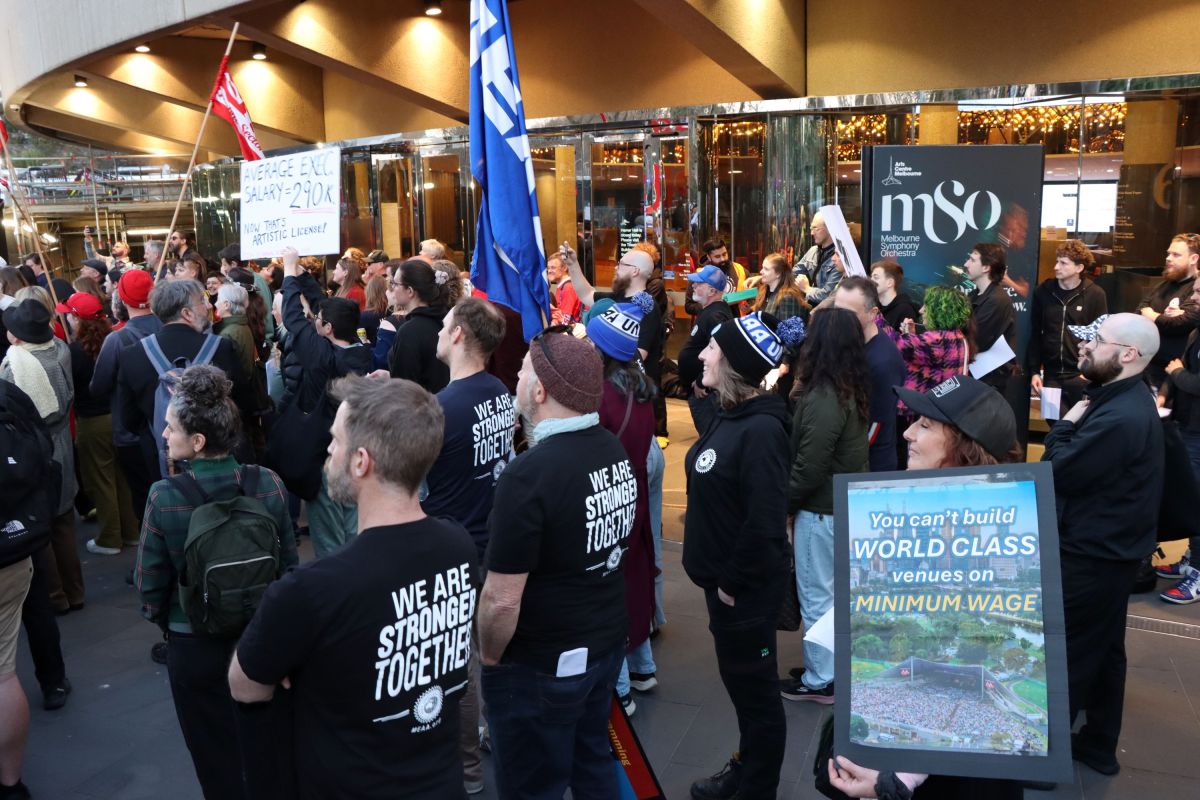
The work stoppages have impacted major ACM shows and garnered national attention. It’s also the first time in decades that union members at the ACM have taken industrial action.
Given how difficult it is to take protected industrial action in Australia, that only makes sense. Here, we lay out the laws regulating industrial action in Australia as well as some perspectives from the union members at ACM taking action.
Arts workers on strike – quick links
What is an enterprise agreement? And what is protected industrial action?
An enterprise agreement is an agreement made between an employer, usually a company or ‘enterprise’, their employees, and usually their unions or other representatives. It contains terms and conditions of employment, such as wages and leave.
Agreements have their own legal framework that we won’t go into now, but essentially employees and employers need to follow a set of rules to negotiate (or ‘bargain for’) this agreement. Any size organisation can have an enterprise agreement as long as they have direct employees.
Industrial action (protected or otherwise) is many things, most commonly refusing to attend or perform work, also commonly known as ‘going on strike’ or ‘hitting the grass’.
Protected industrial action is a concept that comes from the Fair Work Act 2009, which sets out the laws that regulate most employment related issues across Australia. It applies to almost all workers in Australia, except those who are employed by entities like state governments who are not ‘national system’.
According to the FW Act, there are ‘protected’ and ‘unprotected’ forms of industrial action, which basically means there are only certain times you can be protected from any legal consequences for taking industrial action. These consequences could include losing your job, or being sued by your employer for the financial damage you might have caused while taking action.
In Australia, you’re only protected by the law when you take industrial action that is directly related to the claims you might have made in a proposed enterprise agreement and you’ve met a number of specific criteria. These include:
- Not taking action before the previous enterprise agreement has expired
- Ensuring you are ‘genuinely trying to reach agreement’ before beginning the process to authorise protected industrial action
- Giving at least 3 working days notice before taking action
- Complying with any orders of the Fair Work Commission
- Applying to the Fair Work Commission for them to approve you conducting a vote to take action
- Making a declaration, via the the Fair Work Commission’s website, about how how many people voted to take industrial action and what they voted for
- Attending a compulsory meeting between the Fair Work Commission, the employer and the employees who want to take protected industrial action, where the Fair Work Commission attempts to assist everyone to come to an agreement
If that sounds like a lot of hurdles to go through, it is. And if anything goes wrong with the process along the way, employees could lose their right to take protected industrial action entirely.
Practically, this means that taking protected industrial action in Australia is complex, and limited to only very specific circumstances.
It also means that all other types of industrial action are unlawful in Australia, such as sympathy strikes or strikes about any issue other than the agreement between a specific group of employees and their employers.
Why is it so hard to strike in Australia?
Professor Shae McCrystal, a labour law academic at the University of Sydney, has written extensively about our strike laws. In 2019, she wrote an article entitled Why is it so hard to take lawful strike action in Australia? and suggested that ‘it is possible that strike regulation in Australia has reached a tipping point whereby the costs associated with getting it right may now be so high that simply abandoning the lawful path and engaging in unlawful strike action may be more appealing than complying with the law’.
Professor Andrew Stewart, another labour law expert at Queensland University of Technology, has also pointed out that the International Labour Organisation, which is the UN agency that oversees labour standards, ‘for the past 20 to 30 years has told governments of both political persuasions that we are in breach of international labour standards … our laws are also so restrictive on the right to strike that they are way out of step with the laws of just about every other developed country’.
In this context, the ACM workers taking industrial action about their pay and their enterprise agreement are taking a step that is more than just disruptive or historic. It’s truly a last resort. These workers – union members – are coming together to make a statement to the ACM and to the Victorian Government that they want to be heard, whatever it takes.
It’s also an incredibly exciting opportunity for them to exercise their now internationally recognised, as of May 2026, human right to strike.
What do striking workers say?
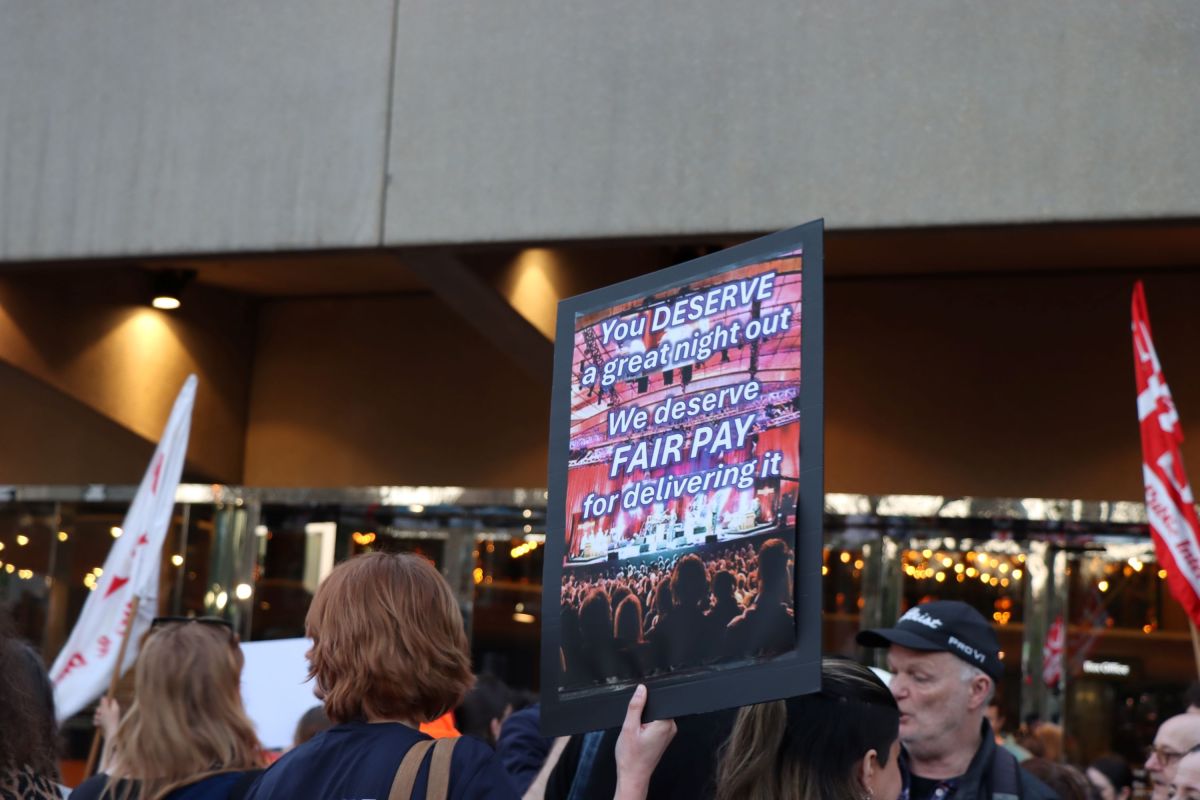
We spoke to Allie Imlach, a CPSU delegate, and Luke Bryant, a MEAA delegate, about why they’re taking action in Melbourne and what they think about Australian strike laws. Here’s their joint response.
Why are ACM employees taking protected industrial action?
‘We’re taking protected industrial action because ACM has failed to come to the bargaining table with a offer higher than 3%. We are asking for a 7% wage increase, which would bring wages up to inflation. Our last wage increase of 1% was in April 2025.
‘We are taking protected industrial action because the Victorian arts sector is in crisis. A critical lack of government funding, a changed risk landscape since Covid-19, and increasing operating costs are destabilising the entire performing arts ecosystem.
‘The problem is not unique to ACM, it’s a common story for arts organisations throughout Victoria, nationally and internationally. ACM is a prime example of workers being required to subsidise an unsustainable funding system … the [Victorian] Government continues to reduce funding, impose requirements that limit opportunities for ACM to operate commercially, and also requires that ACM finds “efficiencies” to make up the difference. Efficiencies inevitably means employing less staff, and paying them less [than employees need to survive] … Somehow the national leader of performing arts venues has failed to keep up.’
What do you have to give up in order to take protected industrial action?
‘To take part in protected stop-work industrial action, you are not allowed to be paid for the period of stop-work … We are giving up pay.
‘Taking [protected] industrial action has required us all to make ourselves vulnerable, and to make incredibly challenging decisions that conflict with our professional instincts. People who work in the arts don’t do it for the money – most do it because they believe in the public value of their work.
‘Taking industrial action in the arts sector involves making decisions that carry a significant emotional toll … Many of our members are the same people who program and produce the events on our stages. For those members in particular, they are effectively disrupting their own hard work … It’s a difficult, uncomfortable situation to navigate and it really all hinges on the courage, conviction and commitment of all our members.’
What do you wish was different about taking industrial action in Australia?
‘I wish it wasn’t only limited to disputes about money! The workers of ACM have concerns beyond the wages dispute, but we have no opportunity to use our collective power to solve those problems. This is because we can only take industrial action when we’re in bargaining … The continual focus on money oversimplifies the extent of the challenges we’re facing in our workplaces.
‘Yes, money is the dominant driving force behind many of those challenges, but it means we miss out on any opportunity to have a nuanced conversation about what we need from our work (beyond wages) in order for it to be a positive part of our lives.
‘It also leaves no space for conversations about how different kinds of work are valued, and how that value is recognised both financially and non-financially. If industrial action always seems to be about workers claiming they’re not getting paid enough, it’s because Australia’s laws provide no other legal opportunity for workers to demonstrate their concerns – which are usually many and varied, and not just financial.’
How do you feel about the fact that taking protected industrial action in Australia is such a tightly regulated process that the International Labour Organisation has found is inconsistent with the human right to strike?
‘Unsurprised … This is difficult to reconcile with commonsense understanding of contemporary Australia as a liberated society that values freedom of expression and human rights … The tight regulation of how, when and under what circumstances groups of workers can band together and build power to pursue their collective interests contradicts all of that.’
What advice do you have for fellow workers in the arts who are looking to make change in their workplaces, particularly those who are reliant on government funding?
‘It’s incredibly hard work. We in the arts start at a disadvantage because we’re such a fragmented workforce. So many arts workers work multiple jobs as casuals, and in the performing arts in particular there’s a lot of shift work. It’s a very individualised industry. We are so rarely (if ever) in the same place at the same time.
‘Mobilising such a transitory workforce is really challenging … There is also a deeply entrenched sense of apathy across our sector – a feeling of helplessness and a lack of belief that anything can change.
‘I think the most powerful thing any group of workers has is a collective story, and the arts sector holds some of the most skilled storytellers in the world … Harness that strength – if the story is powerful enough, and resonates with enough people, your colleagues will find a way to move towards it.’
Where can I go for further information about industrial action?
If you’re interested in finding out more about making change in your workplace, including bargaining for an enterprise agreement or taking industrial action, you can join your union (like me, a proud MEAA member).
Arts workers are often covered by the MEAA, but can be covered by other unions depending on the workplace they are in. Australian Unions can direct you to the right one.
If you’re interested in broader changes being called for by the union movement, particularly about strike action, the Australian Manufacturing Workers Union’s Blueprint for Action campaign has further detail.
Australian Unions has also published a factsheet on industrial action. For a longer view, the ACTU Institute has information on the history of Australian strike laws and strike action, and Sam Oldham’s book Without Bosses: Radical Trade Unionism in the 1970s also goes into how workers defeated anti-strike laws in Australia in the 1970s.