For the fifth year running, the Europa! Europa Film Festival has surveyed an entire continent to find its line-up. The Down Under event celebrates the latest and greatest movies from the region, and screens its astutely curated program from 19 February to 19 March – not only in Sydney and Melbourne, but also expanding to Brisbane, Hobart and Auckland for the first time.
Can’t decide what to see at the Europa! Europa Film Festival? With Oscar-nominated animation, big-name stars, acclaimed filmmakers and new discoveries all on the bill, there are plenty of standouts to choose from. To help you to whittle down your viewing list, we’ve picked 10 highlights.
Europa! Europa Film Festival – quick links
Arco
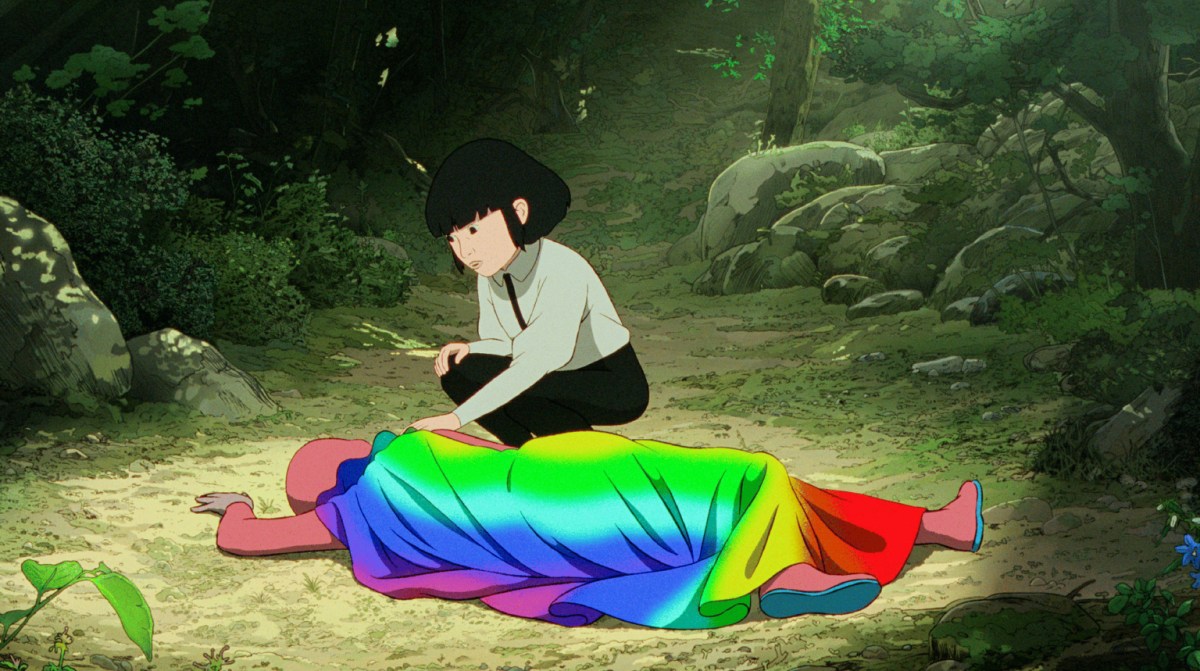
Rainbows gain a new sparkle after watching the gorgeous, imaginative, heartfelt and hopeful animated sci-fi Arco. The debut feature from illustrator and comics author-turned-filmmaker Ugo Bienvenu, this French gem sends earth’s inhabitants circa 2932 time-travelling via colourful arches. When the 10-year-old titular character secretly makes the trip, however, he ends up marooned in 2075 with a young girl and her robot caretaker for company.
Natalie Portman both produces and is among the English-language voice cast for this enchanting hand-drawn movie, which belongs in the same company as Studio Ghibli’s finest work. KPop Demon Hunters might be the favourite to win the Oscar, but this nominee – and recipient of the top prize at the Annecy Animation Film Festival – is the best animated movie of the past year.
Below the Clouds
Haunting both in its beauty and its contemplation of the full scope of everyday existence, Below the Clouds rounds out director Gianfranco Rosi’s trilogy of documentaries about his homeland. Golden Lion-winner Sacro GRA honed in on Rome, and Golden Bear-winner Fire at Sea on Lampedusa in Sicily. With this luminous monochrome film, a treasure of a factual feature, Rosi heads to Naples.
‘Vesuvius makes all the clouds of the world,’ said French poet and filmmaker Jean Cocteau. Below the Clouds takes that statement as inspiration in two ways. As it explores the realities of life lived beneath the towering volcano, it also adopts a floating approach to its chronicle, drifting between its points of focus – moving between call-centre employees, archaeological digs at Pompeii, port workers, teachers and their students, and more.
Franz
When a filmmaker decides to bring the life of Franz Kafka to the screen, the standard biopic approach will never do. Steven Soderbergh knew this in 1991, when Jeremy Irons played the writer behind The Trial, The Castle, The Judgement and The Metamorphosis in Kafka. Polish director Agnieszka Holland, whose 1990 movie Europa Europa gives the festival its name, is just as aware with Franz.
As well as making a star out of German actor Idan Weiss as its lead, Franz gets playful, thrillingly and engagingly so. The film’s gaze doesn’t just fall on Kafka’s existence, including the expectations placed upon him by his father (Peter Kurth), his despair at his routine as an insurance clerk, his health, his relationships and his compulsion to write. It also breaks the fourth wall and heads to contemporary tours at the real-life Kafka Museum in Prague, and probes the meaning of legacy and the act of memorialising historical figures.
Hungarian Wedding
Like falling in love, watching spectacular choreography is a can’t-tear-your-eyes-away experience. Both sit at the heart of delightful romantic comedy Hungarian Wedding. Péter (Tamás Kovács) might expect dancing when he accompanies his friend András (Zsombor Kövesi) from Budapest to Transylvania for the latter’s cousin’s wedding. But given that he’s there as part of a scheme involving Romanian religious iconography and a sham coupling, all to fund their band’s US tour, romance isn’t meant to be on the agenda.
Indeed, when Péter meets sister-of-the-bride Kati (Franciska Töröcsik), he isn’t even thrilled about pretending that sparks are flying between the pair. Director Csaba Káel and screenwriter Miksa Békési prove perceptive with this 80s-set film, with cultural specificity and emotional depth up there with pulsating dance scenes and sparkling chemistry as Hungarian Wedding’s biggest strengths.
Made in EU
If a film is set in early 2020, and also if a character within it starts the movie with a mystery illness that no one is giving the requisite concern, Covid is bound to loom large. That said, while the global pandemic strikes rural Bulgaria in the gripping and potent Made in EU, and afflicts widowed clothing-factory worker Iva (Gergana Pletnyova) as the small town’s first known case, this isn’t a Contagion-style outbreak thriller.
Rather, as Iva becomes public enemy number one due to her infection – and as Pletnyova proves superb as the vilified woman – writer/director Stephan Komandarev offers up a clear-eyed and compelling look at the repercussions of capitalism’s love of profits over people, textile industry standards, humanity’s incessant need for a scapegoat and the relationship between the European Union’s member countries.
Magellan
For fans of slow cinema, every Lav Diaz movie is an event, an ode to patient filmmaking, a communion with the screen and the reason to spend most of a day at the pictures, as the likes of Norte, the End of History, From What Is Before and Lullaby to the Sorrowful Mystery have demonstrated. That Magellan clocks in at less than three hours makes it one of the Filipino director’s shortest features, then, and perhaps his most accessible as well.
Gael García Bernal portrays the Portuguese explorer, with the film focusing on his early 16th century quest to reach the Spice Islands, including his time in the Philippines. Diaz, Bernal, this slice of history: that’s plenty to make this a must-see at the Europa! Europa Film Festival. True to his usual form, a nine-hour cut that Diaz has described as both a prequel and a sequel is also on the way.
Rolling Papers
A number of famous cinema names are mentioned in conversation in Rolling Papers. Although Richard Linklater isn’t among them, the Dazed and Confused and Before Sunrise helmer springs to mind anyway. While charting the lives of Tallinn twentysomethings, this charming Estonian dramedy from writer/director/editor/composer Meel Paliale fits the slacker mould. It also adds to the big screen’s great walk-and-talk moments.
Grocery-store employee Sebastian (Mihkel Kuusk) meets Silo (Karl Birnbaum) thanks to the eponymous item. A lively conversation over a purchase soon sparks a firm friendship, an adventurous outlook on life and talk of moving to Brazil to be their best selves. Rolling Papers revels in the hope and joy of chasing a dream, and of having a purpose, while also appreciating how and why reality can interrupt – and why that might be welcome.
The Son and the Sea
There’s a difference between realising that you’re on an unwanted path and knowing where you’d be better off venturing, or knowing the kind of life that you should be aiming for and how to bring it to fruition. The Son and the Sea’s protagonist Jonah (played by first-time actor Jonah West) understands this chasm. Accordingly, the rugged north coast of Scotland beckons, ostensibly to visit his great aunt, but really to break his cycle of partying in London and clear his head.
In Aberdeenshire, Jonah and his best mate Lee (Stanley Brock) also find a new friend in Charlie (Connor Tompkins), who is deaf and has his own struggles with his twin (Lewis Tompkins). Making her feature directorial debut, co-writing with her mother Imogen West and casting her brother as her lead, Stroma Cairns crafts a tender examination of masculinity, and a film as resonant as it is visually striking.
The Piano Accident
That no one makes movies like Quentin Dupieux, aka French electronic musician Mr Oizo and the absurdist force behind Rubber, Wrong and Deerskin, has been apparent for more than two decades. Influencers, social media, viral fame and online savagery are increasingly regular targets for filmmakers, for instance, but only this inimitable director and his latest satire task two-time César-winner Adèle Exarchopoulos (for Blue Is the Warmest Colour and All Your Faces) with taking cues from Jackass.
What happens when an internet sensation known for putting her body on the line tries to stop a scandal from derailing her career? That’s The Piano Accident’s premise. Now a three-time star for Dupieux after Mandibles and Smoking Causes Coughing, Exarchopoulos keeps having a ball tapping into the director’s wavelength.
The Testament of Ann Lee
When Ann Lee, the daughter of a Manchester blacksmith, created her own religious sect and then took it to the New World, ample criticism and fear came her way – as The Testament of Ann Lee covers. Even to her detractors in the 18th century, however, the Shakers founder’s ambition was undeniable. The same is true of the astonishing film that tells her tale, and of Mona Fastvold, its visionary director.
Norwegian talent Fastvold and her husband Brady Corbet are one of cinema’s most ambitious couples, in fact, following up Oscar-winner The Brutalist with this masterful interrogation, as made with a keen eye for agony and ecstasy crashing and thrasing. The film’s musical-infused approach, complete with hymn-inspired song-and-dance numbers, is mesmerising. And in the lead, Amanda Seyfried gives her greatest performance yet.