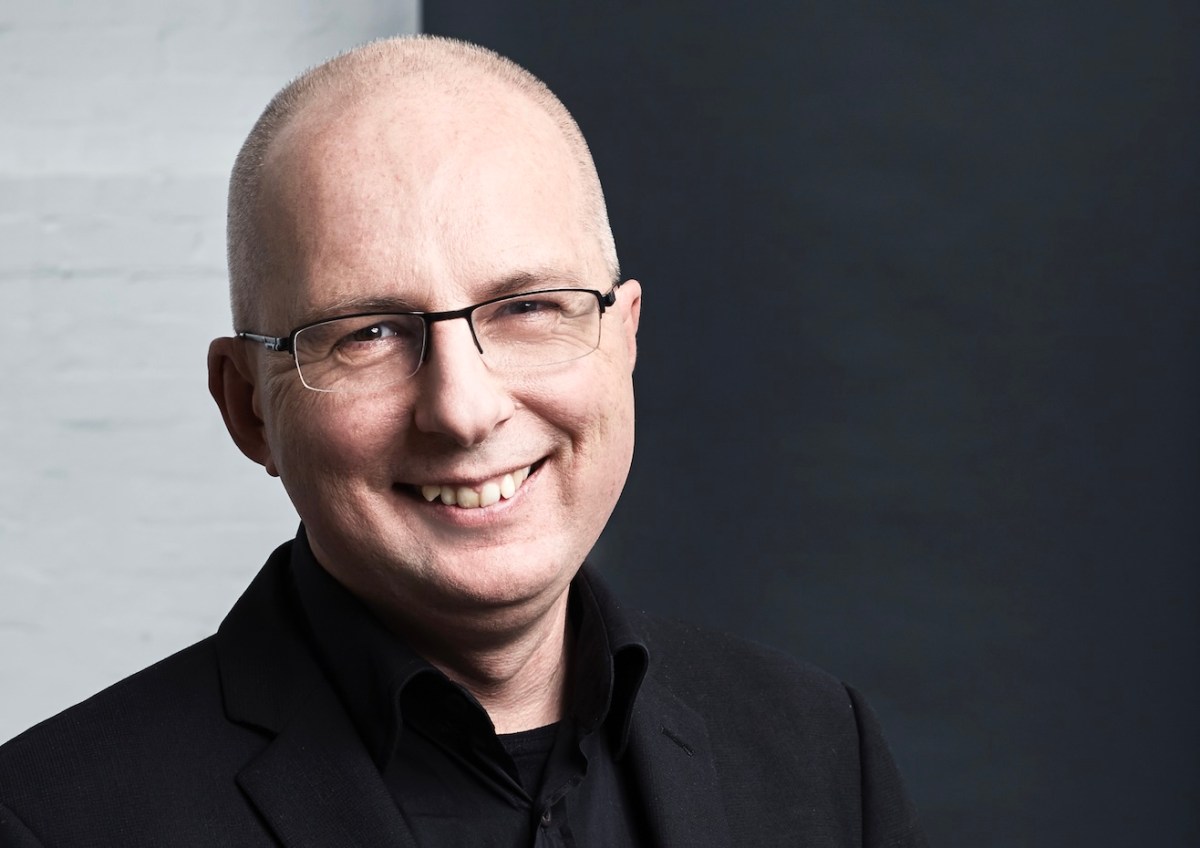
Paul Stanhope is an award-winning Sydney-based composer, conductor and educator, whose compositions have been performed worldwide.
He is also an Associate Professor of Composition at the Sydney Conservatorium of Music. Stanhope completed doctoral studies at the University of Sydney with Peter Sculthorpe and post-doctoral studies at the Guildhall School of Music in London.
The world premiere of his new work, Paludarium Dreams, will be performed on stage by Omega Ensemble as part of Inner Landscapes, touring from 11 to 16 July.
Would you like to be profiled in ArtsHub‘s What I’ve Learned series? Email us with ‘What I’ve Learned’ in the subject line.
Paul Stanhope: What do conductors ACTUALLY do?
Interviewed by Liam Currie.
Paul Stanhope: video transcript
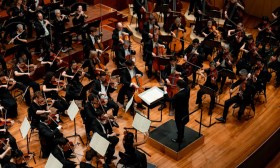
The guys standing up on stage – I know that’s the conductor, but he’s doing this [waves arms around] the whole time. What does that do? What does a conductor do?
Paul Stanhope: There are basic patterns which are just time patterns. There’s a downbeat, which shows that’s the first bit of the bar – one, two, three and four. So that’s the basic shape if you’ve got something in four-four time.
But what you probably see is something that probably looks a bit more random, because the players all kind of understand the basic shape. And then, what the conductor is doing with their left hand is often shaping things and making momentum and giving little signals here and there.
The musicians all have the music in front of them, so they know how it goes.
But it’s really that in-the-moment gesture that the conductor is doing to help bring things alive. And it’s a really kind of spontaneous kind of alchemical thing – there’s no real science to it.
I thought you’d have rehearsal times?
PS: Oh yeah, there is rehearsal time as well. Yeah, exactly. In that rehearsal the conductor is taking the ensemble through the pieces and they take them apart and rehearse little bits. But when you’ve got a larger number of musicians on stage, then you generally require someone up the front to be able to keep it all together.
What I’ve learned: Ragnar Kjartansson, Visual Artist
And musicians are pretty remarkable at being able to, simultaneously, be listening to each other and following the gestures of the person upfront.
But in the case of Omega Ensemble, for example, they don’t use a conductor and it’s the musicians cueing themselves and kind of taking the role of a conductor in a smaller ensemble context.
So is it just, ‘Here’s the music sheet, play this?’
PS: Yes, it can be. They usually send out the music in advance and if there’s anything particularly tricky then players will will mark it up and do rehearsal for it, and then in the recording session there’ll be an amount of rehearsal, and then the recording will happen and then they’ll do a number of takes of different things and slowly put that together. But yeah, professional musicians work at a really fast rate.
Paul Stanhope on the role of experimentation
PS: If you’re a good composer, you map all of that into your score and make it very clear about what the musicians are expected to do in any one moment. If you just come in and say, ‘Oh, let’s just jam this film score,’ that’s never going to work.
You’ve actually got to come in with quite a lot of preparation in advance, and everything has to be synchronised up to film anyway, and timings are incredibly important [with] things recorded to click tracks and all sorts of crazy stuff like that.
With the costs of hiring musicians and stuff, people do it digitally. What are your opinions on doing it digitally versus hiring an actual musician to play it?
PS: Yeah, they’re different things. I mean, there’s a lot of commercial music that is done digitally now in audio workstations. And watch out, because AI is coming with this as well. And it’s starting to suck up music and being able to do these fake versions of things.
I like music written by humans, personally, and that’s where having a live musician will, I don’t think, ever be replaced by AI or by software.
What I’ve Learned: Julia Potter, Screen Composer
There’s something just magical about having live musicians and the way that an orchestral sonority works and the beauty of the individual timbre and humanness behind things. There’s breath behind woodwind instruments, there’s a physical action of what you do with a violin that shapes things. And it’s essentially human. And I think that’s what always attracts people to live musicians.
Yeah, they cost more. But in fact, live musicians are very fast. So if you put them in a studio, you can record a surprising amount of music in a day. And you can do a whole film score in a week.
It’s amazing what they get through.