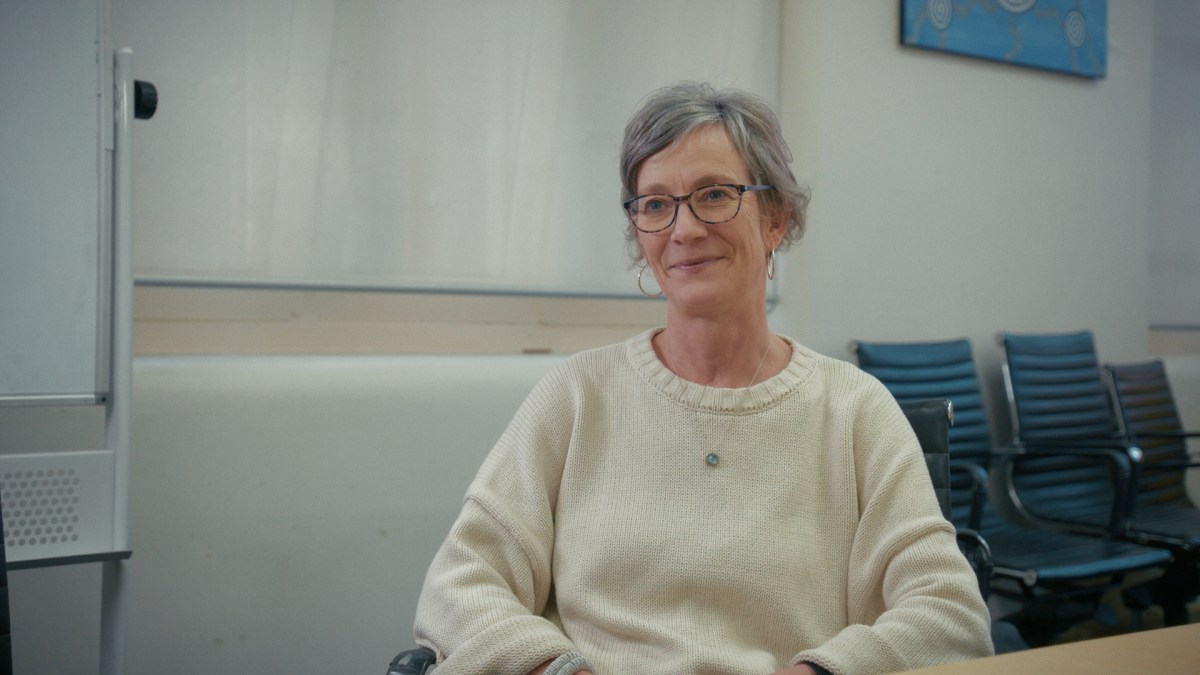
Kirsten Meyer is a drama therapist, educator and facilitator with over 18 years of experience across South Africa and Australia.
She has worked in clinical, educational, and community settings, with a strong focus on group work and the connections between psychological, social, and political processes of change.
In 2001, she co-founded the Zakheni Arts Therapy Foundation in South Africa. Kirsten completed her PhD at Victoria University, Melbourne, in 2017, researching arts-based methods and dramatherapeutic processes to support care workers working with children and young people.
She has published several peer-reviewed articles and book chapters in the field of arts therapy.
Visit Kirsten’s LinkedIn and professional bio.
Would you like to be profiled for ArtsHub‘s What I’ve Learned series? Email us with ‘What I’ve Learned’ in the subject line.
Kirsten Meyer: video transcript
What is a drama therapist? Not somebody who gives therapy to those who study drama, as often we get asked.
A drama therapist essentially works in the same way as a psychotherapist would. But in psychotherapy, you would have a dyad, you would have the therapist and the client, and they would be talking.
Whereas in drama therapy there’s a triad, there’s a third. So we work through something. So we work through an object. For example, we might get somebody to choose an object that represents them.
And then they might speak through that or they might just respond to the quality of an object.
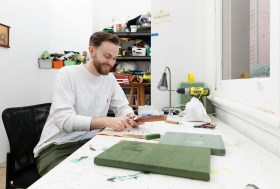
What I have here are some natural objects.

But I would usually have have containers where I often have plastic animals and those can represent many different things. Or I use natural objects, or I might have a whole lot of other found objects. And what I will very often invite people to do in a first session is to talk to, or to create a world for themselves. Who’s in their world? What’s in their world?
The process is … We use kind of dramatic projection, which is something that might be happening inside you that you kind of put out there.
And then the process of distancing is looking at, Oh my gosh, I didn’t really realise that. Look what’s happening there. And so it creates a bit of distance and it creates a bit of safety for the person to engage with what might be happening with them.
So it might not only be an object – it could be a story, you could work through role-play, but it’s providing a third element. So you’re not just saying, This is me and this is what’s happened to me. I might talk through, say, that’s a character. You might talk about the character or you might talk about the stone.
But what you actually do is you’re talking about yourself. So it creates a bit of distance and it’s not as confronting with what might be happening for you.
Kirsten Meyer: ‘Acting is not a prerequisite’
People get frightened because they think they’re going to have to act, or they’re going to have to be good at acting, and that’s not a prerequisite.
Everybody has the capacity to be creative, and you take your time as a therapist finding out what works for the person you’re working with.
If it’s working through a story, or you create a story together, or you might use objects, that might be the start, and then you might end up talking. So it’s a mix of things. Or they might want to get into the body and loosen the body and kind of do some movement as a way of working.
Kirsten Meyer: ‘Sometimes words fail us’
I think sometimes words fail us. And if you think about us as human beings, how we grow and how we develop, we don’t really have verbal capacity until we are about three or four. So our first experiences in the world are all without words. And sometimes experiences, especially difficult experiences, can get caught in our body.
We don’t quite know what’s happening, or we don’t quite know why. Our behaviours might show something, and we kind of think, Why am I doing this? Or you know I might feel completely kind of dysregulated and I keep getting angry, but my body’s telling me something, why am I feeling very down?

I think that for many, many people, the words fail them. And there’s something very, very very releasing and cathartic about expressing without having to use words. And it really speaks to us as human beings. We have minds, we have bodies, we have feelings. And I think often the thinking and the talking keeps us here.
It does require feeling, but sometimes we need to tap into our body as well.
And even this is embodiment, you know? It might be touching, so you get a felt sense. So I do, I feel, I might feel physically, but I might also have an internal feeling. And then I can express or I can understand, and I put it out there.
Kirsten Meyer: process of change
So we talk in drama therapy about processes of change. Most importantly, things like play – very important. You know, and play is difficult, you know, engaging in a process of play. So you can be able to kind of be spontaneous and kind of creative, because it’s the creative part. That’s the healthy part of all of us.
And I think arts therapists, all of them, know that, and it’s about tapping into that. But often the inner child is quite a hurt child, it’s not always a happy child, but it is tapping into that playful sense.
Also I need to just say that some children, they are frightened or unsafe or have experienced trauma, don’t play. And that’s often a first sign, because it’s too scary to play. To play means that you’ve got to trust a lot.
But yeah, tapping into that playful part of oneself is important, and it is about that.