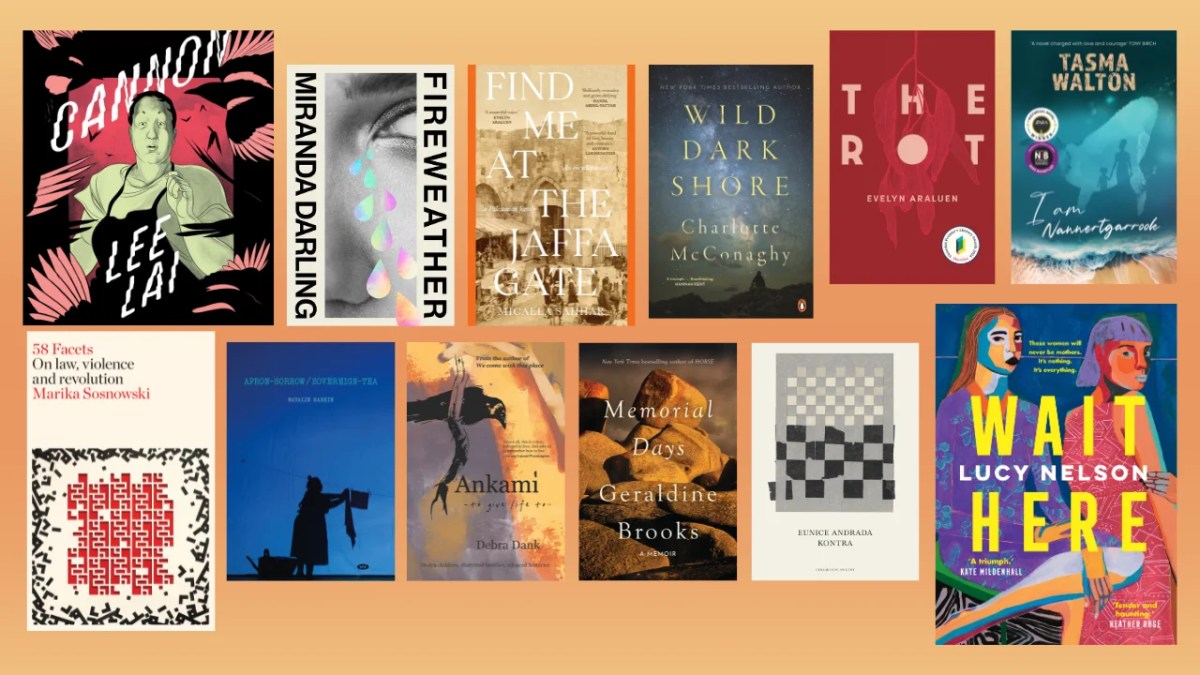
The longlist for the 2026 Stella Prize has been announced, with 12 exceptional works by Australian women and non-binary writers in the running for the $60,000 prize. Spanning poetry, memoir, fiction, non-fiction and graphic works, the 2026 longlist explores themes of memory, truth and the beauty and transformative power of creative fiction.
The yearly prize, established in 2013, is awarded for any Australian book that champions and amplifies the voices and stories of women and non-binary individuals.
This year, the Stella received 212 entries, and in the coming weeks this longlist will be reduced to a shortlist of six, before one extraordinary book is awarded the Stella Prize on 13 May.
‘Selected from an enormous pool of 212 entries, this year’s judges have read thoughtfully and thoroughly across genres to bring us a cohort of 12 incredibly different, yet equally remarkable books,’ said Stella Prize CEO and Creative Director Fiona Sweet.
‘The Stella Prize is proud to celebrate a wide array of stories – difference has always been our strength. The 2026 Stella Prize long list spans widely across form and content, displaying some of the very best new work from Australian women and non-binary writers. There are stories here for everyone, stories that will resonate, surprise, delight and challenge. We hope you will dive in and discover for yourself.’
Each of the longlisted authors receives $2000 in prize money, courtesy of the Copyright Agency’s Cultural Fund. Here are all the longlisted works, in alphabetical order.
The 2026 Stella Prize longlist – quick links
KONTRA by Eunice Andrada (Poetry)
Winner of the 2026 Victorian Premier’s Literary Award for Poetry, KONTRA is a collection by the multi-award-winning Filipina-Australian poet Eunice Andrada, in which characters reckon with the constraints of the past in order to claim a future of their own making. KONTRA enacts a poetics of clashing decadences, testing the tightrope between ‘feminine’ goodness and deviance, desire and refusal, reverence and repulsion.
The Rot by Evelyn Araluen (Poetry)
Winner of the 2026 Victorian Prize for Literature at the Victorian Premier’s Literary Awards, The Rot is a visceral collection of poetry and fragmented prose as shattered and sharp as a shard of glass. Evelyn Araluen unleashes this incendiary collection like a volley of burning arrows aimed squarely at the corrosive heart of colonialism, capitalism, misogyny and genocide. The poems examine rot as both literal process and structural condition, the death of country, death on country, the horrors of Gaza, global violence and the ongoing moral decay of settler colonialism.
A Goorie and Koori poet, editor and educator, Araluen also won the 2022 Stella Prize for Dropbear.
Memorial Days by Geraldine Brooks (Non-fiction/Memoir)
On Memorial Day 2019, Geraldine Brooks was home on Martha’s Vineyard. As she was sitting down to work on her novel Horse, she received a phone call that changed her life. Tony Horwitz, her partner of more than 35 years, had died, collapsing on the street in Washington DC. Brooks, in her retelling of this tragic event, alternates between the logistical and emotional turmoil one experiences in the immediate aftermath of a loved one dying. As much as this is a grief memoir, it is also the portrait of a long and beautiful marriage.
Ankami by Debra Dank (Non-fiction/Memoir/Social commentary)
In this harrowing and haunting memoir, Dank continues her deeply personal journey of truth-telling, discovery, and cultural reclamation. Driven by a long-held desire to understand her family history more fully, Dank’s visit to the National Archives reveals a devastating truth: her paternal grandmother gave birth to 10 children, four of whom were stolen. Ankami also bears witness to the unpaid labour of Aboriginal workers, including Dank’s grandmother, exposing the not-so-distant history of Australia as a nation built on exploitation and slavery.
Dank describes her writing as non-linear and organic, her voice resists the flattening language of archival records in a restoration of the dignity and humanity of her ancestors.
Fireweather by Miranda Darling (Fiction)
Against a backdrop of raging bushfires and devastating winds, we reunite with Darling’s protagonist, Winona, from her previous book, Thunderhead. Winona has somehow broken free from the claustrophobic domestic purgatory in which we last encountered her. But she is in no way free from societal expectations placed on her as a woman, as a mother, as a sane person, or from the control and power of her cruel and now ex-husband. Darling’s sharp, stylised prose shimmers on the page and pulls the reader in deeply to this narrative of feminist rage.
Apron-Sorrow / Sovereign-Tea by Natalie Harkin (Non-fiction)
Apron-Sorrow / Sovereign-Tea is a powerful reckoning with the state archives that illuminates and vividly remembers the harrowing experiences of Aboriginal women and girls in domestic servitude in South Australia. The intergenerational effects on families and communities are deeply conveyed, and Harkin’s truth-telling is a potent response to whitewashed narratives and brutal systems of control and capture.
Cannon by Lee Lai (Graphic novel)
The reliable and dutiful Cannon (real name: Lucy; nickname Luce; ironically – or perhaps not – Luce Cannon) has myriad responsibilities. During the day, she helps her avoidant mother by taking care of her elderly gung-gung (maternal grandfather). At night, she works in the pressure-cooker kitchen of a fine dining restaurant. In her off hours, she’s a confidante and troubleshooter for best friend, Trish. However, Cannon is about to crack – something we see in a dizzying flashforward in the first pages.
The highly anticipated follow-up to the Stella-shortlisted Stone Fruit, Cannon is a compelling depiction of a fracturing friendship between two queer, second-generation Chinese women. It is also a bruising examination of the lifelong weight that people – often women – carry, the profound toll it takes to be the ‘responsible one’, and what can happen when you are being taken advantage of repeatedly. (Bonus: it is also, somehow, very funny.)
Wild Dark Shore by Charlotte McConaghy (Fiction)
A woman washes onto the shore of a remote island off the Antarctic coast. She is rescued by a family – a widowed father and his three children – who are the last inhabitants of an abandoned research base and seed bank. But who is this mysterious woman, and what is she doing here? And what is this family hiding from her – and us, the reader?
In Wild Dark Shore, Charlotte McConaghy has produced a ripping, plot-driven literary page-turner. At the same time, she also invites us to ask profound and timely questions about how we raise children, and what we choose to salvage, in a world on the verge of collapse.
Winner of Dymocks Book of the Year 2025, Wild Dark Shore is as much a climate change-era mystery as an elegy to a world at the edge of ruin, punctuated with some of the most glorious descriptions of the majesty of the natural world.
Wait Here by Lucy Nelson (Fiction)
The glistening short stories in this debut collection ask questions about mothering and its absence, and how we shape a family and build a life. Each protagonist is connected by a common thread: her childlessness.
Nelson understands shortform fiction and uses the form in incredibly interesting and innovative ways. The collection, with each story accumulating, enacts an invitation to the reader to lean in closely and see these women’s complex inner lives play out on the page. The stories are incredibly varied in both tone, perspective and style, showcasing the full range of Nelson’s literary skills and craft.
Find Me at the Jaffa Gate by Micaela Sahhar (Non-fiction/Memoir)
A winner of the Victorian Premier’s Literary Awards 2026, Find Me at the Jaffa Gate: An Encyclopaedia of a Palestinian Family is a tender, absorbing family memoir about the Palestinian diaspora, living across three continents, and keeping traditions alive even through the loss of home and history. At the centre of this book is a journey the author took to Jerusalem to visit the family home her grandfather built, a home that has loomed large in the collective memory.
It’s a generative offering, a work that brings together people, stories and ideas. It consists of 48 entries symbolising the 1948 Nakba that displaced the author’s family and eventually led them to Melbourne. Sahhar writes lyrically and surprisingly, capturing many voices and characters across history and place.
58 Facets by Marika Sosnowski (Non-fiction)
58 Facets: On violence and the law is a book that defies categorisation or comparison. A hybrid of personal memoir, scholarly research and sobering investigation, Sosnowski’s micro-essays on law, violence and revolution span 1930s Europe to the modern-day Levant, from the Syrian resistance against the bloody regime of Bashar al-Assad to Australia’s immigration policies and Covid-19 response.
What unites these moments and places? Firstly, they are flashpoints in how the state uses laws and checkpoints against ordinary people, essentially making violence legal. Secondly is Sosnowski herself. She has skin in the game: her ancestors arrived in Australia after surviving Nazi persecution, while one great uncle became a significant player in the founding of the Israeli military.
I Am Nannertgarrook by Tasma Walton (Fiction)
A page-turner that is also deeply researched, beautifully written and very accessible, I Am Nannertgarrook is an embodiment of Walton’s First Nations heritage and culture that welcomes all readers into its rich emotional landscape. This is that rare bird: a serious and inviting historical novel.
Winner of the 2025 ARA Historical Novel Prize and shortlisted for the 2025 NiB Literary Award, the story is about the impact of the British seal-hunting and whaling industries on First Nations lifeways in Australia. Walton recounts the story of her ancestor’s abduction from Boonwurrung Country, where she was sold into enslaved labour in Tasmania, entering a life of forced migrations that led eventually to southern Western Australia. It’s a story of loss, grief and dignity, as well as the endurance of the profound meaning and spiritual aliveness of whale song, motherhood and marine life across centuries of extraction and dispossession.