
Music has always shaped the way that musician and composer Biddy Connor understands the world. But it wasn’t until 2020 – when she unexpectedly found herself hooked up to a whirring chemotherapy machine in the midst of lockdowns – that she found herself compelled to step outside of her comfort zone, put aside her usual instruments (the viola, predominantly), and to start making music with machines (and not in the way you might think).
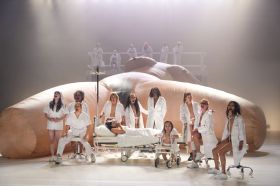
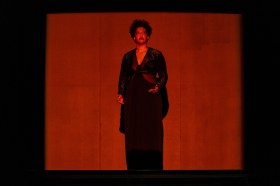
With her innovative new project, Song To The Cell, Biddy has converted two retired IV machines into musical instruments. Along with the sound of her voice, and a hand-held ultrasound tool, she manipulates these towering medical devices (much like those used during her own breast cancer treatment) to create emotive soundscapes that build into something ‘ecstatically beautiful’.
Transforming medical machines into instruments of change
‘I started recording the sounds from my very first chemo session. There was no intention of anything, except that at the time, I was in a very heightened state of anxiety, and had no idea what was really about to happen to my body. So that was the thing that I focused on,’ explains Biddy.
‘I could hear melodies in the IV machine that was being used on me, and I thought … maybe that melody is a good melody. But I do really feel like, over this period of time … it’s helped me really put a place for understanding what my body’s been through, and understanding how everyone who goes through it, goes through it in a different way.’
How the Art Music Fund is helping Biddy’s art to heal others
In 2025, Biddy was one of 11 established composers to be selected to receive the APRA AMCOS Art Music Fund, and she says that this generous funding allowance has been essential to developing Song To The Cell into something truly next level, and to perform it live for the very first time (but not the last).
Initially presented over two nights at Melbourne Recital Centre as part of Now or Never, Biddy is continuing to push her unconventional new music practice to new places. The project is not only helping her to heal from her own cancer journey (which she is now, thankfully, in remission from) but she also hopes her new music can offer some comfort to people who have had or are dealing with their own medical journeys.
‘It’s been really great because [the Art Music Fund] gave me some time to really synthesise and focus on ideas that I’d had swimming around for a while,’ Biddy explains.
‘I did also have support from Chamber Made in the years leading up to it, but having the [APRA AMCOS] funding to focus on the composition allowed me to sit down and really get stuck into it, and then also allowed me to, I guess, feel a little bit of confidence in talking about it too.’
Why you should apply for the 2026 Art Music Fund
For successful applicants, receiving the Art Music Fund can allow for the time and space to take an idea and turn it into a fully realised work of art. For Biddy, being selected as a recipient also had the effect of boosting her confidence in the credibility of her project – while she has broad experience as a performer, composer, arranger and session musician, Song To The Cell is her most personal work yet.
She also notes that even the process of putting together the funding application can be a beneficial process, helping an artist to clarify their project. She says: ‘[Forming] clarity of idea and process, I think, is always useful. Not just for that application, but for your art.’
Biddy’s top tips on applying for the 2026 Art Music Fund
While a composer doesn’t necessarily need to have a rigid, fully fleshed out plan in place, they should have a work with a strong concept in mind for their application.
Says Biddy: ‘I think it’s always good to talk through your ideas with a colleague first, or even find a colleague who might read through your application. Be really clear with your project – sometimes it’s too easy to overcook an idea.’
Biddy also shares that the funding panel generally wants to see supported works performed more than once, so it is a good idea to get in touch early with people and organisations who may be interested in hosting performances.
But wait, what is the Art Music Fund?
The 2026 Art Music Fund – an initiative of music rights management organisation, APRA AMCOS, in partnership with the Australian Music Centre (AMC) and SOUNZ Centre for New Zealand Music – is now open for submissions.
The Fund provides AU$7,500 each for 11 established composers, nine from Australia and two from Aotearoa New Zealand, to create commissioned work with the intention of ensuring a long artistic life for the work and its composer.
‘[Art music] is music that doesn’t fall into the traditional pedigrees of either classical music or pop or rock music, but it might incorporate ideas of those,’ explains Biddy. ‘It’s important for there to be new Australian art music written and supported … because it’s a reflection of our culture and the current moment, and maybe on a smaller scale, our community.’
The Fund was launched in 2016 in recognition of the limited opportunities for art music composers to have new works performed. It directly funds new work and provides winning composers with professional support to grow their repertoire in a sustainable way.
A wide range of music styles are supported by the Fund, and each entry will be assessed by an external panel of musicians from a diverse mix of cultures, gender, geography, generation and genre.