Australian creatives now have broader opportunities to seek funding for collaborative projects with partners in the UK under an expanded British Council initiative.
This year, three international arts funding streams have been consolidated into the prestigious Connections Through Culture (CTC) grants program. The move broadens the scope of the scheme while simplifying access to funding for international creative exchange and cross-cultural partnerships
The CTC program offers grants of up to £5,000 to artists, organisations, festivals and collectives to deliver collaborative projects across a broad range of fields ranging from visual arts and architecture to music, literature, theatre, dance, film, design, fashion, craft and creative technology, including digital arts, immersive experiences and games.
‘The UK and Australia share longstanding cultural ties, but Connections Through Culture is about deepening those relationships and creating new opportunities for artists and cultural organisations to learn from one another,’ says Helen Salmon, Director of the British Council in Australia.
She says the emphasis of the CTC program is always on the collaborative aspect of the projects, building valuable long term international relationships that often go well beyond the life of the grant.
‘The strongest applications present a clear, well-developed creative idea that is genuinely collaborative, with both UK and Australian partners contributing equally to shaping and delivering the project.’
Applicants should be able to demonstrate that the international partnership is essential to producing the work.
‘We’re looking for projects that show why international collaboration matters and how working together will create something that couldn’t happen otherwise,’ she says.
British Council: diversity of projects
That ambition is reflected in the range and diversity of projects that were supported through last year’s grants, with 127 recipients from 35 countries.
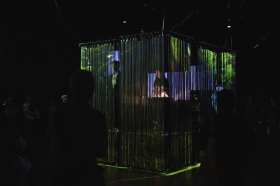
There were four Australian grants made in 2025, including Bat Night Market, a collaboration between World Science Festival Brisbane and UK artist Robert Charles Johnson that imagined a future without bats through a large-scale immersive installation. Another successful project was Regenesis that brought together Australian designer Dr Sam McGilp and UK artist Luisa Charles to explore regenerative design and ecologically sustainable new media practice through neurodivergent perspectives.

GUURANDA x Rise saw Australian choreographer and curator Jacob Boehme lead a residency hosted by Dance North Scotland as part of the 2026 Rise Festival, with a focus on Indigenous and First Nations artists. And From the Margins: Creative Survival within Marginalised Economies supported the partnership of Australia’s TextaQueen and the UK’s Raju Rage, focusing on issues of diversity and accessibility for precarious and underrepresented artists.
Salmon says the number of successful applicants this year will depend on the quality and spread of applications across the expanded grant categories.
The successful projects in 2025 also reflect some of the CTC’s priority areas of interest.
‘We are particularly interested in collaborations that respond to current themes and opportunities in the cultural sector, including climate and sustainability, diversity and inclusion, and creative technology and innovation,’ says Salmon.
British Council: tips for applicants
Applicants should be sure to pay close attention to the practicalities of their proposals and the application itself, carefully working through the published guidelines and grant timeframe. Salmon says it’s vital that the partners will take an equal role in the project; indeed, one of the most common pitfalls is proposals where one partner takes the lead while the other plays only a limited role. She also says applicants must be able to clearly explain their aims.
‘It’s important for applicants to be specific about the outcomes they hope to achieve, rather than relying on broad aspirations,’ Salmon says.
‘We’re particularly interested in partnerships built on genuine mutual understanding and a shared commitment to the project, where both organisations contribute expertise and learn from each other, rather than knowledge flowing in one direction.’