After an acclaimed Sydney debut in 2022, Palawa playwright Dylan Van Den Berg’s award-winning play Whitefella Yella Tree takes root in Brisbane this spring. This Griffin Theatre production presented by La Boite is a tender yet devastating coming-of-age story set against the arrival of European settlers.
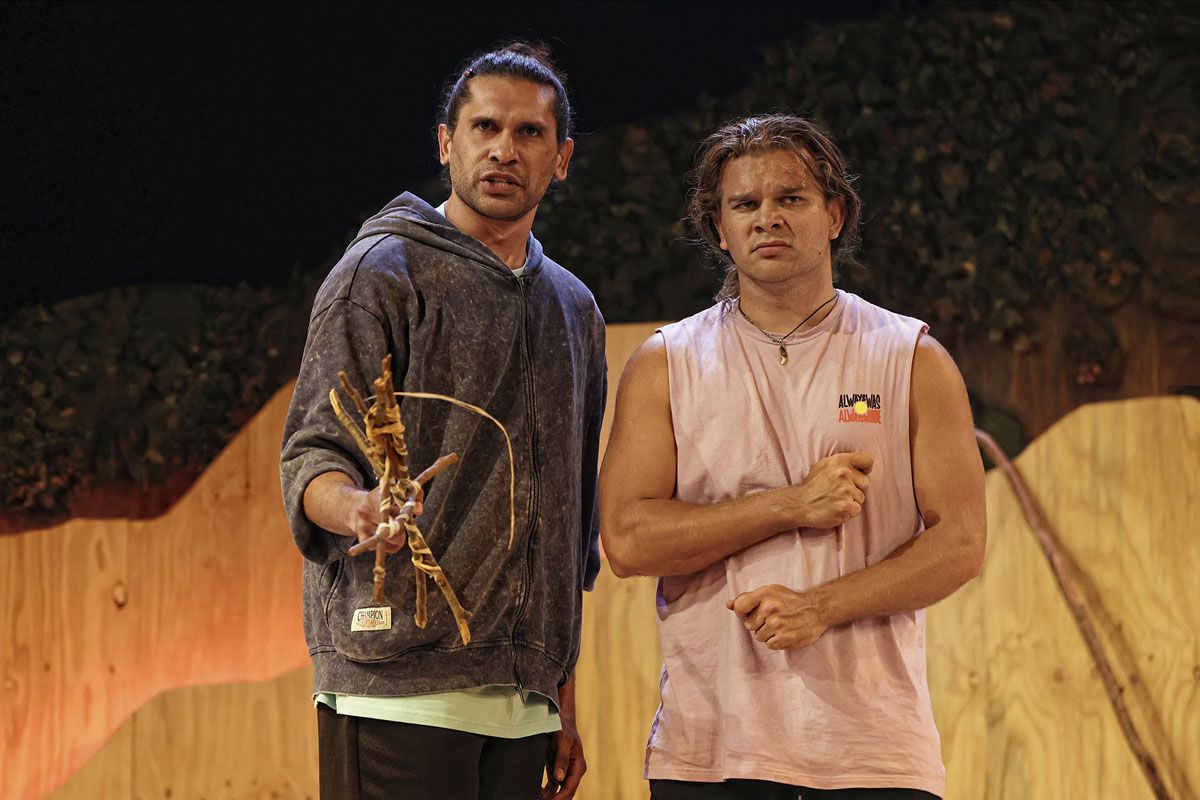
It begins with a meeting. Two teenage boys, Ty and Neddy, cross paths under a lemon tree, having been tasked to pass on messages between their neighbouring clans, the River Mob and the Mountain Mob. It’s the early 19th century and while the rest of country grapples with first contact with foreign settlers, these two teens find a private kind of revolution – falling in love.
We see them grow from boys into young men, their secret meeting place becoming a sanctuary. But while their relationship grows stronger, the settlers strengthen their hold over the land and its people, the beginnings of the painful disruption of over 75,000 years of Aboriginal culture.
Whitefella Yella Tree – quick links
Centring queer and First Nations perspectives
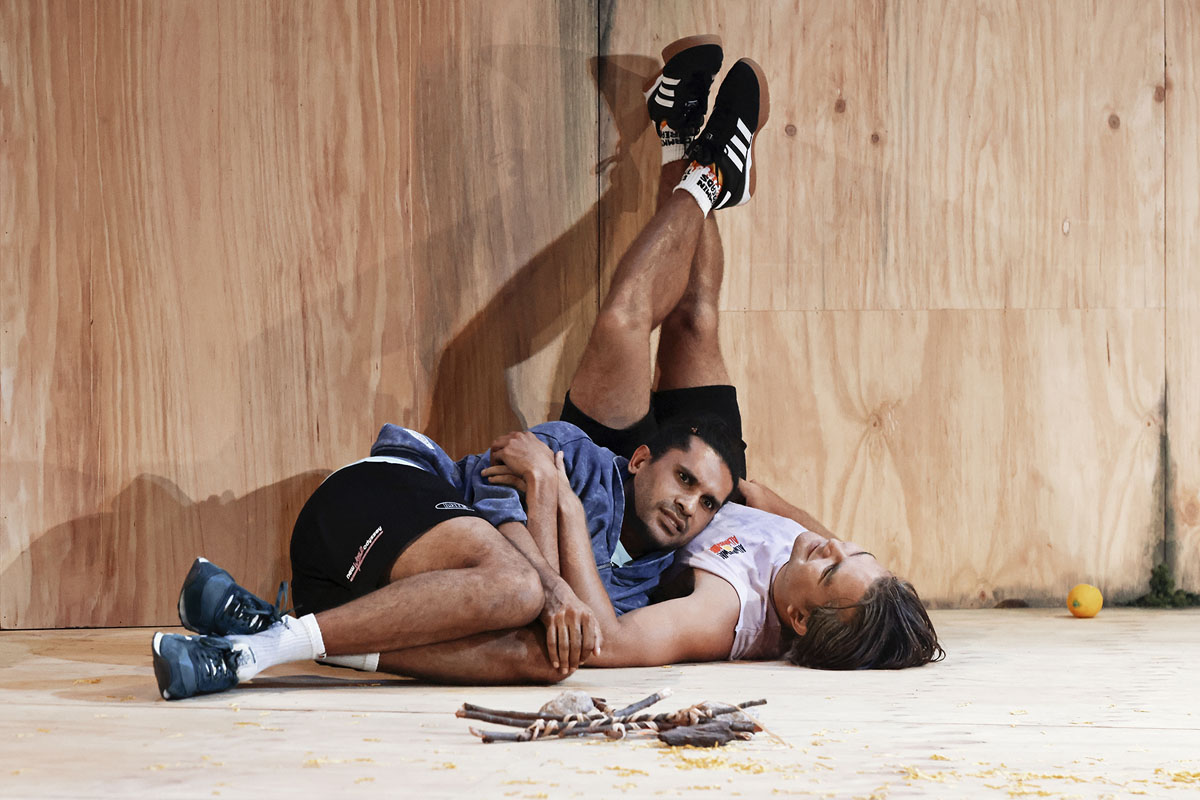
As the conflict deepens, both Ty and Neddy are forced into impossible choices where Neddy is lured by the whitefella’s ways and Ty, once a storyteller for his tribe, is forced to become a warrior, burdened by the fading stories of his people.
Their love is tested time and again. Their meetings become intermittent but more intense each moon passing. Only tragedy can bring them together.
Interrogating the history of Australia, Whitefella Yella Tree feels like a sequel to Jane Harrison’s The Visitors. Both are retellings of first contact from a First Nations perspective, but Whitefella Yella Tree does so on an intimate level, homing in on one relationship.
Returning with the same creative team from the acclaimed 2022 Griffin Theatre premiere, this production feels deeply lived in and carefully tended. Directors Declan Greene and Amy Sole centre queer and First Nations perspectives, trusting the story’s emotional truth to do the heavy lifting.
Whitefella Yella Tree: True chemistry on stage
The only change is the cast, though you wouldn’t know it. Joseph Althouse and Danny Howard inhabit Ty and Neddy as if they’ve been carrying these characters for years. Their chemistry sparks with humour and heart.
Howard’s Neddy bounces with energy, a restlessness pulsing beneath the surface of bulging biceps and boyish charm. Althouse’s Ty, meanwhile, brings an emotional intelligence and open-hearted innocence that slowly matures into fierce resolve.
The language shifts with the passing of time, yet Ty seems to grow up much quicker than Neddy, leaving the audience with a feeling that more action happens offstage than on.
Staging decisions evoke Country
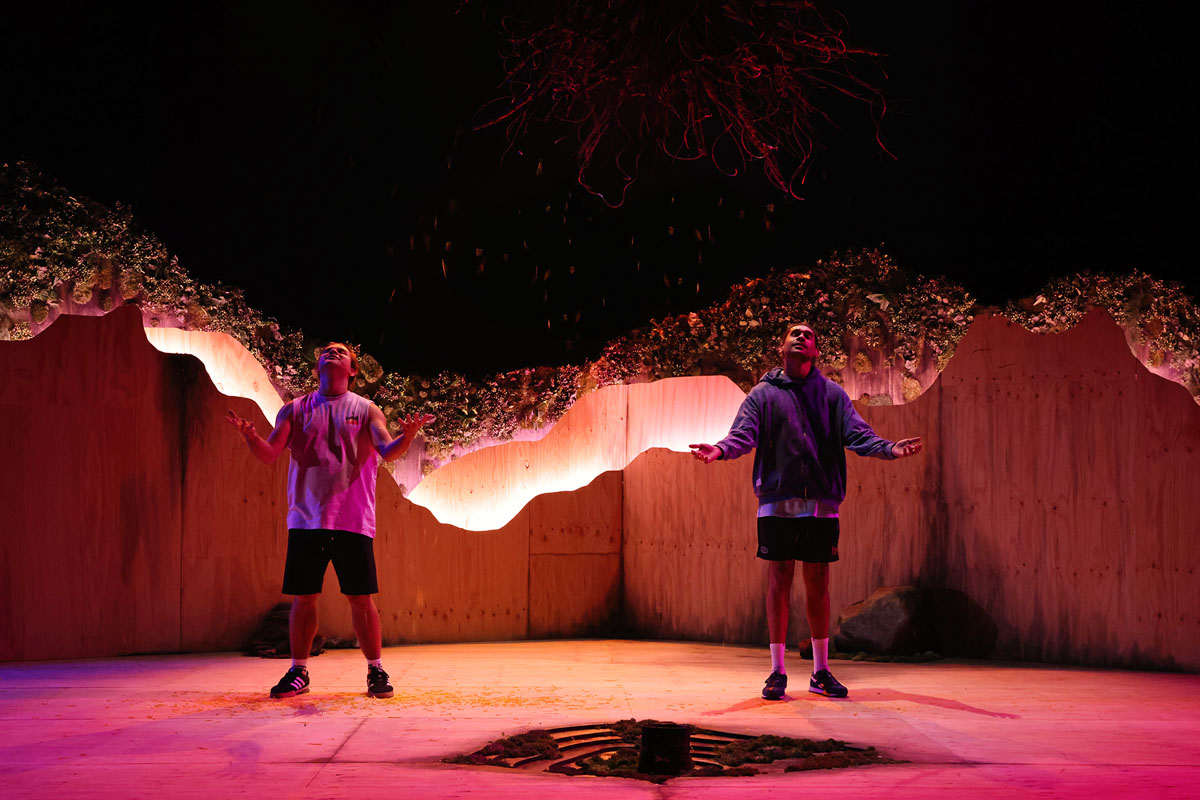
Mason Browne’s set evokes Country through layered plywood mountains, an ideal backdrop for past and present to coexist. In their early meetings, the boys mark their heights and later etch other symbols onto the surface, echoing the rock art of their Elders and tracing their own coming of age.
The roots of the lemon tree stick out above the stage like a Stranger Things creature. The lemon tree is, of course, not native to Australia, and this foreign entity looms over the entire show, an oppressive force above them.
Costumes are modernised to remind us that the past echoes even now. A shocking moment occurs when Neddy arrives at the lemon tree in a colonial uniform. It marks how much the boys have grown apart over time.
Lighting designers Kelsey Lee and Katie Sfetkidis colour the stage in soft golds and dusky blues, subtly depicting the changing seasons of Country and the boys’ relationship. Steve Toulmin’s sound design deepens the world, with the sound of the birds, the wind and roots growing into the soil. Sudden blackouts and sharp sonic effects jolt the senses, growing harsher as the play progresses and colonisation takes hold.
Whitefella Yella Tree reminds us that there are many untold stories from our history, and it’s about time they bloom.