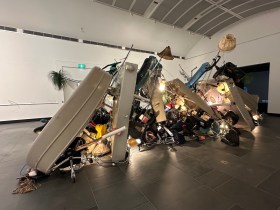
NGV International consistently stamps itself as the national leader for fashion and design – not just through major exhibitions, such as the current Westwood / Kawakubo, but through rigorous collection and their spectacular annual gala. Simply, the gallery is undisputed.
For its summer major exhibition, which traditionally pair two creatives, it has turned to two women, and fashion, in a first.
But does Westwood / Kawakubo deliver?
Westwood / Kawakubo review – quick links
Westwood / Kawakubo: promoting fearless individualism
As designers, the answer is yes. Australian audiences are hungry to learn more about these fashion legends – the late British designer Vivienne Westwood and founder of label Comme des Garçons, Rei Kawakubo – especially in times of flourishing conservatism and the sanitisation of the individual.
We only have to ponder that on the same day this exhibition opened, Pantone – the company that standardises colours – announced its trending colour for 2026 was Cloud Dancer, essentially a bland grey white.
Read: Pantone’s colour of the year is under attack – and rightly so
Exhibitions like Westwood / Kawakubo counter the fear around individual expression, and endorse the place for rupture in our contemporary society. For this very reason alone, this exhibition is a must see.
However…
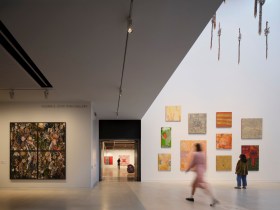
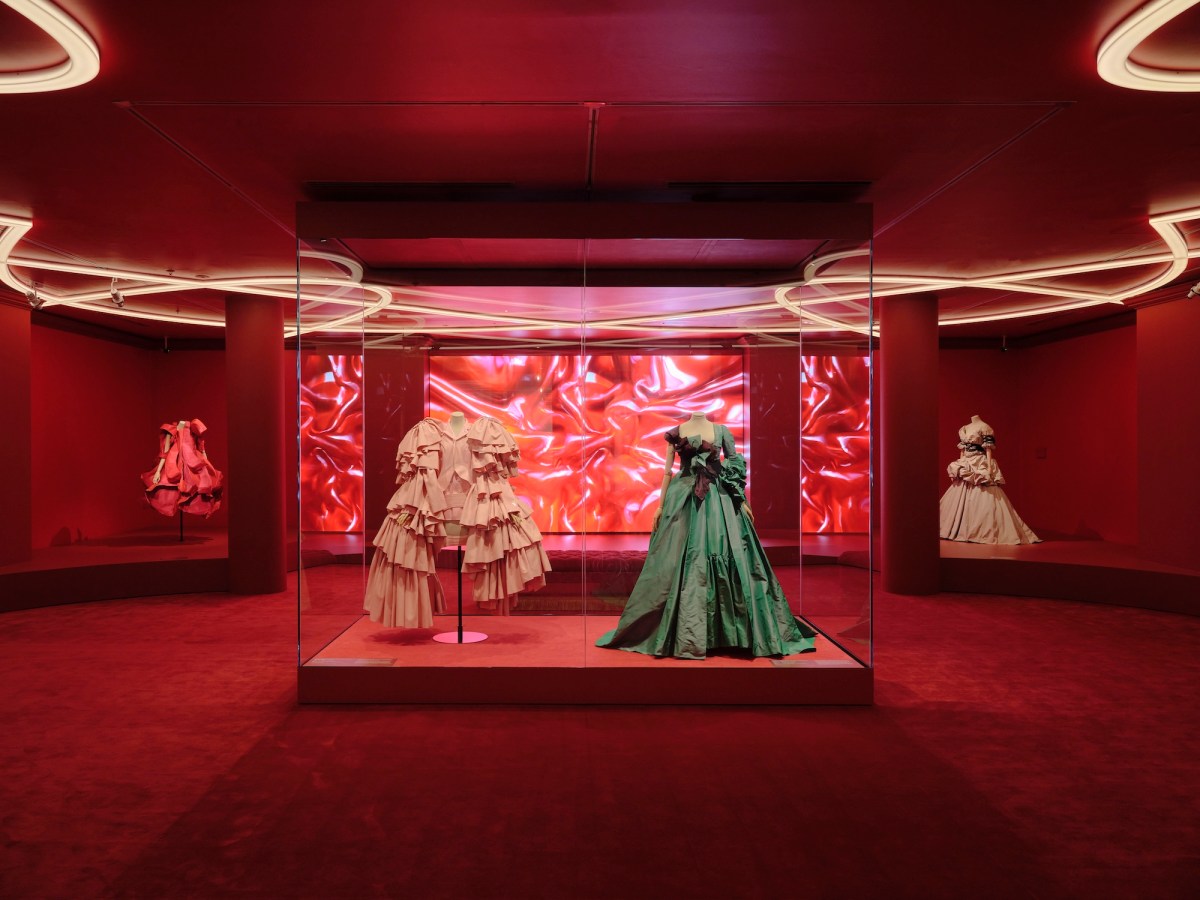
There is bound to be a ‘however’ when we dive into the nexus of fashion, societal agitation, expectation and traditional gallery spaces. Here, it’s that this exhibition overwhelms itself. It is over-designed within an inch of its life, at times suffocating the garments that it hopes to elevate.
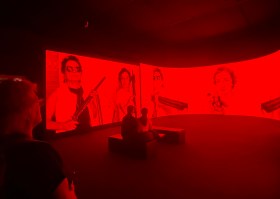
Audiences are pummelled with an overstimulation of sound, video projections, colour washes, lighting effects, stacked wall displays and build-outs.
While it taps the punk aesthetics and brashness of the Westwood brand, at times it feels at odds with some of Kawakubo’s collections, which are more minimal and introspective.
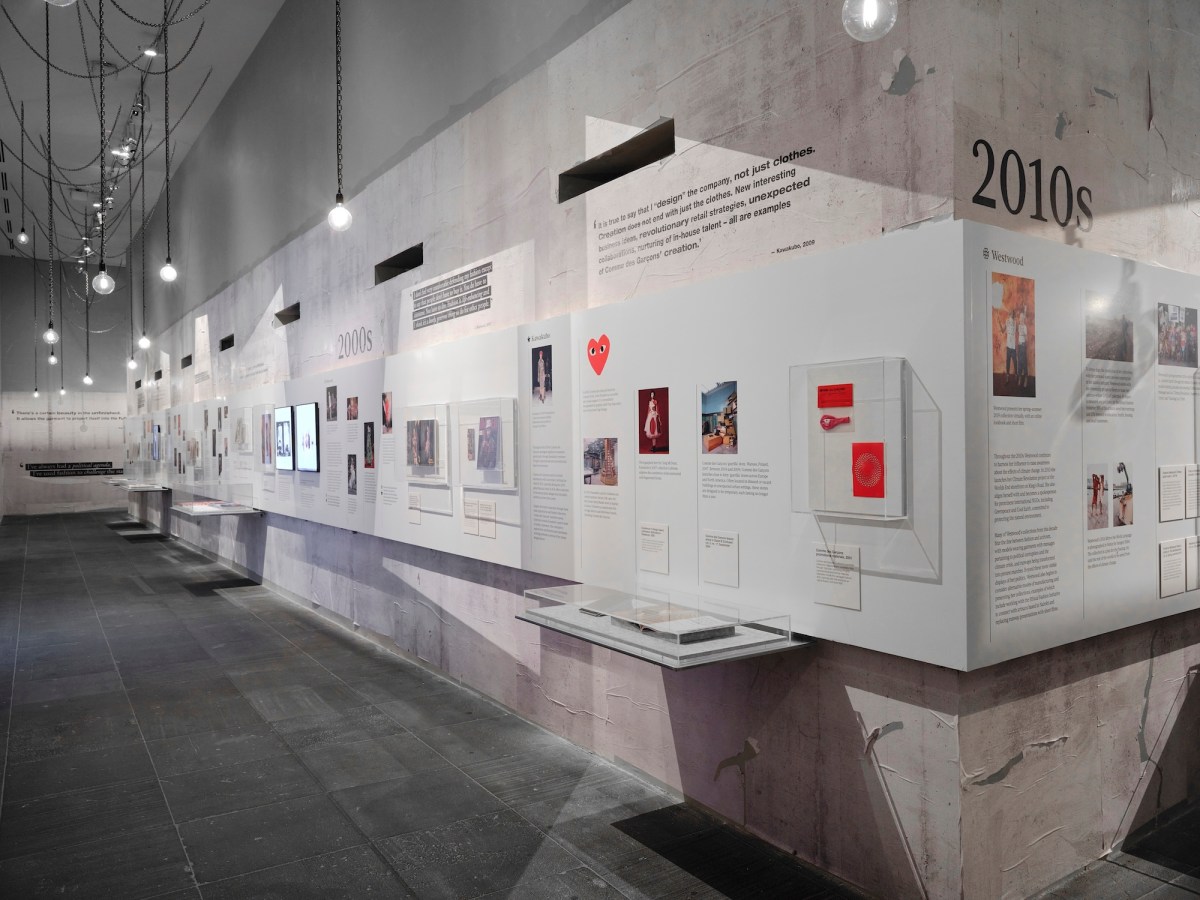
Interestingly, visitors were deeply drawn to a timeline that sits in the early part of the exhibition (and which is fantastic, accompanied by lot of wall-vinyl quotes). It was testament to the fact that audiences want to learn more about the lives of these two iconolasts. They don’t have to be won over by the immersive tactics.
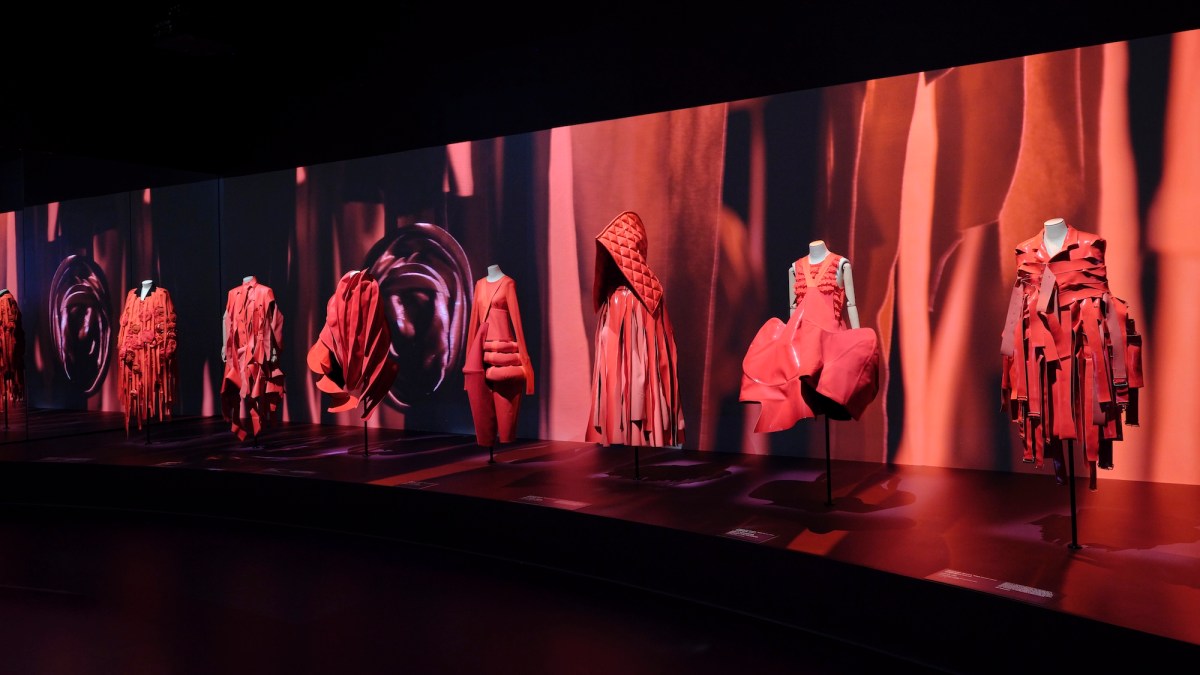
Often witnessed too, viewers would lean in to see the details of the garments. It reconfirmed how displays often had to compete with the exhibition design. A march of Kawakubo’s red garments from the period of her Blood and Roses collection, for example, was set against a video of flowing fabrics in the same hue.
Signature works by Westwood and Kawakubo
On a positive, the exhibition delivered a swag of showstoppers, including key historical works in their oeuvres and also popular crowdpleasers, such as Westwood’s MacAndreas tartan gown. From her Anglomania collection of 1993, it was famously worn by Kate Moss on the runway. The exhibition also presents Westwood’s corseted wedding gown seen on Sarah Jessica Parker in Sex and The City: The Movie, which is drawn from her Wake Up, Cave Girl collection of 2007.
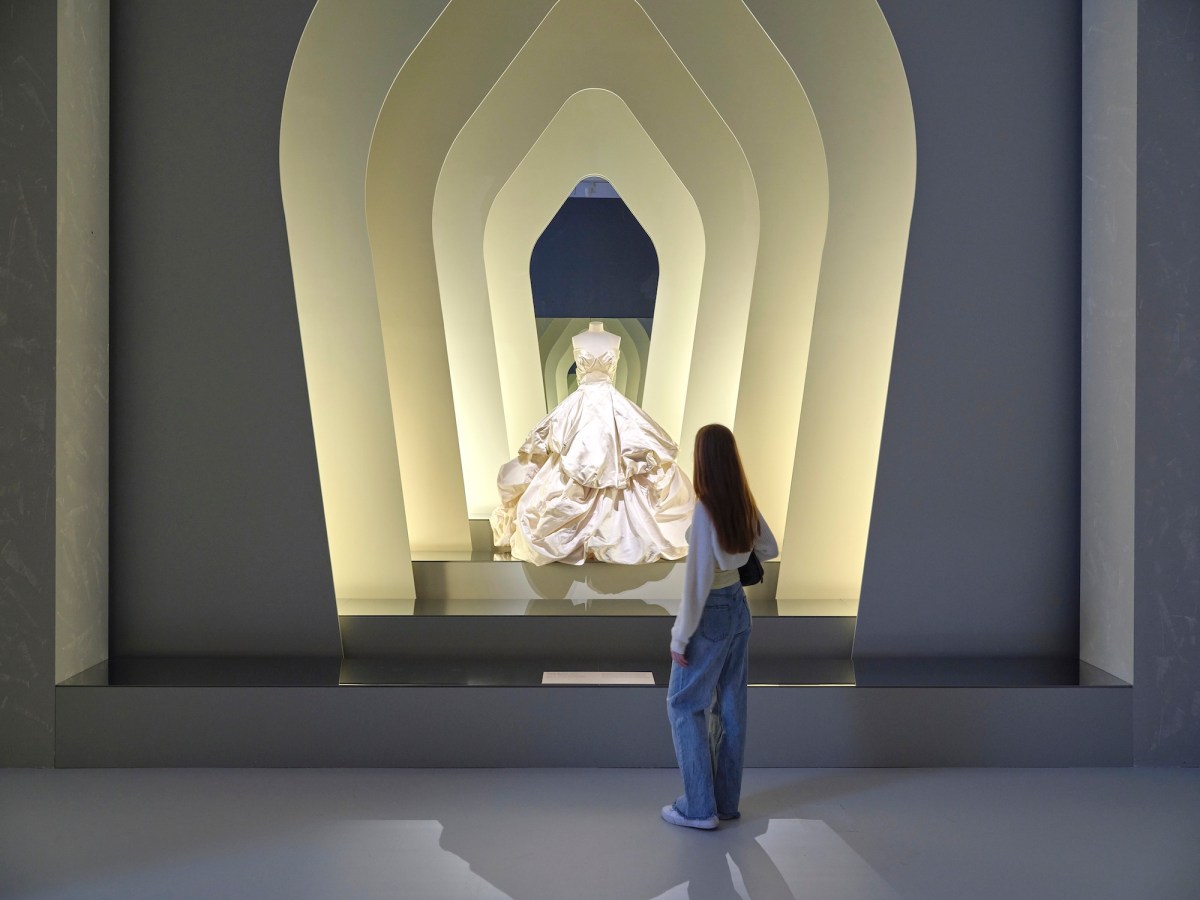
Highlights from Kawakubo’s work include the sculptural petal ensemble worn by Rihanna on the red carpet for the inaugural Met Gala – which coincided with her 2017 Met exhibition Rei Kawakubo / Comme des Garçons: The Art of the In-Between – and pieces worn by Lady Gaga, Katy Perry and Tracee Ellis Ross.
Tracing connections between Westwood and Kawakubo
Navigating the exhibition is easy. It moves chronologically, with an emphasis on thematic pairings that explore the convergences and divergences between the two designers.
The exhibition delves into their radical origins, looking at ideas around punk, provocation and rupture. It places Westwood’s Pirate collection, exploring the new romantic movement, alongside Kawakubo’s wearable ‘objects’ that question the boundaries of the body and the form of the garment. Another theme is reinvention, considering the way both designers have referenced fashion history, in particular through the introduction of corsetry and ruffles.
From there, the exhibition considers how the designers thought about the freedom and restraint of the body, with both subverting gender stereotypes in fashion in very different ways. Westwood turned to the hypersexualised while Kawakubo used silhouettes that challenged form and played with the slips between function and non-function.
We really start to get a picture of how layered their practices were, not only in terms of their interest in fashion history and the social moment, but also in how they handled texture, form, patternmaking, fabric technologies and so on. Curatorially, the collection of work is so rich.

The final section rounds things out by considering fashion as a tool to convey a message, personal or political, bringing us full circle in that history of protest. Sadly, this gallery is again overshadowed by exhibition design.
The most current chapter and the connection with our times could have been stronger, to help anchor viewers navigating today’s body politics – and politics more generally – without the static.
Westwood / Kawakubo: overall verdict?
I haven’t spoken of the designs themselves but do we need to? They are icons of fashion history and to just have the rare opportunity to see them in tandem, and at depth, is incredible.
We are not disappointed by what we see. There are nearly 150 garments drawn from collections including New York’s Metropolitan Museum, The Victoria & Albert Museum, Palais Galliera and the Vivienne Westwood archive as well as important gifts to the NGV Collection, shown for the first time.
The archival material and runway footage that supports this exhibition is also incredible.
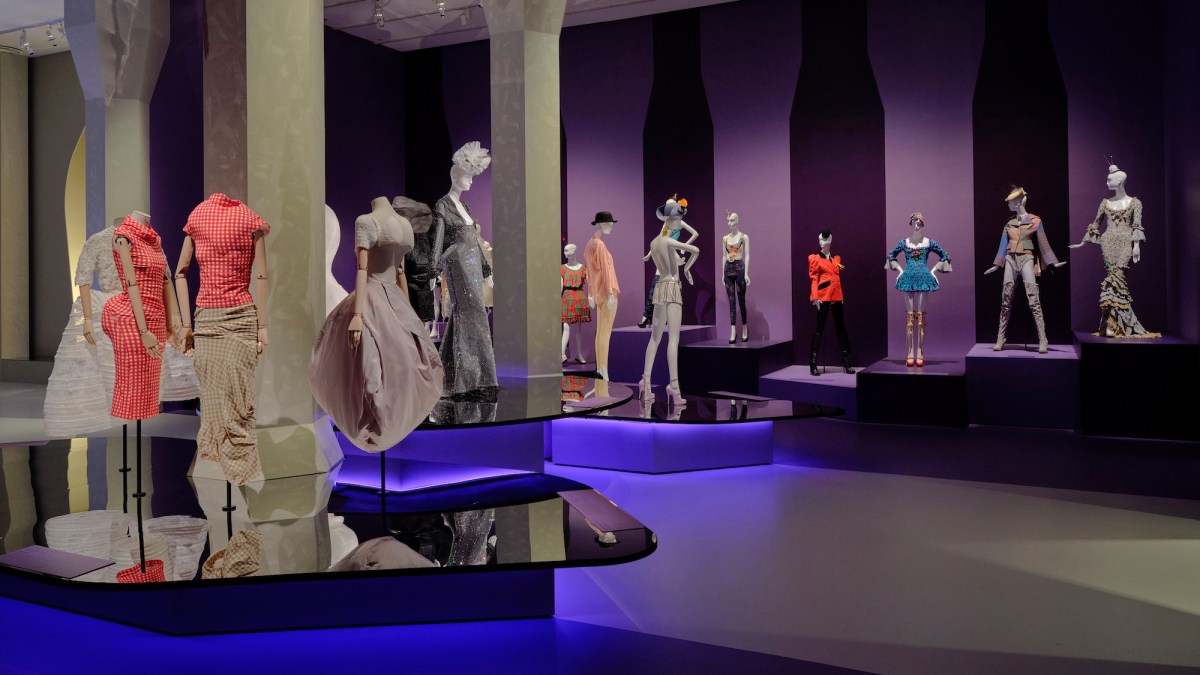
What is perhaps the most remarkable story of this exhibition is that both designers were self-taught –incredible! – and, born just a year apart in 1941 and 1942, they both seismically changed how we thought about the role of fashion and the female body.
It is this pairing – and I believe it is a first that is has been done globally with fashion curators at this depth – that the NGV does so well.
It is an important exhibition that says beauty, by your own definition, is ok and that being an individual is to be fierce – and we need heroes like Westwood and Kawakubo in our times.
Westwood / Kawakubo is at NGV International in Melbourne until 19 April 2026. It is a ticketed exhibition.
The writer travelled to Melbourne as a guest of the gallery.