Two Tongues by Maria van Neerven arrives with quiet force. The 2023 David Unaipon Award winner and 2024 Next Chapter Fellow brings memoir, language and visual experimentation together as a reclamation of Indigenous voice and language.
This poetry collection invites the reader into van Neerven’s life, with almost every page a new poem, opening up on how systems of injustice have shaped generations of her Aboriginal family.
Two Tongues review – quick links
A personal and collective experience
Two Tongues moves through different decades in three parts, seen through van Neerven’s eyes. In yalany, she confronts how colonisation, segregation, racism, the Stolen Generations and family trauma have impacted her growing up. Part two, titled two tongues, straddles two worlds, interrogating constitutional monarchy, genocide and the complex mix of pain and pride.
In the final section, kanna, van Neerven reflects on raising children in the modern world, postnatal depression, the Voice referendum and finding her own voice. Together, these parts weave a narrative that is both deeply personal and a collective experience.
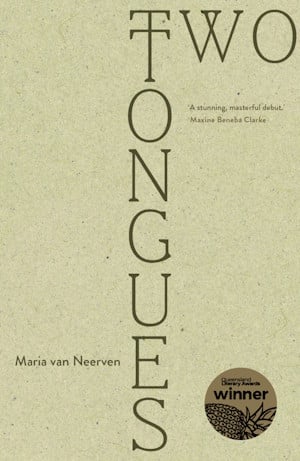
Van Neerven’s poems refuse to sit neatly in lines. These poems break the mould of how language and text should be presented on the page. It is not just top to bottom, left to right. Strikethroughs, scribbles, italics and shifts in layout give some of the work an almost sculptural quality.
Each page feels like a piece of visual art, something to be taken in close, then stepped back from, and each poem is an invitation to be both read and spoken out loud. Meaning is carried not only by language, but by the way the words are laid out on the page.
In bargal, an entire page of ‘c’s create an optical illusion with the poem interwoven throughout.
Interrogating power
This refusal to conform mirrors the book’s interrogation of voice and power. Writing with a yearning for her Yugambeh language, van Neerven reflects on the history of this country, framing the past as something still living and breathing in the present. A glossary of Yugumbeh words at the end of the collection adds another layer of meaning and discovery.
Senses are heightened in lemonade, as van Neerven writes about the loss of her mother: ‘woke to the smell of lemonade scones knew it was my mother’. In qmc, her anger flares as she asks ‘queen mother coloniser’: ‘do you sleep at night’.
Under grief and pain, there is also humour rippling across the page, along with the brightness of childhood memories and a profound knowing as she moves into adulthood. But above all, a deep love of family and culture beats throughout.
Two Tongues is a celebration of Indigenous women – mothers, aunties, grandmothers – who showed van Neerven the strength of living and speaking truth. In telling their stories, she gives voice to those who were historically denied one. The act of writing becomes an act of reclaiming their stories from history, from the painful disruption of over 75,000 years of Aboriginal culture.
Van Neerven’s poems carry the power of speech, asking to be heard out loud. In van Neerven’s own voice, they would undoubtedly take on yet another ascension.
About her aunty, she writes: ‘Your art spoke love for country/ culture/ family’. That love has certainly been passed on into van Neerven’s poetry. Her generosity in sharing her upbringing feels like a wholehearted offering for us all to connect.
Thought-provoking and deeply felt, Two Tongues is a debut that readers will return to again and again, discovering more between the lines each time.