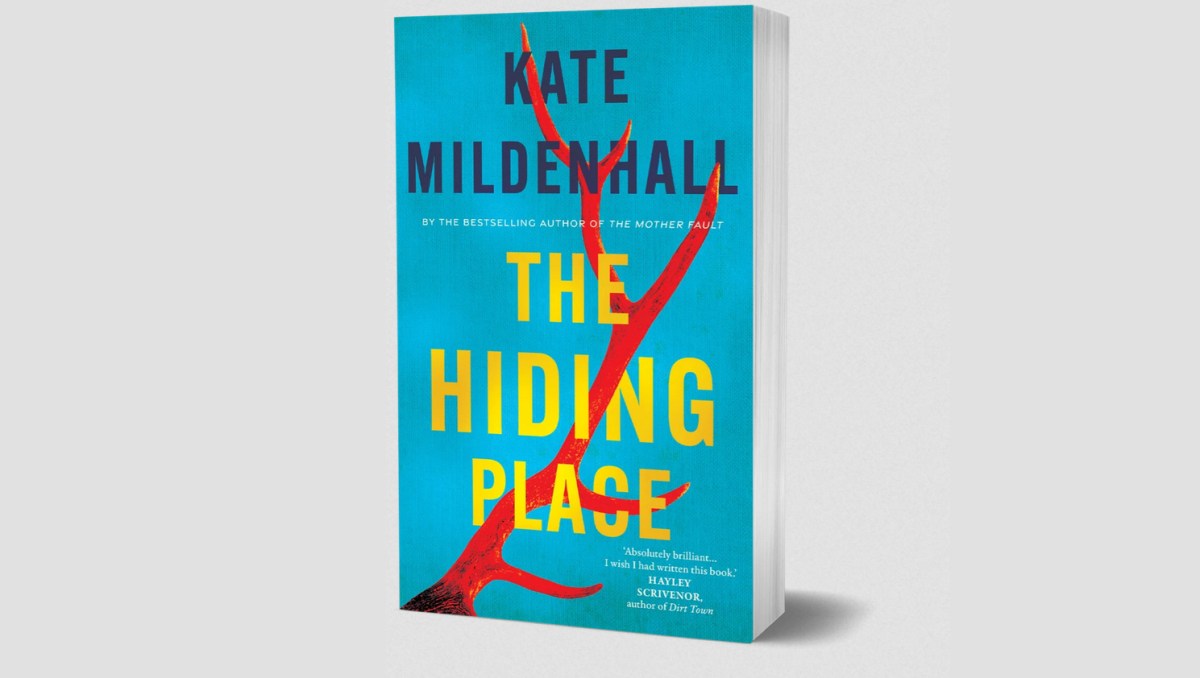
Kate Mildenhall enters the crime game with her latest novel, The Hiding Place, turning a traditional thriller into a biting satire of modern life.
Four mid-forties, middle class families pool their savings to buy an entire abandoned mining town as their shared holiday home. It’s a place to reconnect with nature, rewild their kids and remind themselves that they are the kind of people who deserve good things.
But by the end of their first night staying at Willow Creek, someone is dead. And that’s only the beginning.
From the first pages, Mildenhall proves her talent for voice with the opening chapter in the local general store setting the tone. Unequivocally Australian, sharply observed and already bubbling with tension.
The Hiding Place review – quick links
A weekend at Willow Creek
The story unfolds over a single weekend, sliced into punchy chapters that bounce between characters: friends Lou, Josie, Phil and Flick, as well as Lou’s sister, Ness, and daughter, Stella.
Willow Creek is four hectares of grassy fields with river frontage and an old pub, plenty of room for all. The friends bring along their tribe of offspring, as well as Tom, Josie’s handyman boyfriend, Lou’s politician wife, Marnie, and Avril, Lou and Ness’ mother.
Of course, every member of this group arrives with a secret. Lou has engineered the weekend with the precision of a project manager, quietly guiding everyone toward her own vision for the property. Josie is plotting to plant an illegal Class A acacia experiment on the land while Phil is clinging to his masculinity with the biggest caravan and a secret lamb cook-up, farm-to-table style.
Flick is swallowing her own private shame and Ness, newly divorced, is trying hard not to fall apart. They’re all pretending they know what it means to live off the land. They have no idea.
Despite the sprawling cast, the story is surprisingly easy to follow. The roving point-of-view keeps things moving and, crucially, keeps the reader from getting too attached to any one character. Mildenhall doesn’t want you choosing favourites. She wants you watching them all unravel.
Politics put to the test
These well-intentioned city slickers pride themselves on being good, preaching sustainability and progressive politics, but behave with staggering hypocrisy the moment they cross the Thompson River into the Gurnaikurnai country of Gippsland.
Unfortunate events stack up. While the group encounter wild deer, rogue hunters, a boundary-obsessed neighbour and squatters who disrupt the fantasy, the veneer of morality peels away.
Even their kids can see straight through them. At one point Lou’s teenage daughter Stella notes that if the squatters down by the river were refugees or a First Nations family, the adults would ‘fall over themselves for them to stay’. Instead, these supposedly enlightened grown-ups panic, working out a way to get rid of the people who have lived there far longer than these weekenders ever will.
Mildenhall nails the satire. This is a modern-day farce that tears into the upwardly mobile, chasing-a-tree-change ideal. She skewers everything: organic lifestyles, infidelity, social media righteousness and the smugness that comes with believing you’re a ‘good’ person.
The Hiding Place pushes the satire
The hashtags lightly sprinkled through the text are like tiny digital tics reminding us how deeply online these characters remain, even when supposedly escaping to the bush.
The kids, ironically, are the only ones with any real sense of responsibility, taking on the ‘Rules of Willow Creek’ – respecting this place and people, acting with integrity and kindness – which the adults swiftly ignore.
The tonal shift from satire into chaos is where the novel becomes deliciously absurd. A death by page 100 feels intentionally over-the-top, a wild escalation that might seem implausible if you read the book as straight realism. But Mildenhall leans into the unhinged energy and otherwise sensible adults become feral the moment their self-image is threatened.
If you come looking for a traditional crime novel, the far-fetched turns may lose you. But if you surrender to the absurdity, The Hiding Place is wickedly smart, funny and sharp in its observations about privilege, land ownership and the fragility of being a good person.