
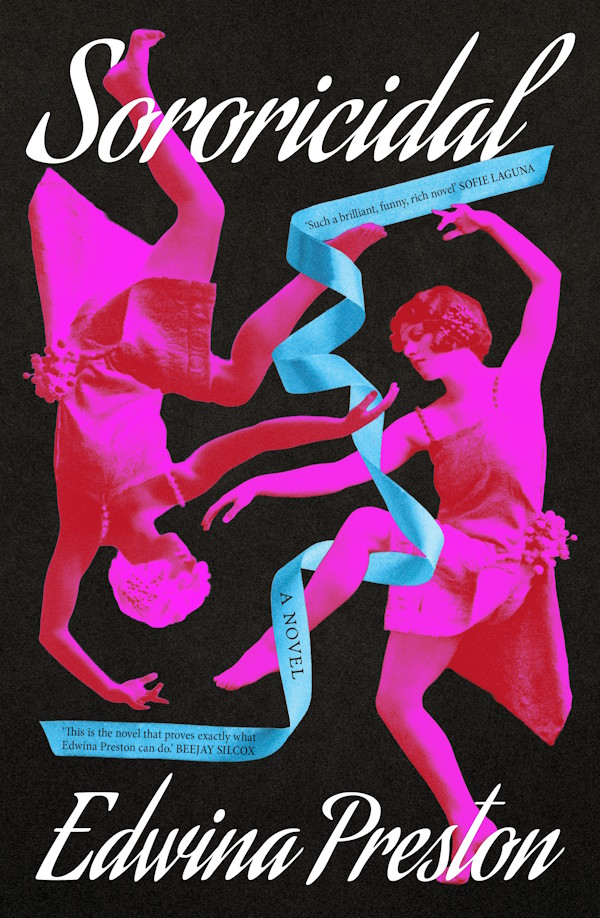
From the first page of Edwina Preston’s Sororicidal, a sense of foreboding takes hold. Sororicide – the act of murdering one’s own sister – is a premise that hangs over the novel like a dark cloud.
Set in the 20th century, the novel follows Mary and Margot, two sisters whose love-hate relationship twists and turns across a lifetime.
Sorocidal review – quick links
Bound by blood
Growing up on a vineyard estate above Adelaide in 1915, the Cussen sisterhood is first seen through Margot’s eyes. Her older sister Mary is the beautiful one, the centre of attention and a budding artist. Margot is quieter, observant and devoted to her sister, trailing behind Mary with blind faith. With her lazy foot, Margot is always a few steps behind in every sense.
‘When you yourself are marked for victimhood, you must align yourself with the victor. It’s basic self-preservation.’
Margot leans heavily on Mary until adolescence begins to fracture their dynamic. As the girls shift into womanhood, hormones reshape the household. Mary grows colder and crueller toward both her mother and Margot, becoming increasingly consumed by her art and her sexual desires.
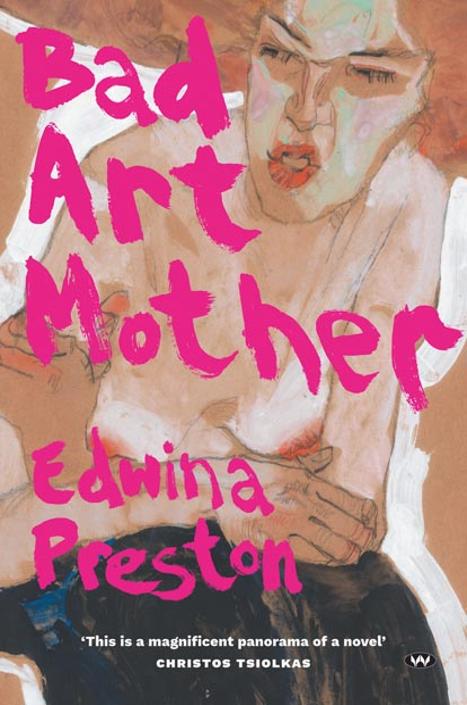
Margot, in turn, finds solace in Nessy, the cook’s daughter, who becomes both friend and her first awakening to intimacy.
Childhood games sharpen into adolescent betrayals, capturing the brittle dynamics of a broken family. When an affair with a tennis instructor is discovered, it alters the course of both their lives.
The sororicidal urge
Part two jumps several years ahead, shifting into Mary’s perspective. Having built her career as an artist in Europe, she returns home for her mother’s funeral and decides to remain in Adelaide, much to Margot’s disgust, who has constructed a modest life with her husband Arthur and their daughter, Christina, without her sister in it.
Mary describes her bond with Margot as ‘islands in an archipelago of two’, a line that captures both their separation and their inescapable bond.
The point of view alternates twice more, to Margot in middle age and Mary in old. Across childhood, adulthood and into later life, Mary and Margot remain bound to one another, no matter the betrayals that pile up between them.
Sororicidal unfolds as a slow burn but one that never quite ignites in the way its title suggests. While the premise is dark, Preston’s prose glimmers on the page.
ArtsHub: All Australian books news & reviews
Two sides to every sisterhood
Despite the characters’ flaws, Preston approaches each with empathy, but never softening or excusing their failings. By shifting perspectives between the sisters, she allows shared memories to be revisited from opposing angles, highlighting the slipperiness of truth. Her sensitivity to memory’s distortions convincingly captures how two people can inhabit the same past and emerge with entirely different versions of it.
Margot appears persistently wounded, while Mary, driven by artistic ambition, often reads as entitled and emotionally oblivious to the damage she inflicts. It is her art, particularly her portraits of family – first Margot, then Margot’s daughter Christina, and finally Margot’s husband Arthur – that leave the deepest mark, and inflict the greatest pain.
Reader sympathies may shift throughout, but like a parent unable to choose a favourite, it becomes difficult to determine who is right, who is wrong and who bears the greater fault.
Margot’s and Mary’s power dynamic evolves across the novel, with Margot at times stepping into a stronger, more assertive presence. While it offers a heightened portrayal of sisterhood, the momentum slows in the second half.
Though there are moments that verge on the grotesque, the violence between sisters remains largely psychological. It’s death by a thousand cuts and Sorocidal asks us to consider the cost of failing to be kinder to our siblings. They may be the only people who remain throughout our lives.