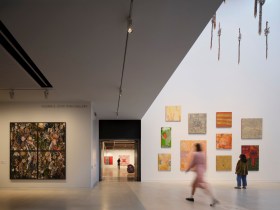
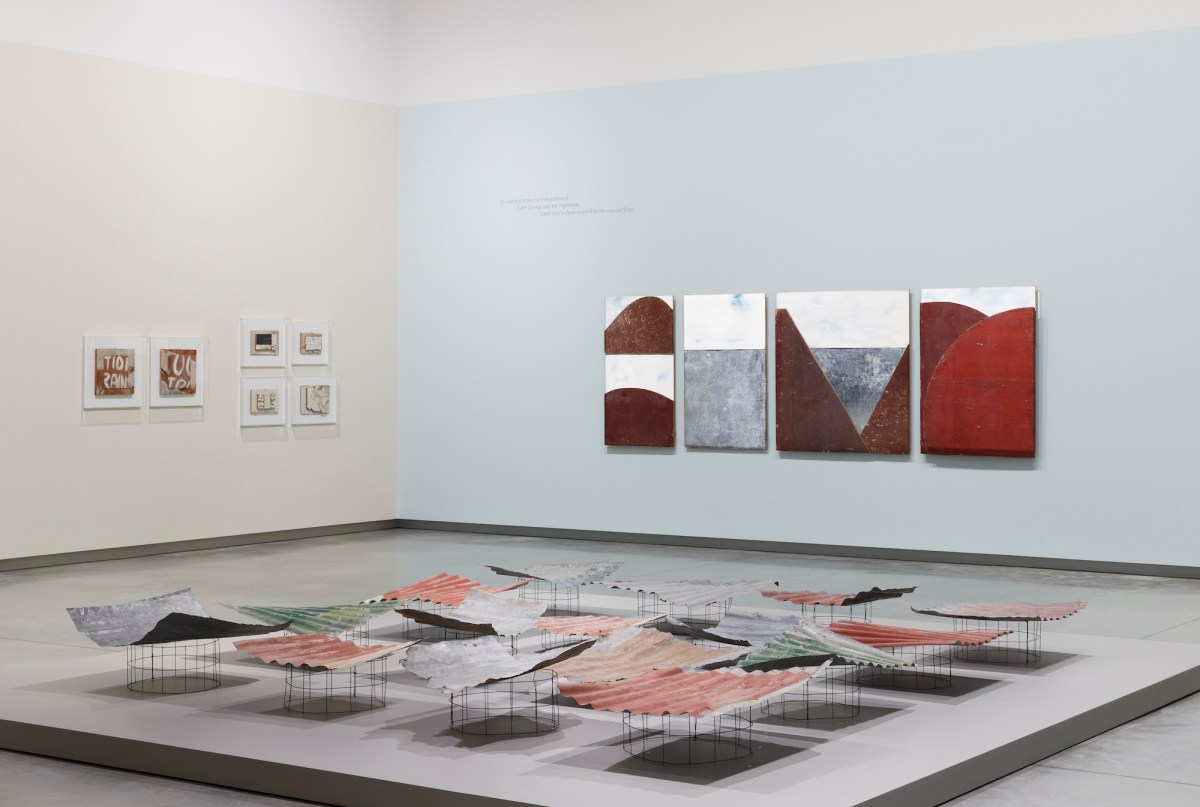
Sitting on the land of the Dharawal and Dhurga people, Bundanon’s program is ever conscious of the gallery’s footprint on Country but it does so in ways that constantly expand and rethink our understanding of landscape. Sky, Earth, Water is the next iteration of that journey.
The words of the late artist Rosalie Gascoigne (1917-1999) perhaps capture it best. ‘It has a vitality,’ she says in a video within the exhibition space, explaining how found materials hold a source of life. ‘They have had the sun and wind on them.’
This exhibition taps into that wellspring of energy across the work of four women artists: Rosalie Gascoigne; the Meriam Mir (Torres Strait) ceramic artist Janet Fieldhouse; the Waddi Waddi, Ngarrindjeri and Yorta Yorta master weaver Glenda Nicholls; and the Waradgerie artist sculptor Lorraine Connelly-Northey. Bundanon, as the home of the Boyd Collection, has selected works that also sensitively tap into Arthur Boyd’s own connection with sky, water and earth here on the Shoalhaven River.
Sky, Earth, Water review – quick links
Standout works by Gascoigne
An icon of Australian art history, Gascoigne’s work fills the large gallery at Bundanon with 20 works borrowed from major state galleries and private collections. They are stellar works.
The exhibition comes just months before a major retrospective of Gascoigne’s work at the National Gallery of Australia – one of the lenders to this exhibition. Indeed, the two major pieces that ground this show, placed at opposite ends of the gallery, will be included in the Canberra show in October: Suddenly the Lake (1995) with its razor-sharp horizon line of Lake George; and Plenty (1986), an expansive yellow field assembled from distinctive drink crates.
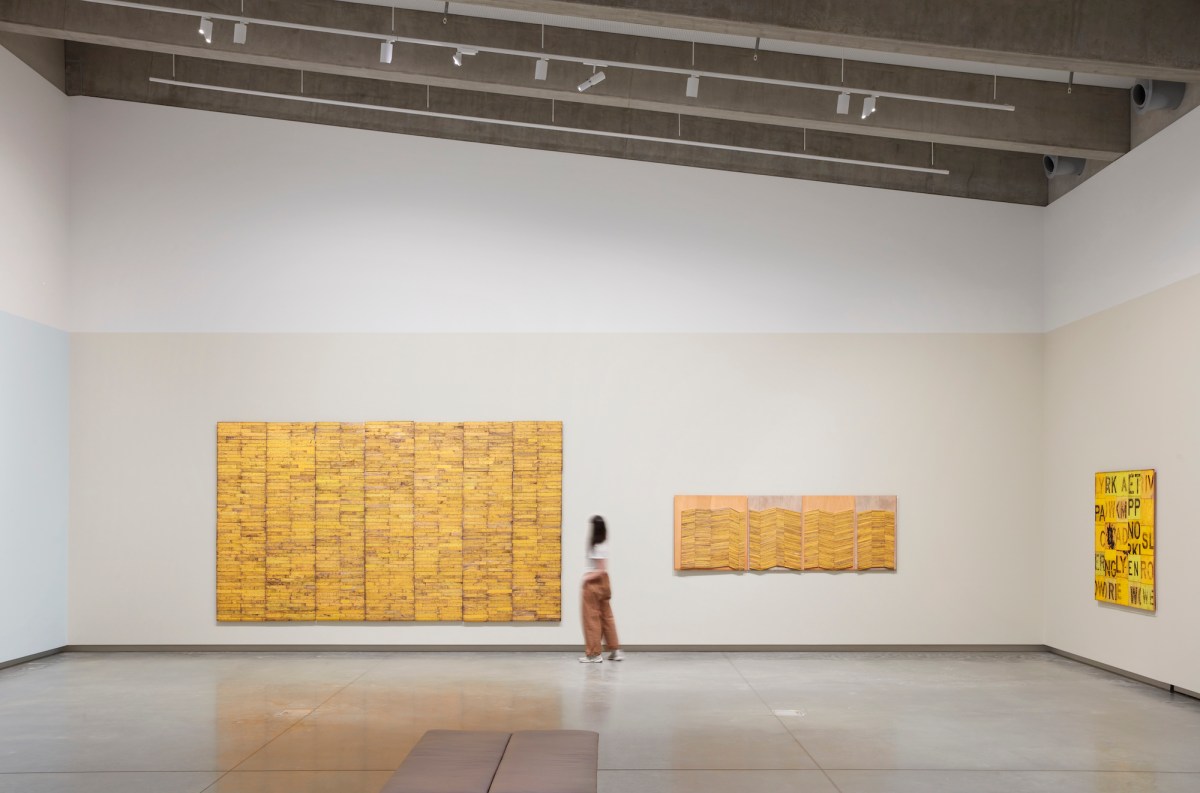
Anchoring the room with a glow is the expansive work Plenty (1986), which hangs heavy with a sense of bush heat and buzzing insects. It sits alongside Wheat belt (1989) with its rhythmic tessellation of soft drink crates echoing the patterns of planted fields across Gascoigne’s much loved Monaro region of New South Wales.
The expansive long wall of the gallery carries visitors through to Gascoigne’s cloud works, which move across various materials – some more refined, others more expressive. They sit almost in stasis and with their palpable feeling of space and openness, there is a synergy between the works and the cavernous gallery. Fittingly, Gascoigne says of her work: ‘I don’t make paintings; I make emotions.’
These impressive works are counterbalanced by a suite of small studies from 1987 to 1990 that continue this theme, demonstrating her poetic eloquence despite scale. The floor piece Inland sea (1986) pulls the display together and reminds us of the depth of Gascoigne’s expression.
Overall, it is an elegant hang and a weighty look at Gascoigne’s career across several decades, and we are reminded of the freshness of Gascoigne’s work, and her intuitive talent.
ArtsHub: Biennale of Sydney review: a world, and an organisation, in decline
Sharing narratives of memory and land
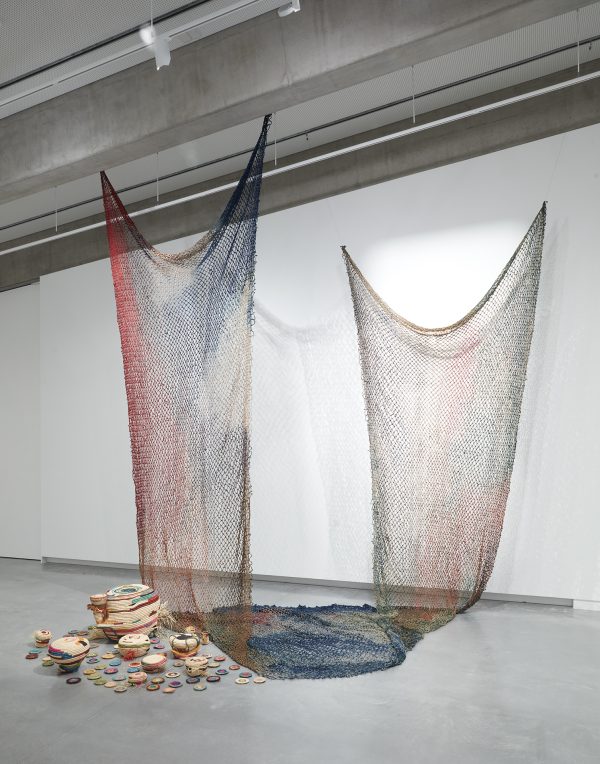
Stepping into the next gallery, works by Fieldhouse and Nicholls are interspersed with Gascoigne’s. Gascoigne’s almost psychedelic reflective piece in orange, Lantern (1990) – made from road signs – has a lovely resonance with Nicholls’ woven installation, I see Country, (2026).
It drapes elegantly with a freedom in the space, its new use of colour picking up on that orange. For Nicholls, however, those hues reflect the rocky escarpments, in particular Pulpit Rock, that inspired Arthur Boyd’s celebrated Shoalhaven painting series. It is presented with small baskets by her sister, Darlene Cunningham, grounding this landscape.
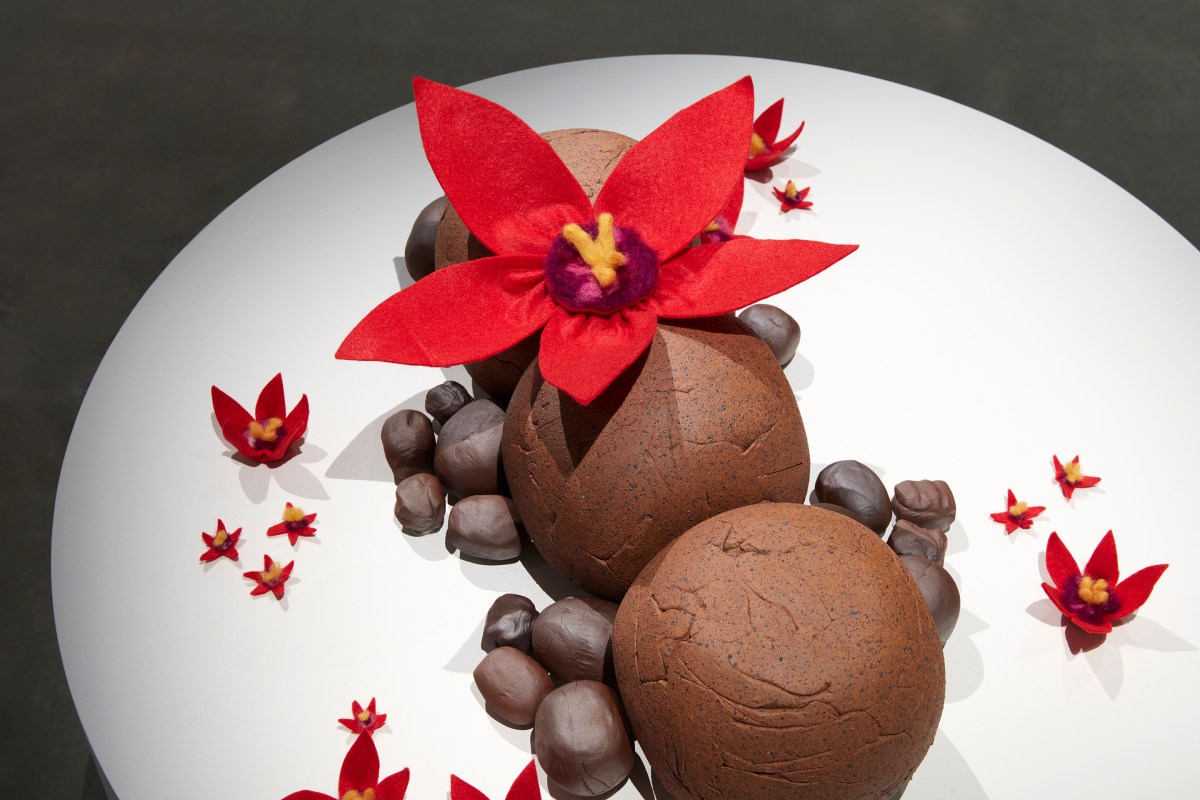
Nearby, Fieldhouse presents us with a series of handbuilt vessels made in stoneware and clay, set into glass bases and animated with addition of birds – wildlife she observed while on residency at Bundanon.
This gallery in Sky, Earth, Water feels a bit discombobulated, and the synergy with Gascoigne feels a little forced. The works themselves and their connection to Bundanon are narrative enough.
The showstopper is Lorraine Connelly-Northey
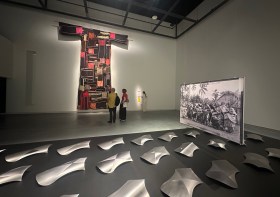
The real highlight of Sky, Earth, Water, however, is Lorraine Connelly-Northey, whose installation of bush bags, bowls and digging sticks inaugurate a new gallery space. Connelly-Northey’s practice offers a contemporary interpretation of significant First Nations knowledge through objects that echo the tools of traditional hunter-gatherer society.
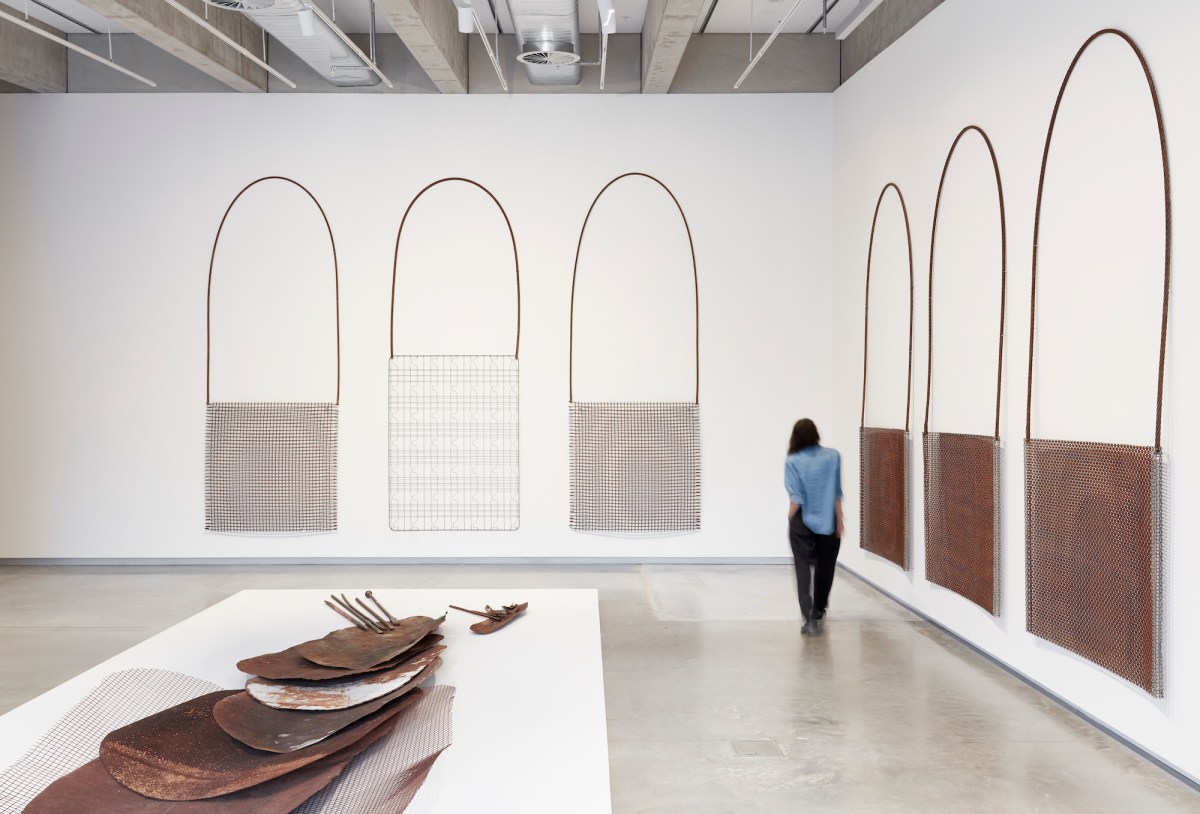
Central to the room is a kind of flotilla of these objects, while around the walls, monumental bush dilly bags hang as silent holders of cultural memory. They range in material from old mattress innards and rusted iron to sheet metal, each with the patina of age and weather. These objects are land foraged by Connelly-Northey – much like Gascoigne off Country – and they speak about that very relationship with earth, sky and water.
To recall Gascoigne’s words: ‘I look for things that have been somewhere, done something. Secondhand materials are deliberate.’ The curatorial synergy is tight between these two artists.
Rounding out the visitor experience is the aforementioned video biography on Gascoigne in a new viewing space, and an introductory suite of photographs of her Ikebana practice.
It is a generous curatorial conversation, and the connections these four women have with landscape, memory and material is palpable to the viewing audience. Exhibiting work created over several decades, it also demonstrates a timelessness in their passion for looking and connecting.
Sky, Earth, Water is showing at Bundanon in the Shoalhaven, NSW until 14 June. It is a ticketed exhibition.
The writer was a guest of Bundanon Trust.