Pippin’s Drysdale’s major retrospective Infinite Terrain at the Art Gallery of Western Australia is nothing short of a breathtaking survey, leaving little doubt of the renowned artist’s commitment to the distinctive (yet diverse) natural landforms that continue to shape her work.
Over 400 porcelain vessels and sculptural forms have been chosen by the artist and AGWA curator Isobel Wise. They speak to Drysdale’s life in art – a life spent travelling, both abroad and frequently to Northern Australia, in search of the desert hues that charge her imagination – and position her as one of Australia’s foremost ceramic artists.
Pippin Drysdale’s Infinite Terrain review – quick links
A life committed to ceramics
Contrary to common assumption, Drysdale is no relation to artist Russell Drysdale (except through her brief marriage to Drysdale’s second cousin from 1967 to 1972). Born in Melbourne in 1943, Drysdale was raised in Perth from aged three, growing up in Western Australia before spending her early adulthood travelling through England and Europe.
It wasn’t until Drysdale was in her late twenties that she started seriously experimenting with art, soon finding her singular artistic passion for porcelain clay.
A ceramics residency at Colorado’s Anderson Ranch Arts Centre in the United States followed shortly after. It proved an important moment for the artist, allowing her to forge important creative ties with fellow potters like Paul Soldner, Toshiko Takaezu and Daniel Rhodes.
Since then, international travel has underpinned many of the artist’s directions, but her most recognisable works are informed by the energies of the wide desert plains and rocky formations in her home state of Western Australia.
Drawing from the landscape
And it is these red earth desert landscapes that are undoubtedly the beating heart of this show, with works suggesting scorched surfaces, crevices and ancient forms.
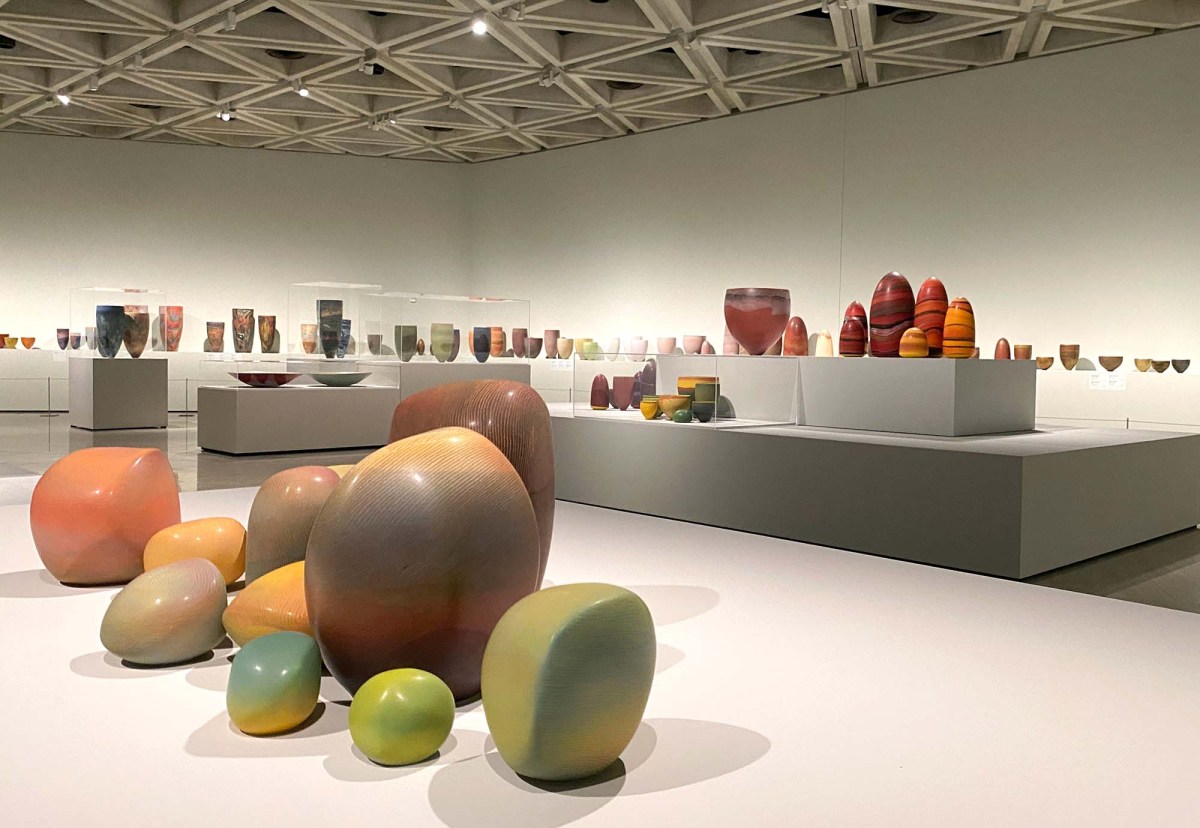
Particularly prominent works from the early 2000s that relate to the Tanami Desert. These are placed both at the exhibition’s entrance, and in single file along a low shelf that skirts the gallery’s far walls.
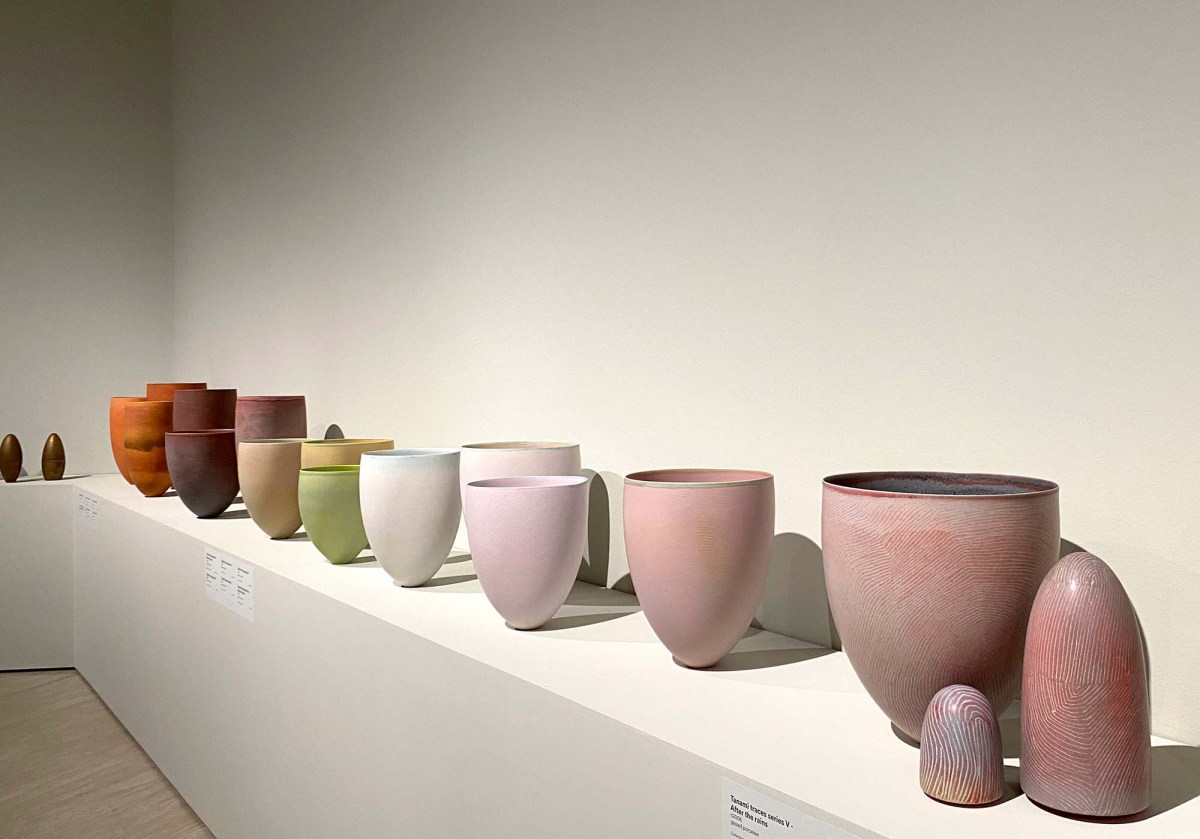
This perimeter display allows Drysdale’s Tanami Mapping series to unfold as a cascade of colour, which is not only beautiful but also brings the works’ subtle dusky desert hues into full light.
With their soft blue-grey and salt lake colours, the pieces in this series are not as well-known as the artist’s fiery ‘red earth’ works – perhaps because they are not as obvious in their connections to the Northern Australian landscapes from which they are drawn.
But the strength of the exhibition – and how it achieves its harmonic highpoints – is through the curator’s careful arrangement of Drysdale’s works, and these choices are informed principally by subtleties of colour (rather than form or scale).
Drysdale’s intricate colour palettes are the main guideposts through this journey, and they are also what take us through the progression of the artist’s practice through the decades.
Charting the decades
Early on, we encounter Drysdale’s highly decorative ‘puppet’ platter series. These formative works are followed by various ‘Russian’ pieces made in the early 1990s after time spent at Tomsk University in Siberia. These bear interesting gold-tinted markers of Russia’s Fabergé traditions.
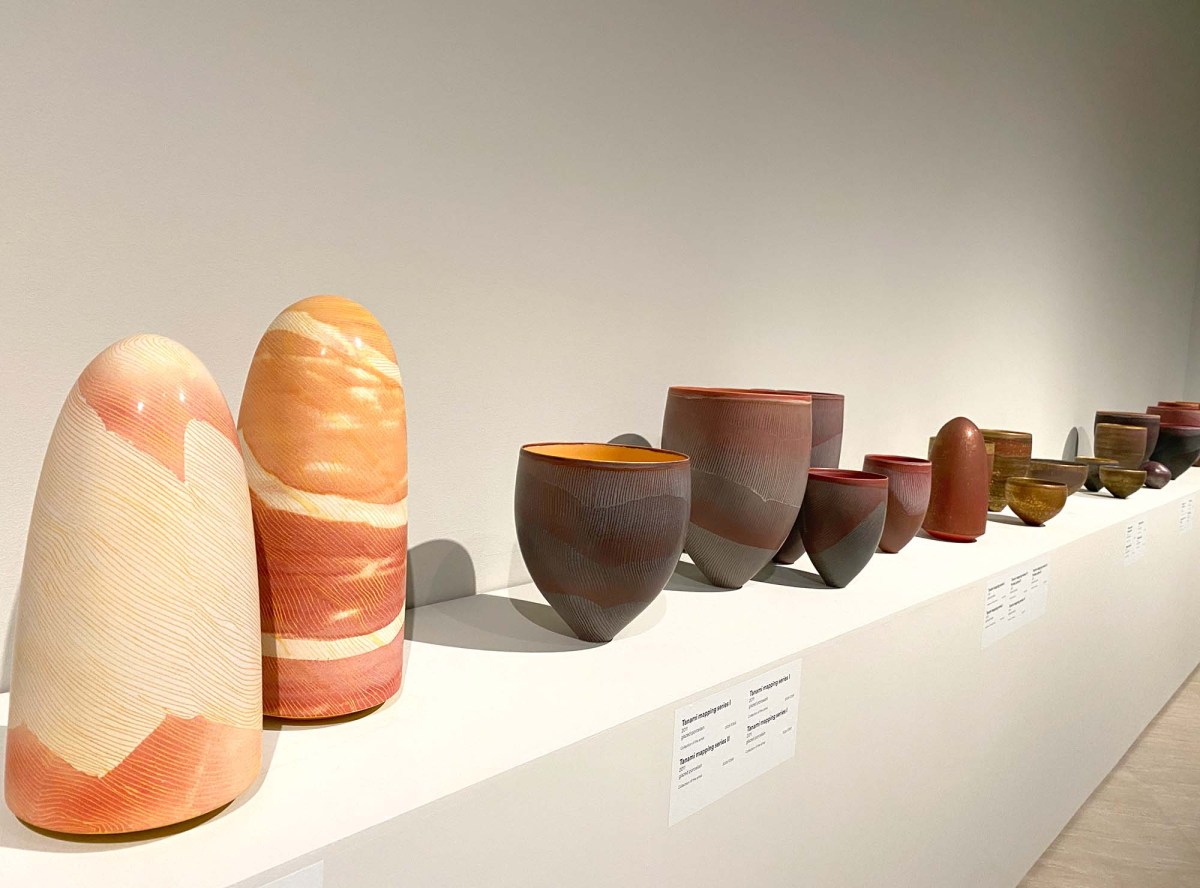
From the 2000s, after the artist returned more permanently to Perth, Drysdale’s view has been dominated by the remarkable desert landscapes of her home state of Western Australia and also the neighbouring Northern Territory.
Series like Tanami mapping (2011-14) and Pilbara (2015) are made by the artist and Warrick Palmateer, an esteemed ceramicist who has thrown Drysdale’s pots for years.
These pieces reveal the artist’s enduring ties to the giant ancient rockforms and fissured surfaces found in these remote plains. Especially when grouped together, her giant pebble forms are stunning evocations of these arid environments.
But perhaps the most thrilling aspect of this show is the inclusion of the artist’s most recent works, which signal that Drysdale’s indefatigable thirst for colour studies and experimentation is still going strong.
Embracing vibrant colour
Breakaway series – The Patterning of Light: Swift Parrot Installation (2024) is a series of pieces displayed at the survey’s end. Among her most playful work to date, it marks another distinctive shift in the artist’s colour palette.
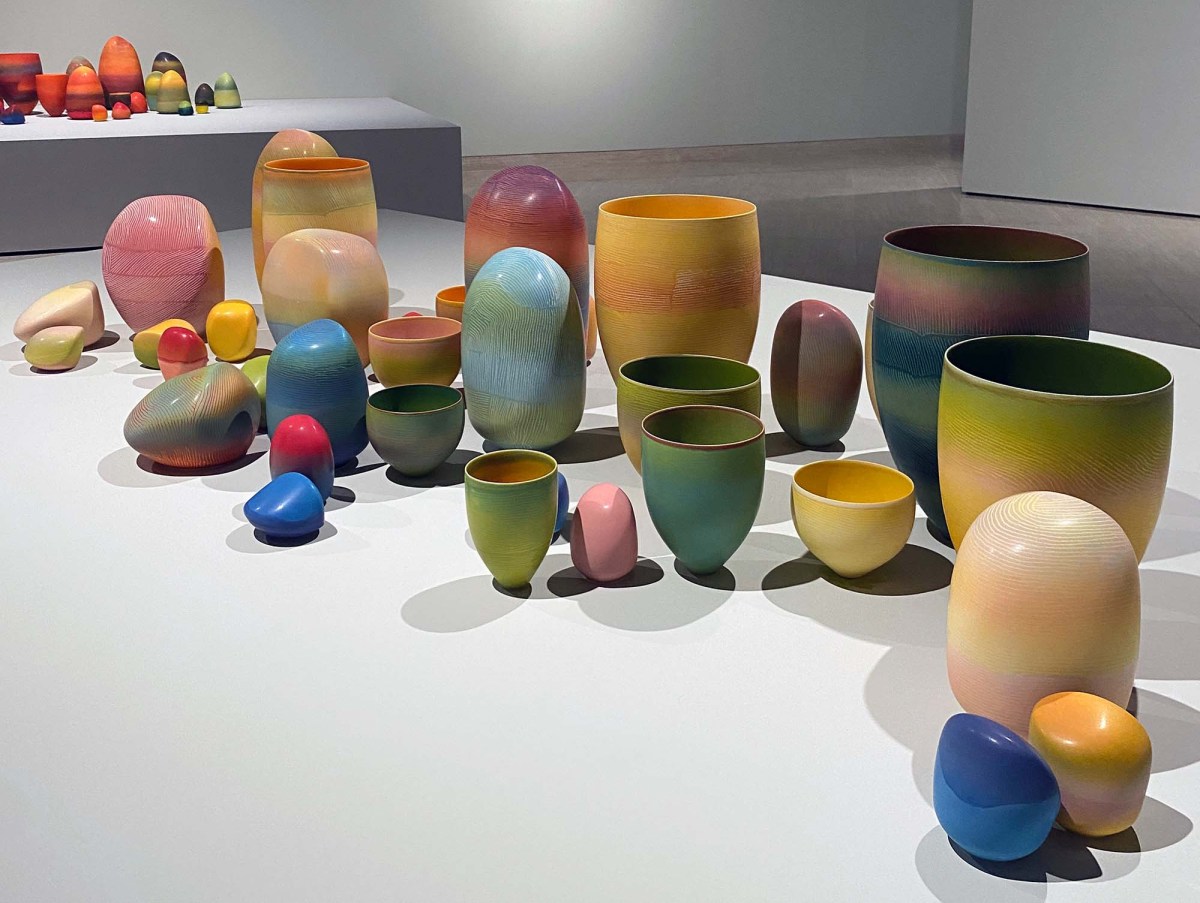
In place of Drysdale’s signature ochre tones and dusty blue-greens, the pieces presented here are far brighter, with fuller-bodied candy-tinted hues. Although these works are small, they are resoundingly full of life, and were created as the artist’s ode to Australia’s critically endangered swift parrot.
These pieces are also a sign that this artist – now in her early eighties – is still pulsing with the vital creative visions that have sustained her for the past four decades.
They are also an exciting hint that Drysdale no doubt has other natural wonders and new expansive vistas she still wishes to chart through her work, and that we will likely see the results of these artistic inquiries in years to come.